


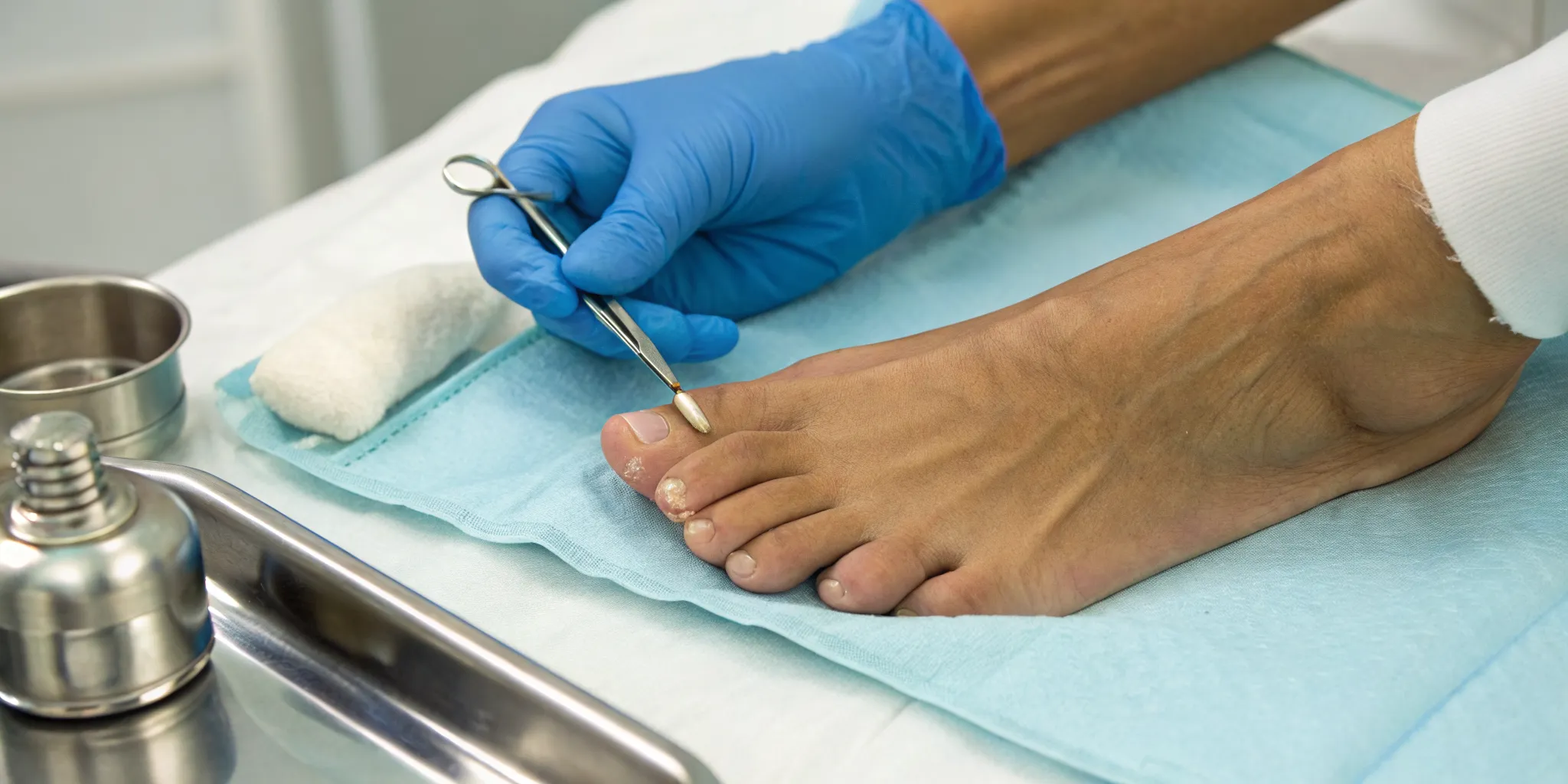

The word “surgery” can sound intimidating, bringing to mind hospitals, long recoveries, and significant pain. Let’s clear the air about what it means for a recurring ingrown toenail. The procedure to fix this issue for good is not a major operation. Instead, an ingrown toenail permanent removal surgery is a quick, precise treatment performed right in our office. After completely numbing your toe so you feel nothing, Dr. Singh addresses the root cause of the problem. This isn’t just about trimming the nail; it’s about preventing the troublesome edge from ever growing back. Think of it as a definitive solution that finally breaks the cycle of pain and regrowth, with a recovery so simple you’ll be back to your routine almost immediately.
Key Takeaways
- It’s a Simple, Permanent Solution: A matrixectomy is a minor, in-office procedure that provides a permanent fix. Your doctor removes the ingrown nail edge and treats the nail root to prevent that specific section from growing back.
- Recovery Is Quick with Minimal Pain: You can walk out immediately after the procedure and return to most daily activities the next day. This makes the treatment ideal for anyone with an active lifestyle who needs to get back on their feet fast.
- The Results Are Highly Effective: By addressing the problem at its source, the procedure has a very high success rate. It effectively stops the frustrating cycle of recurring ingrown toenails so you can get back to your life without pain.
What Exactly Is an Ingrown Toenail?
Let’s start with the basics. An ingrown toenail happens when the edge or corner of your toenail, usually on the big toe, grows into the soft skin beside it. If you’ve ever had one, you know the telltale signs all too well. It often starts with some tenderness and redness, but can quickly become swollen, painful, and even infected. It’s an incredibly common problem, and if you’re an athlete or someone who spends a lot of time on your feet, you might be more familiar with them than you’d like.
The constant pressure and impact from running, jumping, or even just wearing snug athletic shoes can create the perfect storm for this painful issue. While a minor ingrown nail might seem like a small annoyance, ignoring it can lead to bigger problems that can sideline you from your favorite activities. Understanding what’s happening with your toe is the first step toward finding a fast and effective solution. Our goal is to provide regenerative therapies that get you back on your feet without significant downtime.
What Causes Ingrown Toenails?
You might be surprised to learn what causes an ingrown toenail. Sometimes, it’s simply genetics, but often, it’s related to a few common habits or conditions. One of the biggest culprits is how you trim your nails. Cutting your toenails too short or rounding the edges can encourage the skin to fold over the nail, causing it to grow inward.
Another major factor is your footwear. Shoes that are too tight or narrow squeeze your toes together, putting pressure on the nail and forcing it into the skin. For athletes, this is a frequent issue. Excessive foot sweating can also soften the skin around the nail, making it easier for the nail to pierce. Occasionally, a nail fungus can change the nail’s shape and lead to ingrowns.
When to See a Doctor for Your Ingrown Toenail
While you might be tempted to handle an ingrown toenail at home, there are definite signs that it’s time to see a professional. If you’ve tried soaking your foot and the pain isn’t getting better, or if it’s getting worse, it’s time to make a call. You should also seek medical attention if you see signs of an infection. This includes increased redness that spreads, significant swelling, throbbing pain, warmth around the toe, or any pus.
For active individuals, seeing a doctor sooner rather than later is always the best approach to ensure a quick recovery. And if you have a condition like diabetes, poor circulation, or nerve damage, you should never try to treat an ingrown toenail yourself. Contacting our office is the safest first step to prevent serious complications and get lasting relief.
Is Permanent Removal Right for You?
Many of us have been there: leaning over our foot with a pair of tweezers, trying to fix a painful ingrown toenail on our own. While home remedies can sometimes offer a bit of temporary relief for a minor issue, they often don’t address the root cause. If you feel like you’re stuck in a frustrating cycle of pain, careful trimming, and inevitable regrowth, it might be time to think about a permanent solution. This is especially true if you live an active lifestyle and can’t afford to be sidelined by recurring foot pain.
Choosing to see a specialist isn’t admitting defeat; it’s about taking control of your comfort and health. A permanent removal procedure is a straightforward, in-office treatment that provides lasting relief so you can get back to your workouts and daily activities without a second thought. It’s about choosing a long-term fix over a short-term patch.
When At-Home Treatments Aren’t Enough
You’ve tried soaking your foot in warm water and have been extra careful about how you trim your nails, but the throbbing pain just keeps coming back. When an ingrown toenail fails to improve with these home remedies, it’s a clear signal that you need a different approach. The reality is that home care can’t change the way your nail is shaped or how it grows. If the nail plate is naturally too curved or wide for your toe, it will likely continue to dig into the skin. This is where professional treatment, including advanced regenerative medical therapies, provides a definitive solution that you simply can’t achieve on your own.
Signs It’s Time for a Permanent Fix
How do you know when you’ve crossed from a minor annoyance to a recurring medical problem? It’s time to consider a permanent fix if you notice a few key signs. If your ingrown toenail keeps coming back in the same spot, or if the area becomes infected (look for increased redness, swelling, pus, or warmth), your body is telling you it needs help. Another clear indicator is when the pain starts interfering with your life, forcing you to change your gait or preventing you from wearing your go-to shoes. A simple, in-office procedure can permanently remove the troublesome nail border, finally stopping the cycle. If you’re ready for lasting relief, it’s time to contact us to discuss your options.
What Is a Matrixectomy? (Permanent Ingrown Toenail Removal)
If you’re tired of the endless cycle of painful, recurring ingrown toenails, a matrixectomy might be the permanent solution you’re looking for. Think of it as a minor, in-office procedure that gets to the root of the problem, literally. During the procedure, your podiatrist will numb your toe completely, so you won’t feel any pain. Then, they’ll carefully remove the small edge of the nail that keeps digging into your skin.
The final, most important step is treating the nail matrix, which is the part of your toe that grows the nail. By applying a special chemical, we can stop that specific, troublesome section of the nail from ever growing back. This targeted approach means you get lasting relief without affecting the rest of your healthy toenail. It’s a straightforward and highly effective way to say goodbye to ingrown toenail pain for good. At our clinic, we focus on these types of precise, in-office procedures that allow you to get back on your feet right away.
Partial vs. Total Removal: What’s the Difference?
When we talk about permanent removal, most people immediately picture losing their entire toenail. Thankfully, that’s rarely the case. The most common procedure is a partial matrixectomy, where only the ingrown sliver of the nail on one or both sides is removed. This is often called a wedge resection. It’s the perfect solution when the majority of your nail is healthy and only the edges are causing problems.
A total matrixectomy, which involves removing the entire toenail and treating the whole nail bed to prevent regrowth, is reserved for more severe or complex cases. This might be necessary if the nail is unusually thick, curved, or damaged. Dr. Singh will carefully examine your toe and discuss your history to recommend the best approach for your specific needs.
Chemical vs. Surgical Options
To make the removal permanent, the nail matrix must be treated to stop it from producing new nail cells in the problem area. There are a few ways to do this, but the most common and effective method is a chemical matrixectomy. After the offending piece of nail is removed, a chemical agent like phenol is precisely applied to the nail root. This neutralizes the cells responsible for nail growth in that small area.
This chemical method is a key part of what makes the procedure so successful at preventing recurrence. It’s a simple and targeted technique that helps ensure the ingrown nail won’t come back to bother you again. The goal is always to provide a definitive solution with a simple recovery, which is why this approach is so widely used.
A Step-by-Step Guide to the Procedure
If you’re picturing a major operation when you hear “ingrown toenail surgery,” let me help you reset that image. The permanent removal procedure, called a matrixectomy, is a quick and straightforward solution performed right in our office. It’s specifically designed to be a permanent fix that gets you back on your feet the very same day. For athletes and anyone with an active lifestyle, this means minimal disruption and a fast return to your routine. Knowing exactly what happens can make the process feel much less intimidating, so let’s walk through it together. From start to finish, the entire goal is to resolve your pain for good, without the downtime of traditional surgery.
Step 1: Numbing the Area
First things first, we make sure you are completely comfortable. Before the procedure begins, Dr. Singh will numb your toe using a local anesthetic. This is usually done with a couple of small injections near the base of your toe, a simple technique that numbs the entire area. You might feel a little pinch at first, but it works very quickly. Within moments, your toe will be completely numb, which guarantees you won’t feel any pain during the actual removal. This step is essential for a relaxed and pain-free experience, allowing you to rest easy while we take care of the problem.
Step 2: Removing the Ingrown Edge
Once your toe is fully numb, Dr. Singh will get to work on the source of your pain. Using precise, specialized surgical instruments, he will carefully trim away only the ingrown portion of the nail that is digging into your skin. The objective is to remove the offending sliver of nail while leaving the healthy, flat part of your nail plate completely intact. This part of the process is surprisingly fast. Dr. Singh’s expertise ensures the removal is clean and efficient, addressing the root cause of the pain without causing unnecessary trauma to the surrounding skin and tissue.
Step 3: Preventing Future Regrowth
Removing the ingrown nail provides immediate relief, but this next step is what makes the solution permanent. To stop that troublesome edge from ever growing back, a medical solution is applied directly to the nail matrix. The matrix is the part of your nail bed where new nail cells are created. By treating the specific cells that form the curved, ingrown part of the nail, we can prevent it from recurring. This is the most important step for achieving a long-term, pain-free result and is one of the many advanced services we provide to keep you moving comfortably.
Step 4: Bandaging and Heading Home
After the nail matrix has been treated, the procedure is complete. Dr. Singh will clean the area and apply a sterile, medicated dressing to protect your toe as it begins to heal. The bandage is a little bulky, so we recommend wearing open-toed shoes or loose-fitting footwear to your appointment. And here’s the best part: there is no downtime. You can walk out of the office immediately after your procedure. We will send you home with simple aftercare instructions for changing the dressing, which is key to ensuring a smooth and speedy recovery.
Let’s Talk About Pain: What to Expect
It’s completely normal to worry about pain when you’re thinking about any kind of medical procedure, even a minor one. The good news is that permanent ingrown toenail removal is designed to be a low-pain process from start to finish. We prioritize your comfort at every step, from the moment you sit in the chair to your recovery at home. Let’s walk through what you can realistically expect.
During the Procedure
Your comfort is our top priority. Before the procedure begins, we completely numb the toe using a local anesthetic. You might feel a small pinch from the injection, similar to any shot, but after a few moments, the entire area will be numb. You won’t feel any pain while Dr. Singh works. Some patients report feeling a bit of pressure or a pushing sensation, but the sharp, painful part of the process is over before it even starts. You can just sit back and relax, knowing you’re in expert hands.
Immediately After Surgery
Once the numbing medication wears off, most people feel very little pain. You can expect some mild soreness or tenderness in the toe for a day or two, but it’s usually manageable. Because our no-incision technique doesn’t require stitches, the recovery is much smoother than with traditional surgery. Many of our patients are able to go right back to work or school the very next day. This minimally invasive approach is one of the core benefits of the advanced services we offer, getting you back on your feet with minimal downtime.
Tips for Managing Discomfort at Home
Aftercare is refreshingly simple. To keep any swelling down and ease soreness, you can elevate your foot when you’re resting. If you feel you need it, standard over-the-counter pain medication like ibuprofen or acetaminophen is typically all that’s required. We will give you specific instructions to follow, but the goal is a straightforward and easy recovery. Of course, if you experience any significant pain or have concerns, we want you to call us. Don’t hesitate to contact our office; we are here to support you.
Your Recovery Timeline: What to Expect
One of the best parts about this procedure is how straightforward the recovery is. You’ll be able to walk out of the office and get back to your life with minimal disruption. Your main job is to follow a few simple aftercare steps to ensure your toe heals beautifully. Think of it as a partnership: Dr. Singh performs the expert procedure, and you handle the simple follow-up care. This teamwork is the key to a fast and smooth recovery, getting you back on your feet and into your favorite activities without that nagging toenail pain. Let’s walk through what you can expect in the days following your permanent ingrown toenail removal.
The First 48 Hours
Your main goal for the first day is simply to take it easy. While you can walk immediately after the procedure, giving your foot some rest helps minimize swelling and discomfort. Your toe will be numb for several hours from the local anesthetic, which makes the initial period quite comfortable. You might notice some drainage on the bandage, which is completely normal. Just relax, elevate your foot when you can, and let the healing process begin. This brief period of rest sets the stage for a quick and uneventful recovery ahead.
Healing vs. Infection: Know the Signs
It’s normal to have some redness, swelling, and clear or pinkish drainage as your toe begins to heal. This is just your body’s natural response. However, it’s also important to know what isn’t normal. If you experience severe, throbbing pain that isn’t managed by over-the-counter medication, notice a thick, yellow discharge, or see red streaks moving up your foot, it’s time to get in touch. These can be signs of an infection. Our dedicated approach means we’re always here for you, so please contact us if you have any concerns at all.
What to Wear and When to Get Moving Again
Your shoe choice matters for the first week or so. Opt for open-toed shoes, sandals, or a loose-fitting sneaker that doesn’t put pressure on your big toe. This prevents irritation and gives the area room to breathe and heal. The great news is that you don’t have to put your life on hold. Most people are back to their normal daily activities, like work or school, the very next day. You can walk and move around as you feel comfortable, making this procedure a great fit for a busy lifestyle.
Simple Aftercare for a Smooth Recovery
Your aftercare routine is simple and only takes a few minutes a day. You’ll need to change the dressing on your toe once or twice daily. During each change, you can soak your foot in warm water with Epsom salts for about 15 minutes, gently pat the area dry, and apply a small amount of antibiotic ointment before putting on a new bandage. Following this simple process helps keep the area clean and supports your body’s healing efforts. This is a key part of the advanced services we provide, ensuring your outcome is as successful as possible.
Getting Back to Your Routine (and Workouts)
For all the athletes and active people out there, this is the big question. You can resume normal, low-impact activities the day after your procedure. Most patients report very little pain once the initial numbness wears off. We do recommend holding off on strenuous exercise, like running or high-impact sports, for about one to two weeks. This short break gives the toe tissue the time it needs to heal fully without being stressed. Listen to your body; it will tell you when it’s ready to get back to your full training schedule.
How to Prepare for Your Procedure
Getting ready for your permanent ingrown toenail removal is straightforward, especially since Dr. Singh performs this as a quick, in-office procedure. A little preparation goes a long way in ensuring you have a comfortable experience and a smooth, speedy recovery. Think of it as setting the stage for success. By taking a few simple steps before your appointment, you can walk in feeling confident and walk out ready to heal. We’ll cover everything from what to do beforehand to how to plan for a relaxing recovery period.
Your Pre-Appointment Checklist
First things first, let’s get you ready for your visit. If you’ve been trying home remedies for a painful ingrown toenail without success, you’ve already made the most important decision: to see a doctor. Before your appointment, make a list of any questions you have for Dr. Singh. Also, be ready to discuss your medical history and any medications you’re currently taking. Since this is a minor surgical procedure, it’s important to follow any specific instructions given by our office. Don’t eat a huge meal right before you come in, but a light snack is perfectly fine.
What to Wear and Bring on the Day
Your comfort is key on the day of the procedure. The most important piece of advice is to think about your feet. Wear or bring a pair of loose, open-toed shoes or sandals. You’ll be bandaged up, and you definitely don’t want to squeeze your treated toe into a tight-fitting shoe on your way home. For clothing, choose something comfortable and loose-fitting. On the day of your appointment, remember to bring a photo ID and your preferred form of payment. Having everything organized will make the check-in process seamless, so you can just sit back and relax before your procedure begins.
Planning for a Relaxing Recovery
One of the best things about our minimally invasive services is that aftercare is simple and recovery is fast. You can walk immediately after the procedure, but it’s wise to plan for some downtime. Arrange to have a relaxing, low-key rest of your day. While you can resume normal, low-impact activities the next day, you should plan to rest and elevate your foot as much as possible for the first 12 to 24 hours to minimize swelling. This is the perfect excuse to catch up on your favorite show. Also, hold off on any strenuous exercise for a few days to give your toe the best chance to heal perfectly.
Success Rates, Risks, and Long-Term Results
Making the decision to go for a permanent solution is a big step, so it’s completely normal to have questions about how well it works and what to expect long-term. You’re probably wondering if it’s truly a permanent fix and what the potential downsides are. Let’s walk through the success rates, the possibility of recurrence, and the risks involved so you can feel confident about your decision. The good news is that this procedure is designed to be a lasting solution with a very straightforward recovery.
How Successful Is the Procedure?
When you’re dealing with a painful, recurring ingrown toenail, the last thing you want is to go through a procedure only to have the problem come right back. Fortunately, permanent ingrown toenail removal has a very high success rate. The key is treating the nail matrix, which is the part responsible for nail growth. Research on permanent ingrown toenail removal shows that without this step, the nail has a high chance of growing back improperly. However, when a chemical agent is used to neutralize that small section of the nail matrix, the success rate skyrockets. The chance of recurrence drops dramatically, from as high as 65% down to about 5-8%. That’s a huge difference and the reason this is considered a permanent fix.
Will It Grow Back? Understanding Recurrence
It’s a fair question: if you remove it, can it just grow back? The procedure, known as a matrixectomy, is specifically designed to prevent this from happening. We aren’t just trimming the nail; we are addressing the root of the problem. By removing or neutralizing the part of the nail matrix that creates the offending edge of the nail, we stop it from producing new nail cells in that area. According to the American Academy of Family Physicians, this ingrown toenail management technique is the standard for preventing recurrence. Whether it’s done with a chemical agent or precise surgical tools, the goal is the same: to ensure that the ingrown portion of the nail is gone for good, so you can get back to your life without this nagging pain.
Understanding and Minimizing Potential Risks
Any procedure comes with questions about risks, but the ones associated with a matrixectomy are minimal and easily managed. Because the procedure is performed in a sterile environment, the risk of infection is very low, and antibiotics are typically not needed. The biggest advantage, especially for active individuals, is the quick recovery. Most people can walk out of the office immediately and are able to resume their normal activities the very next day. Of course, the best way to ensure a smooth process is to have an experienced specialist perform the procedure. Choosing a doctor like Dr. Singh, who focuses on precise, minimally invasive techniques, is your best bet for a safe and successful outcome with a fast recovery.
Debunking 4 Myths About Ingrown Toenail Surgery
The idea of any kind of surgery can be intimidating, and there’s a lot of misinformation out there about what permanent ingrown toenail removal actually involves. Let’s clear the air and tackle some of the most common myths head-on. You might be surprised to learn how simple and straightforward getting permanent relief can be, especially with modern, minimally invasive techniques. Understanding the facts can help you make a confident decision and finally get rid of that nagging pain for good.
Myth #1: “It’s a major, complicated surgery.”
Let’s put this one to rest right away. Permanent ingrown toenail removal is not a major operation. It’s a minor, routine procedure that a podiatrist performs right in the office. In fact, it’s one of the most common services we provide. The entire process is done using local anesthesia to numb your toe, so you won’t feel any pain during the procedure. Dr. Singh uses precise instruments to handle the issue with minimal impact. Think of it less like a hospital surgery and more like an advanced, in-office treatment designed for quick and effective relief.
Myth #2: “It will just grow back anyway.”
This is a common fear, especially if you’ve tried trimming the nail back yourself only to have it return with a vengeance. The key difference with a professional procedure is the goal: permanent removal of the offending nail border. After the sliver of nail is removed, the underlying nail matrix (where the nail cells grow from) is treated. This prevents that specific edge from ever growing back. While no procedure has a 100% guarantee, the recurrence rate is very low, typically around 5%. The whole point is to provide a lasting solution so you can finally stop the cycle of pain.
Myth #3: “Recovery takes weeks.”
For an athlete or anyone with a busy lifestyle, the thought of being laid up for weeks is a non-starter. Thankfully, the recovery from this procedure is surprisingly fast. Most people can walk out of the office immediately and return to most of their normal, daily activities the very next day. While you’ll need to take it easy on intense workouts for a short period, you won’t be stuck on the couch. Our patients are often amazed at how quickly they can get back on their feet, a fact you can see in our patient testimonials. The goal is to get you moving comfortably again, not sideline you.
Myth #4: “You’ll definitely need antibiotics.”
This is another common misconception. Antibiotics are used to treat bacterial infections, not to prevent them in a clean, sterile procedure. For a standard ingrown toenail removal where there isn’t a pre-existing infection, antibiotics are usually not necessary. The procedure itself, by removing the source of irritation, often resolves any minor inflammation. If your toe is already significantly infected before you come in, Dr. Singh might prescribe antibiotics, but it’s not a default part of the aftercare. Following proper cleaning instructions at home is the most important step in preventing any issues. You can find more foot care information on our blog.
Your Next Step to Permanent Relief with Dr. Singh
If you’re tired of the endless cycle of pain, soaking, and temporary fixes for a recurring ingrown toenail, it’s time to consider a permanent solution. When home remedies just aren’t cutting it and the problem keeps coming back, seeking professional help is the most effective way to find lasting relief and get back to your life without discomfort, especially when you have an active lifestyle to maintain.
At our clinic, Dr. Singh offers a highly effective procedure for permanent ingrown toenail removal, known as a matrixectomy. This is a minor, in-office treatment designed to solve the problem once and for all. During the procedure, your toe is numbed to ensure you are completely comfortable. Dr. Singh then carefully removes the problematic edge of the nail that has been causing irritation and pain.
The key to making this a lasting solution is what comes next. A chemical agent is applied to the nail root, or matrix, in that specific area. This simple step prevents that troublesome portion of the nail from ever growing back. This method is incredibly successful, significantly reducing the chances of recurrence compared to just cutting the nail back. For our athletic patients, the best news is the recovery. Most people experience very little pain after the procedure and can return to their normal activities the very next day. If you’re ready to stop dealing with the pain and inconvenience of an ingrown toenail, contact us to schedule your personal consultation.
Related Articles
- Laser Therapy and Ingrown Toenails
- Minimal incision Tailor’s Bunion without any internal hardware. Faster healing with Regenerative Medical Therapy
Frequently Asked Questions
How long does the actual procedure take from start to finish? You can expect to be in our office for less than an hour for the entire process. The procedure itself is quite fast. Most of the time is dedicated to making sure your toe is completely numb and you are comfortable before we begin, and then carefully bandaging the area afterward.
Will my toenail look strange after a permanent removal? This is a very common question, and the answer is almost always no. For most procedures, we only remove a small sliver of nail from the side. This means your toenail will look completely normal, just slightly narrower than before. Most people find the cosmetic result is a huge improvement over a red, swollen, and irritated toe.
How soon can I get back to running or my specific sport? You can walk immediately and return to daily activities the next day. We recommend you wait about one to two weeks before returning to high-impact activities like running, jumping, or sports that put a lot of pressure on your feet. This short break gives the tissue time to heal properly and ensures the best long-term result.
Is this procedure covered by insurance? Our clinic operates on a concierge model, which allows us to provide highly personalized, one-on-one care directly with the doctor. Because many of our procedures are considered cosmetic or regenerative, they are typically not covered by insurance plans. We can provide you with all the details about the cost during your consultation.
What if my toe is already infected? Can I still have the procedure done? Yes, you can and should still come in for an evaluation. An infected ingrown toenail often needs the offending nail border removed to allow the infection to heal. Dr. Singh will assess your toe and determine the best course of action, which may include treating the infection and performing the removal at the same time.