


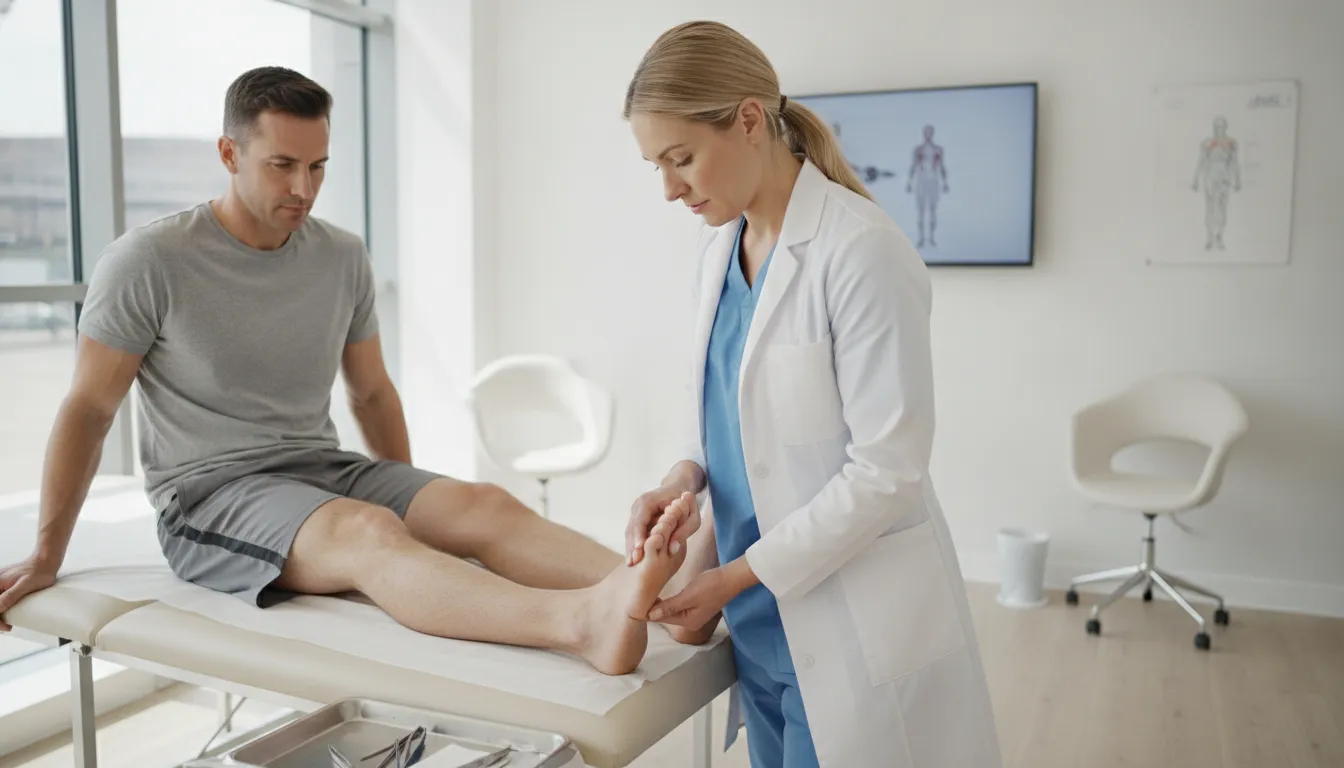

Persistent heel pain can make each morning step difficult, but it does not automatically mean the plantar fascia is permanently damaged. Because several conditions can resemble plantar fasciitis, an accurate podiatric evaluation should come before any treatment decision.
peptide therapy plantar fasciitis uses specialized amino acid chains to signal your body to speed up the healing of damaged foot tissues. This regenerative approach focuses on peptides like BPC-157, which have shown the potential to improve tendon health and biomechanical strength. According to research published in PubMed, specific pentadecapeptides can significantly improve the recovery of transected tendons by increasing the load of failure and elasticity. Unlike cortisone injections that merely reduce swelling, these targeted treatments reverse the growth-inhibiting effects of chronic inflammation on your cells to stimulate repair. By using these tools in a personalized plan, podiatrists help athletes overcome persistent foot pain without the need for traditional surgery or long hospital stays.
Patients often ask whether peptide-based care can support recovery after months of persistent symptoms. Understanding the emerging science, its limitations, and the importance of a careful podiatric evaluation can help you make an informed decision.
Peptide Therapy Plantar Fasciitis: What is peptide therapy for plantar fasciitis?
Plantar fasciitis is a common cause of heel pain that stems from small tears in the thick band of tissue on the bottom of your foot. When this tissue stays inflamed, it can lead to chronic pain that makes walking hard. Standard care often uses rest or ice, but peptide therapy offers a new way to help your body heal itself. This treatment uses small chains of amino acids to signal your cells to start the repair process.
The role of peptides in tissue repair
Peptides are short strings of amino acids that act as signals in the body. They tell your cells how to work and when to fix damage. For foot pain, peptide therapy plantar fasciitis often involves BPC-157. Preclinical research suggests this compound may support aspects of tendon repair, but human evidence remains limited. It works by boosting the growth of new blood vessels and collagen in the hurt area.
At our office, we use these tools as part of a full plan for regenerative podiatric care. Dr. Sutpal Singh looks at your exact injury to see if peptides are a good fit for you. We often combine this with other ways like Class IV laser therapy to get the best results. The goal is to reduce pain and help you get back to your active life in the northwest Chicago suburbs.
How BPC-157 helps your feet
BPC-157 stands for Body Protection Compound. It is a peptide found in the human stomach but can be used to help other parts of the body too. Studies show it may speed up the healing of tendons by helping cells move to the site of an injury. This is vital for the plantar fascia because it has a poor blood supply, which usually makes it slow to heal on its own.
While many people find relief with this care, it is key to know its limits. The FDA has not yet approved peptides for all uses, and they are often used as an off-label treatment. We stay open about what the science shows and what you can expect. This helps you make a smart choice about your care without any false hopes or vague claims.
What to expect during care
Starting peptide therapy is a simple process. First, you will meet with our team for a full exam of your foot and ankle. If we find that your tissue needs help to heal, we will talk about the best way to use peptides. You might use them as a simple shot near the painful area or as a cream you put on your skin. Most people find the process quick and easy to fit into their day.
We do not just give you a shot and send you home. We track your progress to see how your pain changes over time. Many patients see more gain when they use peptides along with stem cell therapy for plantar fasciitis. This multi-step path helps ensure your foot gets the support it needs to stay strong for years to come.
BPC-157 and Synapep: what patients should know
BPC-157 and Synapep are peptides discussed in regenerative medicine for their potential role in tissue-repair signaling. Evidence for BPC-157 is primarily preclinical, and peptide use may be off-label. A qualified clinician should explain the evidence, uncertainties, safety considerations, and alternatives before care.
Many patients in Hoffman Estates and Schaumburg ask about BPC-157 and Synapep when they have chronic pain. Peptides are amino-acid chains that can act as biological signals. At our clinic, we use regenerative podiatric medicine to help you get back to an active life. We focus on tools that work with your body’s natural ways to heal. This approach helps people in the northwest Chicago suburbs stay active without major surgery.
How peptides may influence tissue repair
BPC-157 is also known as Body Protection Compound 157. Researchers have studied this synthetic peptide primarily in laboratory and animal models. A study indexed by PubMed investigated its effects on tendon healing in rats. These early findings help explain scientific interest in BPC-157, but they do not establish that it safely or effectively treats plantar fasciitis in people.
Peptides can act as signaling molecules, but each compound has different properties and a different evidence base. A careful consultation should distinguish scientific hypotheses from proven clinical outcomes. This is especially important when a patient is comparing peptide therapy with established conservative treatments or other regenerative options.
Peptide therapy for plantar fasciitis
If you have heel pain that will not go away, you may want to look into peptide therapy for plantar fasciitis. Many patients come to our office looking for another choice to steroid shots or surgery. Old methods like rest, ice, and stretching can help for a short time. But they may not fix the deep tissue damage that causes chronic pain. Peptides like BPC-157 aim to restart the healing process in the foot tissue.
If considered appropriate after an evaluation, peptide therapy may be discussed as one part of a broader plan that can include tools such as Class IV laser therapy. No treatment is right for every patient, and outcomes vary. The goal is to select a responsible, minimally invasive approach that supports comfortable movement and a gradual return to activity.
What to expect from a meeting
Synapep and BPC-157 are part of a growing set of healing tools. It is key to know that these treatments are still in the early stages of study. While early results are good, they do not come with a promise of a cure. Each patient responds in their own way to therapy. This is why a personal meeting with Dr. Singh is the first step. We offer a concierge model of care with no double-booking and short wait times.
During your visit, we will talk about all your options for foot and ankle care. We will look at the risks and benefits of each choice. You will get direct care from a doctor who listens to your needs. We want to find the best plan to help you move freely and enjoy life. At the Comprehensive Foot and Ankle Institute, we know that life is motion and motion is life.
How peptide therapy compares with other plantar fasciitis treatments
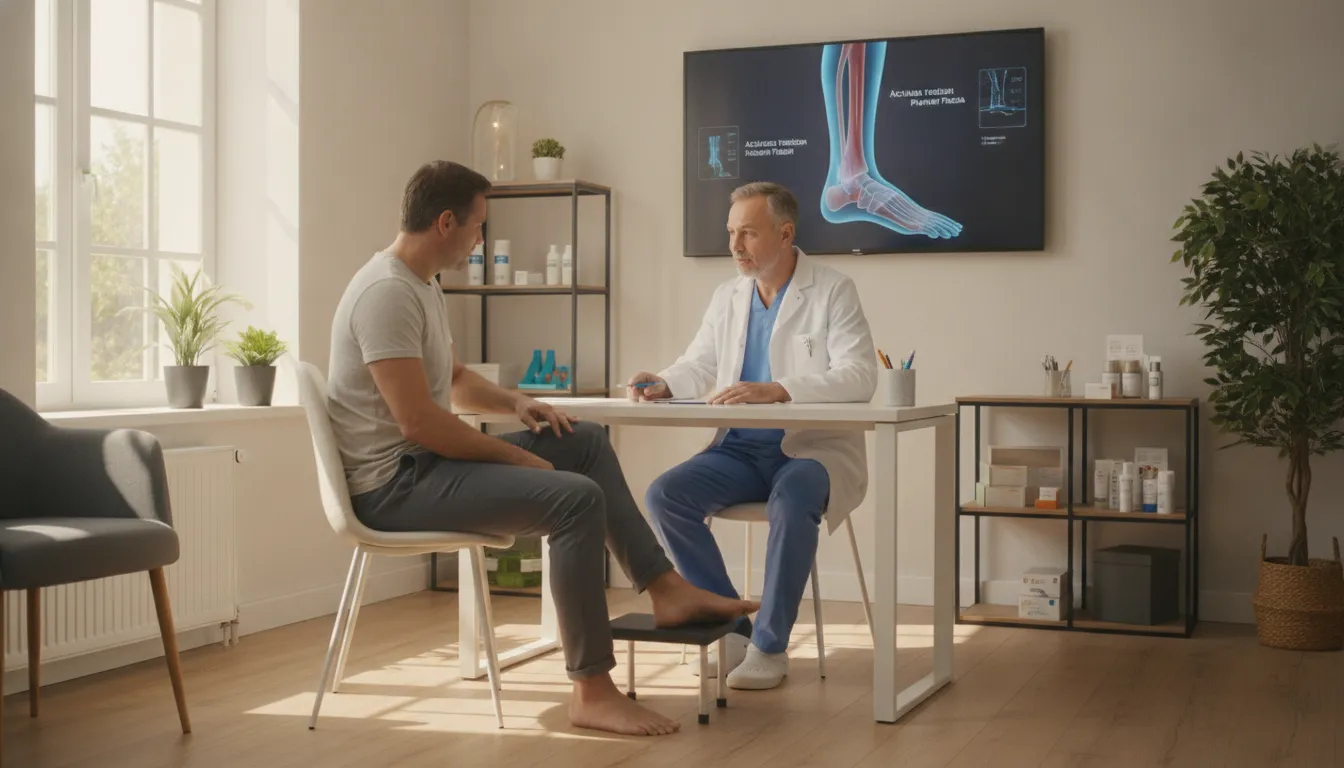
Peptide therapy differs from established plantar fasciitis treatments because it is an investigational, consultation-based regenerative option with limited human evidence. Stretching, load management, orthotics, physical therapy, Class IV laser therapy, and shock wave therapy may also be considered according to the diagnosis, symptoms, and patient goals.
Most people start with rest, ice, and stretching when they feel heel pain. These steps are fine at first, but they may not be enough for everyone. Many patients use foot inserts or get cortisone shots to dull the pain. These methods can help for a short time. But they often fail to fix the deep tissue damage that causes heel pain. They do not help the body heal itself. This is why many people find their pain comes back after a few weeks.
In our office, we look for better ways to help you move. We offer advanced regenerative podiatric medicine to find the root cause of your pain. Our goal is to fix the damage, not just hide the signs. This approach helps you get back to your active life sooner. We focus on long-term health rather than just a quick fix. You deserve a plan that works as hard as you do.
Common care vs active repair
Conservative care often starts with activity modification, stretching, supportive footwear, orthotics, or a night splint. Depending on the diagnosis, these measures can reduce strain and create better conditions for recovery. Injections and regenerative treatments require a separate discussion of potential benefits, limitations, and risks.
Peptide therapy for plantar fasciitis is sometimes discussed as a regenerative option, but it is not automatically better than established care. Research on compounds such as BPC-157 remains limited, particularly in humans. A podiatrist can help determine whether any regenerative option belongs in a responsible plan for your specific condition.
Comparing advanced options
Modern tools give us several ways to address foot pain. Some patients may be candidates for shockwave therapy. Others may discuss Class IV laser therapy as part of a broader plan. Suitability, expected recovery, and potential risks vary by patient and treatment.
There is also stem cell therapy for plantar fasciitis. Peptides are short chains of amino acids that can act as biological signals. However, promising mechanisms or early research do not guarantee a clinical benefit. These options require individualized evaluation and informed consent.
The role of peptide therapy in recovery
BPC-157 is one compound patients may encounter while researching regenerative care. A tendon-healing study in rats has contributed to interest in the peptide. Human evidence for plantar fasciitis remains limited, so the study should not be interpreted as proof of effectiveness or safety for an individual patient.
If peptide therapy is discussed, it should fit into a complete plan that addresses loading, movement, footwear, and recovery goals. Our concierge model gives you time to ask questions and understand your options. The objective is a plan made for your needs, not a one-size-fits-all promise.
| Treatment Type | Primary Goal | Recovery Time | Long-term Effect |
|---|---|---|---|
| Cortisone Shots | Stop pain and swelling | Very fast | Often short-term |
| Orthotics | Support the foot arch | No downtime | Only while worn |
| Laser Therapy | Reduce swelling | No downtime | Varies by case |
| Peptide Therapy | Investigational regenerative signaling | Minimal | Human evidence is limited |
| Stem Cell Therapy | Regenerative treatment option | Short | Varies by patient |
What happens during a regenerative podiatry evaluation?
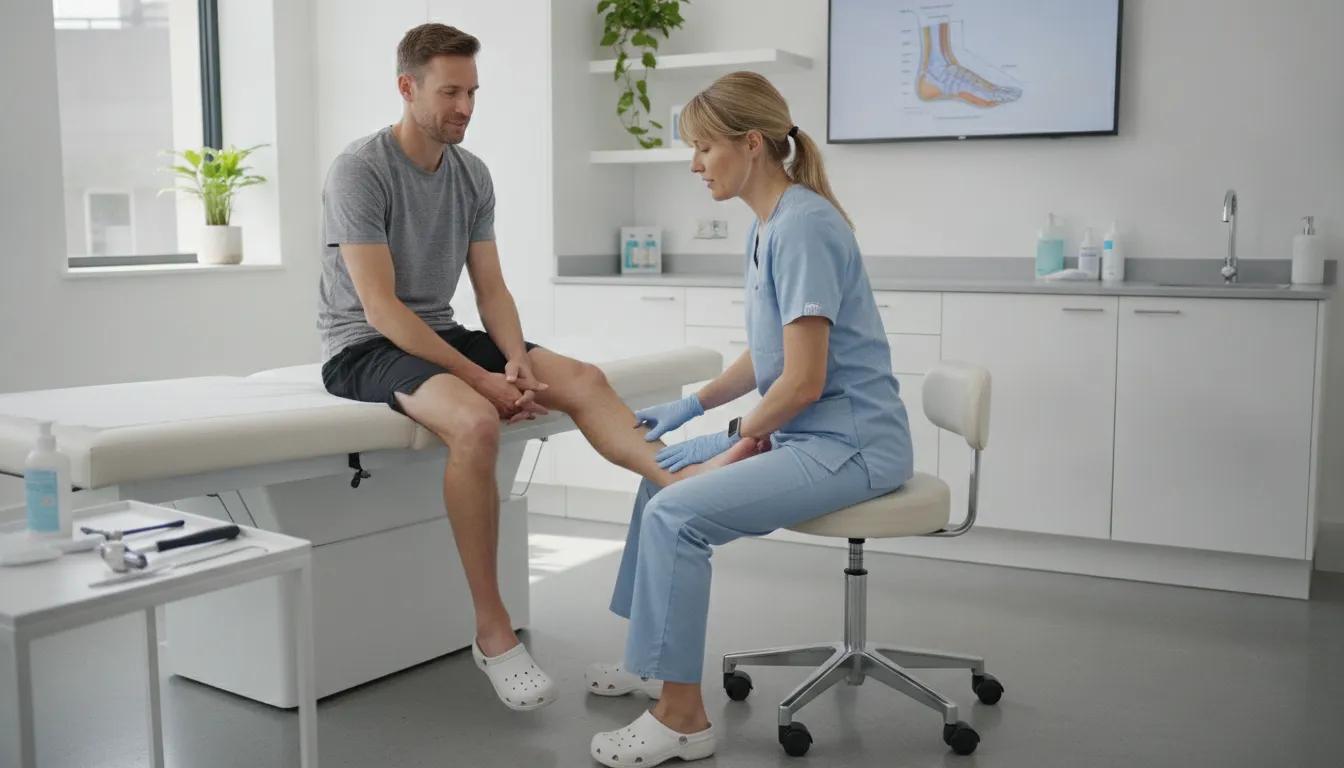
A regenerative podiatry evaluation reviews the location and pattern of heel pain, activity demands, prior treatments, footwear, mobility, and contributing biomechanics. Dr. Sutpal Singh then discusses appropriate options, realistic expectations, available evidence, and whether additional testing is needed before recommending a personalized plan.
At the Comprehensive Foot and Ankle Institute, we believe your care should be as unique as you are. A full check of your health is the base of any good plan. Our custom model means you will not feel like a number in a busy clinic. Instead, you get direct time with Dr. Sutpal Singh. This one-on-one time helps us hear your story and learn about your goals. We focus on getting you back to an active life. Since life is motion and motion is life, we want to help you move without pain.
Finding the true cause of pain
Heel pain can come from many spots. While many people think they have a simple strain, the cause may be more complex. We work hard to find issues that look like plantar fasciitis. These can include nerve traps, bone spurs, or tiny cracks in the bone. If we do not find the right cause, the care may not work. By being thorough, we make sure your plan hits the mark. We use our deep skill to look at every part of your foot and ankle.
Looking at how you move
How your foot hits the ground changes how your body heals. During your visit, we look at how you walk and stand. We want to see how your weight moves across your foot. If there is too much load on one spot, it can cause tissue harm over time. This info helps us find the root of the problem. We look for ways to take stress off the fascia while we help it heal. This step is key for long-term relief and to stop the pain from coming back.
Making a custom healing path
Once we have the full picture, we build a plan just for you. We may use tools like ultrasound to see the soft tissue in real time. This helps us see the thickness of the fascia and any signs of harm. We then talk about new tools such as stem cell therapy for plantar fasciitis. We also talk about peptide therapy plantar fasciitis treatments. Peptides like BPC-157 can help the body fix tendons and ligaments faster. These options offer a way to heal without the need for old surgery or long downtime.
- First, you will meet with Dr. Singh to go over your health history and past care.
- Next, we check how you walk to see how your feet handle weight.
- The doctor will check your foot for pain, swelling, and how well it moves.
- We may use an ultrasound or X-ray to get a clear look at the bones and tissue.
- Our team works to rule out other issues like nerve harm or stress cracks.
- We explain your results and talk about how new tools can help your body heal.
- Finally, we set up a plan that fits your needs and helps you reach your goals.
Who may consider peptide therapy for heel pain?
Someone with a confirmed plantar fasciitis diagnosis and persistent symptoms despite an appropriate conservative-care plan may ask about peptide therapy. Candidacy depends on medical history, activity goals, examination findings, prior care, and a discussion of the limited human evidence and off-label status.
Chronic heel pain can stop you in your tracks and make simple tasks hard. For many, typical care like rest, ice, and stretching does not give enough relief. If you have dealt with pain for months without a change, you may be a candidate for peptide therapy for plantar fasciitis. This advanced care is for people who want to keep moving but want to avoid surgery. It uses certain compounds to help the body repair itself from the inside out.
Ideal candidates for regenerative care
Runners and active people often face the most risk for foot injuries. Research shows that about 10 percent of runners deal with heel pain at some point in their life. If you are an athlete, you need a plan that helps you get back to your sport fast. Peptide therapy aims to speed up the repair of damaged tissue in the foot. It works to fix the root cause of the pain rather than just hiding the signs.
This care is also a good fit for people who have tried other ways to heal. Some of our patients have used walking boots or had steroid shots with no luck. Since plantar fasciitis involves real tissue damage, simple rest might not fix the problem. People looking for a new path to relief often choose regenerative podiatric medicine. This field focuses on helping your body grow new, healthy cells.
Safety and real outcomes
Safety is a top concern for every patient we see. Peptides like BPC-157 have been studied for their ability to help heal tendons and ligaments. A study in the National Library of Medicine shows how these compounds can improve tissue repair in lab models. While results can vary from person to person, the goal is to help your body heal. We use these tools to support your body’s own healing work.
You should have real goals for your care and your healing. Peptide therapy is not a magic fix or a sure cure for every case. It is a tool used to help the repair process along. Most patients find that it works best as part of a full health plan. Dr. Singh will check your foot and your health past to see if this treatment fits your needs. We want to make sure you have the best chance for success.
The value of medical oversight
You should never try to use peptides on your own or buy them online. It is vital to work with a doctor who knows foot health and knows how these tools work. At our office, we follow a concierge model of care. This means you get personal time with the doctor and a plan made just for you. We do not double-book our patients. You will never feel like a “pack of cattle” when you visit us.
You will also need to talk about costs and how to pay for your care. Many regenerative treatments are self-pay and are not covered by most insurance plans. A visit is the first step to find out what is right for your foot. We aim to give you the best care so you can get back to your active life in the suburbs. Remember, life is motion and motion is life. We are here to help you move again.

Building a complete tendon and foot recovery plan
A good recovery plan for foot pain must fit your specific needs. It is not enough to just rest or ice the area. True healing comes from a mix of modern medicine and daily care. Our doctor-led method makes sure you get the right care at the right time. Our goal is to help you move without pain. Life is motion and motion is life. This focus on your life is why we build plans for each person. We want to see you back on your feet and active again.
Better tools for tissue repair
Many people find that traditional methods may provide only short-term help. These plans often fail to fix the real cause of the pain. Modern care uses tools that help your body fix itself. One key option is regenerative therapies for tendon recovery. These methods aim to speed up the repair of worn tissue. They can be a great choice for those who want to avoid surgery. When clinically appropriate, peptide therapy for plantar fasciitis may be discussed as one consultation-based option within this plan. This helps to start the natural repair process in your feet. A peptide called BPC-157 is a main tool in our work. This peptide contains 15 amino acids and is being studied for potential tissue-repair signaling. Preclinical BPC-157 tendon research suggests potential repair effects, although human evidence is limited. It may be considered alongside other options such as laser therapy.
Support and loading steps
Using the right shoes and support is also a must. Proper orthotics can help to take the stress off your feet. This support helps your tendons rest while they heal. It is a vital part of keeping you moving. Rest is only one part of the plan. You also need to load your tendons in a safe way. This means doing easy moves that get harder over time. Loading the tissue helps it get strong again so it can handle your tasks. Each plan is unique to the patient. We do not use the same plan for every person. Instead, we look at how you walk and move. We then find the best support for your specific foot shape.
Safe paths back to motion
Going back to your active life should be done with care. We give you a clear guide on how to start moving again. You should not jump back into hard runs too fast. We help you find the right pace for your needs. This guide helps to keep you safe from new injuries. It also makes sure your healing stays on track for the long term. Our team looks at your progress in each step. We check how your feet feel and how well you move. By following a full plan, you can reach your goals. We want you to enjoy your life without foot pain. Stay in motion and keep your body strong with the right care.
Ready for an individualized plan? Request an appointment at our Hoffman Estates office.
Frequently Asked Questions
Which peptides are discussed for plantar fasciitis?
BPC-157 and Synapep may be discussed during a regenerative podiatry consultation. However, human evidence for peptide therapy in plantar fasciitis remains limited, and use may be off-label. A personalized evaluation is necessary to review potential benefits, uncertainties, safety considerations, and established alternatives.
How might BPC-157 affect foot tendons?
Laboratory and animal research suggests BPC-157 may influence blood-vessel formation, collagen organization, and other tissue-repair processes. A preclinical tendon study indexed by PubMed reported biomechanical changes during healing. These findings do not prove effectiveness or safety for plantar fasciitis in people, so medical oversight and an evidence-informed discussion are essential.
Why can plantar fasciitis treatments fall short?
Persistent symptoms may reflect continued overload, limited ankle mobility, footwear, activity demands, incomplete rehabilitation, or a different source of heel pain. Treatments such as orthotics, stretching, and activity changes can be useful when matched to the diagnosis. If pain continues, a podiatric reassessment can identify contributing factors and guide the next step.
Are there non-surgical options for plantar fasciitis relief?
Yes. Depending on the diagnosis, options may include activity changes, stretching, orthotics, physical therapy, Class IV laser therapy, shock wave therapy, and consultation-based regenerative approaches. The right combination depends on your symptoms, examination findings, goals, and response to prior care.
Ready to start your foot and ankle recovery today?
Waiting to treat a foot or ankle injury often leads to more pain and a much longer path to healing. Small tears or swelling can get worse over time if you do not act, which makes it harder for you to stay active. By starting a custom plan now, you can help your body repair itself and get back on your feet much faster than before. Dr. Singh offers regenerative services to help you find relief without the need for usual surgery or harsh drugs. Each day you wait is another day you are not moving at your best, so take the first step today for a quick return.
Ready to request an appointment? Call +1 (331) 444-6569 to book your visit and speak with our team.