



An ankle that keeps giving way is not simply an ankle that needs another wrap and a few days of rest. Repeated sprains can leave the supporting ligaments stretched or damaged, while weakness in the peroneal muscles reduces the ankle’s ability to respond when your footing changes.
Chronic ankle instability treatment may include functional rehabilitation to rebuild strength and coordination, regenerative options such as laser or SoftWave therapy, and, when appropriate, minimally invasive ligament repair. The right plan depends on the extent of ligament damage, symptoms, activity goals, and how the ankle responds to conservative care.
Schedule an evaluation with a foot and ankle specialist if your ankle repeatedly buckles or remains painful after a sprain. Early assessment helps match the problem to an effective chronic ankle instability treatment plan before the pattern becomes harder to reverse.
Chronic Ankle Instability Treatment: What Is Chronic Ankle Instability?
An acute ankle sprain is a single injury where one or more ligaments are stretched or torn. With proper care, most people regain stability. Chronic ankle instability (CAI) is different. The outer side of the ankle repeatedly gives way, often after multiple sprains. In fact, about 10% of people who sprain an ankle develop ongoing instability, according to the Hospital for Special Surgery.
CAI commonly involves the lateral ankle ligament complex, especially the anterior talofibular (ATFL) and calcaneofibular (CFL) ligaments. The American College of Foot and Ankle Surgeons describes the recurring sense of giving way on the outside of the ankle as the defining feature of chronic instability.
Why Do Some Ankle Sprains Become Chronic?
An ankle sprain becomes a recurring problem when the original injury changes how the joint is supported. Ligaments on the outside may heal in a lengthened position, providing less restraint when the foot rolls outward. Peroneal muscle weakness also plays a role.
- Ligament elongation: Stretched ATFL or CFL ligaments may not hold the ankle tightly, allowing repeated giving way.
- Peroneal weakness: Reduced strength and coordination in the muscles that dynamically stabilize the ankle during movement.
- Incomplete rehabilitation: Returning to activity before the ankle has regained coordination and strength increases the risk of re-injury.
Without complete rehabilitation, the pattern reinforces itself. An unstable ankle rolls again, causing additional tissue irritation. Over time, both ligament damage and peroneal weakness can make ordinary activities more difficult. Research identifies both structures as major contributors to ankle stability, so effective evaluation should consider both (NCBI reference). Learn more about the connection between these structures and peroneal tendon weakness.
When Should You See a Podiatrist?
Schedule an evaluation when your ankle repeatedly gives way, remains painful after a sprain, or feels loose during ordinary activities. Trouble walking on uneven ground, avoiding stairs, or losing confidence during sports are also important warning signs. Patients who play basketball, soccer, or tennis are at higher risk because sudden stops and directional changes place repeated stress on the ankle stabilizers.
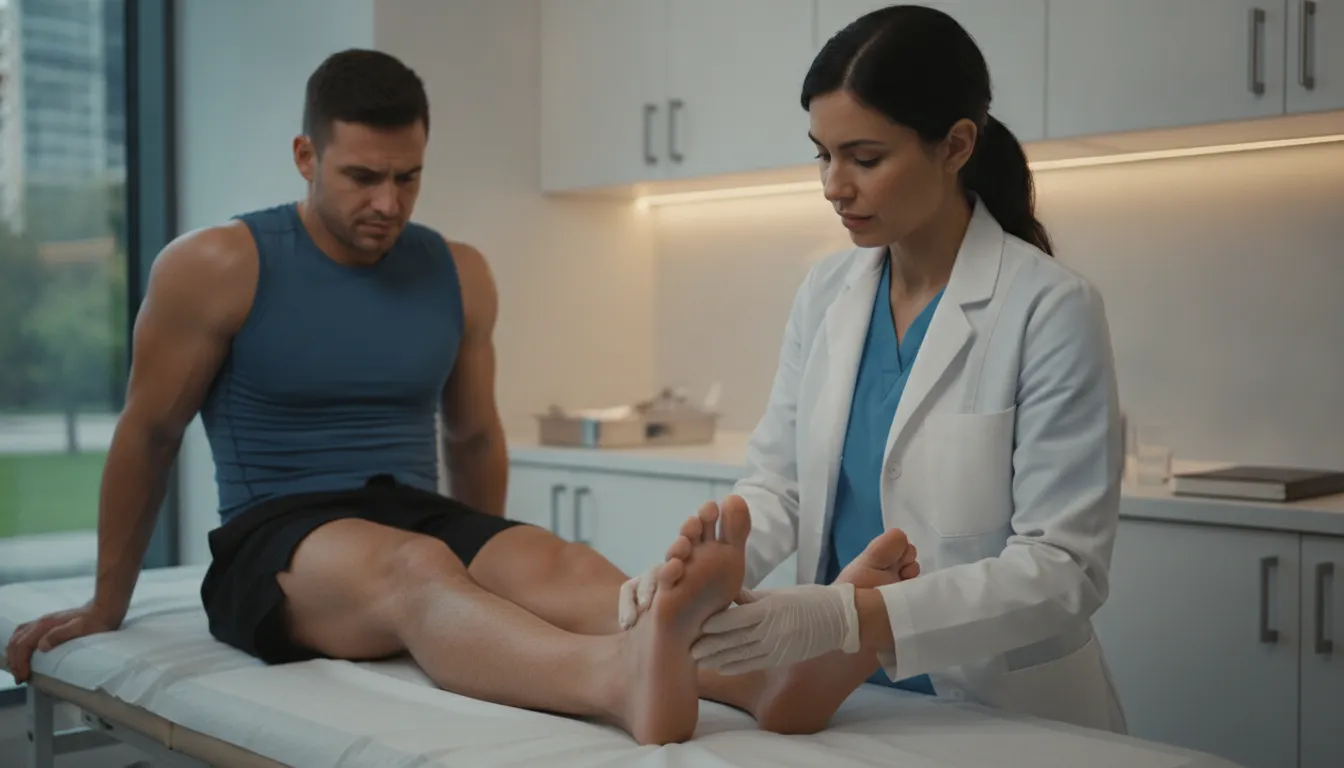
During an evaluation, the doctor takes a detailed history and examines tenderness, range of motion, balance, ligament stability, and muscle strength. X-rays may assess bone alignment, and an MRI can examine ligaments, tendons, or cartilage more closely. The practice serves patients from Schaumburg, Palatine, Rolling Meadows, and surrounding northwest Chicago suburbs who want advanced podiatric care. Contact the office to discuss your symptoms.
Conservative and Regenerative Treatment Options
Effective care usually begins by restoring how the ankle controls movement. Functional rehabilitation strengthens the calf, peroneal muscles, and ankle stabilizers while balance exercises improve coordination. A clinician adjusts exercise difficulty as stability improves, challenging the ankle without provoking the giving-way episodes.
For patients who need additional support, Comprehensive Foot and Ankle Institute offers regenerative options:
- Class IV laser therapy supports tissue recovery and can help with ligament healing. See laser therapy for ankle instability.
- SoftWave or shockwave therapy provides another non-surgical option. Learn more about shockwave therapy for ankle instability.
- BPC-157 peptides and stem cell injections may be discussed depending on the clinical picture. Read about peptide therapy for ligament repair.
Comparison of Treatment Approaches
| Approach | How It Works | Best For | Recovery |
|---|---|---|---|
| Functional Rehabilitation | Strength, balance, and coordination exercises targeting peroneal muscles and stabilizers. | Mild to moderate instability. Patients who want to avoid procedures. | Weeks to months. Depends on home exercise compliance. |
| Regenerative Therapy (Laser, SoftWave, Peptides) | Non-invasive energy or biologic agents that support tissue healing. | Patients needing extra support beyond rehab. Ligament healing without incisions. | Minimal downtime. Multiple sessions over several weeks. |
| Minimally Invasive Ligament Repair | Precise instruments through a small “poke hole.” No screws or plates used. | Advanced instability or failed conservative care. Active patients wanting faster recovery. | In-office local anesthesia. Immediate walking possible. |
Minimally Invasive Repair for Chronic Ankle Instability
When an ankle continues to give way despite structured rehabilitation and conservative care, surgical stabilization may be considered. At Comprehensive Foot and Ankle Institute, Dr. Sutpal Singh may recommend a minimally invasive ligament repair using precise instruments through a small “poke hole” rather than the larger incision of conventional open reconstruction. The procedure avoids screws, plates, or internal hardware and is performed in the office with local anesthesia. Immediate walking may be possible when clinically appropriate.
This approach can be especially relevant for active patients who want to preserve mobility while addressing instability. Dr. Singh brings more than 30 years of physician experience to complex foot and ankle care, serving Hoffman Estates, Schaumburg, Arlington Heights, and the northwest Chicago suburbs. Learn more from the NCBI reference on surgical options.
Frequently Asked Questions
Can chronic ankle instability be fixed?
Many people improve with a plan matched to the cause of their instability. Care may include rehabilitation, regenerative options, and, when needed, minimally invasive ligament repair. Surgery can be effective when conservative measures are insufficient, but the right choice depends on a full examination and imaging.
How do you strengthen ankle ligaments?
Exercises cannot directly tighten a stretched ligament, but they improve the strength and coordination of the muscles that stabilize the ankle. A rehabilitation plan targets the peroneal muscles, balance, and joint control. Have a podiatrist evaluate you before starting demanding exercises.
What happens if you ignore chronic ankle instability?
Repeated giving way can keep the ankle in a cycle of reinjury. Ongoing pain, loss of confidence during movement, and difficulty with sports or daily activities may follow. An evaluation can clarify whether the problem is ligamentous, muscular, or both and guide appropriate treatment.
Ready to Address Chronic Ankle Instability?
If repeated sprains or a feeling of giving way are limiting your movement, an evaluation can help clarify which treatment options fit your goals. Schedule a consultation for chronic ankle instability treatment with Comprehensive Foot and Ankle Institute. Contact us online or call (847) 310-1600 to take the next step.