



Achilles tendon pain can stop an active life in a single afternoon. This stubborn injury often resists standard care and leaves patients searching for real relief. Dr. Sutpal Singh offers BPC-157 peptide therapy as a regenerative tool for recovery.
BPC-157 Achilles tendon therapy is an emerging regenerative treatment that uses a synthetic peptide to support the body’s natural healing ways in damaged tissue. At our practice in Hoffman Estates, we offer medical-grade peptides as a choice instead of cortisone shots; these standard injections can often weaken the tendon. While research is still new and this use is not FDA-approved, a 2026 systematic review suggests it may help fix fibers and improve blood flow. Dr. Sutpal Singh puts these peptides into a custom concierge care plan; this helps athletes in the northwest Chicago suburbs recover without needing invasive surgery. This path matches our core belief that life is motion and motion is life, ensuring that every patient gets the focused care they truly need.
Patients often ask how these new peptides interact with human tissue, and understanding the science behind this treatment is the first step toward a good recovery.
Bpc-157 Achilles Tendon: What Is BPC-157 and How Does It Help the Achilles Tendon?
BPC-157 stands for Body Protection Compound 157. It is a man-made peptide with 15 amino acids. This compound comes from a protein found in human gastric juice. In our clinic, we use medical-grade peptides as part of our certified regenerative podiatric medicine program. This therapy helps the body heal by targeting the root of the injury.
A boost for blood flow
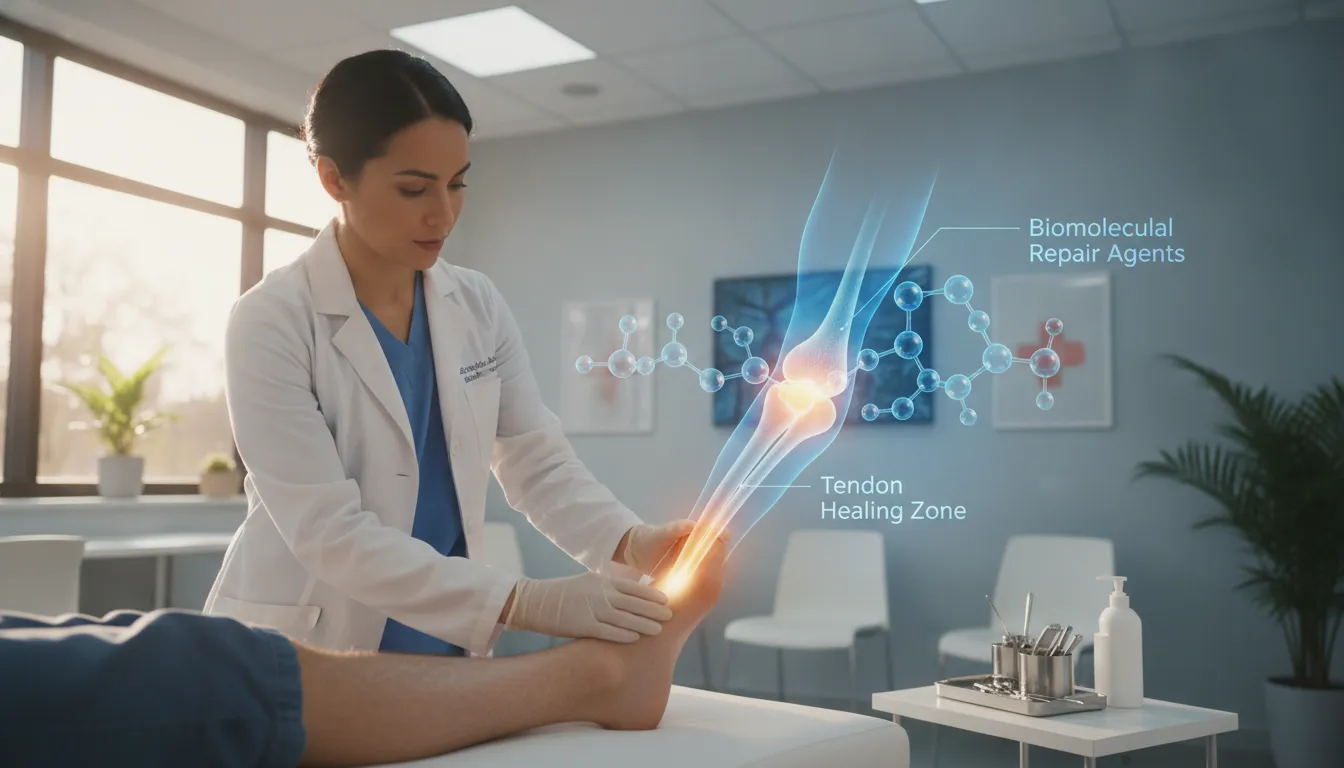
The Achilles tendon is the strongest tendon in your body. But it has a major weakness. A small area about two to six centimeters above the heel bone has very low blood flow. This “watershed zone” is where most tears and pain happen. Because blood brings the tools needed for repair, this low-flow zone heals very slowly on its own.
Research shows that BPC-157 helps grow new blood vessels. This process is called angiogenesis. According to study data, the peptide increases the expression of VEGFR2, a protein that triggers new vessel growth. By bringing more blood to the watershed zone, BPC-157 gives the tendon the resources it needs to mend faster. This is a key part of the regenerative treatments for Achilles injuries we offer in Hoffman Estates.
Building stronger tendon tissue
BPC-157 does more than just fix blood flow. It also talks to the cells that build your tendons. These cells are called tenocytes. The peptide helps these cells grow and move to the site of the injury. It also turns on a factor called Egr-1. This factor tells the body to make more collagen and organize the tissue correctly.
A 2006 study in the Journal of Orthopaedic Research showed that BPC-157 improved how tendons attach to bone. It also helped protect the tissue from the bad effects of steroid shots. At our practice, we focus on these natural paths to healing. Dr. Sutpal Singh uses these tools to help patients get back to an active life without the risks of surgery or steroid use.
The Science Behind BPC-157 for Tendon Healing
The healing process for a damaged tendon is often slow and prone to scar tissue. BPC-157 helps bypass these issues by working at a deep cell level. This peptide is unique because it starts specific growth factors that the body uses to repair tough tissue. For people in the northwest Chicago suburbs, these details show why medical grade peptide therapy at our practice has become a key tool for foot health.
How it works at the cell level
BPC-157 helps repair the body by boosting a specific growth factor called VEGFR2. This protein helps the body grow new blood vessels in the tendon. The Achilles tendon has a zone with very low blood flow, which often makes healing hard. By increasing blood supply, the peptide brings needed oxygen and nutrients to the site of the injury. A 2026 review in Pharmaceuticals showed that this protection works even without extra carriers or scaffolds.
The peptide also turns on a gene called Egr-1. This gene is a master switch that tells the body to build more collagen. Collagen is the main building block of a strong tendon. This process helps the new tissue organize itself correctly so the tendon can handle weight again. These regenerative treatments for Achilles tendon injuries help the body heal from the inside out.
Improving tendon movement and strength
Old injuries often lead to stiff scar tissue that limits movement. BPC-157 helps manage the nitric oxide pathway in the body. This pathway helps relax blood vessels and lowers swelling. By keeping inflammation in check, the peptide helps reduce the risk of the tendon sticking to other tissues. These bonds are a common cause of pain and stiffness after a major injury or surgery.
Research also shows that the peptide helps tenocytes grow and move. Tenocytes are the cells that live inside your tendons. When these cells work better, the tendon can repair itself more quickly. Studies on the BPC-157 Achilles tendon connection show that both local and systemic use can work well. Local care often leads to faster tissue growth, which helps the tendon regain its full strength soon.
BPC-157 vs. Conventional Achilles Tendon Treatments
When you have Achilles pain, you want a plan that works. Most people start with rest and ice. If the pain stays, doctors often suggest exercise or shots. Common care focuses on easing pain. But new methods aim to help the tissue fix itself. It is vital to know how these paths differ in terms of proof and safety.
How basic care and therapy compare
Most experts suggest physical therapy first. One method uses calf raises to load the tendon. This path has strong proof of helping people get back to sports. Other tools like shockwave therapy use sound waves to start the healing process. These are safe and help many people. But they can take a long time to show results. For patients seeking faster recovery, our regenerative peptide therapies at our practice offer a different path. At our clinic, we often combine these with certified regenerative podiatric medicine to help you heal faster.
Risks of steroid shots and surgery
We do not use steroid shots for the Achilles. While they can stop pain fast, they may also weaken the tendon. Research shows these shots can raise the risk of a full Achilles tendon rupture. If the tendon tears, surgery is often the last path. This path needs months of rest and hard work. We aim to offer other paths like BPC-157 to avoid these risks when we can.
| Treatment | Evidence Level | Mechanism | Key Advantage | Key Disadvantage |
|---|---|---|---|---|
| Calf Exercise | Strong | Tendon Loading | Low cost, safe | Slow progress |
| PRP Shots | Moderate | Growth Factors | Natural healing | Many visits |
| Shockwave | Moderate | Sound Pulses | No needles | Local soreness |
| Steroid Shots | High Risk | Lower Swelling | Fast pain relief | Rupture risk |
| Surgery | Variable | Direct Repair | Fixes tears | Long recovery |
| BPC-157 | Preclinical | Blood Vessel Growth | Faster healing | WADA banned |
The role of peptide therapy
BPC-157 is not like standard care. It is a peptide that may help grow new blood vessels in the tendon. This is key because the Achilles has poor blood flow. While animal tests show great promise, it is not yet FDA-approved for human use. We offer regenerative treatments for Achilles tendon injuries for patients who need more help. Athletes should know that BPC-157 is on the WADA banned list.
What Does BPC-157 Treatment Involve at Our Practice?
At the Comprehensive Foot and Ankle Institute, we focus on you. Dr. Sutpal Singh uses his 30 years of skill to guide your care. We know that every injury is unique. Our concierge model means you get a one-on-one visit without any rush. We never double-book our patients because we value your time. Your visit starts with a full check of your foot and ankle.
A Full Look at Your Foot Health
Your first step is to meet with Dr. Singh in Hoffman Estates. He will discuss our comprehensive regenerative medicine program and your regenerative treatments for Achilles injuries options. This starts with a body check. He might use tools to see inside the tendon. This helps him find the exact spot of the pain. He checks the watershed zone of the Achilles. This area has low blood flow and needs extra help to heal.
Research shows that BPC-157 can help cells in the tendon grow and move. A study in the Journal of Orthopaedic Research found that this peptide helps tendons join back to the bone. This is key for people with chronic pain or tears. We use medical-grade peptides that are safe and pure. We do not use research chemicals from the web. Our peptides come from trusted labs to keep you safe.
The Treatment Steps
Dr. Singh is certified in regenerative podiatric medicine and leads your care. He creates a plan that may use one or more of our seven tools. These include Class IV laser and SoftWave therapy. We find that mixing tools often gets the best results.
- First Meeting. You talk with Dr. Singh about your past health and current goals. He checks your pain level and how well you can move. This is where he decides if BPC-157 is a good fit for you.
- Treatment Map. We build a path for your healing. This map shows which therapies we will use. We might use red light therapy or stem cells along with the peptide.
- In-Office Care. We give the BPC-157 right here in our office. The process is quick and done in a clean room. We use local anesthesia to make sure you feel no pain. This means you are awake but do not feel the needle or the work. You do not need to stay in a hospital.
- Recovery Cycle. Most patients need a set of sessions over a few weeks. A typical course might be five to ten visits. We check your progress at each visit to see how your tendon reacts. We want to see your tendon get stronger and your pain go down slowly. Dr. Singh monitors your healing at every turn.
- Home Care Rules. You will get a list of things to do at home. This includes how much you can walk and what stretches to do. We want you to stay active but safe. Our goal is to help you heal without a long stop in your life.
- Final Checks. We watch your Achilles tendon as you return to your normal life. Our goal is to get you back to the sports you love. We check the tendon one last time to make sure it is ready for more action.
Insurance and Costs
Most insurance plans do not pay for peptide care now. We are open about our costs and will talk about them with you. You will need a visit to get an exact price for your care. We think that your health and how you move are worth the cost. “Life is Motion and Motion is Life” is the core of our work.
Who Is a Candidate for BPC-157 Peptide Therapy?
Achilles tendon issues are common among active people. Many elite runners and athletes deal with pain that limits how they move. Research shows that regenerative treatments for Achilles tendon injuries may help those who have not found relief. BPC-157 peptide therapy is a new choice for people who want to avoid surgery. It can also help when basic care has not worked. Dr. Singh uses his skills to help patients in Hoffman Estates get back to the life they love. We focus on healing the root cause of your pain.
Athletes and Active Individuals
People who put high stress on their feet and ankles often face tendon damage. This is true for pro athletes and those who play sports for fun. When old methods like rest and stretching fail, peptides may offer a new path. Some studies show that BPC-157 can help tissues heal by helping tendon-to-bone healing. This is vital for keeping the strength needed for running and jumping. However, pro athletes must know that BPC-157 is now on the WADA banned list. We check each case to ensure our care fits your goals and all rules for your sport.
Chronic Tendinopathy and Failed Care
If you have tried physical therapy, calf raises, or PRP shots without luck, you might be a candidate. Many patients come to us after these standard steps fail to stop their pain. BPC-157 is often used for chronic pain where the body cannot fix the damaged fibers on its own. Dr. Singh looks at each case to see if medical-grade peptides can help restart the healing process. This care is part of our certified regenerative podiatric medicine program. We aim to help you move without pain and stay active for a long time. Our concierge model means you get the time and focus you need.
Post-Surgical Support and Alternatives
Peptide therapy can also support patients as they heal from Achilles surgery. It may help tissues mend faster and lower the chance of new tears. Some people choose this path because they cannot take NSAIDs or want to avoid steroid shots. Steroids can sometimes weaken the tendon over time. This makes a rupture more likely in the future. We look at your health history to see if this choice is right for you. BPC-157 is not FDA-approved for medical use now. While there have been trials for other issues, no large human tests have finished for the Achilles tendon. All plans are discussed during a private meeting at our office.
Who Should Avoid This Therapy?
While many people benefit from peptides, they are not for everyone. Women who are pregnant or nursing should not use BPC-157. People with active infections or a history of cancer must also be careful. Some research shows that BPC-157 might help new blood vessels grow. This could be a risk for certain health issues. We put your safety first and will only suggest therapy if it is safe for you. Our team serves Hoffman Estates and the northwest Chicago suburbs with a focus on your well-being. We believe that life is motion and motion is life.
Is BPC-157 Safe? Understanding the Evidence
Safety is the first concern for any patient seeking new ways to heal. When you look at BPC-157 for an Achilles injury, you must look at the facts. This peptide shows promise in labs, but human data is still thin. Our team focus on safe, medical-grade care led by an expert doctor.
Current Status and Human Studies
As of 2026, there are no finished human trials for BPC-157. Most of what we know comes from animal tests. These tests show the peptide is safe for most use. But the lack of human trials means it is not yet FDA-approved for medical use. In the United States, it is still a research chemical.
For athletes, there is one more key rule. The World Anti-Doping Agency (WADA) has banned BPC-157. If you play sports that follow these rules, you cannot use this peptide. For others, it is a helpful tool when you have the right medical help and a clear plan.
Sourcing and Medical Care
Where you get your peptides is just as vital as the dose. Many people try to buy these online from shops that sell “research chemicals.” These shops often lack strict tests for purity. Using these products on your own can lead to a high risk of infection. You need a clean, safe source to avoid harm.
Our office uses only medical-grade peptides. We get them from trusted labs to ensure they are pure. Dr. Singh leads every part of your care. He makes sure the peptide works with your certified regenerative podiatric medicine plan. This care helps lower risks and aids your path to recovery.
Known Risks and Side Effects
Most data shows that BPC-157 has a low risk of side effects. In animal models, it appears to be safe at many doses. Some people may have small issues like skin redness or pain at the site. Since human data is still new, we watch every patient for any signs of a bad reaction.
Some doctors take a very cautious view of new tools. They may suggest older paths first. We offer a balanced view. While we use proven regenerative treatments for Achilles injuries, peptides can be a strong addition. They work best as part of a full plan made for your health needs.
Frequently Asked Questions
How long does it take for BPC-157 to work for an Achilles injury?
In animal studies, BPC-157 showed faster tendon healing within the first four weeks. Research showed better collagen growth and more strength during this time. At our practice, the time to see results depends on the person. Dr. Sutpal Singh creates a custom plan for your specific needs. He checks your progress often to make sure the treatment is helping you get back to your active lifestyle.
Does insurance cover BPC-157 peptide therapy?
Most insurance companies do not cover BPC-157 or other peptide therapies at this time. This is because the FDA has not approved it for medical use yet. At Comprehensive Foot and Ankle Institute, we offer these services as part of our private regenerative care. We will talk about the cost with you during your first visit. Our team can help you understand the total price before you start any treatment plan.
What is the difference between BPC-157 and PRP for tendons?
Platelet-rich plasma (PRP) uses your own blood to help you heal. Many studies show it works well for tendon pain. BPC-157 is a man-made peptide that helps grow new blood vessels and collagen. While PRP needs a blood draw, BPC-157 works in a different way. Dr. Sutpal Singh can help you choose the best option. According to a 2026 research review, BPC-157 shows strong potential for healing tendons and muscles.
Can athletes use BPC-157 for Achilles recovery?
Professional and college athletes must be very careful with this peptide. The World Anti-Doping Agency currently bans BPC-157 for use in sports. Even though it may help you heal faster, using it could lead to a ban from your sport. At Comprehensive Foot and Ankle Institute, we work with athletes to find safe and legal ways to recover. Dr. Singh offers many other tools like laser therapy and shockwave treatment that are safe for sports.
Ready to schedule a BPC-157 consultation with Dr. Singh?
If you do not start your care now, the pain in your Achilles tendon will get worse and stop the things you love to do. When you take the first step today, you can heal faster and get back to your active life without the long wait of old plans. You do not have to live with pain for long because our team can help you find the right way to feel strong again.
Ready to schedule a consultation to discuss BPC-157 peptide therapy for your Achilles tendon recovery? Call (847) 310-1600 to set up your appointment with Dr. Singh and start your path to better health and full motion today.