



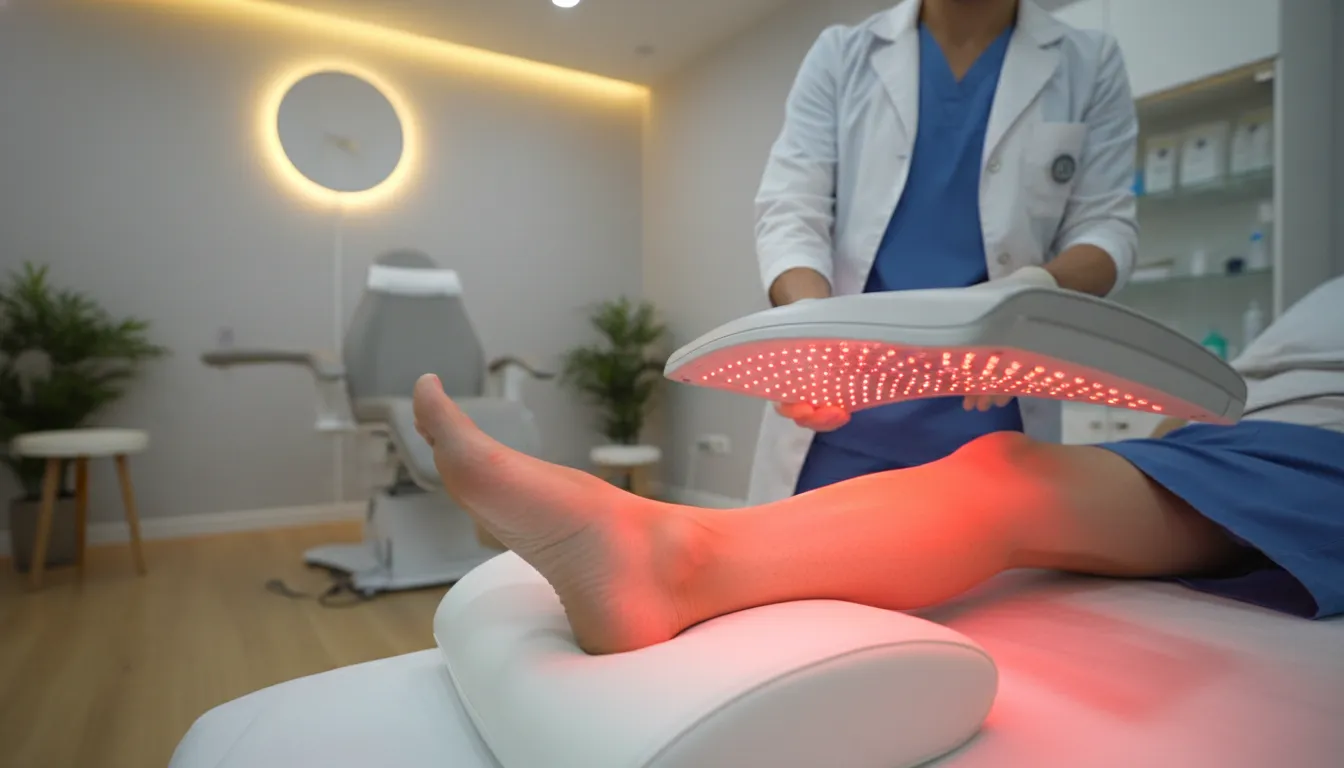

A swollen ankle can sideline your daily routine long after the first painful twist. Red light therapy may ease pain and swelling, but it cannot tell a sprain from a fracture. A careful exam comes first.
Request an appointment with Dr. Sutpal Singh to have a painful ankle evaluated before relying on red light therapy alone.
Can red light therapy help a sprained ankle? Evidence suggests it may reduce early pain and swelling while supporting the body’s healing response. Red and near-infrared light, also called photobiomodulation, stimulates cellular activity and may help injured ligaments and surrounding soft tissues recover. In one clinical study, LED treatment reduced pain and edema during the initial phase of acute ankle sprains. However, red light therapy should complement, not replace, a proper diagnosis, protection, guided movement, and a gradual return to activity. A foot and ankle specialist should first rule out a fracture, severe ligament tear, or another injury. Your recommended treatment plan will depend on the sprain’s grade, your symptoms, and your activity goals.
For Hoffman Estates patients, the key question is not only whether light therapy may help, but when it is safe to start. We will begin with “Can red light therapy help a sprained ankle?” before explaining evaluation, rehab, and other regenerative care options. Here’s how.
Can red light therapy help a sprained ankle?
Yes, red light therapy may help a sprained ankle as part of a broader care plan. It may ease pain and swelling while supporting the recovery of injured soft tissue. Still, it is not a guaranteed cure or a substitute for a proper exam. An exam helps confirm the injury and guides safe treatment.
Research offers some support for its use during the early stage of an acute ankle sprain. One clinical study found that LED phototherapy at a tested dose helped reduce pain and swelling during this phase. The ankle sprain phototherapy study used a specific light wavelength and treatment plan.
How light therapy may support recovery
Red light therapy is also called photobiomodulation, a treatment that exposes injured tissue to set wavelengths of light. The goal is to affect cell activity linked with pain, inflammation, and tissue repair. It does not force an injured ligament to heal overnight.
For an acute sprain, less pain and swelling may make early recovery easier to manage. Those benefits can support movement and rehab when a foot and ankle doctor says those steps are safe. Results can vary based on sprain severity, dose, and treatment timing.
Red light therapy is best viewed as an add-on rather than the whole treatment plan. In fact, researchers have studied low-level laser therapy as an addition to standard ankle sprain care. Rest, support, guided movement, and rehab may still have important roles.
Why an ankle exam comes first
A painful, swollen ankle may involve more than a mild ligament sprain. The injury may need an exam before light therapy or exercise begins. This is key when pain is severe or walking is hard.
A foot and ankle doctor can assess the injured area and determine the next steps. That visit also helps set a treatment plan based on the type and extent of damage. Light therapy settings should fit that plan, not a generic schedule.
Home devices also differ in light output, wavelength, and how much energy reaches the tissue. A device may not match the light source or dose used in a clinical study. That makes professional guidance useful before relying on research results.
A sports medicine and regenerative approach
From a sports medicine view, the goal is not only short-term pain relief. Care should also support stable movement, safe loading, and a sound return to activity. Light therapy may fit beside rehab and other regenerative medical therapies when appropriate.
Dr. Singh evaluates ankle injuries through this sports medicine and regenerative lens. He considers the tissue involved, the demands of the patient’s activity, and the stage of recovery. This tailored approach helps determine whether red light therapy has a useful supporting role.
How red light therapy works on injured ankle tissue
A cellular response to light
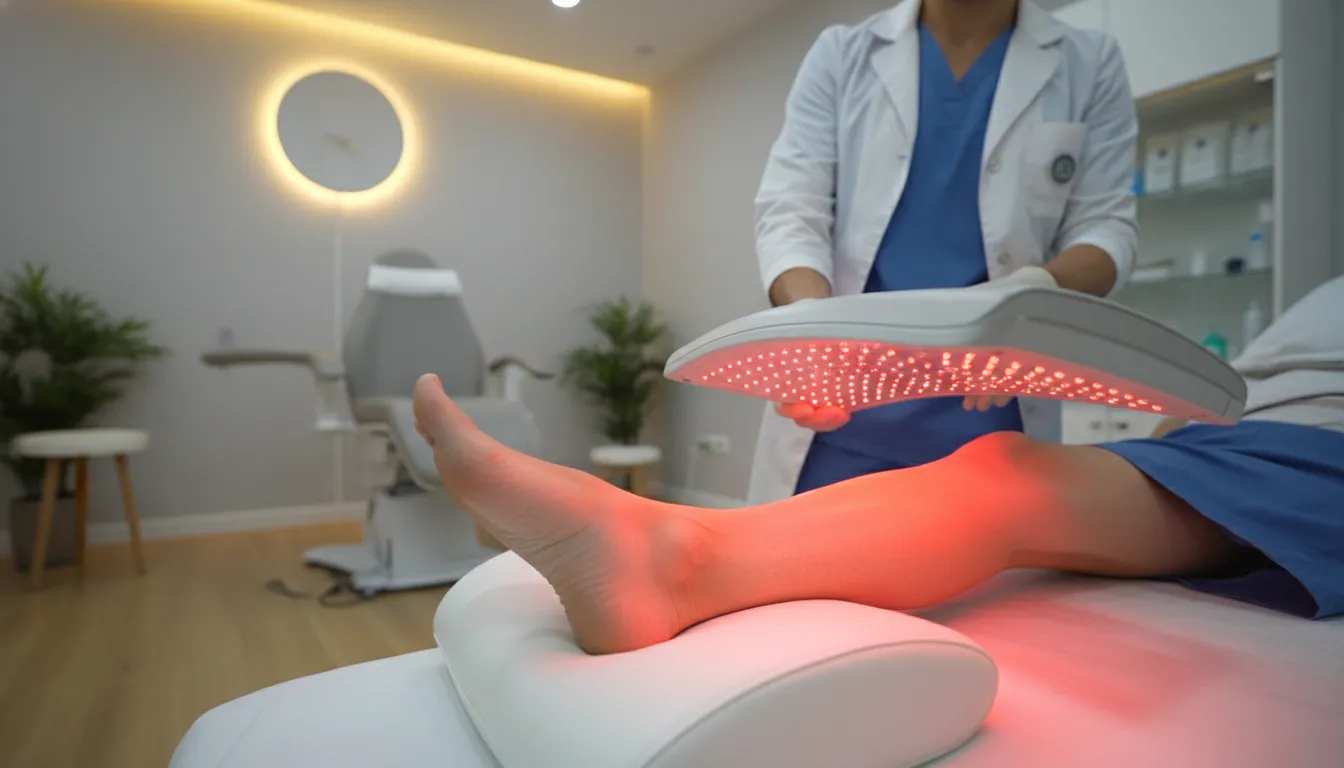
Red light therapy, also called photobiomodulation, sends selected bands of red or near-infrared light into injured tissue. The light does not brace a torn ligament or reset a joint. Instead, it prompts a response within cells around the sprain.
One proposed response involves mitochondria, the parts of cells that make usable energy called ATP. More ATP may help stressed cells carry out the work needed during tissue repair. This cellular focus also explains why photobiomodulation differs from heat alone. It uses light as the signal, while warmth may simply be a mild effect of treatment.
Effects on pain, swelling, and blood flow
A sprain can cause pain, swelling, and an inflammatory response around damaged ligaments. Photobiomodulation may change pain signaling and help regulate that local inflammatory response. A clinical ankle-sprain study found that LED treatment at the tested wavelength and dose helped reduce pain and edema during the early phase. The published ankle-sprain study supports using light as an added therapy, not proof of a cure.
Light therapy may also support local circulation, which helps bring oxygen and nutrients to recovering tissue. Better flow may help the body clear some fluid linked with edema. These effects can make the ankle feel less painful or tight. They do not show that a torn ligament has regained full strength.
For patients asking, “can red light therapy help a sprained ankle,” the short answer is that it may support symptom control and healing. At Comprehensive Foot and Ankle Institute, red light is one part of a wider set of Class IV laser therapy and photobiomodulation options for foot and ankle problems.
Treatment settings and injury severity
Results depend on more than shining any red lamp at the ankle. Wavelength affects how the light interacts with tissue, while dose reflects how much light reaches the area. Treatment timing and the position of the device also shape exposure. A plan should match the tissue involved and the stage of recovery.
Injury severity matters just as much. A mild sprain and a major ligament injury do not have the same care needs or healing time. Red light therapy cannot rule out a fracture, confirm ligament damage, or replace a proper exam. It is best viewed as an added tool within a broader care plan. That plan should protect the ankle and guide a safe return to motion.
When a sprained ankle needs an exam before therapy
A mild ankle sprain may improve with rest and careful home care. Still, pain after a twist does not always mean a simple sprain. An exam can find a fracture, severe ligament injury, or another problem that needs a different plan.
Signs that need prompt care
Seek an exam promptly if you cannot bear weight, the ankle looks deformed, or pain is severe. Marked swelling or bruising also calls for a closer look. Numbness, tingling, a cold foot, or a change in skin color needs urgent medical attention.
- A fall, hard impact, or direct blow raises concern for a fracture.
- Pain over a bone may point to more than a ligament sprain.
- Swelling that gets worse instead of easing should be checked.
- An open wound or signs of infection need prompt care.
Do not use red light to delay an exam when these warning signs are present. Research describes light therapy as an addition to a standard ankle sprain treatment plan, not a replacement for diagnosis.
Why the exam comes first
An ankle sprain can stretch or tear ligaments to different degrees. Dr. Sutpal Singh checks where the ankle hurts, how much it moves, and whether it feels stable. He also reviews how the injury happened and whether imaging may be needed.
The exam helps match care to the injured tissue and the sprain’s severity. It also shows whether poor foot or ankle mechanics may keep stressing the same area. Only then can Dr. Singh decide whether red light therapy, bracing, rehab, or another option fits the injury.
If light-based care is appropriate, an in-office plan may differ from a home device. The practice’s Class IV laser therapy page explains another light-based treatment used for foot and ankle problems.
Repeated sprains and higher-risk feet
An ankle that repeatedly rolls or gives way may have lasting instability. Treating each flare without checking balance, strength, and joint motion can miss the cause. A focused exam helps guide care and may reduce stress on an already weak ankle.
People with diabetes, neuropathy, poor blood flow, or slow-healing wounds should also get medical guidance before therapy. Reduced feeling can hide pain, skin damage, or a more serious injury. Dr. Singh can check the skin, circulation, sensation, and ankle before recommending a safe care plan.
Request an appointment if swelling, bruising, or pain is keeping you from walking normally.
Red light therapy vs ice, rest, and rehab
One part of a broader care plan
Red light therapy does not replace protection, support, or a guided return to movement. It is best viewed as one part of a broader ankle sprain care plan. A clinical trial studied low-level laser therapy as an addition to a standardized treatment regimen, rather than as stand-alone care.
If you are asking whether red light therapy can help a sprained ankle, the answer depends on the injury and treatment plan. Early protection can limit more strain while a clinician checks whether the ankle needs imaging, a brace, or other care. Light therapy may then support symptom care without doing the work of stabilization or rehab.
Different tools, different roles
Each part of care serves a different purpose. Early protection and a brace help keep the injured joint from taking more stress. Ice and elevation may help with short-term comfort, while rehab rebuilds motion, strength, balance, and confidence.
| Approach. | Main role. | Fit with red light therapy. |
|---|---|---|
| Early protection and rest. | Reduces added strain. | Still needed when the injury is new. |
| Ice and elevation. | Supports short-term comfort. | Use based on clinical advice. |
| Brace or support. | Helps stabilize the ankle. | Light does not provide stability. |
| Physical therapy and rehab. | Rebuilds motion, strength, and balance. | Light may complement rehab. |
| Red light therapy. | Targets pain, swelling, and tissue recovery. | Acts as an adjunct to standard care. |
Red light therapy is aimed at pain, swelling, and tissue recovery. One study of acute ankle sprains found that 627 nm LED treatment reduced pain and edema early on. The researchers used LED or placebo care alongside PRICE treatment, which included protection, rest, ice, compression, and elevation.
That evidence supports combining methods rather than choosing light instead of basic care. It does not show that every sprain needs red light therapy. The right mix depends on the sprain’s severity, symptoms, and response to care.
How the methods can work together
Start with an exam when pain, swelling, or loss of function makes the injury hard to judge. The exam can guide the right level of protection, bracing, and movement. Once the ankle is safe to load, rehab should progress based on symptoms and clinical advice.
During rehab, track practical signs such as walking comfort, ankle motion, and the joint’s response after exercise. A brace may protect the ankle during selected tasks, but it does not rebuild strength or balance. Red light can sit beside these steps when a clinician finds it suitable.
If red light therapy is added, the plan should still include early protection and a staged return to activity. People comparing other recovery options can review the practice’s regenerative medical therapies for sports injuries before the visit. Keep the discussion focused on the full injury plan, not one device.
What to expect from an in-office regenerative ankle care plan
An ankle sprain can range from a mild ligament stretch to a more serious tear. A doctor-led exam helps define the injury before any treatment begins. At Comprehensive Foot and Ankle Institute, Dr. Sutpal Singh provides personalized visits without double-booking patients.
Your first visit and care plan
The visit starts with a discussion of how the injury happened, your symptoms, and your activity goals. Dr. Singh then checks swelling, tender areas, motion, strength, and ankle stability. He may recommend imaging when the exam suggests a fracture or another injury.
Your diagnosis guides the next steps. Red light therapy may support recovery, but it does not replace a proper exam or a full care plan. Research suggests that phototherapy can help reduce pain and swelling during the early phase of an acute ankle sprain. The published ankle sprain study tested a specific light dose under clinical conditions.
Complete a concierge exam. Dr. Singh assesses the injured ankle and explains the likely grade and tissues involved. The visit also helps rule out problems that need a different type of care.
Choose the right light-based option. Dr. Singh may consider red light treatment or Class IV laser therapy based on the injury. The choice depends on the diagnosis, pain, swelling, and stage of recovery.
Add other regenerative care when appropriate. Some ankle injuries may benefit from other regenerative medical therapies. Dr. Singh explains why an option fits, what it involves, and how it supports the wider plan.
Protect and retrain the ankle. Guidance may include a brace, activity changes, and a gradual rehab plan. The goal is to restore motion and strength without placing too much stress on healing tissue.
Return for follow-up. Dr. Singh checks pain, swelling, stability, and function over time. He can then adjust treatment and guide a safe return to work, exercise, or sports.
How treatments fit together
When patients ask, “can red light therapy help a sprained ankle,” the answer depends on the injury and treatment plan. Light-based care is usually an added tool, not a stand-alone fix. Bracing, guided movement, and load control may remain important while the ligament heals.
The practice also offers advanced foot and ankle treatments for injuries that need a broader approach. Treatment choices are based on the exam rather than a set package. This approach keeps the plan tied to your ankle, goals, and response to care.
Follow-up and return to activity
Follow-up visits show whether swelling, pain, motion, and ankle control are improving. Dr. Singh may change the brace, rehab work, or office treatment as healing moves forward. Contact the practice if pain worsens, walking becomes harder, or new symptoms appear before the next visit.
Contact Comprehensive Foot and Ankle Institute to discuss exam-guided regenerative options for ankle pain.
How often should you use red light therapy for a sprained ankle?
There is no single schedule that fits every sprained ankle. General online guidance often mentions 10 to 20 minutes per session, three to five times each week. These ranges are context, not a personal treatment plan.
Why treatment schedules differ
The right timing depends on the sprain’s grade, swelling, pain, and stage of healing. Device type also matters because light wavelength, power, dose, and treatment distance can vary. A short session with one device may deliver a different dose than a longer session with another.
Studies also test specific devices and doses, so their findings do not create one schedule for every patient. One study found that LED treatment using its tested dose helped pain and swelling during the early phase of ankle sprains. That result supports careful dosing, not more frequent use.
Dr. Sutpal Singh should first assess the ankle and rule out a fracture or more serious ligament injury. He can then set the session length and frequency for the specific device. This doctor-led plan also helps prevent home treatment from delaying needed care.
Home devices and in-office care
Follow the exact directions for a home device, including distance, timing, and eye protection. Do not assume that longer or more frequent use will improve results. Stop and seek guidance if pain, swelling, warmth, or skin irritation gets worse.
In-office care may use a different device and schedule than a home red light panel. The practice’s Class IV laser therapy is one example of a doctor-guided light treatment. Dr. Singh can decide whether it fits the injury and adjust care as the ankle changes.
Frequency within a full recovery plan
Red light therapy should support, not replace, a full ankle sprain plan. A clinical study describes low-level laser therapy as an addition to a standard treatment plan. Rest from painful activity, safe movement, and a guided return to sport may still be needed.
Follow-up matters because the useful schedule may change as pain and swelling ease. Dr. Singh may reduce, pause, or adjust sessions based on the ankle’s response. Seek prompt care if you cannot bear weight, the joint looks out of place, or symptoms keep getting worse.
Where red light fits with Dr. Singh’s sports medicine approach
A careful diagnosis comes first
If you are asking, “can red light therapy help a sprained ankle,” the first step is finding out what the injury involves. An ankle that looks sprained may also have a fracture, tendon injury, or severe ligament damage. Dr. Sutpal Singh, DPM, FACFAS, FAPWCA, evaluates the ankle before discussing a care plan.
That exam helps set safe goals for pain, swelling, movement, and a return to activity. Red light is not a substitute for a sound diagnosis or needed support. Research has studied light therapy as an addition to a standard ankle sprain care plan, rather than as a stand-alone treatment.
One tool within regenerative sports medicine
Dr. Singh may consider red light alongside rest, bracing, guided movement, and other care suited to the injury. Its role depends on the sprain, the patient’s health, and the demands of the sport. This measured approach avoids promising a fixed result or return date.
For some sports injuries, a wider plan may include regenerative medical therapies such as Class IV laser or shock wave therapy. These options aim to support healing while limiting needless disruption to healthy tissue. The right mix is different for each patient.
Concierge care for an active return
At Comprehensive Foot and Ankle Institute, the concierge model gives Dr. Singh time to learn how the injury affects daily life. A runner, court athlete, and active older adult may need different milestones. Follow-up visits can track pain, swelling, stability, and function before activity increases.
This sports medicine approach reflects a broader minimally invasive philosophy. Care starts with the least disruptive option that fits the diagnosis, while more involved treatment remains available when needed. Patients in Hoffman Estates and the northwest Chicago suburbs can review the practice’s advanced foot and ankle treatments and schedule an exam to discuss their injury.
Frequently Asked Questions
How often should you use red light therapy for a sprained ankle?
There is no universal schedule for every ankle sprain or red light device. One pilot study of injured university athletes used 20-minute sessions on three consecutive days, with two to six sessions overall. That protocol should not be copied without guidance because the correct timing and dose depend on the device, injury severity, and treatment plan.
Is red light therapy better than ice for ankle sprains?
Red light therapy and ice serve different purposes, so one is not automatically better. Ice may help manage early pain and swelling, while photobiomodulation may support pain control and inflammatory processes. Red light therapy should be considered alongside protection, compression, elevation, and appropriate rehabilitation, not as a replacement for evaluation or standard ankle sprain care.
Are there risks to using red light therapy for ankle sprains?
Red light therapy is noninvasive, but safe use still requires the correct device settings, session length, and eye protection. A pilot study using 830 nm LED therapy reported no adverse events, although it lacked a control group. Seek medical evaluation before treatment if walking is difficult, pain is severe, or a fracture or major ligament injury may be present.
What wavelengths of red light are used for ankle recovery?
Research has examined more than one wavelength, and results from one device cannot be applied to every product. A clinical study of acute ankle sprains tested 627 nm LED therapy for early pain and swelling. Another pilot study used 830 nm near-infrared light for several athletic injuries. A clinician can select a device and dose suited to the injury.
Can a home red light device replace ankle sprain rehabilitation?
No. A home red light device cannot confirm the sprain grade, rule out a fracture, restore strength, or test ankle stability. Red light therapy is generally considered an addition to a standard treatment plan, not a standalone solution. An appropriate plan may include protection, gradual movement, strengthening, and balance work based on a clinician’s evaluation and the ankle’s response.
Ready to Take the Next Step for Your Sprained Ankle?
Ignoring persistent pain, swelling, or instability can delay a clear diagnosis and keep you from returning to normal activity safely. Starting with an evaluation now gives Dr. Singh time to assess the sprain and recommend a practical recovery plan. That early plan can help you avoid guessing, protect your recovery time, and understand whether red light therapy fits your needs.
Ready to move forward with a plan built around your injury, activity goals, and preferred recovery timeline? Request an appointment with Dr. Singh to discuss your symptoms, get a focused evaluation, and review appropriate treatment and rehabilitation options. Contact the Hoffman Estates office now so you can make an informed choice and begin the right next step without another week of uncertainty.