



.
A hammertoe can make shoes uncomfortable, create pressure at the top or tip of the toe, and limit the activities you enjoy. The right correction depends on the toe’s alignment, flexibility, symptoms, and your health history, not on a one-size-fits-all procedure.
Request an in-office hammertoe evaluation
Minimal incision hammertoe correction may use small access points and specialized instruments to address a deformity, with the specific technique selected for your anatomy and goals. At Comprehensive Foot and Ankle Institute, evaluation may also include discussing no-hardware options, local anesthesia, protection after treatment, and how activity could progress when clinically appropriate.
Understanding what the technique involves is the first step toward asking useful questions about candidacy, recovery, and how it differs from conventional surgery.
What Is Minimal Incision Hammertoe Correction?
A hammertoe is a lesser-toe deformity involving an unusual bend at the middle joint. It most often affects the second, third, or fourth toe. Depending on the toe’s position and flexibility, the deformity may create pressure at the top or tip of the toe. Difficulty fitting into shoes, or discomfort beneath the ball of the foot. Corns and calluses can also develop where the toe rubs against footwear or the ground. Symptoms and their causes should be evaluated rather than assumed. Mayo Clinic describes common hammertoe symptoms and causes.
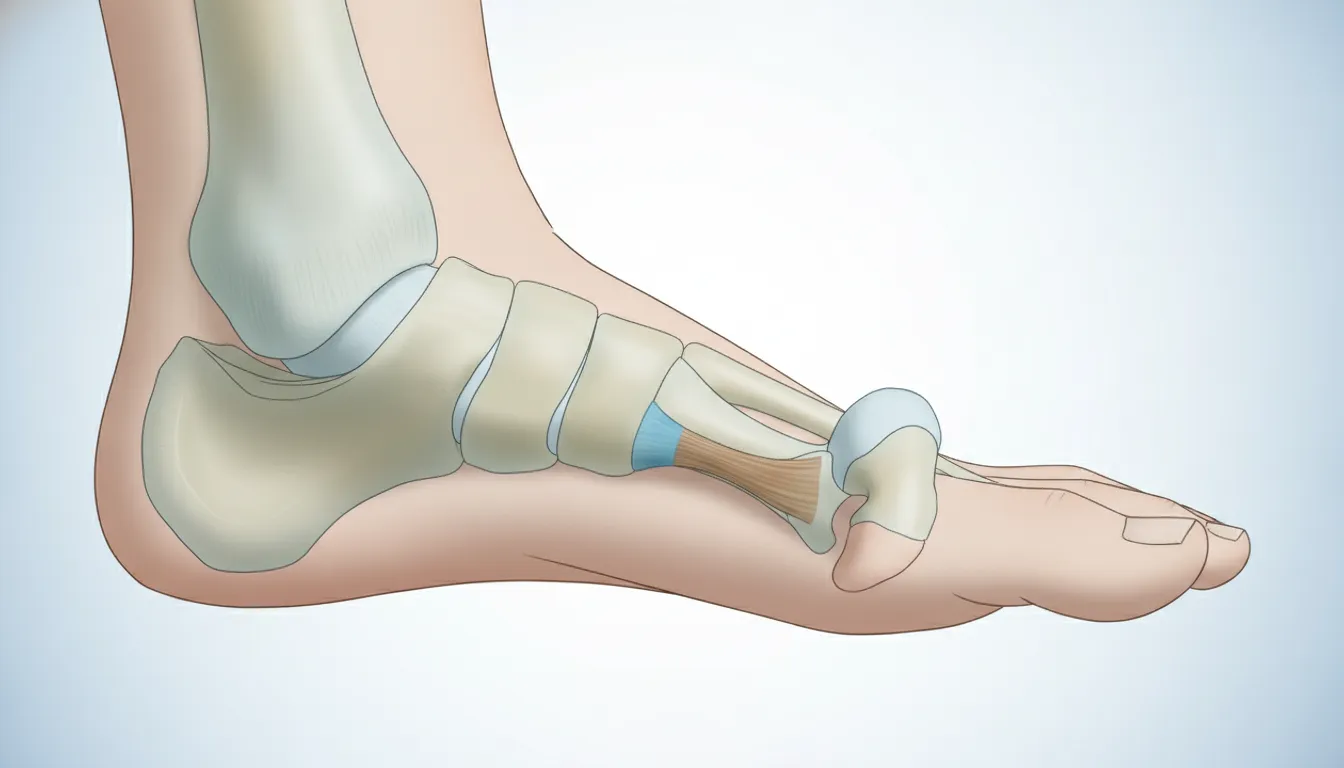
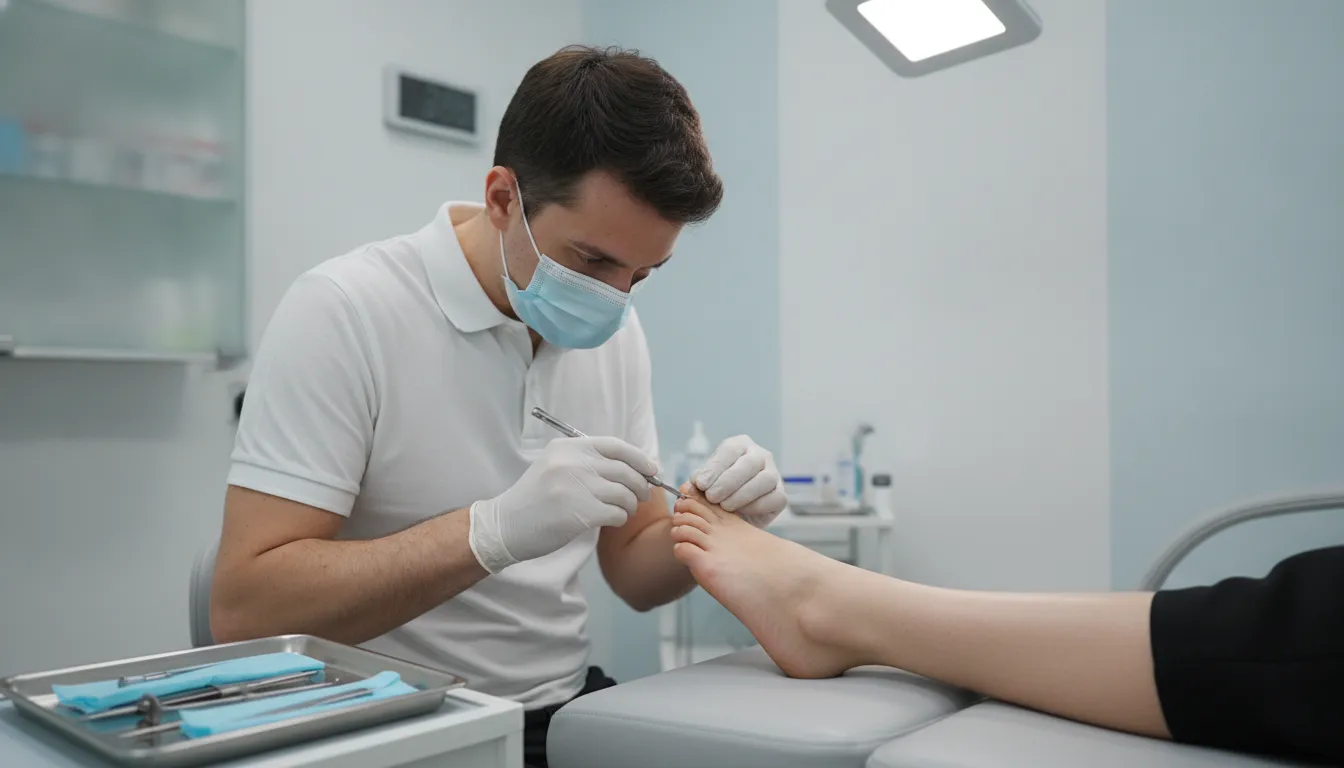
Minimal incision hammertoe correction refers to a technique that uses very small access points rather than a traditional open incision. Through those access points, a foot and ankle specialist may use specialized instruments to address the bone, tendon, or soft-tissue imbalance contributing to the deformity. The exact steps depend on whether the toe can still be straightened, the severity of the bend, the surrounding anatomy, and the patient’s symptoms and goals. A technique described as minimally invasive is not automatically appropriate for every hammertoe.
Minimal incision and no hardware describe related but different ideas. The access point describes how the procedure reaches the affected area. No hardware describes what is left inside afterward. Comprehensive Foot and Ankle Institute describes its relevant hammertoe procedures as using no internal screws or plates when clinically appropriate. Conventional surgery may use hardware depending on the correction required, while a no-hardware approach may rely on a different correction plan. That distinction should be confirmed during an individualized evaluation, not inferred from the procedure name.
For active patients, the practical question is whether the planned correction addresses the deformity while fitting their work, exercise, and footwear needs. Dr. Sutpal Singh’s doctor-led evaluation can review the toe’s position, symptoms, overall health, and goals. His training includes mini-fellowships focused on minimal incision surgery, but credentials do not replace patient-specific assessment. The practice describes appropriate procedures as in-office and performed under local anesthesia, without hospitalization, when clinically suitable.
Key Point: Small access points and no internal hardware are separate features. Whether either feature is suitable depends on the deformity, the planned correction, and your evaluation with a qualified foot and ankle specialist.
Who May Be a Candidate for Minimal Incision Hammertoe Correction?
Minimal incision hammertoe correction may be considered when a bent or contracted lesser toe is causing ongoing symptoms, interfering with footwear, or limiting activities despite appropriate nonsurgical care. Hammertoe can produce pressure and pain where the toe rubs against a shoe or the ground. Some people also develop corns, calluses, stiffness, swelling, or difficulty moving the affected toe. These symptoms can be useful context, but they do not establish candidacy on their own. A healthcare professional must examine the foot and discuss the problem in detail. Mayo Clinic explains that surgery may be considered when conservative treatments do not help.
Key Point: Being interested in a minimal incision approach does not automatically mean it is the right treatment. The deformity, symptoms, health history, and goals all need to be evaluated together.
Symptoms and the flexibility of the toe
During an evaluation, the clinician may consider whether the toe can still be straightened by hand or whether the deformity has become more rigid. This flexible-versus-rigid distinction is an evaluation concept, not a self-diagnosis or a fixed rule for treatment. The position of nearby toes, the source of pressure, the condition of the skin. And the relationship between the toe and the rest of the foot can also affect the plan.
Someone with pain in regular shoes, recurrent rubbing, or activity-related pressure may want to discuss correction. Especially if roomier footwear, pads, inserts, taping, or other conservative measures have not provided adequate relief. If symptoms are mild or the toe remains comfortable, observation or nonsurgical care may still be reasonable. The goal is not to operate on an appearance alone. It is to understand whether the deformity is creating a meaningful problem and whether correction is appropriate.
Goals, medical history, and treatment setting
Candidacy also depends on what you want to return to doing. Tell the clinician about work demands, exercise, sports, preferred footwear, and any activities that the toe now makes difficult. Share your complete medical history, including prior foot injuries or procedures, diabetes or other illnesses, medications, supplements, circulation concerns, and skin or wound-healing issues. These details can influence whether a procedure is advisable, which technique is selected, and how activity is managed afterward.
Comprehensive Foot and Ankle Institute evaluates patients in the context of their individual anatomy and goals. When clinically appropriate, the practice describes minimally invasive hammertoe correction as an in-office procedure under local anesthesia, without internal screws or plates. Dr. Sutpal Singh has completed mini-fellowships focused on minimal incision surgery. That specialized, doctor-led approach supports a careful conversation, not a promise that every patient will qualify or have the same recovery. An in-office evaluation is the next step for determining whether this option fits your situation.
What Happens During an In-Office Evaluation?
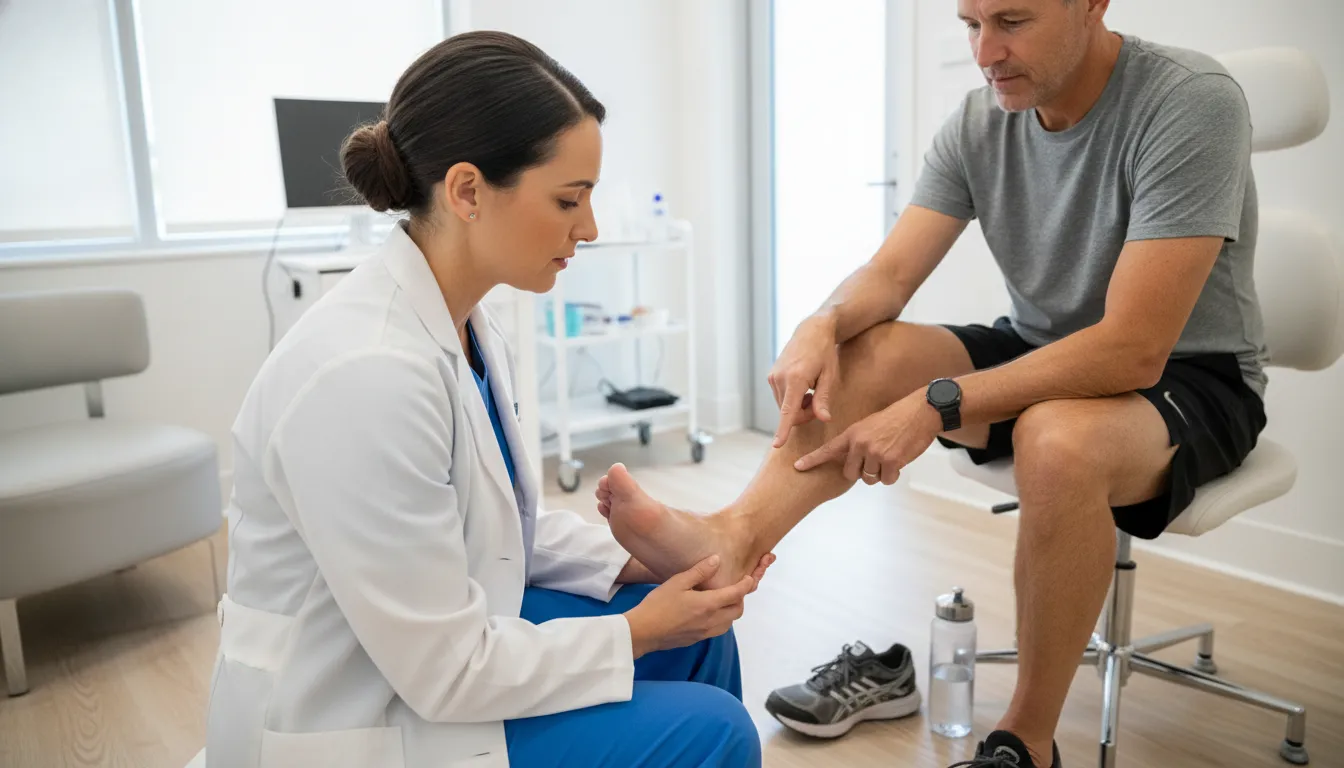
An in-office evaluation is a conversation and examination, not an automatic recommendation for minimal incision hammertoe correction. The goal is to understand how the deformity affects your foot, your daily life, and your activity goals before discussing whether a particular treatment is appropriate.
- Review your history and symptoms. The visit begins with questions about when the toe changed, where you feel pressure or pain, which shoes or activities aggravate it, and what has already been tried. Bring a current medication and supplement list, along with any relevant medical history. Symptoms such as stiffness, difficulty moving the toe, swelling, or rubbing against footwear can help define the problem. A clinical resource from Mayo Clinic describes similar appointment preparation.
- Examine the foot while assessing alignment. Dr. Singh evaluates the toe’s position, pressure points, skin condition, and relationship to the neighboring toes. He may assess alignment while you are seated and standing, then check flexibility and movement. A toe that can still be manually straightened may present different treatment considerations from a more rigid deformity. The examination also helps identify whether discomfort is coming from the toe itself, footwear pressure, or another part of the foot.
- Use imaging when it adds useful information. X-rays may help show the bones and joints, but they are not needed in every evaluation. If imaging is appropriate, it can help clarify alignment, joint changes, or other structural factors that influence planning. The findings are considered alongside your physical examination rather than used as a stand-alone decision.
- Discuss your goals and realistic options. Tell the doctor whether your priority is wearing specific shoes, reducing pressure, returning to sport, walking comfortably, or addressing a progressive deformity. Those goals, your health history, and the severity and flexibility of the hammertoe all matter. You can review the practice’s foot and ankle treatments and ask whether a conservative approach, minimally invasive correction, or another option best fits your situation.
- Clarify the setting and anesthesia plan. If a procedure is considered appropriate, ask how it would be performed. What type of local anesthesia may be used, whether internal hardware is expected, and what protection or follow-up would involve. The practice describes selected procedures as in-office under local anesthesia, without hospitalization, when clinically appropriate. You can also learn more about Dr. Singh’s podiatric experience and training.
What This Means: A personalized, doctor-led evaluation helps determine whether minimal-incision treatment is suitable, but attending the visit does not guarantee candidacy. The recommended technique, setting, activity instructions, and expected recovery depend on your examination and individual clinical needs.
How Does No-Hardware Correction Compare With Conventional Surgery?
When patients compare minimal incision hammertoe correction with conventional surgery. Two ideas are often blended together: the size of the surgical access point and whether internal hardware is used. They are related, but they are not the same. A minimally invasive technique may use small access points and specialized instruments, while hardware decisions depend on the correction required, bone and joint stability, and the surgeon’s plan.
At Comprehensive Foot and Ankle Institute, the described approach for relevant hammertoe procedures uses no internal screws or plates. Procedures may be performed in the office under local anesthesia without hospitalization when clinically appropriate. That positioning does not mean the approach is suitable for every deformity. An examination is needed to assess the toe, symptoms, overall health, goals, and the correction required.
| Consideration | No-hardware, minimally invasive approach | Conventional or open approach |
|---|---|---|
| Access | May use a small access point or no traditional incision, with specialized instruments selected for the deformity. | Typically uses a larger open exposure when direct access to bone, joint, tendon, or other structures is needed. |
| Hardware | The practice describes relevant corrections without internal screws or plates. This is a separate decision from incision size. | Hardware may be used depending on the procedure, the correction, and the need for stabilization. It is not required in every conventional procedure. |
| Setting and anesthesia | May be performed in-office with local anesthesia and without hospitalization when clinically appropriate. | Setting and anesthesia vary with the operation, medical history, and facility requirements. |
| Recovery planning | Protection, dressing or taping, footwear, follow-up, weight-bearing, and activity progression remain patient-specific. | Recovery also depends on the correction, tissues involved, medical factors, and the surgeon’s postoperative instructions. |
Key Point: No hardware does not automatically mean minimal incision, and minimal incision does not automatically mean no hardware. The appropriate combination depends on the deformity and clinical judgment.
Research can provide useful context, but it cannot determine the best option for one person. A retrospective comparative study indexed by PubMed examined minimally invasive and open hammertoe surgery, but its findings should not be generalized to every patient or every technique. You can review the study context at PubMed.
An in-office discussion with Dr. Singh can clarify which options may address your toe deformity and activity goals. The decision should account for both the potential advantages and the limitations of each technique, rather than relying on the label alone.
What Can Recovery and Activity Progression Involve?
Recovery after minimal incision hammertoe correction is not a fixed calendar. The plan depends on the deformity, the techniques used, your overall health, and how your foot responds. An individualized discussion should explain what protection is needed, how much weight you may place on the foot, and when activity can be advanced safely.
Protection, dressing, and footwear
Immediately after treatment, your toe and foot may be protected with a dressing, tape, or another support selected for the correction. Keep the area clean and dry according to the instructions you receive. Do not change the dressing, remove tape, or apply products unless your care team tells you to do so. Footwear may begin with a roomy postoperative shoe or another option that limits pressure on the treated area. As swelling and tenderness improve, Dr. Singh can guide the transition toward shoes that accommodate the toe without crowding it.
The practice describes relevant procedures as in-office and performed under local anesthesia when clinically appropriate. A no-hardware approach may allow walking on the same day for some patients, but that possibility is not a universal instruction. Follow the weight-bearing guidance given for your specific correction rather than using another patient’s experience as a benchmark.
Follow-up and gradual activity
Follow-up visits help the team monitor alignment, skin and wound healing, swelling, comfort, and your response to activity. Early movement may be limited to essential walking, while higher-impact exercise, long periods on your feet. Running, or sports may need to wait until your clinician confirms that progression is appropriate. Activity is usually advanced in stages, with changes based on symptoms and examination findings. A concierge model means your questions can be addressed directly rather than forcing you to navigate a high-volume process.
Call the practice promptly if you notice worsening rather than improving pain, increasing redness or swelling. Drainage, fever, a concerning color change, numbness, or any problem with the dressing or toe position. If symptoms are severe or urgent, seek appropriate emergency care. These signs do not establish a diagnosis, but they deserve timely clinical attention.
Key Point: Recovery is individualized. Protect the correction, follow dressing and footwear instructions, attend follow-up, and increase activity only as directed by your clinician.
Request an in-office evaluation for individualized recovery guidance
What Questions Should You Ask Before Choosing a Technique?
A useful consultation should help you understand why a particular approach fits your toe, your health, and your goals. Bring a short list of symptoms, when they began, what makes them better or worse, and any medicines or supplements you take. Then ask questions that move beyond the name of a procedure.
Key Point: The right technique is determined by the deformity and your clinical needs, not by a one-size-fits-all promise about incision size, hardware, or recovery speed.
- What is causing the deformity and pressure? Ask how the toe’s alignment, flexibility, joint position, skin irritation, and any related foot mechanics affect the plan. An evaluation may include a physical examination and, when useful, imaging. X-rays can show the bones and joints, but they are not always needed.
- What are my realistic goals? Explain whether you want less shoe pressure, improved comfort, better alignment, or a return to particular activities. Ask how those goals influence the recommended treatment and what limitations may remain.
- Which techniques are appropriate for my toe? Ask whether a minimal incision hammertoe correction, another minimally invasive option, nonsurgical care, or conventional surgery is reasonable. If a no-hardware approach is proposed, ask why it fits your deformity and whether screws or plates would be needed with another method.
- What anesthesia and setting should I expect? Ask whether treatment can be performed in the office under local anesthesia and when hospitalization or a different setting would be clinically appropriate.
- How will I protect the correction? Clarify dressing or taping, footwear, weight-bearing, follow-up visits, activity progression, and signs that should prompt a call. Instructions depend on the procedure and your response to treatment.
- What are the risks and alternatives? Ask about possible complications, the chance that symptoms or alignment may persist, and what could happen if you continue with observation, footwear changes, pads, or other nonsurgical care.
- What costs may I need to plan for? Ask which services are covered, which may be self-pay, and what out-of-pocket expenses could apply. Request a clear explanation rather than relying on a general estimate.
At Comprehensive Foot and Ankle Institute, a direct conversation with Dr. Sutpal Singh can connect these questions to your examination and priorities. His experience with minimal incision surgery supports an individualized discussion, while the evaluation remains the basis for deciding whether the approach is appropriate. Patients from Hoffman Estates and the northwest Chicago suburbs can review the practice’s podiatric experience and training before scheduling.
Frequently Asked Questions
Can a hammertoe be corrected without traditional surgery?
Some flexible hammertoes may improve with roomier footwear, shoe inserts, pads, taping, or exercises. These options can ease pressure and pain, but they may not straighten a fixed deformity. If conservative care does not help, a foot specialist can discuss whether a surgical correction is appropriate. Mayo Clinic describes these treatment pathways.
What is different about minimal-incision hammertoe correction?
The technique uses small access points and specialized instruments rather than a large incision. At Comprehensive Foot and Ankle Institute, the described approach uses no internal screws or plates for relevant procedures. Whether that approach fits depends on the deformity, symptoms, overall health, and treatment goals, so an evaluation is essential.
Is minimal-incision hammertoe correction performed in an office?
The practice describes relevant procedures as performed in-office under local anesthesia, without hospitalization, when clinically appropriate. The setting and anesthesia plan still depend on your health history and the planned correction. An evaluation allows the doctor to review the toe, discuss alternatives, and explain what to expect before making a decision.
How long does recovery take after hammertoe correction?
There is no single recovery timeline. Protection, dressing or taping, footwear, follow-up visits, weight-bearing, and return to exercise depend on the deformity and procedure. Some patients may be able to walk the same day with a no-hardware approach. But you should follow individualized instructions rather than assume immediate walking or a faster recovery.
Will hammertoe correction be painful?
Discomfort varies with the procedure and the individual. During an in-office procedure, local anesthesia is used when clinically appropriate. Ask how pain will be managed, what normal discomfort may feel like, and which symptoms should prompt a call during recovery.
Schedule an In-Office Hammertoe Evaluation
An in-office evaluation can clarify how your hammertoe is affecting movement, footwear. And daily comfort while giving you an opportunity to discuss whether a minimal-incision approach may fit your goals. Candidacy, technique, and recovery planning are individualized to your examination and medical history.
Request an in-office hammertoe evaluation through the contact page