


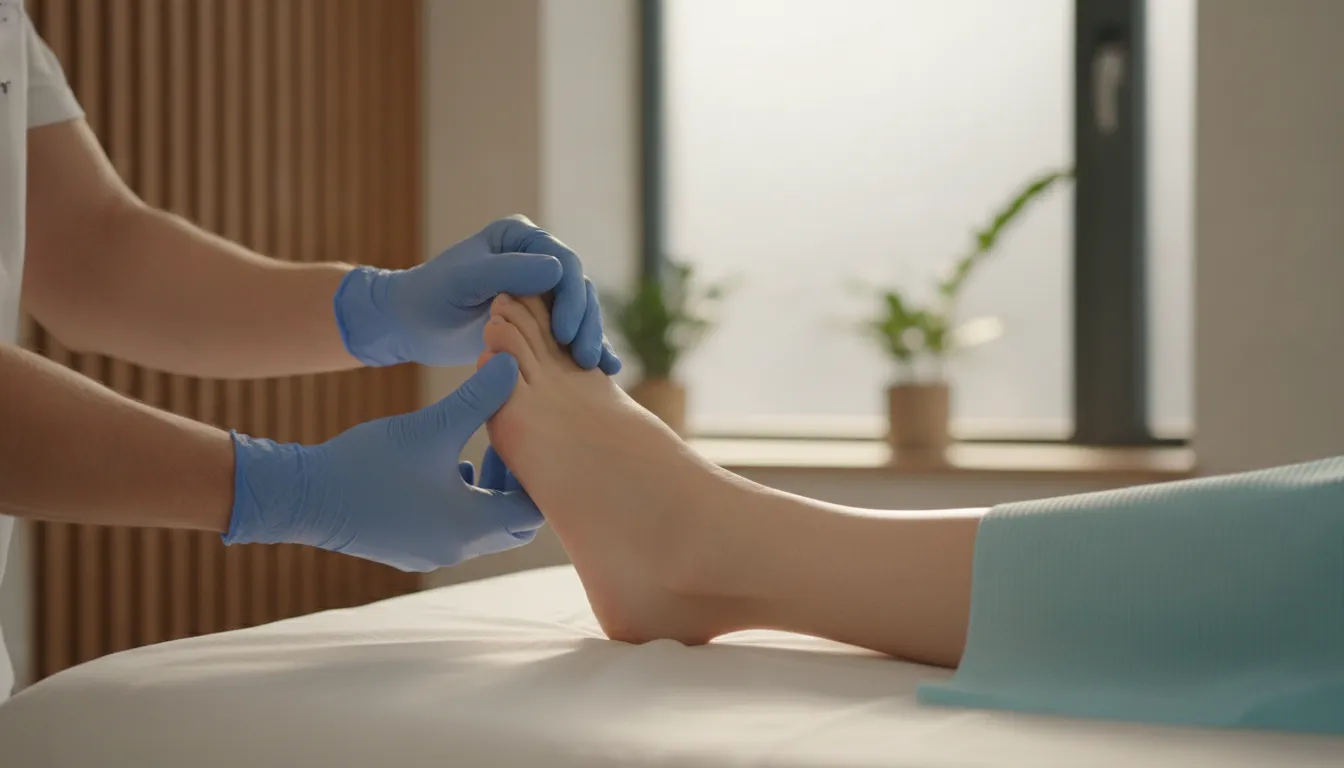

Burning forefoot pain, tingling between the toes, or the feeling of a pebble inside your shoe can make every step feel deliberate. Morton’s neuroma is a degenerative compressive neuropathy of an interdigital nerve, caused by repeated pressure and irritation rather than a true tumor. Anatomical reference.
Morton’s neuroma treatment can include footwear changes, orthotics, physical therapy, and non-surgical regenerative options designed to reduce irritation and support healthier tissue. Offering a thoughtful alternative to cortisone injections or surgery for appropriately evaluated patients.
Although this condition is common, persistent symptoms deserve more than a temporary workaround. A careful evaluation can clarify whether pressure relief, targeted therapy, or a combination makes sense for your foot and your activity goals. The next step is understanding why some patients choose a non-surgical path and how personalized care may support that decision.
Why Choose Non-Surgical Morton’s Neuroma Treatment?
When forefoot pain, burning, or tingling begins to limit walking and exercise. Many patients want an option that addresses the problem without immediately turning to cortisone injections or surgery. That preference is understandable. Cortisone may reduce inflammation and pain for a period of time, but relief can be temporary. Repeated or poorly placed injections may also contribute to local tissue changes, including fat pad atrophy, which can reduce cushioning beneath the forefoot.
Surgical neurectomy removes part or all of the affected nerve, but it is not a risk-free shortcut. The procedure can leave lasting numbness in the toes, and some patients may develop a painful stump neuroma after the nerve is cut. Surgery also involves healing time and activity limitations, which matter to people who want to remain active. The right choice depends on the diagnosis, severity, prior treatment, and overall goals, so these risks should be discussed rather than assumed away.
Research supports considering non-surgical care before an irreversible procedure. A systematic review and meta-analysis of interventions for Morton’s neuroma found that non-surgical approaches can significantly reduce pain and improve function in many patients: review the published evidence. Conservative measures may be appropriate for some people, while others may benefit from a more advanced plan.
A broader approach than symptom suppression
At Comprehensive Foot and Ankle Institute, regenerative therapies are positioned as alternatives to steroid injections for patients who want a non-surgical path. The goal is to build a plan around the source of irritation and the patient’s activity needs, rather than relying only on short-term symptom control. Learn more about non-surgical neuroma care and the options Dr. Singh may evaluate for your condition.
Personalized care matters
Dr. Sutpal Singh uses a concierge, doctor-led model with personalized attention and minimal wait times. That gives patients time to discuss what they have tried, what they want to avoid, and whether regenerative care is appropriate. For patients in Hoffman Estates and the northwest Chicago suburbs, the decision is not simply injection versus surgery. It can begin with a careful evaluation and a treatment strategy designed to preserve motion while respecting individual needs.
Regenerative Therapies That Can Help Neuromas Heal
When pressure and irritation affect an interdigital nerve, reducing symptoms is only part of the goal. Regenerative care is designed to support the body’s natural tissue-repair processes rather than rely only on symptom control. At Comprehensive Foot and Ankle Institute, these advanced, non-invasive treatments can be considered as part of a personalized plan for patients exploring non-surgical options.
Class IV laser therapy for inflammation and pain
Class IV laser therapy delivers therapeutic light energy to the treatment area. The goal is to support cellular activity, calm local inflammation, and reduce pain around irritated forefoot tissues. By addressing the inflamed environment surrounding the nerve, treatment may help reduce the cycle of swelling, compression, and discomfort that contributes to neuroma symptoms. Class IV laser therapy is a core regenerative service at the practice and is performed without an incision or injection.
Laser treatment is not a one-size-fits-all answer. Dr. Sutpal Singh evaluates the location and severity of symptoms, along with footwear, foot mechanics. And other sources of forefoot pain, before recommending whether it belongs in a patient’s plan. Learn more about regenerative laser therapy and how it is used for foot and ankle conditions.
SoftWave shockwave therapy
SoftWave therapy uses acoustic wave energy rather than heat, an incision, or medication. These waves are intended to stimulate a local healing response in soft tissues and support circulation and tissue remodeling around an irritated nerve. As the surrounding tissue environment improves, the treatment may help reduce swelling and make everyday movement more comfortable. SoftWave is an advanced, non-invasive option for chronic neuroma symptoms and can be paired with other measures when clinically appropriate.
Red light as supportive care
Red light therapy may provide an additional supportive modality within a broader regenerative plan. It is used to encourage cellular activity and assist the body’s repair response, while the overall treatment strategy also addresses mechanical pressure on the forefoot. This distinction matters: regenerative therapy is not simply generic physical therapy. It consists of targeted, in-office procedures selected for the patient’s presentation, often alongside practical changes such as footwear modification or offloading.
Because nerve pain can resemble other causes of metatarsalgia and foot pain, an evaluation is important before treatment. The objective is to identify the source of symptoms and choose the least invasive approach that fits the patient’s needs, without promising a guaranteed response.
Advanced Injection Therapies for Chronic Neuroma Pain
When pressure reduction and other conservative measures do not adequately control chronic neuroma pain, injection-based regenerative care may offer another path. These in-office procedures are designed to support the tissues around the irritated nerve rather than simply mask symptoms. They may be considered for patients seeking alternatives to corticosteroid injections and surgery, depending on the diagnosis, nerve involvement, and overall foot mechanics.
Platelet-rich plasma to support nerve healing
Platelet-rich plasma, or PRP, is prepared from a small sample of the patient’s own blood. The sample is concentrated so the resulting injection contains a higher level of platelets and associated growth factors than whole blood. When placed near an appropriate treatment area, these factors may support the body’s natural tissue-repair response and help create a healthier environment around an irritated interdigital nerve. PRP is not appropriate for every patient, and an evaluation is needed to determine whether it fits the source of the pain.
Restoring protection beneath the metatarsal heads
In some cases, the nerve remains irritated because the forefoot has lost part of its natural cushioning. Fat pad injections using Liposona may help restore support beneath the metatarsal heads, where each step places pressure on the forefoot. By improving the soft-tissue cushion, this approach may help protect the nerve and complement other measures that reduce compression. Fat pad injections using Liposona are among the regenerative injection options offered by Comprehensive Foot and Ankle Institute. Learn more about the practice’s regenerative approach.
Comparison of non-surgical treatment options
| Treatment | How It Works | Best For | In-Office | Downtime |
|---|---|---|---|---|
| Class IV laser therapy | Therapeutic light energy reduces inflammation and supports cellular repair | Mild to moderate pain with visible inflammation | Yes | None |
| SoftWave shockwave therapy | Acoustic wave energy stimulates local healing response and circulation | Chronic symptoms that have not responded to conservative care | Yes | None |
| PRP injections | Concentrated growth factors from your own blood support tissue repair | Patients seeking a biologic, non-steroid option | Yes | Minimal |
| Fat pad injections (Liposona) | Restores natural cushioning beneath the metatarsal heads | Loss of forefoot padding contributing to nerve compression | Yes | Minimal |
| BPC-157 / stem cell therapy | Bioactive peptides or stem cells support targeted tissue regeneration | Complex or persistent cases requiring advanced biologic support | Yes | Minimal |
Peptides and stem cell injections
BPC-157 peptides are bioactive compounds used in regenerative treatment plans to support tissue repair. The practice also offers stem cell injections as part of its broader regenerative therapy options. These therapies should be discussed in the context of a complete examination rather than selected from a menu. The goal is to match the treatment to the underlying source of nerve irritation, including pressure, soft-tissue support, and surrounding tissue condition.
Some patients specifically seek these options because repeated corticosteroid injections can have drawbacks, including potential weakening or atrophy of the fat pad that normally cushions the forefoot. Regenerative injections are not guaranteed to eliminate pain, but they can provide a non-surgical alternative for appropriately selected patients. Dr. Singh performs these treatments in the office and explains expected benefits, limitations, and next steps before proceeding.
Conservative Care: Footwear, Orthotics, and Physical Therapy
Even when a patient is considering regenerative Morton’s neuroma treatment, foundational conservative care matters. The initial goal is to reduce direct pressure around the irritated interdigital nerve by offloading the metatarsal heads. These changes can help calm mechanical irritation and provide a stronger foundation for additional care.
Start with footwear that gives the forefoot room
Shoes with a wide toe box allow the toes to spread without unnecessary compression. A low heel can also reduce the amount of pressure transferred toward the ball of the foot. Tight, narrow, or poorly fitted footwear may compress the forefoot and aggravate the nerve, particularly when worn for long periods. Patients may need to adjust athletic shoes, work shoes, and dress shoes rather than relying on one pair for every activity.
Use orthotics to redistribute pressure
Custom orthotics can support foot mechanics while reducing stress on the painful area. A metatarsal pad, positioned to offload pressure from the forefoot, may help redistribute force away from the affected nerve. Placement and design matter, so an orthotic should be selected and evaluated based on the patient’s foot structure, symptoms, and daily activities. Orthotics are not simply inserts to place in a shoe and forget about; they are part of a broader plan to improve how the foot bears weight.
Build better forefoot mechanics with physical therapy
Physical therapy may include exercises that improve forefoot flexibility, strength, balance, and movement patterns. Better mechanics can reduce repeated irritation during walking, running, or other activities. A therapist can also help patients progress activity appropriately instead of returning too quickly to movements that reproduce symptoms.
Footwear changes, orthotics, and physical therapy are first-line tools, not competing alternatives to advanced care. When appropriate, they can be combined with therapies such as regenerative laser therapy as part of a personalized, non-surgical plan.
What to Expect From Non-Surgical Neuroma Care at Our Practice
Your first visit is designed to understand how forefoot pain affects your daily life, work, exercise, and goals. At Comprehensive Foot and Ankle Institute, Dr. Sutpal Singh personally evaluates each patient rather than passing the visit through a high-volume process. The concierge model does not double-book appointments, helping provide minimal wait times and focused, doctor-led attention.
Dr. Singh begins with a detailed history and physical examination of the foot. He considers the location and character of your symptoms, how footwear and activity affect them. And whether the pattern is consistent with Morton’s neuroma or another source of forefoot pain. When additional information is needed, ultrasound may be used to assess the area and support a more precise treatment discussion. You can learn more about the practice’s neuroma services before your consultation.
There is no single plan that fits every patient. Your recommendations may reflect your activity level, footwear, symptom duration, and recovery priorities. Depending on your evaluation, the discussion may include conservative measures, regenerative options, or a minimally invasive approach. The goal is to address the factors contributing to irritation while keeping the plan aligned with your desire to remain active. Patients who are looking for alternatives to cortisone injections or traditional surgery can discuss those priorities openly with Dr. Singh.
When a minimally invasive procedure is appropriate, it is generally performed in the office with local anesthesia. Immediate walking may be possible when clinically appropriate, although activity and recovery instructions vary by patient and procedure. This approach is intended to support a quicker return to movement than more extensive traditional surgery, without promising the same timeline for everyone. Dr. Singh brings more than 30 years of podiatric experience to each evaluation. With care centered on preserving active lifestyles and the philosophy that life is motion and motion is life.
Patients travel to the Hoffman Estates practice from Schaumburg, Palatine, Arlington Heights, Barrington, and communities throughout the northwest Chicago suburbs for specialized, personalized care.
Who Is a Candidate for Non-Surgical Morton’s Neuroma Treatment?
You may be a candidate if you feel burning, sharp, tingling, or electric pain in the ball of your foot, especially between the third and fourth toes. Some patients describe the sensation as having a pebble in the shoe or needing to remove a shoe during activity. Morton’s neuroma involves compression and irritation of an interdigital nerve, so symptoms may become more noticeable in narrow shoes, during exercise, or after extended standing.
Non-surgical care may be appropriate when over-the-counter insoles, wider footwear, and simple activity changes have not provided enough relief. It can also appeal to patients who want to avoid cortisone injections or surgery and would prefer to discuss regenerative options first. A systematic review found that non-surgical interventions can reduce pain and improve function for many patients. Although the right approach depends on the diagnosis and severity of nerve irritation. Read the systematic review of non-surgical interventions.
Active patients seeking a practical recovery
Runners, recreational athletes, workers who stand, and anyone who wants to preserve an active lifestyle may benefit from an evaluation. The goal is not to promise a particular result, but to identify whether pressure on the nerve can be reduced and whether regenerative treatment may fit your needs. Patients often seek this path because they want care that supports motion without committing immediately to a lengthy surgical recovery.
Why earlier evaluation matters
Persistent compression can continue to irritate the nerve. Seeking an assessment earlier may help prevent symptoms from becoming more limiting and gives you more options to consider. Because similar forefoot pain can come from metatarsalgia or another condition, accurate diagnosis matters before treatment begins. Morton’s neuroma is common, with one patient-education source estimating that it affects about one in three people at some point in life. But common does not mean every case should be treated the same way.
Comprehensive Foot and Ankle Institute serves patients from Schaumburg, Palatine, Arlington Heights, Barrington, and other northwest Chicago suburbs who travel to Hoffman Estates for specialized care. Dr. Sutpal Singh provides a doctor-led, concierge evaluation to help determine whether non-surgical treatment is appropriate for your symptoms.
Frequently Asked Questions
What is the best non-surgical treatment for Morton’s neuroma?
The best approach depends on the neuroma’s location, severity, and response to prior care. Treatment commonly begins with wider footwear, metatarsal-supporting orthotics, and physical therapy to reduce pressure and nerve irritation. If symptoms persist, a clinician may discuss non-invasive regenerative options such as Class IV laser or SoftWave therapy, along with other individualized treatments. A systematic review found that non-surgical interventions can reduce pain and improve function for many patients, although results vary. Review the evidence before choosing a plan.
How effective is laser therapy for Morton’s neuroma?
Class IV laser therapy is used as a non-invasive regenerative option to help address pain and inflammation. It may be considered when a patient wants to avoid or postpone cortisone injections or surgery, but no treatment works equally well for everyone. The appropriate plan depends on the diagnosis and the source of forefoot pressure. Your provider can determine whether laser therapy fits your symptoms and whether it should be combined with footwear changes, orthotics, or physical therapy. Learn about Class IV laser therapy.
Can shockwave therapy cure Morton’s neuroma?
Shockwave, including SoftWave therapy, is a non-invasive treatment used to support the body’s natural tissue-repair response and manage chronic foot pain. It should not be described as a guaranteed cure. A careful evaluation is important because similar burning or tingling symptoms can have different causes. Treatment may be paired with pressure relief and footwear modification, with progress monitored over time. Ask whether shockwave therapy is appropriate for your specific diagnosis and goals.
Are steroid injections recommended for Morton’s neuroma?
Steroid injections may be discussed in some cases, but they are not the only option. Patients who prefer to avoid cortisone can ask about conservative care and regenerative therapies, including laser, SoftWave, or other treatments selected after examination. The decision should account for symptom duration, prior treatment, nerve irritation, and personal preferences. Schedule a consultation to review non-surgical choices with Dr. Sutpal Singh at (847) 310-1600.
Ready to Explore Non-Surgical Morton’s Neuroma Treatment?
A consultation can help you discuss your symptoms and whether a non-surgical approach fits your goals. To schedule a consultation for non-surgical Morton’s neuroma treatment with Dr. Sutpal Singh, contact our office today.