



That sharp, burning pain in the ball of your foot that feels like a small stone under every step could be a sign of nerve damage. When the large nerve between your third and fourth toes becomes swollen and trapped, walking turns into a constant struggle. Finding effective Morton’s neuroma treatment starts with understanding what is happening inside your foot.
Call (847) 310-1600 to schedule a consultation with Dr. Singh and explore your options for lasting relief.
Morton’s neuroma treatment focuses on relieving pressure on the enlarged nerve between the third and fourth toes. Options range from conservative measures like wider footwear and orthotics to advanced regenerative therapies including PRP, laser therapy, and minimally invasive procedures that avoid long recovery times.
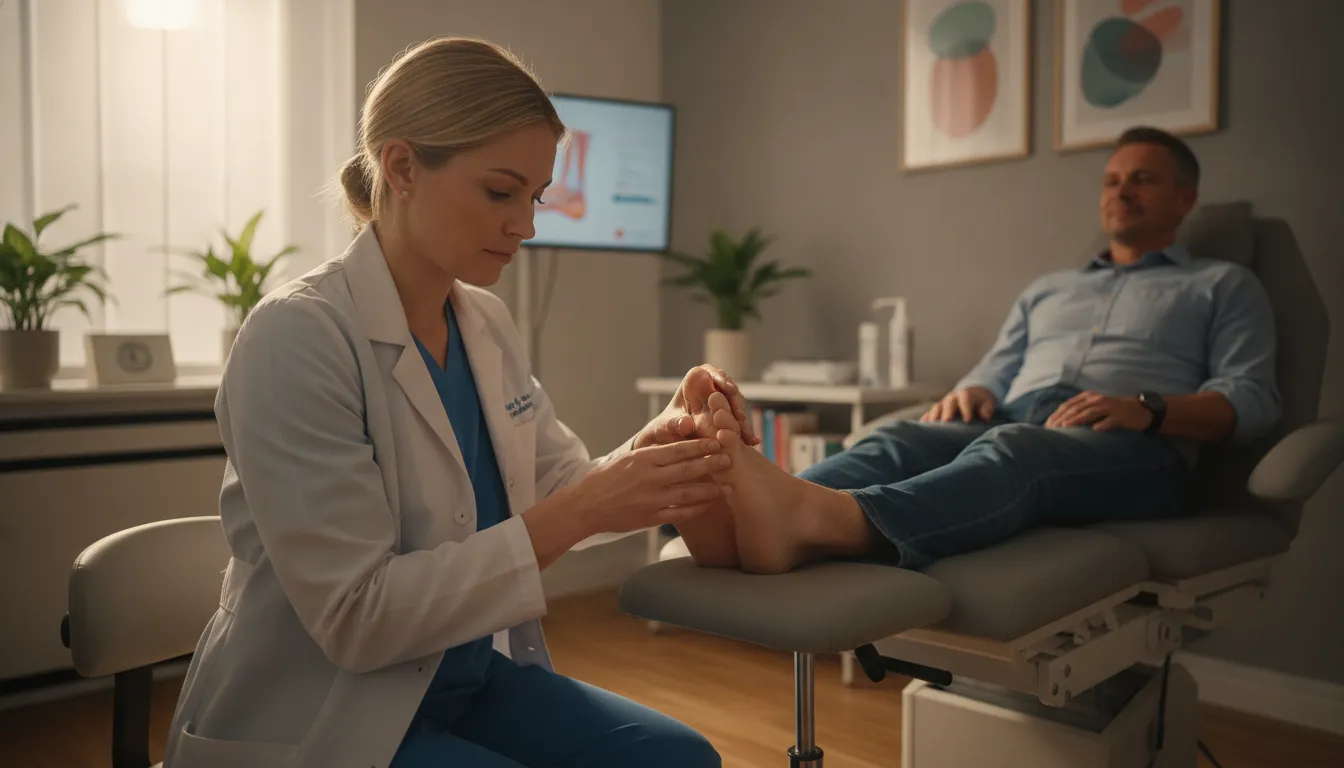
At Comprehensive Foot and Ankle Institute in Hoffman Estates, Dr. Sutpal Singh takes a concierge approach to diagnose the root cause of your foot pain and create a personalized care plan. Our patients come from Schaumburg, Palatine, Arlington Heights, Barrington, and across the northwest Chicago suburbs seeking advanced care that goes beyond routine podiatry.
What Is Morton’s Neuroma?
Morton’s neuroma is a thickening of the tissue around a nerve leading to your toes, most often between the third and fourth metatarsal bones. It is not a tumor despite the name. Pressure and irritation cause the nerve to enlarge, producing sharp burning pain in the ball of the foot.
Morton’s neuroma, also called interdigital neuroma, develops when the nerve that runs between the metatarsal bones in your forefoot becomes compressed and irritated. This pressure triggers the body to build up fibrous tissue around the nerve as a protective response. The result is an enlarged, sensitive nerve bundle that produces pain every time you take a step.
According to the Mayo Clinic, this condition almost always occurs between the third and fourth toes. It is one of the most common nerve disorders of the foot, affecting approximately one in three people at some point in their lives.
- Feeling of a pebble, fold, or lump under the forefoot with every step
- Burning, tingling, or numbness that radiates into the toes
- Pain that worsens with narrow shoes, heels, or high-impact activity
- Pain that improves when removing shoes and massaging the foot
Common Causes and Risk Factors
The primary cause of Morton’s neuroma is chronic compression of the interdigital nerve between the metatarsal bones. Tight or narrow footwear, high heels, repetitive high-impact activities, and certain foot shapes increase the risk of developing this painful nerve condition.
The exact cause is not fully known, but experts agree that nerve compression is the central mechanism. When the metatarsal bones repeatedly squeeze the nerve, the body responds by building protective tissue around it. Over time, this thickened tissue becomes the source of pain and discomfort.
Footwear Choices
Your shoe selection plays a major role in nerve health. Narrow toe boxes crowd the forefoot and compress the metatarsal bones together. High heels shift your entire body weight onto the ball of the foot, amplifying pressure on the nerves by several times. Penn Medicine recommends keeping heels under three inches to reduce risk. Shoes that are too tight during sports, like ski boots or climbing shoes, can also trigger nerve compression.
Foot Structure and Activity
Natural foot mechanics can predispose some people to this condition. Flat feet, high arches, bunions, and hammertoes all alter how weight distributes across the forefoot, increasing pressure on specific nerves. High-impact sports such as running, tennis, and basketball place repetitive stress on the same area.
Who Is Most at Risk?
Morton’s neuroma occurs most often in adults between 30 and 60 years old. Women experience it at higher rates, largely due to footwear styles. People who stand for extended periods at work or engage in regular high-impact activity also face elevated risk.
What Are the Symptoms of Morton’s Neuroma?
The hallmark symptom is sharp, burning pain in the ball of the foot that often radiates into the third and fourth toes. Many patients describe the sensation of walking on a small lump or fold inside their shoe, even when barefoot.
Recognizing the symptoms early allows for faster intervention and better outcomes. The most distinctive sign is pain that comes and goes depending on activity and footwear.
- Sharp or burning pain in the forefoot, centered between the third and fourth toes
- A sensation of walking on a small pebble, fold in the sock, or marble
- Tingling, numbness, or shooting sensations that spread into the toes
- Pain that intensifies with narrow shoes, heels, or prolonged standing
- Immediate relief when removing shoes and massaging the forefoot
Because the symptoms can mimic other conditions like metatarsalgia or stress fractures, an accurate diagnosis is essential. Many patients wait too long to seek care, assuming the pain will resolve on its own. Early evaluation by a foot specialist can prevent permanent nerve damage and help you return to your active lifestyle more quickly.
How Is Morton’s Neuroma Diagnosed?
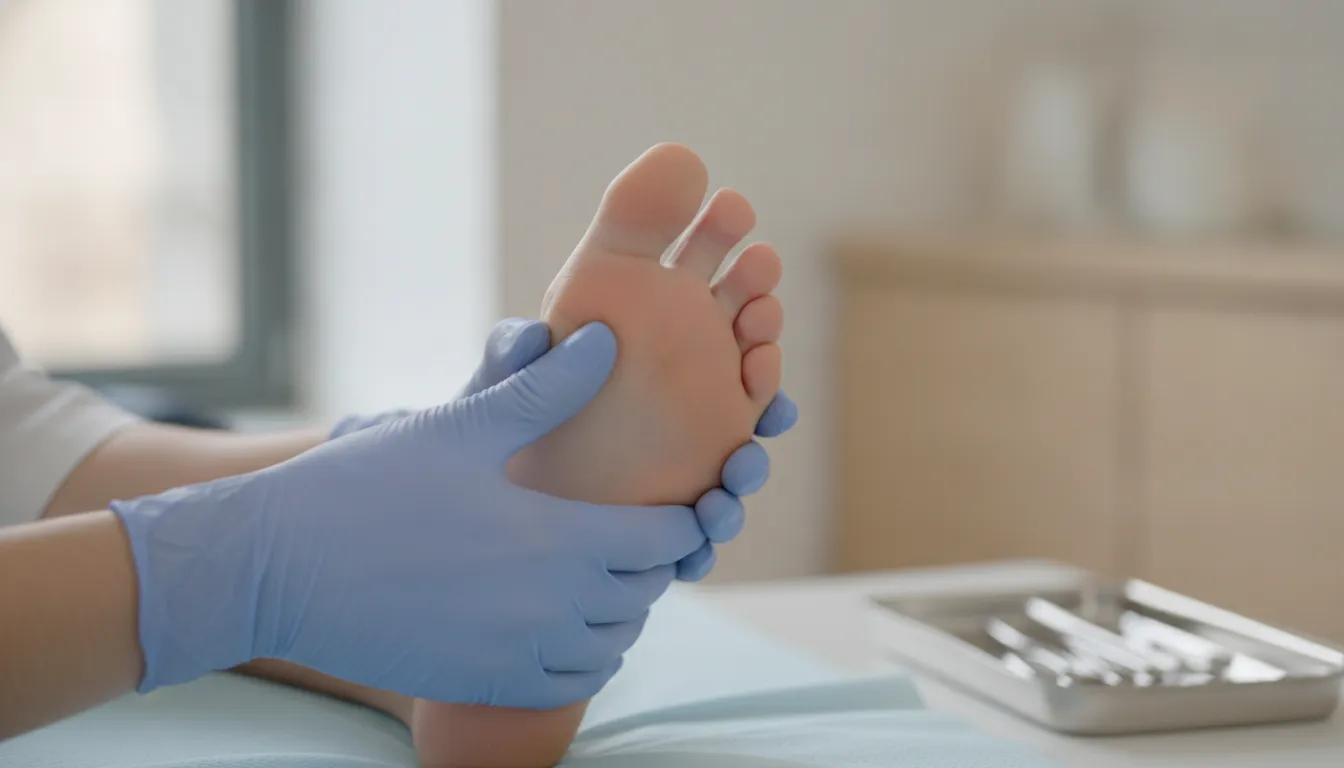
Diagnosis begins with a physical exam where the doctor palpates the forefoot and performs Mulder’s sign test. Imaging such as ultrasound or MRI confirms the size and location of the neuroma while ruling out other causes of forefoot pain.
Dr. Singh takes a thorough approach to diagnosis, combining a detailed history of your symptoms with hands-on examination. Your specific pain patterns, footwear habits, and activity levels provide important clues about the underlying nerve issue.
Physical Examination
The most reliable diagnostic indicator is a finding known as Mulder’s sign. The doctor squeezes the forefoot from side to side while pressing on the space between the metatarsal bones. A distinct click accompanied by your typical pain confirms the presence of a neuroma.
Imaging Studies
While X-rays cannot show the nerve itself, they help rule out stress fractures or arthritis. Ultrasound provides a real-time view of the swollen nerve and its size. MRI offers the most detailed picture, confirming the precise location and ruling out other soft-tissue problems. With an accurate diagnosis, Dr. Singh can design a treatment plan that addresses the root cause rather than just the symptoms.
Conservative and Nonsurgical Treatment Options
Most cases of Morton’s neuroma respond first to conservative care. Wider shoes with low heels, metatarsal pads, custom orthotics, and activity modification can reduce nerve compression and relieve symptoms without any medical procedure.
Conservative treatments form the foundation of Morton’s neuroma care. These approaches focus on reducing pressure on the nerve and allowing the surrounding inflammation to resolve naturally.
Footwear Modifications
The simplest and most effective change is switching to shoes with a wide toe box and low heel. This creates more space in the forefoot, allowing the metatarsal bones to spread apart instead of compressing the nerve. Many patients experience significant relief from this change alone.
Orthotics and Padding
Custom orthotic inserts support the arch and distribute weight more evenly across the foot. Metatarsal pads placed behind the ball of the foot lift the metatarsal bones, reducing pressure on the nerve. These devices are available through our office and tailored to your specific foot structure.
Activity Modification and Ice
Temporarily reducing high-impact activities like running or jumping allows the nerve inflammation to subside. Applying ice to the ball of the foot for 15 minutes after activity helps control pain and swelling.
Steroid Injections
Corticosteroid injections can provide temporary relief by reducing inflammation around the nerve. Ultrasound guidance ensures the medication reaches the precise location. However, these injections address symptoms rather than root causes, and repeated use carries risks. Dr. Singh prefers regenerative approaches that help the body heal the nerve itself for longer-lasting results.
Not sure which treatment is right for you? Contact our team to schedule a consultation and receive a personalized evaluation.
Advanced Regenerative Treatments for Morton’s Neuroma
Regenerative treatments aim to repair the damaged nerve tissue itself rather than just masking the pain. Options include platelet-rich plasma (PRP), stem cell therapy, Liposona fat pad repair, BPC-157 peptides, Class IV laser therapy, and SoftWave shock wave therapy.
Dr. Singh offers a comprehensive suite of regenerative therapies that distinguish his practice from conventional podiatry. These advanced options stimulate the body’s natural healing mechanisms to address the underlying nerve damage.
Platelet-Rich Plasma (PRP) and Stem Cell Therapy
PRP involves drawing a small sample of your blood, concentrating the platelet-rich portion, and injecting it near the neuroma. The growth factors in platelets signal your body to begin repairing the damaged tissue. Research on PRP for metatarsal pain shows promising results for nerve regeneration without the side effects of steroid medications.
Stem cell injections provide an additional layer of regenerative potential. These cells can differentiate into healthy tissue and reduce inflammation at the site of injury. Ultrasound guidance ensures precise delivery to the affected nerve.
Liposona Fat Pad Restoration
The natural fat pad on the bottom of your foot acts as a shock absorber for the metatarsal bones. When this pad thins, nerves are exposed to increased pressure. Liposona uses your own fat cells to restore cushioning, protecting the nerve from further compression.
Peptides and Laser Therapy
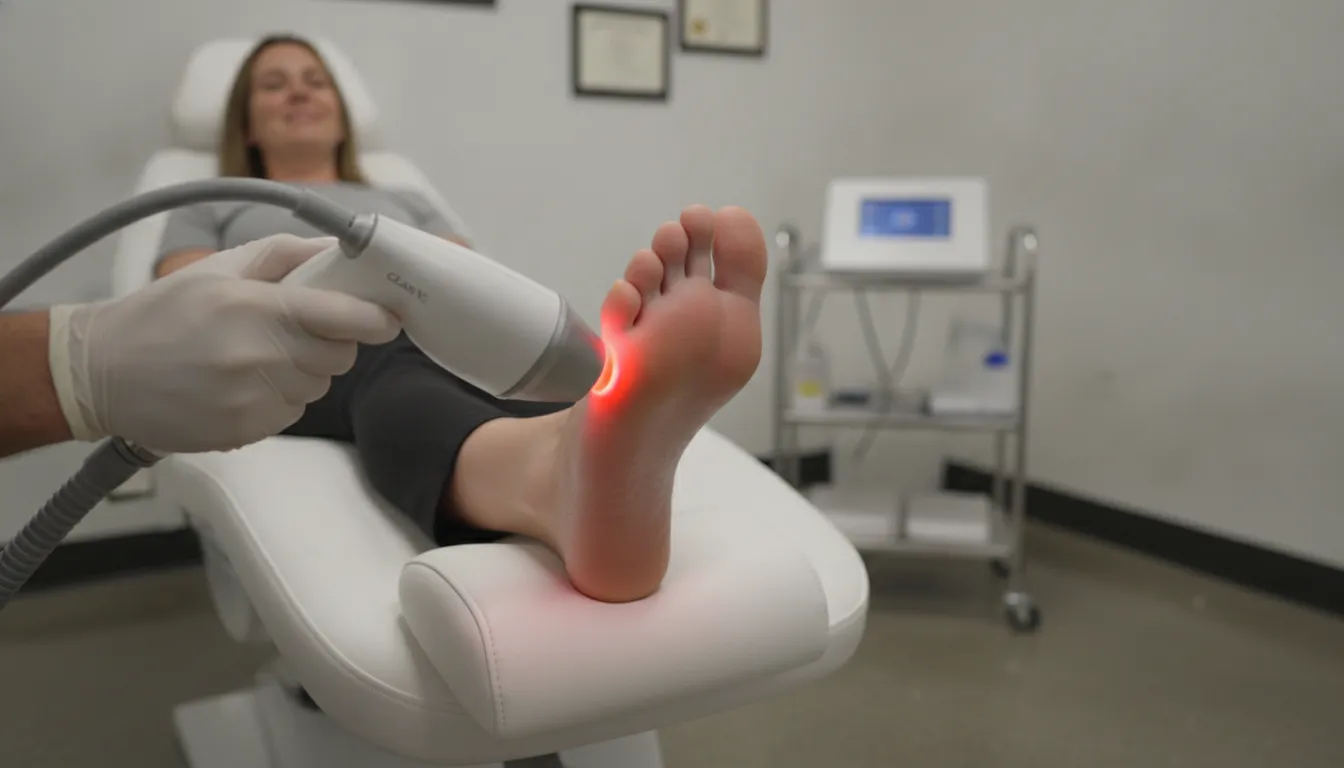
BPC-157 is a bioactive peptide that promotes nerve and soft-tissue repair. Class IV laser therapy delivers deep-penetrating light energy that reduces inflammation and stimulates cellular recovery. SoftWave therapy uses acoustic waves to trigger blood flow and accelerate healing.
| Treatment | Approach | Recovery |
|---|---|---|
| Steroid Shots | Reduces inflammation with chemicals | Quick but temporary |
| PRP / Stem Cells | Uses your cells to repair tissue | Natural and long-lasting |
| Liposona Fat Pad | Restores natural cushioning | Immediate pressure relief |
| BPC-157 Peptides | Signals nerve healing | Supports deep repair |
| Class IV Laser | Deep light energy reduces swelling | No downtime |
| SoftWave Therapy | Sound waves trigger blood flow | No downtime |
Minimally Invasive Surgery for Morton’s Neuroma
When conservative and regenerative treatments do not provide sufficient relief, minimal incision foot surgery offers a precise solution. Dr. Singh uses a small poke-hole technique with specialized instruments under local anesthesia, allowing immediate walking afterward.
Traditional neuroma surgery involves a large incision and weeks of recovery. Dr. Singh’s approach uses a tiny opening about the size of a pen tip to access the nerve with minimal disruption to surrounding tissue.
The Minimal Incision Advantage
Unlike open surgery that removes the entire nerve through a long cut, the poke-hole technique uses precise instruments through a single small opening. This preserves healthy tissue and reduces recovery time dramatically.
- Performed in-office under local anesthesia, no hospital stay needed
- No screws, plates, or internal hardware required
- Patients typically walk on the same day as the procedure
- Minimal bleeding and lower infection risk compared to open surgery
Nerve Decompression vs. Removal
Not every case requires nerve removal. When possible, Dr. Singh performs a nerve decompression by releasing the tight bands of tissue compressing the nerve. This creates more space in the forefoot, allowing the nerve to heal while preserving full sensation in the toes. When removal is necessary, the minimal incision technique still offers faster recovery than conventional approaches.
Why Choose Comprehensive Foot and Ankle Institute?
Dr. Sutpal Singh brings 30 years of experience and advanced fellowship training in foot and ankle surgery. His concierge practice model ensures personal attention, short wait times, and a treatment plan tailored to your unique needs and lifestyle goals.
Patients travel from across the northwest Chicago suburbs to receive care at our practice because of the combination of expertise, advanced technology, and genuine personal attention.
Expertise That Makes a Difference
Dr. Singh is a third-generation physician with board certifications in foot surgery and reconstructive rearfoot and ankle surgery. His 30 years of experience include advanced training in regenerative medicine and minimal incision techniques that most podiatrists do not offer.
A True Concierge Experience
Our practice does not double-book patients or rush through appointments. Dr. Singh personally oversees every aspect of your care, from initial evaluation through treatment and follow-up. You receive the time and attention needed to fully understand your condition and participate in the treatment decision process.
Serving Our Community
We are proud to serve patients from Hoffman Estates, Schaumburg, Palatine, Arlington Heights, Barrington. South Barrington, Rolling Meadows, Elk Grove Village, and all across Kane, DuPage, McHenry, and Cook counties.
Frequently Asked Questions
What is the most effective treatment for Morton’s neuroma?
The most effective treatment depends on the severity of the nerve enlargement and your activity goals. Conservative options like wider shoes and orthotics help mild cases. For persistent pain, regenerative therapies such as PRP, laser, or shock wave therapy address the underlying nerve damage. Advanced cases may benefit from minimal incision surgery, which allows same-day walking.
Will Morton’s neuroma go away on its own?
Morton’s neuroma rarely resolves without intervention. The enlarged nerve tissue and surrounding fibrosis do not shrink on their own once established. According to the Mayo Clinic, early changes to footwear and activity can prevent progression, but active treatment is typically needed to relieve symptoms.
What happens if Morton’s neuroma is left untreated?
Without treatment, the nerve compression can lead to permanent nerve damage, chronic pain, and numbness in the affected toes. The condition may progress from intermittent discomfort to constant pain that limits walking, exercise, and daily activities. Early professional evaluation gives you the best chance of successful conservative treatment.
What conditions are commonly mistaken for Morton’s neuroma?
Metatarsalgia, stress fractures, arthritis, and fat pad atrophy all produce similar forefoot pain. A physical exam combined with ultrasound or MRI provides the definitive diagnosis, ensuring you receive the correct treatment for your specific condition.
Ready to Find Relief From Morton’s Neuroma Foot Pain?
Every step should not be a reminder of nerve pain. Whether you have just started noticing symptoms or have been struggling for months, advanced treatment options are available. Dr. Singh and the team at Comprehensive Foot and Ankle Institute are ready to help you find the right path to recovery. We focus on getting you back to the activities you love with a personalized plan that fits your life.
Call (847) 310-1600 or contact us online to schedule your consultation today.