





A toenail that keeps becoming tender in the same spot is not always a simple trimming problem. Pressure from footwear, nail shape, prior injury, inflammation, or an infection can keep the edge pressing into the surrounding skin. The right next step depends on what is driving the recurrence, not only how painful the toe feels today.
A permanent solution for painful ingrown toenail may involve treating the repeatedly problematic nail edge or its growth area, but no procedure can guarantee that an ingrown toenail will never return. A specialist first considers the nail border, skin changes, drainage, infection risk, health history, and prior episodes before discussing conservative care or removal options. Recovery and follow-up also vary by the approach and the patient.
For patients in Hoffman Estates and the northwest Chicago suburbs, a doctor-led evaluation can clarify the cause. It may be ongoing pressure, the nail’s natural curve, or another condition requiring careful management. Understanding why ingrown toenails recur is the place to begin.
Request an individualized ingrown toenail evaluation
Why Do Ingrown Toenails Keep Coming Back?
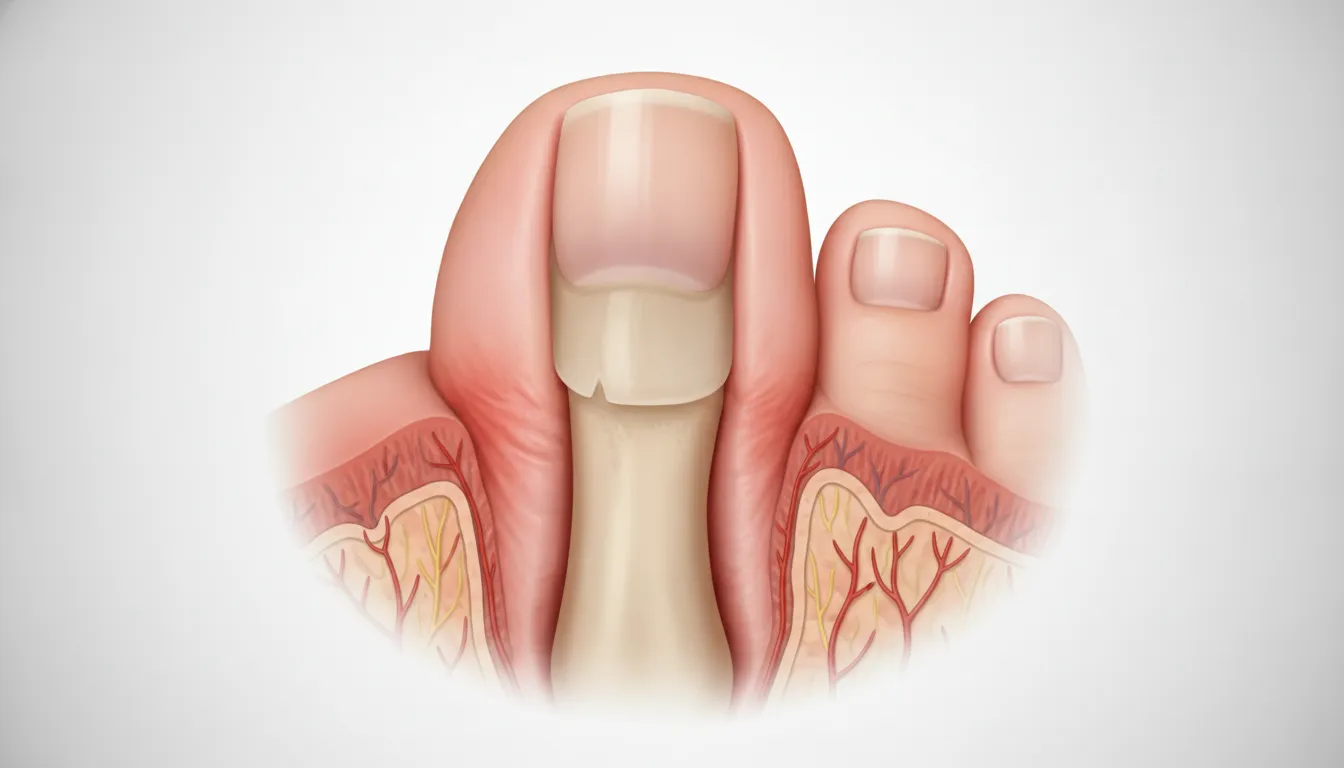
An ingrown toenail develops when the corner or side of the nail grows into the surrounding soft tissue. That pressure can produce pain, swelling, inflamed skin, and sometimes infection. When the same toe repeatedly becomes tender, an underlying driver may not be fully addressed. It may not be solved by trimming the nail again.
The nail itself may be part of the problem
Some nails are naturally more curved, thickened, or misshapen. A curved edge can press into the skin as it grows, especially when the toe is crowded inside a shoe. Nail deformities and structural abnormalities may also change how the nail meets the surrounding tissue. In these cases, temporary relief may not prevent the edge from returning to the same painful position.
Key point: Recurrence usually reflects a combination of nail shape, pressure, nail-care habits, and individual health factors. Finding the combination matters because a treatment that helps one person may not address the main trigger for another.
Everyday pressure and nail-care habits can restart the cycle
Shoes that constrict the toes can push the nail border into the skin with every step. This may be especially noticeable for people who run, play field or court sports, or spend long periods in work footwear. Repeated kicking or impact can injure the nail and change its growth pattern.
Trimming can create another problem. Cutting the nail too short, cutting across an uneven edge, or rounding the corners may leave a sharp border that grows into the skin. Digging into the sides at home can also irritate the tissue and make it harder to tell whether the problem is a simple pressure injury or something that needs medical attention. The Mayo Clinic identifies crowded shoes, improper trimming, injury, very curved nails, and nail infections among recognized causes of ingrown toenails. Learn more about common causes and symptoms.
Inflammation and infection can keep symptoms active
Once the nail penetrates the skin, the body can respond with inflammation. Ongoing irritation may lead to granulation tissue, drainage, or infection. Sweaty feet can soften the nail and surrounding skin, while conditions such as diabetes may increase the importance of careful evaluation. If there is pus, severe discomfort, or inflammation that appears to spread, seek evaluation rather than repeatedly treating the toe at home.
For people looking for a permanent solution for painful ingrown toenail problems, the responsible next step is an individualized assessment. A specialist can consider the nail’s shape, footwear, activity, trimming pattern, inflammation, infection risk, and recurrence history before discussing appropriate options. The goal is to address the reason the nail keeps returning, while recognizing that no treatment can guarantee that recurrence will never occur.
What Does a Specialist Evaluate Before Recommending Removal?
A specialist does not recommend nail removal based on pain alone. The examination looks at how the nail edge is entering the surrounding skin, how advanced the inflammation is, and why the problem may be returning. That information helps determine whether conservative care is reasonable or whether a targeted procedure may better address a recurring problem.
Key point: Before recommending removal, a specialist evaluates the nail border, inflammation or drainage, infection risk, recurrence pattern, pressure from footwear, and health factors such as diabetes or reduced sensation. A more lasting approach may be considered when the same nail edge repeatedly causes symptoms, but no procedure guarantees that an ingrown toenail will never return.
The nail edge and surrounding tissue
The clinician first examines which side or corner is involved and whether the nail plate is penetrating the soft tissue. The appearance of the skin matters as well. Redness, swelling, tenderness, granulation tissue, or drainage can indicate a more advanced problem. Severe discomfort, pus, or inflammation that appears to be spreading should be evaluated by a healthcare provider, according to Mayo Clinic guidance.
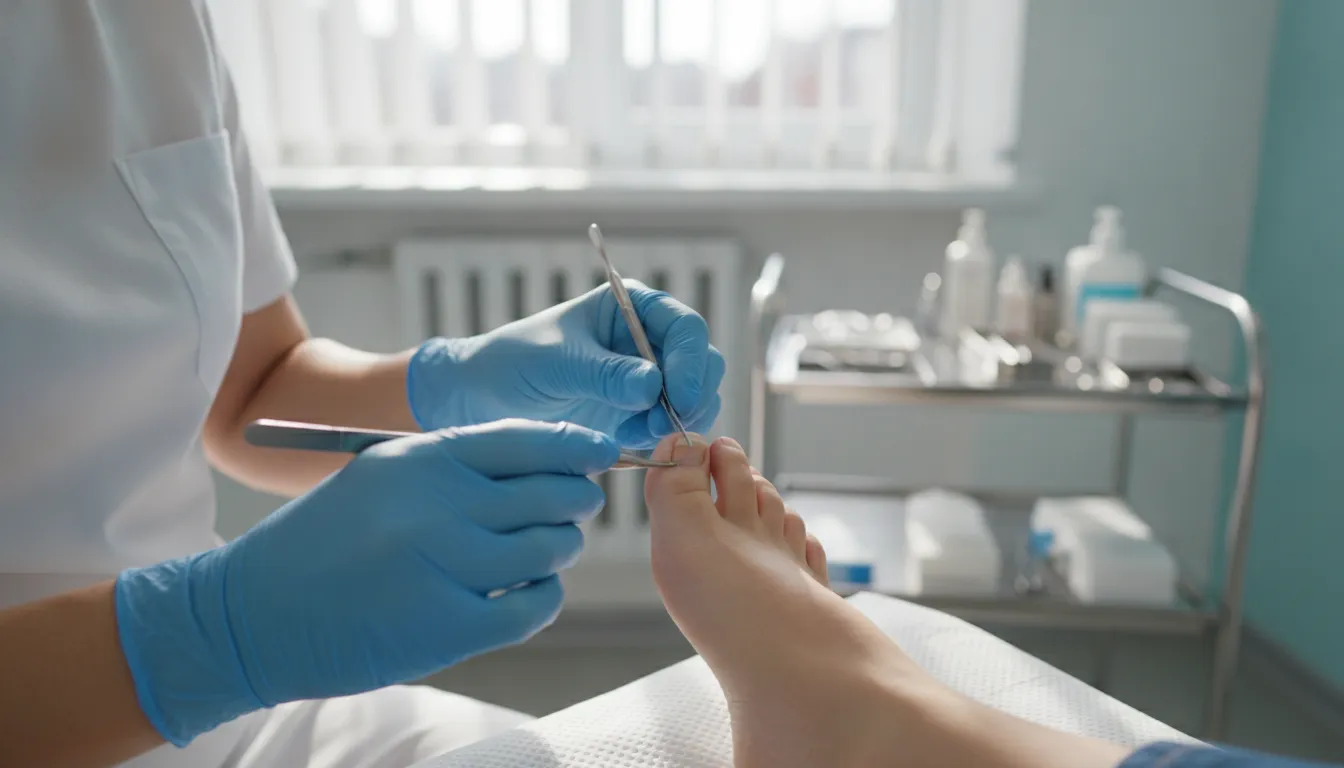
The specialist may also consider whether the symptoms are actually caused by an ingrown nail. Nail fungus, a nail deformity, trauma, a small wound, or another skin or joint concern can produce changes that look similar. Identifying the correct cause is important because removing an edge will not address a different underlying condition.
Severity, recurrence, and daily pressure
One episode after trimming a nail too short may call for a different plan than repeated inflammation on the same toe. The evaluation considers prior treatments, how quickly symptoms returned, and whether the nail shape or underlying nail bed is contributing. Clinical references describe severity-based treatment planning and assessment of patient-specific recurrence risks as parts of an appropriate evaluation. Depending on those findings, options may include conservative care, partial removal, or treatment directed at the nail root. You can review the practice’s broader foot and ankle services to understand its individualized treatment approach.
Footwear and activity are also relevant. Shoes that press against the toe, repetitive running or kicking, sweating, nail-trimming habits, and prior injury can continue irritating the border after treatment. A specialist will ask about work shoes, athletic footwear, and daily activities rather than evaluating the toe in isolation.
Health history and sensation
Diabetes, poor circulation, neuropathy, and reduced ability to feel pain can change the risk of infection or delayed healing. These factors may require closer assessment of skin integrity, blood flow, sensation, and wound risk before any removal is considered. At Comprehensive Foot and Ankle Institute, Dr. Sutpal Singh, DPM, FACFAS, provides doctor-led evaluation for patients in Hoffman Estates and the northwest Chicago suburbs. Learn about Dr. Sutpal Singh’s credentials before discussing which option may fit your toe, health history, and activity goals.
Which Permanent Solution for Painful Ingrown Toenail May Be Appropriate?
Key point: A permanent approach to an ingrown toenail usually means reducing regrowth from the specific nail edge that repeatedly enters the skin. It does not mean that recurrence is impossible, because nail shape, footwear pressure, trauma, trimming habits, inflammation, and underlying health factors can still affect the toe.
The right choice depends on what the toe looks like during examination, how often the problem returns, whether there is drainage or infection, and which factors may be driving the recurrence. Evidence-based management includes conservative care and surgical options. For moderate to severe cases, surgical approaches may be considered to help reduce repeat symptoms.
| Approach | What it addresses | When it may fit | Important expectation |
|---|---|---|---|
| Conservative edge care | The pressure and irritation at a mildly ingrown nail edge. A clinician may gently lift the edge and place a small splint or similar material beneath it. | A slightly ingrown nail without a pattern of significant recurrence may respond to this type of management. | The nail must grow past the skin edge, and the approach does not permanently change the nail matrix. Nail-edge separation may take about 2 to 12 weeks in some cases, but timing varies. |
| Partial nail removal | The narrow section of nail that is penetrating or pressing into the surrounding tissue. | Repeated problems on the same toe or a more severe episode may lead a provider to consider removing part of the nail and, when appropriate, the underlying nail bed. | The removed portion can regrow unless the responsible matrix area is also addressed. A removed toenail may take 2 to 4 months to grow back, depending on the treatment and the individual. |
| Matrix-directed treatment | The targeted portion of the nail matrix, where nail growth begins. Partial matricectomy may use a surgical, chemical, or electrosurgical method. | Recurring disease involving the same nail border, especially when reducing regrowth from that border is a treatment goal. | Published approaches include partial matricectomy and phenolization. They can reduce symptomatic recurrence, but no procedure guarantees that the problem will never return. |
“Permanent” should therefore be understood as targeted prevention, not a promise of a permanently problem-free toe. A clinical review in American Family Physician describes partial nail avulsion followed by phenolization and direct surgical excision of the matrix as comparably effective in a review of 24 studies. The same review notes that partial avulsion with phenolization can be more effective at preventing symptomatic recurrence than excision without phenolization. Those findings help inform a conversation, but they do not determine which option is appropriate for every patient.
Before choosing a procedure, a specialist should assess the nail border, inflammation, drainage, nail deformity, recurrence history, footwear pressure, and conditions such as diabetes that may affect healing or complication risk. That evaluation can help distinguish a problem that may settle with edge care from one that may benefit from a more targeted approach. For individualized treatment planning, explore the practice’s regenerative foot treatments and discuss your goals with a qualified podiatric provider.
What Should Recovery and Follow-Up Really Look Like?
Key point: Recovery after ingrown toenail treatment depends on what was done, how much tissue was inflamed, and your overall health. A simple nail-edge approach may have a different course from removal of part of the nail or treatment directed at the nail root. Follow the instructions provided for your toe rather than using a general timeline as a promise.
Immediately after treatment, your toe may be covered with a dressing. Keep that dressing and the surrounding area clean and dry exactly as instructed. Some soreness or tenderness can be expected as the numbing medicine wears off, but the intensity and duration vary. If pain becomes severe, or if redness, swelling, or drainage appears to spread, contact a healthcare provider. Do not assume that increasing discomfort is simply part of healing.
The first day: protect the toe and reduce pressure
Rest and elevation may be advised for the first 12 to 24 hours after nail-removal surgery. Elevating the foot can help limit throbbing and swelling while the toe settles. Wear the footwear recommended by your clinician. A roomy, open, or protective option may be more comfortable than a tight shoe, but the right choice depends on the procedure, dressing, and your walking needs.
Activity should also be individualized. Avoid putting extra pressure on the toe until your clinician says it is appropriate. That may mean modifying running, kicking sports, long walks, or work duties for a period of time. Returning too quickly can irritate the healing border, especially when footwear rubs the treated area. Your follow-up plan should account for the procedure, skin response, circulation, diabetes or other health conditions, and whether this is a recurring problem.
Healing, follow-up, and nail regrowth
For a slightly ingrown nail treated by lifting and separating the edge. The nail may grow above the skin edge in about 2 to 12 weeks, according to Mayo Clinic. That range applies to this conservative approach and should not be applied to every procedure. If part or all of a toenail is removed, regrowth can take about 2 to 4 months. A matrix-directed procedure is intended to limit regrowth from a targeted portion, so the visible result may not be a completely new full-width nail.
Follow-up is more than a formality. It gives the clinician an opportunity to assess drainage, swelling, skin healing, footwear tolerance, and whether the original pressure or nail-shape problem remains. Even after successful surgery, recurrence can occur. The goal of a carefully selected treatment is to address the involved nail edge and reduce the factors that made it painful. While recognizing that healing and recurrence risk are individual.
Source: Mayo Clinic guidance on ingrown toenail treatment.
When Is Painful Ingrown Toenail Care More Urgent?
A mildly tender nail edge may sometimes be monitored with careful home care, but escalating symptoms deserve professional attention. Severe discomfort, pus. Or inflammation that appears to spread are reasons to contact a healthcare provider rather than continuing to dig at the nail or wait for it to improve. These signs can indicate a more advanced inflammatory or infectious process. Mayo Clinic identifies severe discomfort, pus, and spreading inflammation as reasons to seek medical evaluation.
Key point: Pain that is worsening, spreading, or accompanied by drainage should not be managed as a minor nail nuisance. Prompt assessment can clarify whether the problem needs wound care, infection management, removal of the irritating nail edge, or another treatment plan.
Warning signs that should not be ignored
Arrange an evaluation if the toe becomes increasingly painful, the skin grows more red or swollen beyond the nail fold, or you notice pus or other drainage. Worsening symptoms after an attempted trim are also a reason to stop self-treatment. Cutting deeper into the corner can create another wound and make it harder to see how far inflammation extends. A clinician can examine the nail border and surrounding tissue, assess severity, and determine whether infection or another condition is contributing to the symptoms.
Why diabetes, neuropathy, and circulation change the decision
People with diabetes or poor blood flow to the feet have a higher risk of complications from an ingrown toenail, according to Mayo Clinic. Neuropathy adds another concern: reduced sensation may make it difficult to recognize a wound, pressure injury, or infection early. For these patients, an apparently small nail problem can require more careful assessment of the skin, circulation, sensation, and healing risks. Do not rely on pain alone as a measure of severity, and do not attempt aggressive cutting or drainage at home. The same caution applies if you have a history of slow-healing wounds, immune suppression, or repeated problems in the same toe.
At Comprehensive Foot and Ankle Institute in Hoffman Estates, Dr. Sutpal Singh, DPM, FACFAS, can evaluate the immediate symptoms alongside the factors that may be driving recurrence. The goal is an individualized plan, not an automatic procedure or a promise of a permanent result.
Request an ingrown toenail evaluation and call (847) 310-1600
How Can You Reduce the Chance of Another Ingrown Toenail?
Prevention starts with reducing pressure and trauma around the nail while addressing the habits that may have contributed to the first episode. These measures cannot guarantee that an ingrown toenail will never return, especially when nail shape, infection, diabetes, or another structural factor is involved. They can, however, lower avoidable irritation and help you notice a problem before it becomes more painful.
- Choose footwear with room at the toes. Shoes should not squeeze the nail or press the big toe against the neighboring toe. A wider toe box is especially important for walking, running, and activities that repeatedly load the front of the foot. Crowded or constrictive footwear is a recognized contributor to ingrown toenails. Mayo Clinic lists crowded shoes among the causes.
- Trim nails straight across. Leave enough length for the nail edge to remain above the skin. Avoid cutting too short, rounding the corners, or shaping the sides deeply. Do not use sharp tools to dig under the corners, since that can injure the surrounding skin and encourage further inflammation.
- Protect your toes during sports. Running, kicking, sudden stops, and impact can injure a nail or repeatedly force the toes into the front of a shoe. Wear activity-appropriate footwear, check that it still fits comfortably, and address bruising, tenderness, or nail changes rather than playing through worsening symptoms.
- Monitor the skin and nail edge. Check for increasing tenderness, redness, swelling, drainage, or a nail corner pressing into the skin. Keep the area clean and dry, and do not try to force an inflamed nail edge into a different position. People with diabetes or poor circulation should be particularly cautious because complications may be more likely.
- Follow the clinician’s instructions after treatment. Dressing changes, footwear recommendations, activity limits, and follow-up timing depend on the procedure and your health history. If the same toe repeatedly develops problems, ask a request an ingrown toenail evaluation whether nail shape or another recurrence factor needs to be addressed.
In short: The most useful recurrence-reduction steps are roomy shoes, straight-across trimming, no corner digging, toe protection during sports, early skin monitoring, and adherence to individualized aftercare. Persistent or repeated symptoms deserve an evaluation rather than repeated home cutting.
Frequently Asked Questions
Is it possible to permanently get rid of an ingrown toenail?
A procedure that removes part of the nail and addresses the corresponding nail root may offer a longer-term solution for a recurring problem. However, permanent results cannot be guaranteed. The best choice depends on the nail shape, severity, prior treatment, and factors that continue to place pressure on the toe. Even after successful surgery, recurrence is possible, according to the Mayo Clinic: the Mayo Clinic’s treatment guidance.
How do you fix an extremely painful ingrown toenail?
Severe pain, pus, or inflammation that is spreading should be evaluated by a healthcare provider rather than treated by digging into the nail at home. Depending on the findings, care may include removing the ingrown edge, treating infection when present, or discussing a procedure designed to reduce repeat problems. Diabetes or poor circulation requires additional caution because complications may be more likely.
Will an ingrown toenail eventually stop hurting?
Pain may improve when pressure and inflammation are addressed, but waiting does not remove the underlying nail edge or correct contributing factors. A slightly ingrown nail may respond to clinician-directed edge separation, while a painful or repeatedly inflamed toe may need a different approach. Seek evaluation if discomfort is severe, drainage develops, or redness appears to spread.
How long does it take for a toenail to grow back after removal?
Regrowth varies with the procedure, the portion removed, and your health. When a nail is removed, the Mayo Clinic notes that regrowth may take about 2 to 4 months: the Mayo Clinic’s treatment guidance. Your specialist can explain dressing care, footwear, activity, and follow-up based on your treatment plan.
Ready to discuss your ingrown toenail?
A focused evaluation can help clarify why the problem keeps returning and which treatment options may fit your nail, health history, footwear, and activity goals. Request an individualized ingrown toenail evaluation with Comprehensive Foot and Ankle Institute in Hoffman Estates. Call (847) 310-1600 or use the contact page to begin.