


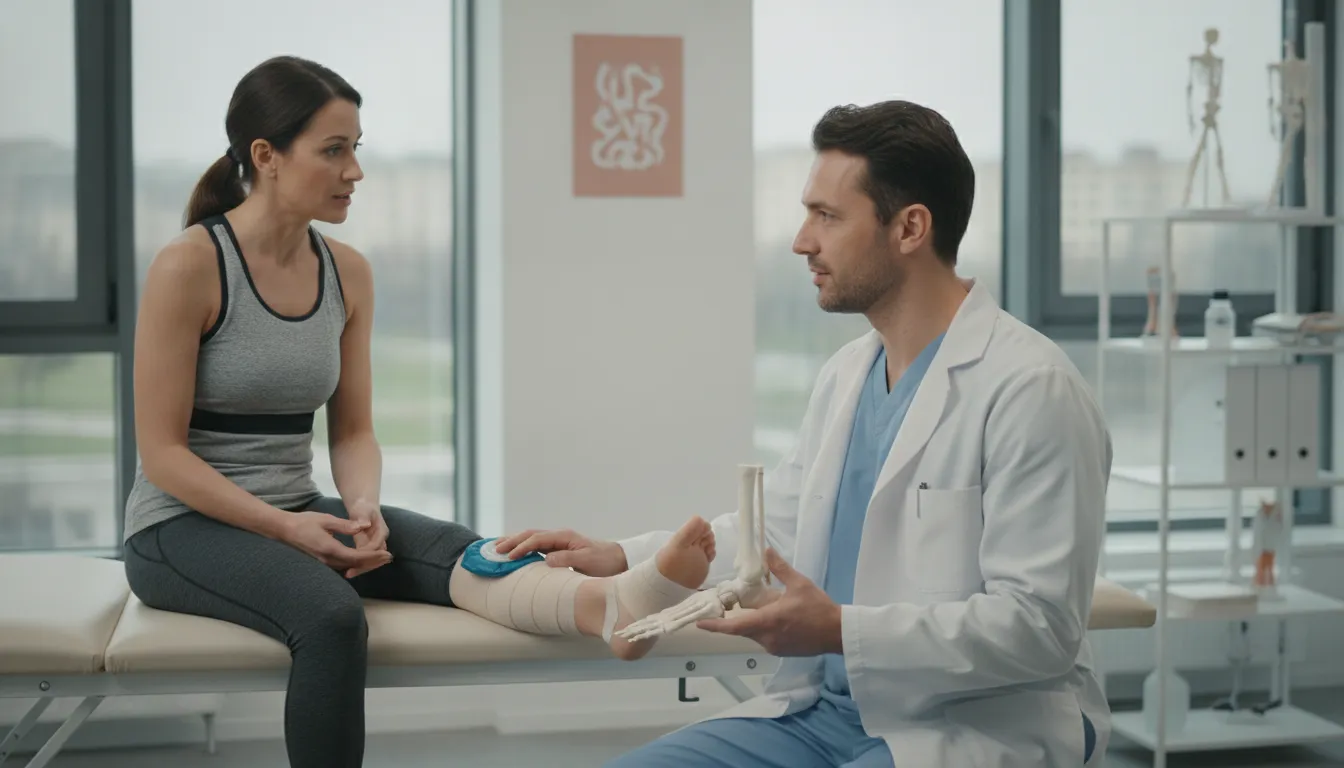

Achilles tendon pain can turn a morning walk, workout, or weekend sport into a daily calculation. Stiffness after rest and pain with activity may reflect an irritated tendon. Persistent symptoms deserve more than guesswork. Shockwave therapy for Achilles tendonitis may be one non-surgical option for carefully selected active patients, after a clinician confirms the diagnosis and discusses realistic goals.
Contact Comprehensive Foot and Ankle Institute about your Achilles pain
Shockwave therapy for Achilles tendonitis uses acoustic waves delivered through the skin to stimulate a local healing response in painful tendon tissue. It is non-invasive, does not replace rehabilitation, and is not a guaranteed cure. Candidacy depends on the cause, location, duration, and severity of symptoms, along with your activity goals and overall health.
At Comprehensive Foot and Ankle Institute in Hoffman Estates, Dr. Sutpal Singh, DPM, FACFAS, takes a personalized approach to regenerative and sports medicine care. Patients from Schaumburg, Palatine, Arlington Heights, Barrington, and other northwest Chicago suburbs can discuss their symptoms directly with the doctor. They are not placed into a one-size-fits-all protocol.
How Does Shockwave Therapy for Achilles Tendonitis Work?
Comprehensive Foot and Ankle Institute uses shockwave therapy as a non-invasive, potentially regenerative option for selected Achilles tendon problems. Acoustic pulses are applied through the skin to a clinically identified area. The treatment may support a local healing response, but it does not instantly repair a tear or guarantee that pain will resolve.
Shockwave therapy uses focused acoustic pulses delivered through the skin to an area identified during the clinical examination. The mechanical stimulus may encourage local circulation and the body’s healing response in tissue that has been slow to recover. The treatment does not remove damaged tendon tissue, instantly rebuild the tendon, or guarantee that pain will disappear.
Although the name can sound intense, extracorporeal shockwave therapy is non-invasive. The treatment does not require an incision, a needle placed into the tendon, or surgical hardware. A clinician applies gel to the skin and guides an applicator over the targeted area. Treatment intensity and location should be adjusted to the patient’s symptoms, tendon involvement, and tolerance.
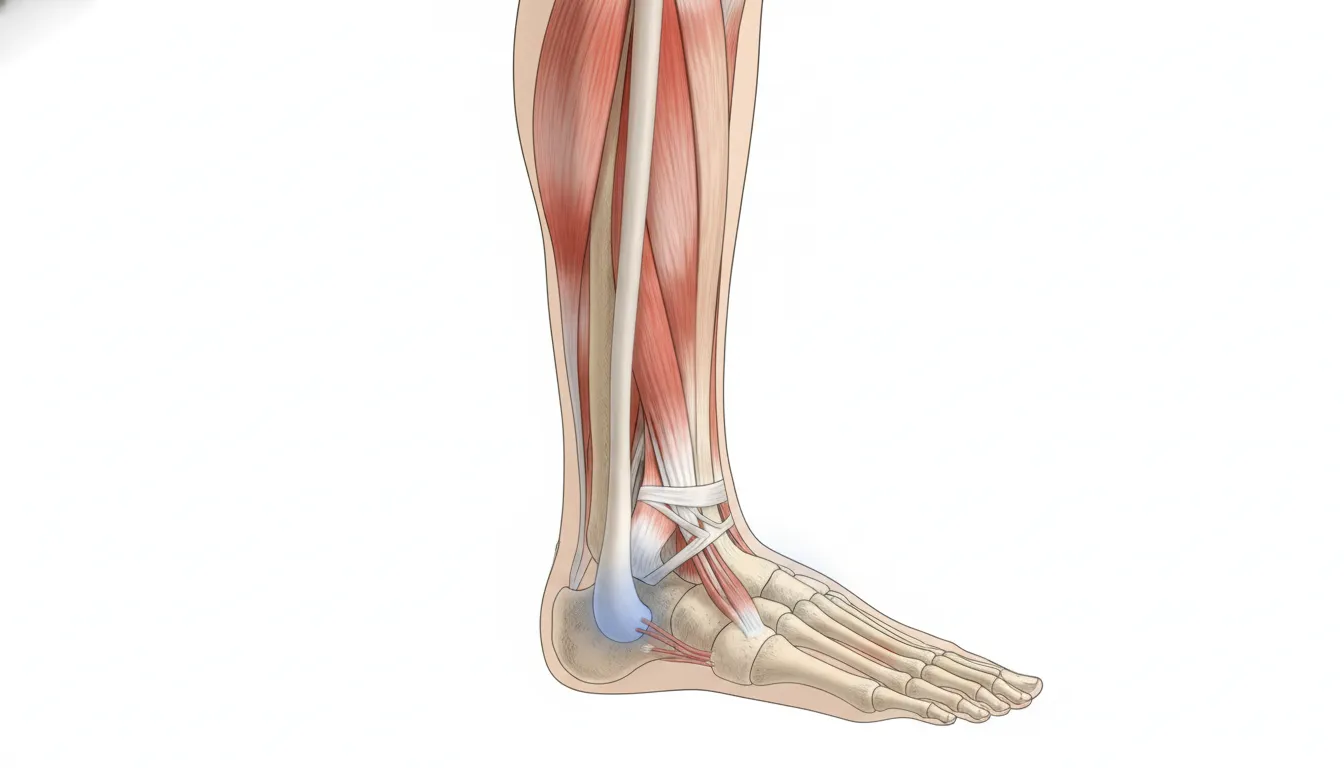
Achilles pain is not always the same problem. Some patients have insertional pain near the heel bone, while others have mid-portion symptoms higher in the tendon. Persistent pain may be described as Achilles tendinopathy rather than tendonitis when tendon structure has changed over time. A careful evaluation helps determine whether shockwave treatment is reasonable and whether another diagnosis needs attention first.
Key point: Shockwave treatment is intended to support a local healing environment, not force an immediate repair. Improvement, if it occurs, may develop over time and depends on the cause of pain, symptom duration, activity demands, and the rest of the care plan.
Research on shockwave therapy for Achilles tendinopathy remains mixed. A systematic review reported that the available evidence is limited and inconclusive, which makes expectation-setting important. A treatment can be a reasonable option for a carefully selected patient without being the right answer for everyone. Review the evidence on extracorporeal shockwave therapy for Achilles tendinopathy.
When Is Shockwave Therapy for Achilles Tendonitis a Reasonable Option?
Shockwave therapy for Achilles tendonitis may be considered when persistent symptoms have been evaluated and a clinician believes an acoustic-wave treatment could complement rehabilitation. Duration alone does not establish candidacy. Diagnosis, tendon findings, previous care, activity goals, and overall health all matter before treatment begins.
Active patients may begin discussing this option when Achilles pain, morning stiffness, swelling, or reduced function continues despite an appropriate period of basic care. Chronic tendon symptoms can make running, jumping, climbing stairs, or even walking uncomfortable. Symptoms may be localized near the heel or higher along the tendon, and they may become more noticeable after rest or a demanding workout.
Shockwave therapy for Achilles tendonitis is generally considered after the cause and extent of the problem have been assessed. An examination can evaluate tenderness, tendon thickening, strength, flexibility, gait, and the way the foot loads during activity. Depending on the findings, ultrasound or MRI may help show tendon detail. Mayo Clinic diagnostic guidance describes physical examination and imaging as part of evaluating Achilles tendinitis.
Some clinicians discuss shockwave treatment when symptoms have continued for months despite conservative measures. That timeline is not a rule and does not establish candidacy by itself. A patient may first need activity modification, progressive tendon loading, footwear changes, or another rehabilitation plan. A partial tear, insertional problem, systemic health issue, or a different source of pain may call for another approach.
Sudden severe pain is different from a gradually developing overuse problem. A snap or popping sensation, immediate bruising or swelling, visible tendon changes, marked weakness, or difficulty pushing off may indicate a rupture or another significant injury. Those symptoms warrant prompt medical evaluation. Shockwave treatment should not substitute for diagnosing an acute injury.
What this means for you: Candidacy depends on the diagnosis, tendon findings, symptom history, previous care, activity goals, and overall health. Dr. Singh can discuss whether a non-surgical regenerative option is reasonable, whether rehabilitation should be the priority, or whether further medical attention is needed. Learn about Dr. Singh’s background and approach.
What Happens During a Shockwave Therapy Session?
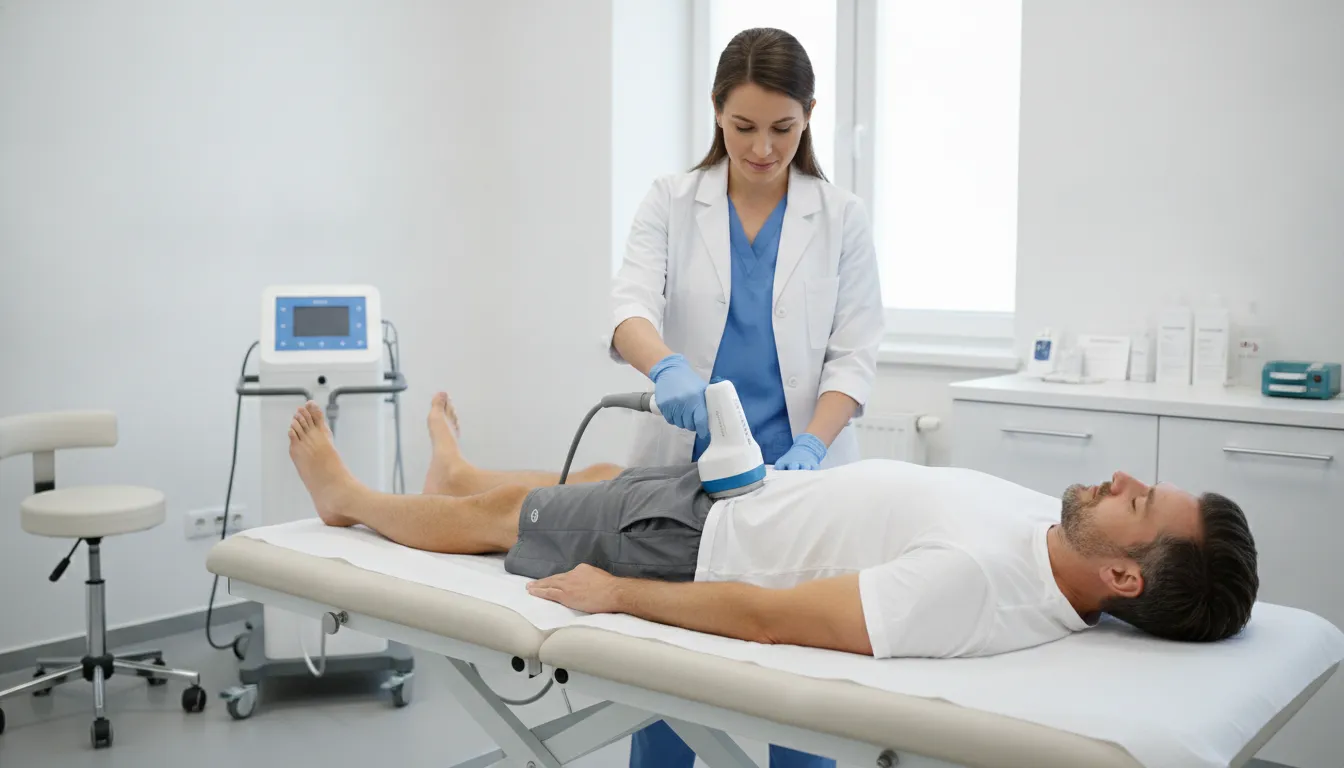
A shockwave therapy session at Comprehensive Foot and Ankle Institute begins with confirmation of the painful area and ends with individualized activity guidance. The clinician applies acoustic pulses through the skin, adjusts intensity to your response, and explains how walking, exercise, and tendon loading should progress after treatment.
A shockwave appointment is designed to be focused, in-office, and tailored to the location and severity of the Achilles concern. The goal is not to apply the same settings to every patient. The clinician first confirms that the painful area and diagnosis are appropriate for treatment, then adjusts the session around comfort and clinical needs.
- Evaluation and planning. The visit begins with a review of symptoms, activity demands, prior treatments, and goals. The clinician examines the Achilles tendon and surrounding foot and ankle. If the diagnosis needs clarification, imaging may be considered.
- Positioning and preparation. You are positioned so the clinician can reach the affected portion of the tendon comfortably. The target is identified using examination findings and the location of tenderness. Shockwave therapy is non-invasive and does not require hospitalization.
- Application of acoustic pulses. A handheld applicator delivers pulses to the selected area. You may feel tapping, pressure, or brief discomfort. The intended effect is stimulation of healing pathways, not mechanical repair during the appointment.
- Comfort and intensity adjustments. Tell the clinician if the sensation becomes difficult to tolerate. The intensity, pace, and treatment approach can be adjusted according to your response and the condition of the tissue.
- Planning the series. A general reference protocol may involve several sessions spaced about a week apart, but this is not a fixed prescription. The clinician determines whether additional sessions are appropriate and whether the interval should change.
- Aftercare and activity decisions. Temporary soreness, redness, or swelling can occur. Walking or daily activity may be appropriate for some patients, but exercise, sports participation, and tendon loading should follow the specific guidance provided for your injury.
Key point: A session is usually brief and non-invasive, but the safest plan depends on accurate evaluation, appropriate intensity, and individualized aftercare. Shockwave therapy may be one part of a broader plan to help you return to motion.
Discuss a personalized shockwave therapy plan with Dr. Singh
How Does Shockwave Compare With Other Achilles Options?
Shockwave therapy is one possible adjunct, not a universal replacement for rehabilitation or surgery. The appropriate choice depends on the diagnosis, tendon location, symptom duration, activity demands, and previous care. A doctor-led comparison helps an active patient weigh potential benefits, limitations, and next steps.
There is no single best treatment for every Achilles tendon problem. The right choice depends on the location and duration of pain, tendon changes, activity demands, and prior care. It also depends on whether the diagnosis is tendinopathy, a partial tear, or another condition. Examination and, when appropriate, imaging can help guide that decision.
Self-care and rehabilitation are commonly considered first. Adjusting aggravating activity, using a structured strengthening program, and addressing mobility or training factors may be appropriate for many patients. Rehabilitation is not necessarily an alternative to shockwave therapy. It may remain part of care when another modality is added.
Shockwave therapy is a non-invasive option that uses acoustic waves to stimulate healing pathways in treated tissue. It may be considered when symptoms continue despite an appropriate conservative plan, but the evidence is mixed. It should be presented as a potential tool, not as a guaranteed result or a replacement for medical judgment.
| Option | Where it may fit | Important considerations |
|---|---|---|
| Activity modification | Early, milder, or improving symptoms | Reduce provoking activity without complete inactivity. Persistent pain, weakness, or worsening symptoms deserves evaluation. |
| Rehabilitation | Many Achilles tendon conditions | Progression should match tendon tolerance and functional goals. Technique, load, and consistency matter. |
| Shockwave therapy | Selected chronic cases when a clinician believes an adjunct may be reasonable | Evidence is mixed. Temporary discomfort, soreness, redness, or swelling can occur. |
| Surgery | Selected structural problems or disabling symptoms after appropriate non-surgical care | It is more invasive and involves procedure-specific risks, restrictions, and recovery planning. |
Surgery can be appropriate in selected circumstances, especially when examination and imaging identify a structural problem unlikely to respond to non-surgical care. Moving directly to surgery without confirming the diagnosis may not fit every active patient. The practice’s foot and ankle services and regenerative therapy options are considered within a doctor-led treatment framework.
Comprehensive Foot and Ankle Institute also offers other regenerative modalities, such as Class IV laser therapy, when clinically appropriate. These options are not automatically combined or selected as a package. The goal is to match the treatment plan to the patient’s diagnosis and priorities. Learn about Class IV laser therapy for foot and ankle care.
What this means for you: Evidence is mixed, so treatment selection needs an evaluation rather than a one-size-fits-all comparison. A careful plan may combine rehabilitation with a selected adjunct, or it may point toward a different intervention entirely.
How Can Northwest Chicago Patients Plan a Return to Motion?
Patients in Hoffman Estates and the northwest Chicago suburbs can plan a return to motion by matching activity progression to diagnosis, tendon tolerance, and functional goals. Dr. Sutpal Singh evaluates those factors before discussing shockwave therapy, rehabilitation, or another option. Walking after treatment does not automatically mean immediate return to running or jumping.
Returning to an active routine is not simply a matter of choosing a procedure. It involves understanding what is affecting the Achilles tendon, what activities matter most to you, and how symptoms respond as care progresses. Dr. Singh evaluates those factors before discussing whether shockwave treatment, rehabilitation, or another option may fit your situation.
A runner may need a different progression than a recreational tennis player, warehouse worker, or patient whose first goal is comfortable walking. The plan should account for pain, strength, mobility, work demands, training goals, and examination findings. Monitoring next-day symptoms can help the care team decide whether activity is progressing appropriately.
Shockwave or SoftWave therapy is presented by the practice as an in-office, non-invasive regenerative modality. It may be compatible with walking or selected activity soon afterward when clinically appropriate. That does not mean every patient should immediately resume running, jumping, or high-load training. The tendon still needs a thoughtful progression.
Patients in Hoffman Estates, Schaumburg, Palatine, Arlington Heights, Barrington, and nearby communities can use the practice’s services page to review the broader foot and ankle treatment focus. Regenerative procedures may be self-pay, and insurance coverage varies by service and plan. Ask about expected costs and payment responsibilities during the consultation rather than assuming coverage.
Bring a short record of when the pain began, which activities increase it, and what you have already tried. Relevant imaging reports can also help. A focused appointment should clarify the diagnosis, realistic goal, progress measures, and activity limits.
Key point: A realistic return-to-motion plan is individualized. Shockwave therapy may be one part of care, but timing, activity progression, and complementary options depend on the diagnosis and response.
Request an Achilles tendon evaluation in Hoffman Estates
Frequently Asked Questions
For patients considering shockwave therapy for Achilles tendonitis, the most important questions concern effectiveness, session count, walking afterward, and safe evaluation. Answers vary by diagnosis and health history. The following guidance explains what is commonly discussed while keeping the need for individualized medical assessment clear.
Is shockwave therapy effective for Achilles tendonitis?
It may help some patients with persistent Achilles tendon pain, but results vary. Current evidence is limited or inconclusive, so treatment should follow a confirmed diagnosis and individualized plan rather than a promise of cure.
How many shockwave therapy sessions are usually needed?
A clinician may discuss a series of several sessions, often spaced about one week apart. The number and intensity depend on the diagnosis, treatment response, tolerance, and broader care plan. There is no universal schedule that fits every patient.
Can I walk after shockwave treatment?
Some patients may walk or perform selected daily activities afterward when clinically appropriate. Exercise, running, jumping, and sports participation should follow the activity guidance for your tendon and overall injury. Immediate walking does not mean immediate return to high-load training.
Who should evaluate Achilles tendon pain before treatment?
A qualified foot and ankle clinician should evaluate persistent pain, weakness, swelling, or changes in function before treatment. Sudden pain with a pop, bruising, or difficulty pushing off needs prompt medical attention because it may reflect a rupture or another significant injury.