


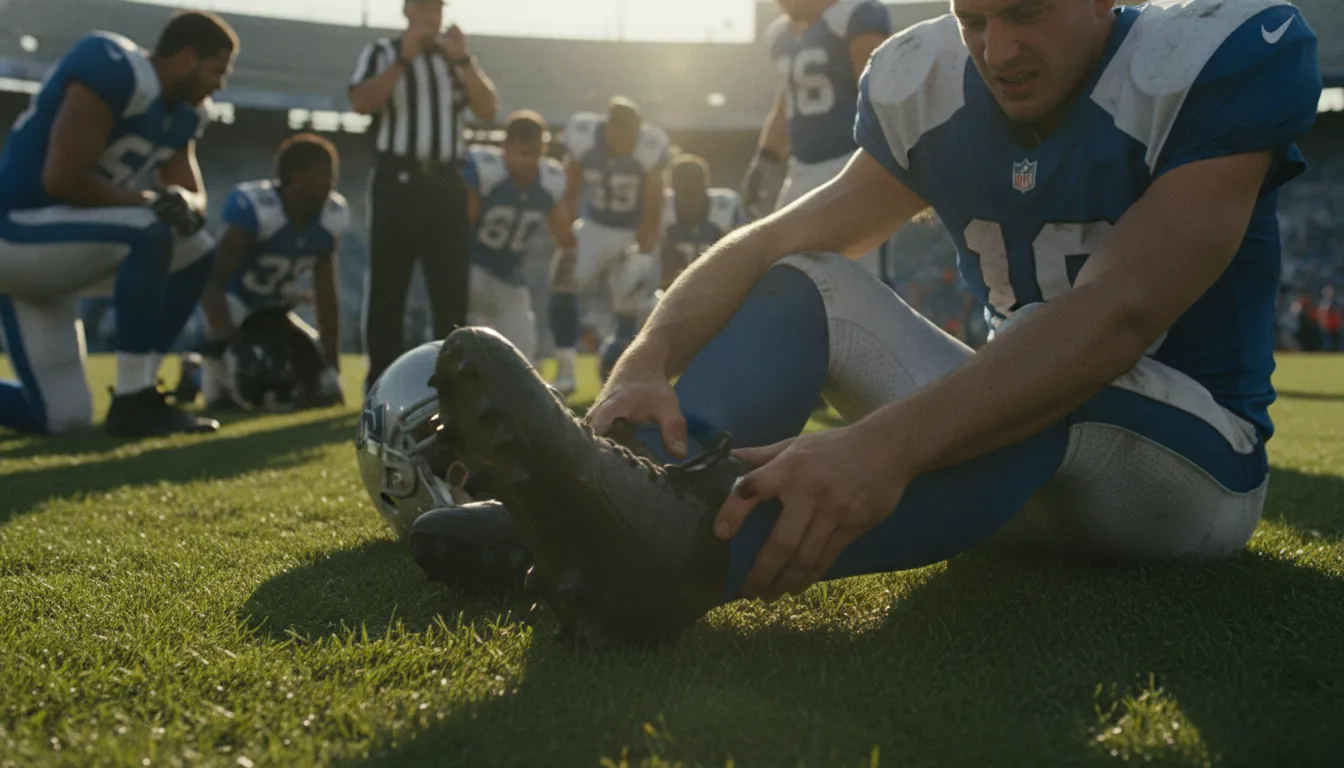

A sudden jolt at the base of the big toe can change an athlete’s stride immediately. Pain during push-off, sprinting, or cutting is not something to simply run through, especially when your season depends on agility and control.
Effective turf toe treatment depends on the injury’s severity, from protection and structured rehabilitation to regenerative or minimally invasive options for selected cases. Turf toe is a sprain caused by forceful hyperextension of the first metatarsophalangeal joint, and it can stretch or tear the soft tissues that stabilize the big toe (NCBI). A careful evaluation helps determine how to protect the joint while supporting a safe return to sport.
At Comprehensive Foot and Ankle Institute, Dr. Sutpal Singh provides personalized, doctor-led care for athletes throughout the northwest Chicago suburbs. Understanding what happens inside the joint is the first step toward choosing a recovery plan that protects both performance and long-term foot function.
What Is Turf Toe?
Turf toe is a sprain of the plantar capsule-ligament complex beneath the big toe’s first metatarsophalangeal (MTP) joint. It usually occurs when the toe is forced sharply upward, or hyperextended, while the forefoot is planted. That motion can stretch or tear the ligaments, tendons, and other soft tissues that stabilize the joint. The term was first described by Bowers in 1976. Clinical references describe the injury and its anatomy in detail.
Although the name is associated with artificial playing surfaces, turf toe is not limited to football. It is common in sports that demand repeated acceleration, sudden stops, jumping, or forceful toe loading, including football, soccer, basketball, wrestling, and dance. An athlete may experience the injury during a sprint, when another player lands on the back of the foot, or when the toe remains planted as the body moves forward.
Why Push-Off Hurts
The plantar structures help stabilize the big toe as the body moves over the foot. When they are injured, pain often becomes most noticeable during push-off, the moment the toes help propel the body forward. This can make sprinting, cutting, jumping, and other agility movements painful or less powerful. Even if walking seems manageable, an athlete may notice difficulty accelerating or changing direction at full speed. Pain with push-off and reduced agility are recognized features of turf toe.
Symptoms can range from mild tenderness and swelling to substantial pain, stiffness, bruising, or limited motion. The apparent severity does not always reveal how much of the plantar complex is injured, so a clinical evaluation is important before selecting turf toe treatment. Accurate grading helps determine whether protection and rehabilitation are appropriate or whether more advanced care should be considered.
Turf Toe Grades and Symptoms
The severity of a turf toe injury depends on how much the soft tissue supporting the big toe joint has been stretched or torn. A proper grade helps guide advanced foot and ankle care and determines how cautiously an athlete should return to activity.
Grade 1: Stretching without a tear
In a Grade 1 injury, the soft tissue is stretched but not torn. Pain and swelling are usually minor, and the toe retains some mobility. You may still be able to walk or train, but pushing off, sprinting, or changing direction can be uncomfortable. Continuing to play through pain can place additional stress on the joint, so an evaluation is appropriate when symptoms persist.
Grade 2: Partial tearing
Grade 2 turf toe involves a moderate stretch and partial tear of the plantar complex. Compared with Grade 1, pain and swelling are more pronounced, while movement of the big toe becomes more limited. Athletes may notice reduced power during acceleration or difficulty completing movements that require the forefoot to bend upward.
Grade 3: Full soft-tissue tear
A Grade 3 injury is a full tear of the supporting soft tissue. Significant pain, swelling, tenderness, and loss of mobility can make normal walking and athletic movement difficult. Recovery generally takes longer, and some severe injuries may require surgery, particularly when the joint is unstable or other structures are involved. The appropriate plan depends on an examination and, when indicated, imaging. Grade definitions are described by Mass General Brigham and Cleveland Clinic.
| Grade. | Tissue Damage. | Symptoms. | Typical Recovery. |
|---|---|---|---|
| Grade 1. | Stretched, not torn. | Minor pain and swelling, some mobility. | 3-5 days. |
| Grade 2. | Partial tear. | Moderate pain and swelling, limited mobility. | 2-4 weeks. |
| Grade 3. | Complete tear. | Severe pain and swelling, difficulty walking. | 4-6+ weeks. |
Common symptoms to watch for
- Pain at the base of the big toe, especially during push-off.
- Swelling around the big toe joint.
- Bruising or tenderness beneath or around the joint.
- Limited movement when bending or straightening the toe.
- Difficulty pushing off while running, sprinting, or changing direction.
Because symptoms can overlap across grades, a sports-focused assessment is more reliable than judging severity by pain alone. Early identification can help match the injury with an appropriate rehabilitation or turf toe treatment plan.
Conservative Treatment Options for Turf Toe
For a mild turf toe injury, early protection can reduce stress on the great toe joint and create a better environment for recovery. Conservative care typically begins with rest, protection, and bracing to limit painful hyperextension. Rest and protection are foundational first steps, but the right plan depends on the injury’s grade and your symptoms.
Start with rest, ice, compression, and elevation
The RICE approach can help during the initial phase. Rest from sprinting, jumping, cutting, and any movement that increases pain. Apply ice for short intervals with a cloth barrier between the ice and skin. Light compression may help control swelling, while elevation can reduce fluid buildup after activity. Do not use compression so tightly that it causes numbness, color change, or increased pain.
Protect the toe during daily activity
Taping the great toe to limit upward bending may reduce strain during walking. A stiff-soled shoe can also restrict motion at the big toe joint. If walking remains painful or the injury needs greater protection, a walking boot may be appropriate for a period recommended by a foot and ankle professional. Is it okay to walk with turf toe? Often, yes, if you can walk without worsening pain and use modified footwear or a boot as directed. Avoid pushing through pain, running, or returning to sport too soon.
Over-the-counter anti-inflammatory medication may help with pain and swelling for some patients. Follow the label, consider your medical history and other medications, and ask a clinician or pharmacist if you are unsure whether it is safe for you.
How quickly can you return?
For a Grade 1 injury, some athletes may return to play in approximately 3 to 5 days with proper care, but only when pain is minimal and sport-specific movements are comfortable. The fastest path to healing is early intervention, appropriate immobilization, and professional guidance, not simply masking symptoms. Persistent pain, swelling, instability, or difficulty pushing off warrants an evaluation so the injury can be graded accurately and treated before it becomes a longer-term limitation.
Regenerative Medicine for Faster Turf Toe Recovery
When turf toe affects an athlete’s push-off, the goal is not simply to reduce discomfort. The plantar soft tissues need an opportunity to repair while the toe gradually regains strength and function. At Comprehensive Foot and Ankle Institute, Dr. Sutpal Singh evaluates the injury and may combine protection and rehabilitation with regenerative options selected for the patient’s tissue damage, activity level, and recovery goals.
Supporting inflammation control and cellular repair
Class IV laser therapy is used to help manage inflammation and stimulate cellular repair in damaged plantar soft tissues. This noninvasive approach can be considered when swelling and tenderness continue to limit walking, training, or sport-specific movement. SoftWave shock wave therapy offers another way to support the healing environment. It is used to promote blood flow, encourage collagen production, and support cellular repair while reducing inflammation around the injured area.
These therapies may be especially relevant for athletes who need a thoughtful alternative to rest-only care. They are not a substitute for accurate grading, protection, or progressive rehabilitation, and the appropriate plan depends on the severity of the sprain. The same regenerative approach can also be useful for other sports-related tendon problems, including regenerative therapy for sports-related tendon pain.
Regenerative support for stubborn injuries
For more persistent or substantial soft-tissue injuries, the practice may discuss BPC-157 peptides, stem cell injections, or Liposona fat pad injections. BPC-157 peptides are considered for tissue repair and recovery support. Stem cell injections and Liposona fat pad injections may provide additional regenerative support when an injury is slow to respond to initial care or when cushioning and tissue quality are concerns. These options require an individualized medical discussion, including the potential benefits, limitations, and whether they are appropriate for the patient’s diagnosis.
Regenerative injections can offer athletes a path toward regaining function without the lengthy downtime often associated with more invasive orthopedic procedures. At the Institute, these procedures are generally performed in the office under local anesthesia, without hospitalization. Immediate walking may be appropriate in selected cases, but weight-bearing instructions are determined clinically and should be followed closely. Personalized, doctor-led care keeps the focus on safe progress and a return to the active life that gives the practice’s philosophy its meaning: Life is Motion and Motion is Life.
When Is Minimally Invasive Surgery Needed for Turf Toe?
Surgery is not the usual next step in turf toe treatment. Fewer than 2% of turf toe injuries require an operation. Surgical consideration is generally reserved for a severe Grade III injury, particularly when the joint is significantly unstable or imaging shows bony involvement. A careful examination and appropriate imaging help determine whether the injury can continue with protection and rehabilitation or needs a procedural solution.
When surgery is appropriate, Comprehensive Foot and Ankle Institute offers a minimally invasive approach designed to address the problem without the disruption commonly associated with traditional open surgery. The process may include:
- Confirm the injury and treatment goal. Dr. Sutpal Singh evaluates the great toe joint, the degree of instability, and any associated bone or soft-tissue damage. This personalized assessment helps distinguish a case that may respond to nonoperative care from one that needs correction.
- Access the affected area through a small opening. Rather than making a long incision, the procedure uses precise instruments through no incision or a small “poke hole,” depending on the correction required. The goal is to treat the structural problem while limiting disruption to surrounding tissue.
- Correct the instability without internal hardware. For relevant minimally invasive procedures, the approach does not use screws, plates, or other internal hardware. That can make the procedure a less burdensome alternative to traditional open surgery, although the appropriate technique depends on the patient’s anatomy and injury.
- Complete the procedure in a focused outpatient setting. These procedures are generally performed in the office under local anesthesia, without hospitalization. Immediate walking may be possible when clinically appropriate, but weight-bearing and activity instructions must be individualized for the injury and correction.
Even a minimally invasive procedure requires thoughtful follow-up and rehabilitation. Athletes should not use the possibility of immediate walking as permission to resume sprinting, cutting, or jumping. The right turf toe treatment plan balances structural stability with a gradual return to sport.
Return to Sport After Turf Toe: What to Expect
Returning to competition after turf toe depends on the injury grade, symptoms, and the demands of the sport. A mild injury may settle quickly, while a higher-grade sprain requires a structured progression that restores push-off strength, balance, and confidence before full-speed play. Non-operative rehabilitation generally follows three phases and may last up to 10 weeks.
Typical timelines by injury grade
- Grade 1: Athletes may return in about 3 to 5 days when pain is minimal and normal agility is comfortable.
- Grade 2: A partial soft-tissue tear commonly keeps an athlete out for approximately 2 to 4 weeks.
- Grade 3: A complete tear or substantial instability may require 4 to 6 weeks or longer, depending on examination findings and treatment.
These ranges are guides, not guarantees. Return-to-play decisions should be based on function, not the calendar. Athletes should have minimal to no pain during sport-specific movements, along with adequate mobility and control. Research indicates that about 70% of athletes with higher-grade injuries maintain their previous level of performance after recovery, whether treated operatively or non-operatively. Read the supporting sports-medicine research.
The three phases of rehabilitation
Phase 1: Protection and gentle motion. The toe is protected from repeated hyperextension while swelling and pain are addressed. Gentle range-of-motion work may begin as clinically appropriate, without forcing painful movement.
Phase 2: Strength and proprioception. Once symptoms are controlled, rehabilitation progresses to strengthening the foot and lower leg, improving balance, and retraining the body’s awareness of joint position. These steps help the great toe tolerate controlled loading.
Phase 3: Sport-specific training. The athlete gradually rebuilds jogging, cutting, jumping, sprinting, and other movements required by their sport. Progression should be monitored for pain during push-off, the motion most important for agility and acceleration.
Returning too soon can perpetuate restricted motion and may contribute to decreased range of motion and earlier degenerative changes, including osteoarthritis. A careful assessment is especially important when symptoms persist or performance does not return as expected. Athletes managing related ankle problems may also benefit from learning about advanced treatment for athletic ankle injuries.
At Comprehensive Foot and Ankle Institute, Dr. Sutpal Singh’s concierge model provides the personalized, doctor-led follow-up serious athletes need throughout turf toe treatment and rehabilitation. The goal is a safe, confident return to the activities that keep life in motion.
Frequently Asked Questions
What is the fastest way to heal turf toe?
The fastest path depends on the injury grade. Protect the toe from painful push-off and hyperextension, then obtain an evaluation so treatment can match the tissue damage. Rest, bracing, and a structured rehabilitation plan are common starting points. Some athletes may also discuss regenerative options, such as Class IV laser, SoftWave therapy, or injections, with a qualified foot and ankle specialist.
How long does turf toe usually last?
Recovery varies from a relatively short course for a mild sprain to several weeks or longer for a partial or complete tear. Non-operative rehabilitation commonly progresses through three phases and may last up to 10 weeks. Return to sport should wait until pain is minimal or absent during sport-specific movements and mobility has returned.
Is it safe to walk with turf toe?
Walking may be possible with a mild injury, but pain, limping, or worsening symptoms are signs to reduce activity and protect the joint. Avoid running, jumping, and movements that force the big toe upward until the injury is assessed. Whether you can bear weight safely depends on the grade, stability, and other involved structures.
What happens if turf toe is left untreated?
Continuing to play through turf toe can prolong pain and limit push-off, agility, and athletic performance. An unrecognized higher-grade injury may also need a different rehabilitation plan than a mild sprain. Because treatment and return-to-play criteria depend on severity, an evaluation is especially important when swelling, instability, or persistent pain does not improve.
Ready to Get Back in the Game?
A focused evaluation can help clarify the extent of your turf toe injury and guide a recovery plan that fits your athletic goals. Schedule a consultation at Comprehensive Foot and Ankle Institute for personalized treatment from a team that understands the importance of staying active. Contact us to schedule your consultation and take the next step toward moving with confidence.