


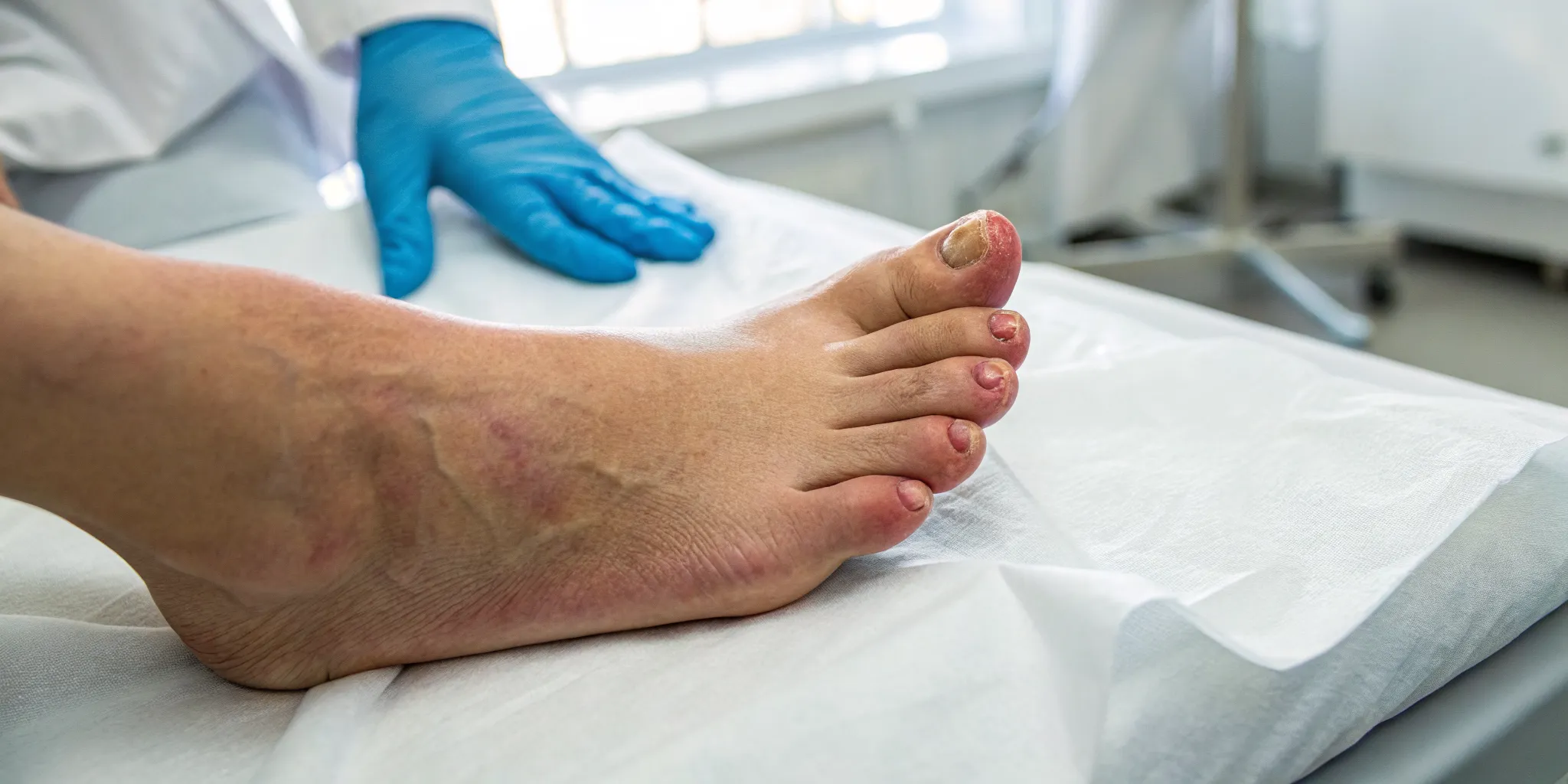

You’ve probably heard the old advice: “If you can move it, it’s not broken.” This common myth is one of the most dangerous misconceptions about toe injuries. The truth is, you can often still wiggle a broken toe, and relying on this test can lead to improper healing and chronic pain. This uncertainty is why many people look up broken big toe photos for a clearer picture. While these images show obvious signs like deformity and severe bruising, they don’t replace a professional evaluation. Getting an expert opinion is essential to avoid long-term complications like arthritis and ensure a full return to your active lifestyle.
Key Takeaways
- Know the definitive signs of a fracture. While sprains are painful, a break often involves more severe symptoms like a visibly crooked toe, an inability to bear weight, or a deep, throbbing pain that doesn’t fade. An X-ray is the only way to get a certain diagnosis.
- Don’t risk long-term complications by skipping a diagnosis. Ignoring a broken toe can lead to improper healing, which may result in chronic pain, arthritis, or a stiff joint that permanently affects your gait. A professional evaluation is your best defense against future problems.
- Take an active role in your recovery. Healing is more than just waiting for the pain to stop. A specialist can create a personalized plan, potentially including regenerative therapies, to accelerate tissue repair and help you return to your activities faster and stronger.
What Does a Broken Big Toe Look Like? (With Photos)
That sudden, sharp pain after stubbing your toe or dropping something on your foot can leave you wondering: is it just a bad sprain, or is it actually broken? It’s a common question, and while only a medical professional can give you a definite answer, there are several visual signs you can look for right away. Your big toe is especially important because it bears a significant amount of your body weight with every step you take, making it crucial for everything from walking to running. A fracture here isn’t something you want to ignore, especially if you live an active lifestyle and want to get back to your routine quickly. Knowing how to spot the key indicators of a break can help you decide when it’s time to stop guessing and seek expert care. From obvious changes in shape to more subtle discoloration, here’s what a broken big toe often looks like. We’ll cover the immediate signs like swelling and bruising, what a deformed toe looks like, and why even small changes to the skin and nail matter. Understanding these visual cues is the first step toward getting the right diagnosis and treatment plan.
Identifying Swelling and Bruising
One of the first and most obvious signs of a fracture is immediate swelling. Your toe will likely look puffy and feel tight within minutes or hours of the injury. This happens as your body sends fluid and blood to the area to begin the healing process. Along with the swelling, you’ll probably see bruising develop. The color can range from a deep purple or blue to a more reddish hue. This bruising might not be confined to just the big toe; it can spread to the smaller toes or even the top of your foot. Because the big toe is critical for balance and pushing off, the pain and swelling can make walking difficult and are clear signals that you’re dealing with more than a simple stub.
Spotting a Deformed or Misaligned Toe
Take a careful look at your injured toe compared to the one on your other foot. Does it look crooked, bent at an odd angle, or out of place? If the broken bone has shifted, the toe might look visibly deformed. This is a major red flag that points directly to a fracture, specifically a displaced fracture. You might notice the nail isn’t pointing straight ahead anymore or that there’s a new, unnatural bump on the bone. Don’t try to straighten it yourself. A misaligned toe needs professional medical attention to ensure the bone is set correctly for proper healing. If you see any deformity, it’s best to contact a specialist right away.
Changes to the Skin and Nail
Beyond general bruising, you might see specific changes to the skin and toenail. It’s common to see bruising directly under the toenail, a condition known as a subungual hematoma. This looks like a dark purple or black spot beneath the nail plate and can cause a throbbing, painful pressure. The skin around the toe may also appear stretched, shiny, or discolored. In some cases, a piece of bone may even break through the skin. This is called an open fracture, and it requires immediate medical care to prevent infection. Any break in the skin is a serious sign that you need to see a doctor.
What an X-Ray Reveals
While the signs above are strong indicators, the only way to know for sure if your toe is broken is with an X-ray. An X-ray image allows a doctor to see the bones in your foot clearly and identify the exact location and severity of the fracture. This is a critical step because not all breaks are the same. The image will show if it’s a clean break, a hairline stress fracture, or a more complex fracture with multiple pieces. This information is exactly what our doctor uses to create a personalized treatment plan that gets you back on your feet as quickly and safely as possible.
Key Symptoms of a Broken Big Toe
You dropped something heavy on your foot, or maybe you took a bad step during a run. Now your big toe is screaming at you. Is it just a bad sprain, or is it actually broken? While a trip to a specialist is the only way to know for sure, your body gives you some pretty clear clues. Paying attention to these signs is the first step toward getting the right treatment and getting back to your active life.
Intense Pain and Tenderness
The first and most obvious sign is pain. But we’re not talking about the fleeting sting of a stubbed toe. A fracture usually causes a sudden, sharp pain that quickly settles into a deep, throbbing ache. The area will likely be extremely tender to the touch, and even the weight of a sock might feel unbearable. You may also see significant bruising on the toe or dark discoloration under the toenail. This isn’t the kind of pain you should push through, as it’s your body’s way of telling you something is seriously wrong and needs attention from a professional who understands advanced foot and ankle services.
Trouble Walking or Bearing Weight
Your big toe plays a huge role in your ability to walk and balance, bearing a significant amount of your body weight with every step. When it’s broken, you’ll likely find it difficult to walk normally. You might find yourself limping heavily or avoiding putting any pressure on the front of your foot. For athletes, this is a game-changer. That push-off power you rely on for sprinting and jumping is compromised. Trying to “walk it off” can lead to further damage or a longer recovery. It’s far better to listen to your body and get a proper diagnosis from an expert like our doctor, who specializes in getting athletes back on their feet quickly.
Stiffness and an Inability to Bend the Toe
Beyond the pain, take note of how your toe moves, or rather, how it doesn’t. A broken big toe often feels stiff, and you may find you can’t bend it up or down. This isn’t just about being sore; the joint itself might feel locked up from the swelling and the bone injury. In some cases, the toe might even look crooked or sit at an odd angle, which is a definite sign you need to see a specialist. If you’re experiencing this limited mobility with pain and swelling, it’s time to stop guessing and get a clear answer. You can contact us to find out what’s really going on.
Types of Big Toe Fractures (and What They Look Like)
A broken toe might seem straightforward, but not all fractures are created equal. The term “fracture” is just a medical word for a broken bone, and these breaks can happen in several different ways. The type of fracture you have often depends on how the injury occurred, whether from a sudden impact or from repetitive stress over time.
Understanding the specific kind of break is the first step toward getting the right treatment. Some fractures are minor and heal with simple care, while others are more complex and require immediate medical attention to prevent long-term problems. For athletes especially, knowing the difference is key to a safe and speedy return to your sport. Let’s look at the most common types of big toe fractures.
Traumatic Fractures
A traumatic fracture is what most people picture when they think of a broken bone. This type of break happens because of a direct, forceful impact or injury. Think about dropping a heavy object on your foot or stubbing your toe with serious force. The pain is usually immediate and intense, and you might even hear a “pop” or “crack” at the moment of injury.
Along with the pain, you’ll likely see significant bruising and swelling develop quickly around the big toe. Unlike other injuries, the pain from a traumatic fracture doesn’t get better with rest. If you’ve had a sudden accident and are experiencing these symptoms, it’s a clear sign you’re dealing with a traumatic injury that needs to be evaluated.
Stress Fractures
Stress fractures are a different beast altogether. Instead of resulting from a single, dramatic injury, they are tiny cracks in the bone caused by repetitive force or overuse. These are common among runners and athletes who put consistent strain on their feet. The pain from a stress fracture tends to creep up over time, often starting as a dull ache during or after activity.
Unlike a traumatic break, the pain usually improves with rest. You might notice some soreness and swelling, but significant bruising is less common. Because they develop gradually, stress fractures can be tricky to self-diagnose. If you’re an athlete with persistent foot pain that worsens with your workouts, exploring regenerative therapies can be an effective way to heal these overuse injuries and get back to training without a long layoff.
Displaced Fractures
A displaced fracture is a more serious type of break where the two ends of the broken bone have shifted out of their proper alignment. In this case, the injury is often visually obvious. Your big toe might look crooked, bent at an odd angle, or noticeably out of place. In very severe cases, the broken bone can even push through the skin, which is known as an open or compound fracture.
This type of fracture is not something you can “wait and see” about. Proper alignment is crucial for the bone to heal correctly and for you to regain full function of your toe. If your toe looks deformed in any way after an injury, it’s a medical emergency. You should contact a specialist immediately to have it properly set and treated.
Sesamoid Fractures
At the base of your big toe are two tiny, pea-sized bones called sesamoids. They are embedded within a tendon and act like little pulleys, providing a smooth surface for the tendon to slide over and helping with weight-bearing and movement. A fracture to one of these small bones is called a sesamoid fracture.
These can be caused by direct impact or, more commonly, by chronic stress from activities like dancing or running. The pain is typically a dull ache right under the ball of the foot that worsens when you put weight on it. Because of their location and limited blood supply, sesamoid injuries can be notoriously difficult to heal and may lead to long-term pain that impacts athletic performance if not treated correctly.
Avulsion Fractures
An avulsion fracture occurs when a tendon or ligament pulls a small chip of bone away from the main bone. This happens when a sudden, forceful pull from the connective tissue is stronger than the bone it’s attached to. You might experience this during an abrupt stop or pivot, where a tendon or ligament yanks on the bone as it’s pulled in the opposite direction.
The result is localized pain, swelling, and tenderness right at the spot of the fracture. While it might seem like a minor chip, an avulsion fracture is still a break that needs proper care. It indicates that the soft tissues around the joint have also been stressed, and ignoring it can lead to instability and chronic pain in the toe joint.
Is It Broken or Sprained? How to Tell the Difference
After a painful toe injury, the first question on your mind is likely, “Is it broken or just sprained?” It’s a tough call to make on your own, especially when both can cause significant pain and swelling. For an athlete, the uncertainty can be frustrating when all you want is a clear path back to training. Understanding the key differences is the first step toward getting the right treatment and preventing a minor setback from turning into a chronic problem.
Visual Clues That Point to a Fracture
While both sprains and fractures cause swelling and bruising, a fracture often leaves a more obvious visual trail. A sprain affects ligaments, but a fracture involves the bone itself. Take a close look at your toe. Does it appear crooked, bent, or out of place? A visible deformity is a strong indicator of a fracture. In a severe break, the bone may even push through the skin. This is a medical emergency that requires immediate attention. If your toe looks anything other than straight, it’s time to stop guessing and contact a specialist for a proper diagnosis.
Why the Type of Pain Matters
The pain from a sprain can be intense, but it might ease up with rest. Fracture pain is different. It’s typically sharp, immediate, and doesn’t go away, even when you’re off your feet. The area right over the bone will be extremely tender to the touch. It’s a common myth that if you can move your toe, it isn’t broken. You might still have some range of motion, but trying to walk or bend a broken toe can make the injury much worse. Pushing through this kind of sharp, persistent pain is your body’s clear signal that something is seriously wrong and needs professional evaluation, not a “walk it off” approach.
How Healing Times Differ
The recovery timeline is another major difference. A broken toe bone needs time to knit itself back together, a process that usually takes about six to eight weeks. A mild sprain might feel better in a much shorter time frame. Rushing your recovery from a fracture can lead to improper healing, chronic pain, or even arthritis down the road. Getting an accurate diagnosis is crucial because it dictates your treatment plan and recovery schedule. Following a plan tailored to your specific injury ensures the bone heals correctly, and advanced regenerative therapies can help support your body’s natural healing process to get you back on your feet safely.
4 Common Myths About Broken Toes
When it comes to a potential broken toe, you’ve probably heard a lot of “common knowledge” from well-meaning friends, family, or even your own assumptions. Unfortunately, a lot of that advice is based on myths that can delay your healing and lead to bigger problems down the road. As an athlete, you can’t afford to take a chance on bad advice. Let’s clear up a few of the most common and dangerous misconceptions about broken toes so you can get on the right path to recovery.
Myth #1: “If you can move it, it’s not broken.”
This is one of the most persistent and misleading myths out there. The ability to wiggle your toe is not a reliable test for a fracture. Depending on the location and severity of the break, you might still have a surprising range of motion. The problem is that continuing to move or walk on a broken toe can make the injury much worse. You could shift the bone fragments out of alignment, turning a simple fracture into a complex one that requires more intensive treatment. Pain is your body’s signal that something is wrong; don’t let a little bit of movement convince you to ignore it.
Myth #2: “You don’t need a doctor for a broken toe.”
Many people dismiss a broken toe as a minor injury that will heal on its own. This is a risky gamble, especially for an athlete. Without a proper diagnosis and treatment plan, a broken toe might not heal correctly. This can lead to chronic pain, arthritis, a permanently deformed toe, or issues with your gait that affect your performance and daily life. Seeing a specialist ensures the bone is properly aligned for healing. A foot and ankle specialist can determine the exact nature of your injury and create a plan to get you back to your sport safely and quickly, preventing long-term complications.
Myth #3: “An X-ray is always unnecessary.”
Some people think that since the common advice for a broken toe is “buddy taping,” an X-ray is an unnecessary step. But how can you know the right treatment without seeing the full picture? An X-ray is the only way to confirm a fracture, see exactly where the bone is broken, and determine its severity. It reveals if the fracture is displaced (out of alignment), if it involves a joint, or if there are multiple breaks. This information is critical for developing an effective treatment plan that ensures a full and proper recovery, getting you back in the game without lingering issues.
Myth #4: “Rest is the only cure.”
While rest is a crucial part of healing any injury, it’s rarely the only thing you need. Simply staying off your foot and waiting for the pain to go away is a passive approach that can prolong your recovery. A specialist can provide a more active and effective treatment plan. Beyond splinting or buddy taping, modern medicine offers advanced options to accelerate healing. Regenerative therapies can help reduce inflammation and support tissue repair, getting you back on your feet faster than rest alone ever could. An expert can guide you on the best course of action for your specific injury.
What Happens If You Don’t Treat a Broken Big Toe?
It’s tempting to adopt a “walk it off” mentality, especially when you’re an athlete focused on staying in the game. But when it comes to your big toe, ignoring a potential fracture is a gamble with your future performance. The big toe is responsible for balance and the propulsive force needed for running and jumping. Letting it heal on its own can lead to a cascade of problems, turning a treatable injury into a chronic issue. Getting a proper diagnosis is the first step toward a recovery plan that protects your mobility for the long haul.
Short-Term Problems
If you don’t seek treatment, a broken big toe might not heal correctly. The bone fragments can set in a misaligned position, a condition known as a malunion. This can leave you with a visibly deformed toe that causes persistent pain and makes it difficult to wear your usual shoes, let alone athletic footwear. You might also experience ongoing swelling and tenderness that never seems to fully resolve. Without proper care, you’re essentially rolling the dice on the outcome, risking a future where every step is a painful reminder of an injury that could have been managed correctly from the start.
Long-Term Complications for Athletes
For an athlete, the long-term consequences of an untreated big toe fracture can be career-altering. An improperly healed toe can lead to chronic stiffness and a significant loss of motion, a condition called hallux rigidus. This directly impacts your ability to push off the ground, compromising your speed, agility, and power. Over time, the altered mechanics of your foot can lead to post-traumatic arthritis, causing persistent pain and joint degradation. Instead of a full recovery, you could be facing permanent damage that sidelines you indefinitely. Prioritizing a proper diagnosis and exploring advanced regenerative therapies can ensure the bone heals correctly, helping you return to your sport with strength and confidence.
How to Treat a Broken Big Toe
If you suspect your big toe is broken, your first thought might be to just wait it out. But for a fracture in such a critical part of your foot, a proper treatment plan is essential for healing correctly and getting you back on your feet without long-term issues. While some initial at-home steps can help manage the immediate pain and swelling, they are just the beginning. The right approach depends on the type and severity of the fracture, which is why a professional evaluation is so important. From simple taping techniques to advanced therapies that speed up recovery, let’s walk through the steps for treating a broken big toe.
At-Home Care: The RICE Method
As soon as the injury happens, you can take steps to manage the initial symptoms. The best first-aid approach is the RICE method: Rest, Ice, Compression, and Elevation. Get off your feet immediately and avoid putting any weight on the injured toe. To manage swelling, keep your foot raised above the level of your heart as much as possible. You can also apply an ice pack, like a bag of frozen peas wrapped in a towel, to the area for about 20 minutes every few hours. This will help reduce both swelling and pain in the first couple of days. While this method provides temporary relief, it isn’t a cure.
Using the Buddy Taping Technique
You may have heard of “buddy taping,” which involves taping your injured toe to the healthy one next to it. This technique uses the neighboring toe as a splint, providing support and keeping the broken toe in a stable position. It’s a common method for treating less severe toe fractures or sprains. To do it, place a small piece of cotton or gauze between the toes to prevent blisters, then loosely wrap medical tape around both toes. The tape should be snug enough to offer support but not so tight that it cuts off circulation. Keep in mind, this is not a one-size-fits-all solution and may not be appropriate for more serious big toe fractures.
When to Use Splints, Boots, or Special Shoes
For a more significant big toe fracture, buddy taping won’t be enough. A doctor will likely recommend a more robust method of immobilization to ensure the bone heals in the correct alignment. Depending on your specific injury, this could involve a walking boot or a short-leg cast with a special toe plate for a few weeks. After that, you might transition to a rigid-soled shoe to keep the toe from bending as you walk. These devices are crucial for protecting the toe from further injury and allowing the bone to mend properly, which is why you should never try to “walk it off” without getting a professional diagnosis first.
Regenerative Options to Speed Up Recovery
It’s important to see a doctor for a broken toe, even if you think it’s minor, because untreated fractures can cause chronic pain, arthritis, or deformity later on. For athletes and active individuals, a long recovery is a major setback. This is where modern medicine offers incredible alternatives. Instead of just waiting for the bone to heal on its own time, you can explore regenerative medical therapies designed to accelerate the body’s natural healing process. Treatments like Class IV Laser Therapy and Shock Wave Therapy can reduce inflammation, increase blood flow, and stimulate cellular repair at the injury site. These non-invasive options can significantly shorten your recovery time and get you back to your sport faster.
When Should You See a Foot Specialist?
It can be tempting to adopt a “wait and see” approach with a toe injury. We often dismiss it, hoping a little rest will solve the problem. But when it comes to your big toe, what seems like a minor issue can have a major impact on your mobility and athletic goals. Your feet are your foundation, and the big toe alone bears a significant amount of pressure with every step, push-off, and jump. Ignoring a potential fracture can lead to a much longer and more complicated recovery down the road.
Knowing when to self-treat and when to seek professional help is the key to a fast and full recovery. While your family doctor can offer general advice, a foot and ankle specialist provides a deeper level of expertise. They understand the intricate mechanics of the foot and can offer a precise diagnosis that gets to the root of the problem. This is especially true for athletes, whose performance depends on their body functioning at its peak. A specialist can not only confirm a fracture but also identify the specific type and recommend a treatment plan tailored to your active lifestyle. Getting a proper diagnosis is the first step toward getting you back on your feet, pain-free and ready for action.
Red Flags That Require Immediate Attention
Some symptoms are too serious to ignore. If you notice any of the following signs, it’s time to get professional help right away. According to the NHS, you should seek immediate care if you think your big toe is broken, especially if it’s pointing in a strange direction or if a bone is visibly sticking out. Don’t try to tough it out. Any tingling or numbness in your toe or foot is another major red flag, as it could signal nerve involvement. These are clear signs that your injury requires an expert evaluation to prevent further damage and ensure proper healing. You should contact a specialist to get a clear diagnosis and a personalized treatment plan.
Why Athletes Need to Act Fast
For an athlete, a broken big toe is more than just a painful inconvenience; it’s a direct threat to your performance. Your big toe is essential for balance, pushing off, and absorbing shock during activities like running and jumping. As Scripps Health points out, a broken big toe makes it difficult to bear weight, and without proper treatment, it can lead to chronic pain, arthritis, or a deformity that affects your gait. Ignoring the injury can sideline you for much longer than if you address it immediately. Seeking prompt care from a specialist ensures you get an accurate diagnosis and access to advanced regenerative therapies that can speed up your recovery and get you back in the game safely and quickly.
Your Broken Big Toe Recovery Timeline
So, you have a broken big toe. The first question on your mind is probably, “How long until I can get back to my life?” The answer depends on the severity of the break and how you care for it, but there is a general path that healing follows. Understanding this timeline can help you set realistic expectations and take an active role in your recovery.
For an athlete, the stakes are even higher. You’re not just waiting to walk without pain; you’re aiming to run, jump, and cut without hesitation. The recovery process is about more than just letting the bone mend. It’s about rebuilding strength, restoring function, and preventing future injuries so you can return to your sport with confidence. This journey has two key parts: the natural healing phase and the active recovery phase, where your choices can make all the difference.
What to Expect During Healing
Most broken toes take about six to eight weeks to heal. During this time, your body is working hard to repair the fractured bone. In the first week or two, you can expect the most significant pain and swelling. Your main job here is to manage these symptoms and protect your toe from further stress.
As the weeks go on, the initial sharp pain will subside into a dull ache, and the swelling will gradually decrease. You might start to feel like you can do more, but it’s crucial to remember the bone is still fragile. Pushing yourself too hard too soon is a classic mistake that can set your recovery back. Patience is key during this foundational healing period.
How to Support Recovery and Prevent Re-Injury
While your body is busy mending the bone, you can take several steps to support the process. Following the RICE method (Rest, Ice, Compression, Elevation) is essential, especially in the first few days. As you begin to move around more, wearing wide, comfortable shoes with a stiff sole will protect the toe. Many people also find that buddy taping the broken toe to its neighbor provides helpful stability.
For athletes, a standard recovery might not be enough to get you back to peak condition. To ensure a strong recovery and reduce the risk of long-term issues like arthritis or chronic pain, it’s vital to get a professional evaluation. Advanced regenerative medical therapies can also significantly speed up tissue repair and reduce inflammation, helping you return to your training schedule faster and stronger. If you’re an athlete dealing with a fracture, don’t wait for a problem to arise; contact us to create a personalized recovery plan.
Related Articles
Frequently Asked Questions
My toe is swollen and painful, but it doesn’t look crooked. Do I still need to see a doctor? Yes, it’s always a good idea. A crooked toe is a clear sign of a serious break, but many fractures, like hairline or stress fractures, don’t cause any obvious deformity. The pain and swelling are your body’s signals that something is wrong. Getting a professional evaluation is the only way to know for sure what’s happening with the bone and to get on the right treatment plan from the start.
How soon can I get back to running or my sport after breaking my big toe? While the bone itself generally takes six to eight weeks to heal, your return to high-impact activity depends on the fracture’s severity and your recovery plan. For an athlete, it’s not just about waiting for the bone to mend. A specialist can create a plan that includes therapies to accelerate healing and specific exercises to rebuild strength, helping you return to your sport safely without losing your competitive edge.
What is the main difference between a bad sprain and a fracture? The symptoms feel the same. The key difference is what’s injured and the nature of the pain. A sprain affects the ligaments connecting bones, while a fracture is a break in the bone itself. Fracture pain is often more constant, sharp, and located directly over the bone. You might also hear a distinct “pop” at the time of injury with a fracture. Because the symptoms overlap so much, seeing a specialist for a clear diagnosis is the best way to avoid guesswork.
The post mentions regenerative therapies. How do those actually help a broken toe? Think of regenerative therapies as a way to support and speed up your body’s natural healing process. Treatments like Class IV Laser Therapy or Shock Wave Therapy work at a cellular level to reduce inflammation, increase blood flow to the injury, and stimulate tissue repair. Instead of just passively waiting for the bone to heal on its own schedule, these therapies can help shorten your recovery time and get you back to your active life faster.
I’ve always heard you can just “buddy tape” a broken toe. Is that not good enough? Buddy taping can be a useful technique for very minor fractures, as it provides some stability. However, it is not a universal solution, especially for the big toe, which is critical for balance and movement. Taping alone won’t correct a misaligned bone or provide the support needed for more significant breaks to heal properly. This can lead to long-term issues like chronic pain or arthritis, so a professional evaluation is always the safest bet.