



What if you could fix your bunion and walk out of the doctor’s office on the same day? What if you could get back to your active life in weeks, not months, without large incisions or hardware left in your foot? This isn’t a futuristic dream; it’s the reality of modern bunion correction. For too long, people have associated bunion treatment with painful, lengthy recoveries. This has led many to seek out what they hope are simpler alternatives. The promise of ‘laser therapy for bunion correction’, for example, sounds appealing but doesn’t address the actual problem. This guide will show you how a true, permanent fix is achieved through a minimally invasive procedure that corrects the bone’s alignment, and how regenerative therapies are used to speed up your recovery, getting you back on your feet faster than you thought possible.
Key Takeaways
- A Bunion Is a Bone Problem: A bunion is not just a bump; it’s a structural issue caused by a misaligned bone in your foot. Because it’s a progressive problem with your foot’s framework, it will not heal on its own and requires a corrective solution.
- Lasers Treat Pain, Not the Cause: While laser therapy is an excellent tool for reducing pain and inflammation, it cannot fix the underlying bone alignment issue. Think of it as a temporary patch for symptoms, not a permanent solution for the bunion itself.
- Modern Surgery Offers a Real Fix: Minimally invasive surgery corrects the bone’s alignment for a lasting result. This advanced procedure allows you to walk immediately after and experience a much faster recovery, getting you back to your active life without the long downtime of traditional methods.
What is a Bunion, and Why Won’t It Go Away?
If you have a painful, bony bump at the base of your big toe, you’re likely dealing with a bunion. It’s a frustrating problem, especially for active people, because it can make wearing shoes and even just walking feel like a chore. But a bunion is much more than a simple bump on your skin. It’s a sign that the internal structure of your foot has shifted out of alignment. The joint at the base of your big toe moves out of place, causing the toe to lean toward the other toes and forcing the joint to stick out.
Because a bunion is a progressive structural issue, it won’t go away on its own. Cushions and wider shoes might offer temporary relief, but they don’t address the root cause of the problem: the misaligned bone. Over time, the pressure on the joint can lead to more pain, stiffness, and inflammation, making it harder to stay active and do the things you love. Understanding what a bunion truly is, and what causes it, is the first step toward finding a lasting solution that gets you back on your feet without pain.
What Causes Bunions?
You can often thank your family tree for bunions. The most common cause is genetics; certain foot types and structures that are prone to developing bunions are passed down through families. If your parents or grandparents had them, you have a higher chance of getting them too. While tight, narrow shoes or high heels don’t necessarily cause bunions on their own, they can definitely aggravate an already susceptible foot structure and make the problem worse, faster. Women also tend to get bunions more often than men, partly due to footwear choices. A specialist can help you understand your foot’s unique mechanics and confirm the cause of your bunion.
It’s a Bone Problem, Not Just a Bump
It’s a common misconception that a bunion is just an extra growth of bone that can be shaved off. In reality, the bump you see is the head of a bone (the metatarsal) that has moved out of its proper position. Think of it as a joint that has become dislocated. This is a fundamental problem with your foot’s skeletal framework, not a surface-level issue. Because the bone itself is in the wrong place, simply removing the “bump” without correcting the underlying alignment won’t fix the problem. The joint will remain unstable, and the bunion will likely come back. True correction requires addressing the bone’s position, which is why our advanced services focus on fixing the structural source of the bunion.
Why Bunions Don’t Heal on Their Own
Unlike a cut that scabs over or a bruise that fades, a bunion will not heal by itself. It’s a mechanical problem. The bones, tendons, and ligaments in your foot are in a state of imbalance, and this imbalance creates constant, uneven pressure on the big toe joint. Without intervention to realign the structure, that pressure continues day after day. Your body can’t just “fix” a misaligned bone on its own. In fact, leaving a bunion untreated usually allows it to get progressively worse. The bump can become larger, the pain can increase, and you might even develop other foot problems like hammertoes as a result. The only way to stop this progression is to correct the alignment and restore balance to your foot.
Can Laser Therapy Really Fix a Bunion?
With all the talk about advanced medical technology, it’s natural to wonder if lasers can offer a quick fix for bunions. You might see ads for “laser bunion removal” and imagine a simple, painless procedure that zaps the bump away for good. While lasers are a powerful tool in medicine, it’s important to have a clear picture of what they can and cannot do for a bunion. Let’s separate the facts from the fiction.
What Lasers Can (and Can’t) Do for Bunion Pain
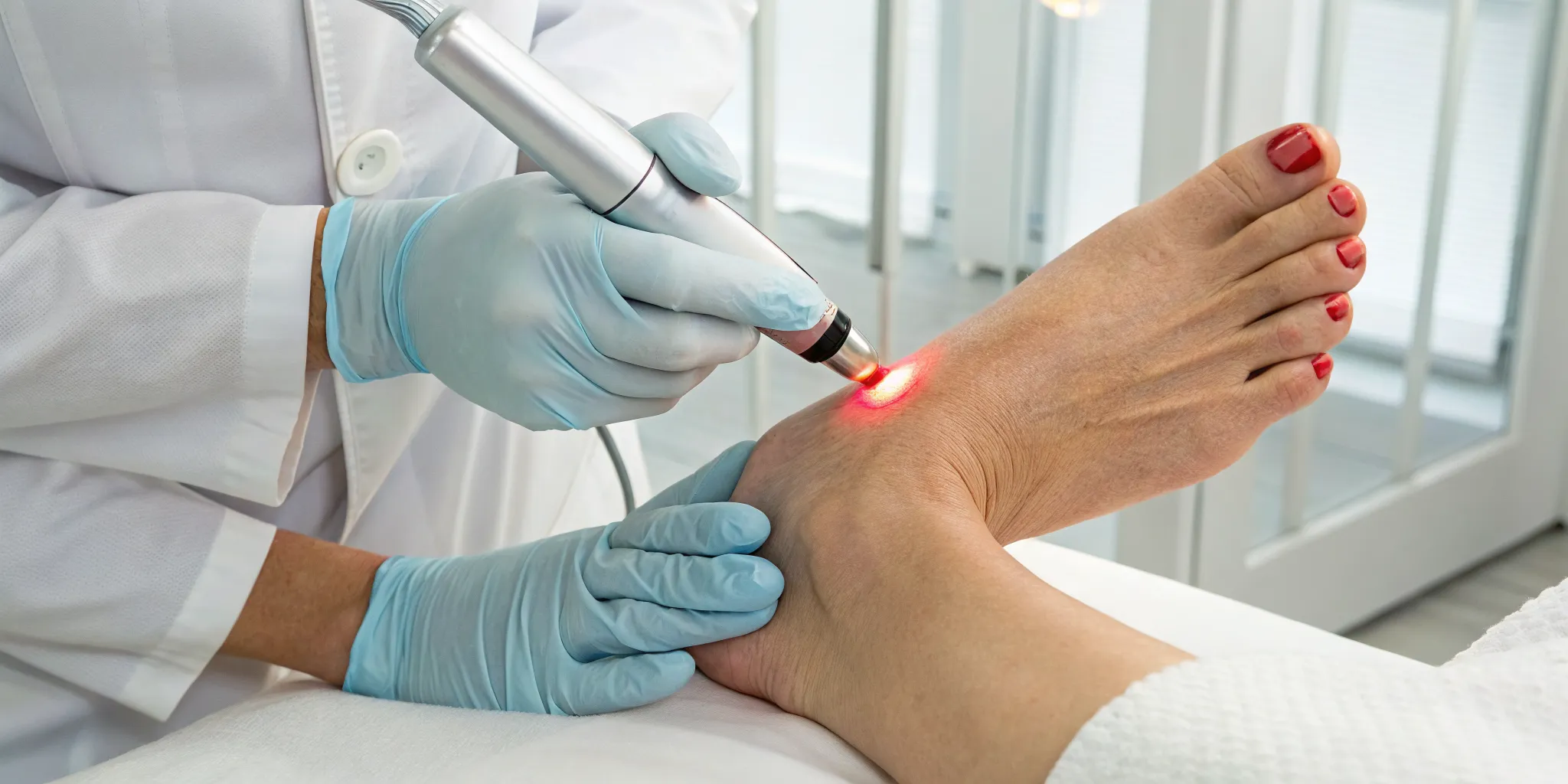
Lasers, particularly Class IV lasers like the ones we use for regenerative therapy, are fantastic for reducing pain and inflammation. The light energy penetrates deep into the tissue, which can stimulate healing and provide significant relief for sore joints. So, can a laser help with the pain associated with your bunion? Absolutely. It can be a great non-invasive option for managing symptoms. However, managing symptoms isn’t the same as correcting the problem. The idea of laser bunion removal isn’t a real option because it doesn’t address the root cause of the bunion, which is a misaligned bone.
Why Lasers Can’t Reshape Bone
The core issue with a bunion is a structural problem within your foot; a bone is out of place. Lasers excel at treating soft tissues like skin, muscles, and ligaments. They can make precise cuts with minimal bleeding, which is why they are used in many surgical fields. Bone, however, is a different story. As podiatry specialists explain, using a laser powerful enough to cut through bone would generate intense heat. This heat would essentially burn the bone tissue, damaging it and preventing it from healing correctly. A bunion needs to be physically realigned, not just shaved down, and a laser is simply the wrong tool for that job.
Temporary Relief vs. a Permanent Fix
Using laser therapy for bunion pain can feel like a solution because, for a while, it might make your foot feel better. The inflammation goes down, and the ache subsides. But this relief is temporary. The underlying bone misalignment is still there, and the bunion will continue to progress over time. The pressure and discomfort will eventually return. While some have proposed using lasers to make skin incisions during traditional surgery, there is no evidence that this leads to a better long-term outcome. If you’re an athlete or just an active person, you don’t want a temporary patch; you want a permanent fix that lets you get back to your life without limitations.
The Risks of a Quick-Fix Approach
Every medical procedure comes with its own set of considerations. While laser therapy is generally very safe when used correctly, relying on it as a “cure” for bunions is misleading and ultimately ineffective. The real risk is delaying proper treatment. By chasing a quick fix that can’t work, you allow the bunion deformity to worsen. This can lead to more pain, greater difficulty with footwear, and the potential need for a more complex procedure down the road. Understanding the advantages and disadvantages of laser therapy is key to making an informed decision and choosing a treatment path that offers a real, lasting solution.
The Modern Solution for Bunions
So, what’s the real solution for a bunion? It’s not about managing symptoms; it’s about a permanent correction. The answer is a modern, minimally invasive procedure that fixes the underlying structural issue. Forget the horror stories of old-school surgery. The new gold standard gets you back on your feet the same day, offering a lasting fix for anyone tired of letting foot pain dictate their life. This isn’t just about relieving pain, it’s about restoring the natural shape and function of your foot so you can move forward with confidence.
Why Minimally Invasive Surgery is the Gold Standard
Forget the old stories of bunion surgery that involved large incisions and weeks in a cast. The new reality is much different. Minimally invasive bunion surgery is a proven and effective way to treat bunions by fixing the underlying cause. Instead of just shaving down the bump, this technique corrects the angular deformity of the bone that created the bunion. This approach is the gold standard because it offers a permanent structural correction with less trauma to surrounding tissue. By using modern surgical techniques, we can achieve better cosmetic results and a more functional, lasting outcome.
Walk the Same Day: No Large Incisions, No Hardware
One of the biggest advantages of this modern procedure is the immediate recovery. This type of surgery removes bunions with less pain and smaller scars, using very small, precise entry points to fix the misaligned bone. Because the procedure is so gentle, it can be performed in the office under local anesthesia, and you can walk out right after it’s done. There are no large cuts that need extensive healing, and we don’t use any hardware like screws or plates. This means your foot’s natural mechanics are preserved, and the entire procedure is handled by a skilled specialist focused on your comfort.
Experience a Faster, Less Painful Recovery
While laser therapy can’t correct a bunion, it plays a starring role in recovery. After your minimally invasive procedure, we use advanced regenerative therapies like Class IV Laser Therapy to dramatically speed up your healing. This is where lasers truly shine. The targeted light energy reduces inflammation, alleviates pain, and stimulates cellular repair, helping the tissue heal faster. Many people feel less pain after their first session, and the good effects get stronger with each treatment. This combination of a minimal correction followed by regenerative therapy is the key to a faster, more comfortable recovery that our patients appreciate.
The Ideal Option for Athletes
If you’re an athlete, you can’t afford to be off your feet for long. Minimally invasive surgery is the perfect solution for active individuals who need to get back to their sport as quickly and safely as possible. Because the procedure causes less trauma to the foot and avoids hardware, the recovery is significantly faster than traditional methods, with discomfort usually lasting only a few days. This approach corrects the problem without compromising the strength or flexibility of your foot, allowing you to return to training and competing with confidence. If you’re ready to stop letting bunion pain hold you back, schedule a consultation to see if this procedure is right for you.
Is Minimally Invasive Bunion Surgery Right for You?
Are You a Candidate?
If you’re an active person tired of bunion pain holding you back, minimally invasive surgery could be the answer. This approach is a fantastic option for most people, especially those with strong, healthy bones. It’s designed for individuals who want a permanent correction without the lengthy downtime of traditional surgery. However, it’s not a universal solution. Factors like the severity of your bunion, the presence of arthritis, or softer bone structure might mean a different approach is better for you. The only way to know for sure is to have a conversation with a specialist. A thorough evaluation, including an exam and X-rays, will help determine if you’re a good candidate for this game-changing procedure.
What to Expect: Before, During, and After
Forget what you think you know about surgery. Minimally invasive bunion correction is a world away from old-school procedures. Instead of large incisions, this technique uses tiny, keyhole-sized entry points. Using precise surgical instruments and guided by X-ray imaging, Dr. Singh carefully corrects the misaligned bone from the inside. The best part? It’s all done right in the office under local anesthesia, so you can avoid the stress and hassle of a hospital visit. This modern approach focuses on what actually works: physically realigning the bone to restore your foot’s natural structure and function. It’s a true structural fix designed for lasting results.
Your Recovery: Pain Management and Getting Back on Your Feet
This is where minimally invasive surgery truly shines, especially for athletes and anyone with an active lifestyle. You can walk out of the office immediately after the procedure. While the bone itself will still need about six to eight weeks to fully heal, your overall recovery is much faster and smoother. You won’t be stuck on the couch for weeks with your foot elevated. This means less disruption to your life and a quicker return to work, daily activities, and the sports you love. Our patients are often amazed at how quickly they can get back on their feet, a testament to the gentle and effective nature of our advanced services.
Understanding the Investment in Your Health
Choosing to correct your bunion is an investment in your long-term mobility and comfort. Because our procedures are focused on providing a permanent, cosmetic solution with a concierge level of care, they are generally not covered by insurance. We believe in giving you our undivided attention, which is why you will only be seen by the doctor. This one-on-one approach ensures your specific needs are met without you feeling like just another number. Think of it as investing in a definitive solution that allows you to live pain-free, rather than spending years and money on temporary fixes that never address the root of the problem.
How to Find a Qualified Specialist
When you’re ready to take the next step, it’s crucial to find a specialist who is an expert in modern bunion correction. Look for a doctor who focuses on techniques that realign the bone, as this is the only way to achieve a permanent fix. Be wary of anyone promising a quick fix with lasers, as these treatments can’t correct the underlying bone issue. You want a surgeon with proven experience in minimally invasive methods that allow for immediate walking and a faster recovery. Don’t hesitate to ask about their experience and see testimonials from past patients. When you’re ready to discuss your options, we invite you to contact us for a personal consultation.
Related Articles
- No incision Bunion surgery with regenerative medical therapy: Laser therapy, Stem cell injection – Comprehensive Foot and Ankle Institute
- Minimal incision Tailor’s Bunion without any internal hardware. Faster healing with Regenerative Medical Therapy – Comprehensive Foot and Ankle Institute
- Pseudo bunion caused by the new orthopedic surgical procedure. Stay away from these procedures! – Comprehensive Foot and Ankle Institute
Frequently Asked Questions
You say I can walk immediately after the procedure, but when can I get back to running or other sports? You can literally walk out of the office right after the procedure is finished. However, while your day-to-day mobility returns quickly, the bone itself still needs time to fully heal, which typically takes about six to eight weeks. Your return to high-impact activities like running will be gradual and based on your personal healing progress. The good news is that this modern approach, combined with our regenerative therapies, makes the entire timeline much faster than with traditional surgery.
How painful is the minimally invasive surgery? We perform the procedure right in the office using local anesthesia, so you will be comfortable and won’t feel pain during the correction itself. Afterward, most patients report that the discomfort is very manageable and lasts for only a few days, which is a significant improvement over the recovery from older surgical methods. We also use Class IV Laser Therapy after the procedure to help manage inflammation and pain, which makes the healing process much smoother.
Is it possible for the bunion to come back after this surgery? Because this procedure is designed to fix the root cause of the bunion, which is the misaligned bone, it is considered a permanent correction. We aren’t just shaving off the bump; we are physically realigning your foot’s structure. When the bone is put back into its proper position, the problem is solved at its source, making it highly unlikely for the bunion to return.
Why isn’t this procedure covered by insurance? Our clinic provides a concierge level of care, meaning you get the doctor’s undivided attention and a treatment plan tailored specifically to you. This procedure is an investment in a permanent, functional, and cosmetic solution that allows you to get back to your life without pain. This specialized approach falls outside of what most standard insurance plans are designed to cover, which often focus on more conventional and less advanced treatments.
So, to be clear, you don’t use lasers to remove the bunion? That’s correct. A laser cannot cut or reshape bone without causing significant damage, so it cannot be used to correct a bunion’s underlying structural problem. We use our advanced Class IV Laser after the minimally invasive correction is complete. Its role is to dramatically speed up your recovery by reducing inflammation and stimulating tissue healing. Think of it as a powerful tool for a faster, more comfortable recovery, not for the correction itself.