



Shockwave Therapy for Plantar Fasciitis: What Active Patients Should Know
Shockwave therapy for plantar fasciitis is a non-surgical treatment option that uses acoustic energy to stimulate healing activity in irritated heel tissue. For active patients in Hoffman Estates and the northwest Chicago suburbs, it may be considered when stretching, shoe changes, rest, or standard conservative care have not provided enough relief.
Request a Consultation with Dr. Singh
At Comprehensive Foot and Ankle Institute, Dr. Sutpal Singh, DPM, FACFAS evaluates heel pain through a regenerative, personalized-care lens. The goal is not simply to quiet symptoms for a short period. The goal is to understand why the plantar fascia is overloaded, decide whether SoftWave or extracorporeal shock wave therapy fits the case, and help patients return to motion with a plan that is realistic for their body and lifestyle.
What is shockwave therapy for plantar fasciitis?
Shockwave therapy, also called extracorporeal shock wave therapy or ESWT, sends controlled acoustic pulses into the painful area of the heel. SoftWave therapy is one form of this technology. The energy does not cut the skin, remove tissue, or place hardware in the foot.
Plantar fasciitis usually involves irritation where the plantar fascia attaches to the heel bone. This band of tissue supports the arch and absorbs stress with walking, standing, running, and sports. When load exceeds the tissue’s capacity to recover, the area can become painful, especially with the first steps in the morning or after sitting.
Shockwave therapy is designed to create a biological response in that irritated region. The acoustic waves may encourage local circulation, cellular signaling, and tissue repair activity. In plain language, the treatment is meant to wake up a stubborn, slow-healing area so the body has a better opportunity to remodel the tissue.
This is why the treatment fits Dr. Singh’s broader regenerative approach. It is not a traditional injection-only plan, and it is not a surgery-first conversation. It is one tool within a larger strategy that may also include gait evaluation, stretching, footwear changes, orthotics, Class IV laser therapy, or other regenerative options when clinically appropriate.
Who may benefit from SoftWave therapy for heel pain?
SoftWave therapy may be appropriate for patients whose plantar fasciitis has become persistent, recurring, or activity-limiting. It is often discussed with people who want to avoid extended downtime and who are looking for a non-surgical option before considering more invasive procedures.
Common candidates include runners, walkers, athletes, fitness-focused adults, people who stand for work, and patients who have tried basic home care without lasting improvement. It may also be considered for patients who prefer to limit repeated steroid injections, when that concern is medically appropriate.
Good candidacy starts with the right diagnosis. Heel pain is not always plantar fasciitis. A nerve entrapment, stress fracture, Achilles problem, fat pad irritation, arthritis, or referred pain can mimic it. Dr. Singh’s exam helps determine whether the plantar fascia is truly the main pain generator.
- Morning heel pain: sharp pain with the first few steps after sleep.
- Activity limitation: pain that interrupts walking, training, golf, tennis, or gym work.
- Persistent symptoms: heel pain that keeps returning despite rest or stretching.
- Non-surgical preference: interest in regenerative options before invasive care.
- Localized tenderness: pain near the bottom-inside portion of the heel.
Not every patient is a fit. The safest next step is a consultation, especially if there is bruising, swelling, numbness, diabetes-related foot risk, or pain after a sudden injury.
What happens during a shockwave appointment?
A shockwave appointment is typically performed in the office. The visit begins with a focused review of symptoms, activity demands, shoe habits, prior treatment, and the exact location of pain. Dr. Singh may also assess foot structure, calf tightness, tendon function, and how the heel responds to pressure.
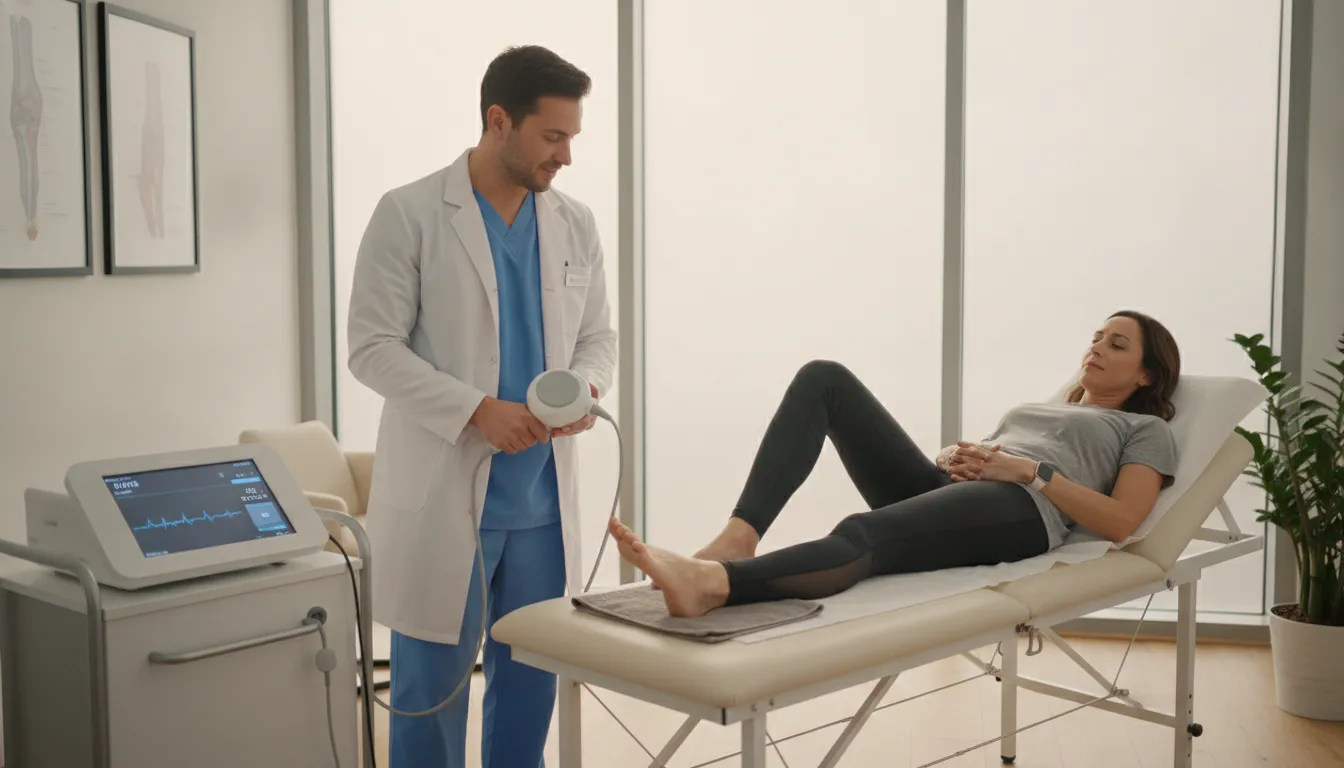
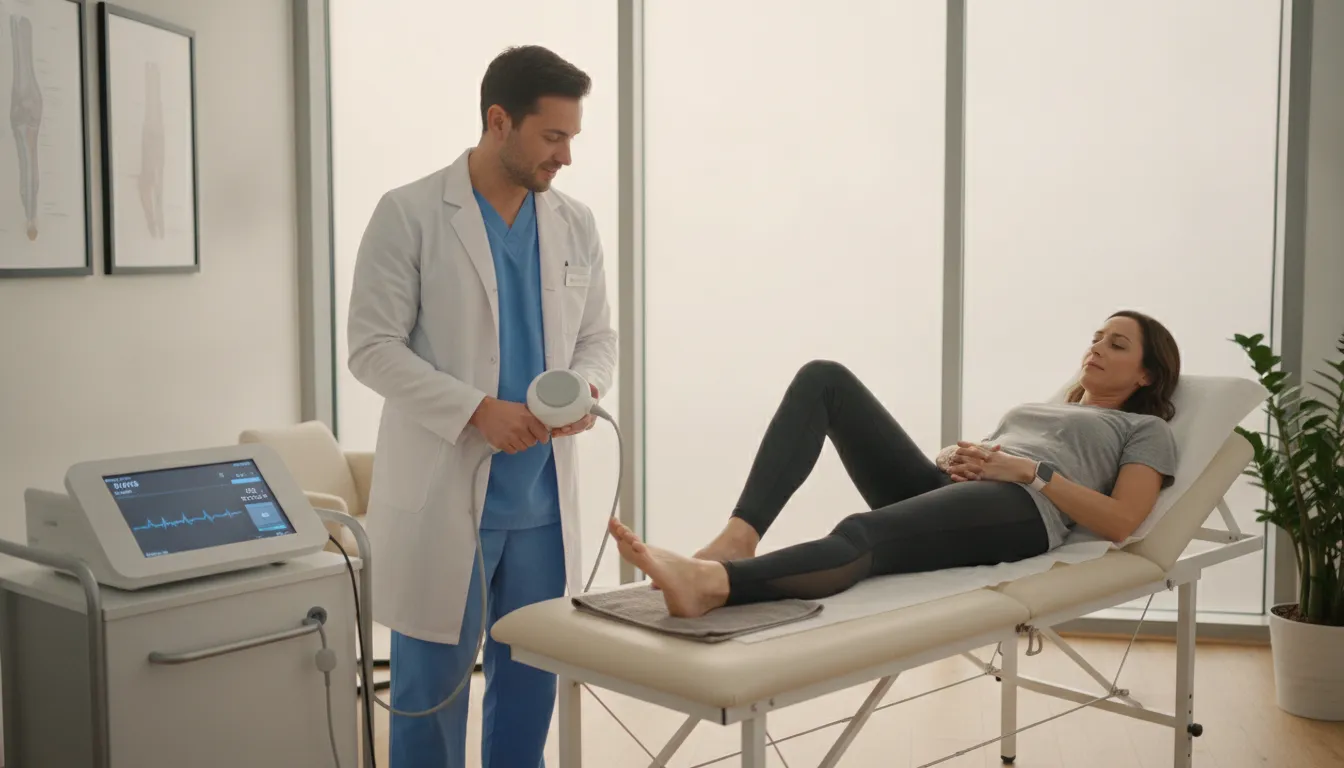
During treatment, a handheld applicator is placed over the painful plantar fascia region. The device delivers acoustic pulses through the skin into the targeted tissue. Patients often describe the sensation as tapping, pressure, or a pulsing feeling. Tender areas may feel more sensitive, but intensity can often be adjusted based on comfort and clinical goals.
The treatment does not require an incision. It does not use plates, screws, or internal hardware. For many patients, the appeal is that the visit can fit into a normal schedule with minimal disruption. Dr. Singh will explain what activity is reasonable afterward and whether any short-term modification is needed.
Patients should not expect the appointment to work like numbing medication. Shockwave therapy is aimed at a tissue response over time. Some people feel early relief, while others notice change gradually as the treatment series progresses and the heel tolerates load better.
How many sessions are needed?
The number of shockwave sessions for plantar fasciitis depends on how long the condition has been present, how irritated the tissue is, and how much stress the foot faces each day. Many plans involve a short series of visits rather than a single appointment.
During the consultation, Dr. Singh can explain the expected schedule and what response signs to watch for. Those signs may include less first-step pain, improved walking tolerance, less post-activity soreness, and fewer setbacks after normal daily activity.
Shockwave therapy works best when it is paired with a load-management plan. If the same tight calf, worn-out shoe, training error, or long-standing arch mechanics continue to overload the plantar fascia, the heel may keep getting irritated. That is why the plan often includes supportive steps outside the treatment room.
- Confirm the diagnosis: make sure plantar fasciitis is the primary issue.
- Reduce overload: adjust shoes, training, standing time, or impact when needed.
- Improve mobility: address calf and plantar fascia tightness safely.
- Support the arch: consider taping, inserts, or orthotics when appropriate.
- Track response: measure pain, function, and activity tolerance over time.
This approach reflects the practice philosophy that life is motion and motion is life. The goal is not to keep an active patient inactive. The goal is to help the foot tolerate motion better.
How does shockwave compare with other plantar fasciitis treatments?
Plantar fasciitis care is not one-size-fits-all. The right plan depends on diagnosis, symptom duration, medical history, activity goals, and what has already been tried. Shockwave therapy is often considered when basic measures are not enough but surgery is not the preferred next step.
| Treatment option | Main role | Invasiveness | Key consideration |
|---|---|---|---|
| Stretching and footwear changes | Reduce daily strain on the plantar fascia | Non-invasive | Helpful foundation, but may not resolve chronic cases alone |
| Orthotics or inserts | Improve support and load distribution | Non-invasive | Works best when matched to foot mechanics and symptoms |
| Class IV laser therapy | Support pain relief and tissue response | Non-invasive | May be paired with other regenerative treatments |
| Shockwave or SoftWave therapy | Stimulate repair activity in stubborn heel tissue | Non-invasive | Often used for persistent plantar fasciitis in active patients |
| Steroid injection | Reduce inflammation in selected cases | Injection-based | Not ideal for every patient or repeated use |
| Surgery | Reserved for select severe cases | Invasive | Usually considered after other options have been exhausted |
Dr. Singh’s regenerative positioning matters here. Instead of automatically defaulting to injections or surgery, he can evaluate whether the heel pain fits a more tissue-focused plan. That may include advanced foot and ankle services such as SoftWave, Class IV laser therapy, or other regenerative medical therapy.
Ask if Shockwave Therapy Fits Your Heel Pain
What results should patients realistically expect?
Shockwave therapy is not a guaranteed cure, and responsible medical care should never promise a specific outcome. The treatment may help reduce pain and improve function for selected patients, but response varies based on tissue health, diagnosis accuracy, activity level, and follow-through with the broader plan.
Research on extracorporeal shock wave therapy has found that it can be a useful option for chronic plantar fasciitis in some patients. A clinical review indexed by PubMed reported positive results for ESWT in plantar fasciitis, while also showing why patient selection and protocol matter. The American Orthopaedic Foot and Ankle Society describes plantar fasciitis as a common heel pain condition that often responds to non-surgical care.
In practical terms, patients should look for functional improvements. Can you get out of bed with less heel pain? Can you walk farther without limping? Can you return to workouts with fewer flare-ups? These are often more meaningful than chasing a single pain-score number.
For active patients, Dr. Singh may also discuss related issues that contribute to heel stress. These can include calf tightness, flatfoot mechanics, training progression, and prior injuries. If your symptoms overlap with broader sports-related foot pain, the practice’s guide to acoustic sound wave and regenerative medical therapy can help you understand why a precise diagnosis matters.
Why see Dr. Singh for plantar fasciitis care?
Comprehensive Foot and Ankle Institute is not positioned as a high-volume, routine clinic. Dr. Sutpal Singh, DPM, FACFAS provides a concierge, doctor-led experience for patients who want focused attention and advanced options for foot and ankle problems.
That matters for plantar fasciitis because persistent heel pain is rarely solved by a generic handout alone. A runner, a warehouse worker, a golfer, and a patient with diabetes-related foot concerns may all say, “my heel hurts,” but their risk factors and treatment plans may be different.
Dr. Singh brings more than 30 years of experience, advanced surgical and wound-care credentials, and a strong interest in regenerative medicine. Patients travel from Hoffman Estates, Schaumburg, Palatine, Arlington Heights, Barrington, South Barrington, East Dundee, West Dundee, Rolling Meadows, Elk Grove Village, and other northwest Chicago suburbs for care that is more personalized than a commodity podiatry visit.
The practice also offers related educational resources. If you are comparing regenerative options, review the practice’s information on Class IV laser therapy, the dedicated shockwave therapy service page, and the broader services available.
When should you request a consultation?
Request a consultation when heel pain lasts more than a few weeks, keeps returning, changes the way you walk, or blocks the activities that matter to you. You should also seek care sooner if pain follows an injury, comes with swelling or bruising, causes numbness, or occurs in a foot at higher medical risk.
During your visit, Dr. Singh can confirm whether your symptoms match plantar fasciitis and whether shockwave therapy for plantar fasciitis is a reasonable option. If another diagnosis is more likely, he can redirect the plan instead of forcing the wrong treatment.
Request an Appointment for Shockwave Therapy for Plantar Fasciitis
For active patients, the best time to ask is often before pain becomes a long-term compensation problem. The sooner the source of overload is understood, the easier it may be to protect your motion, training, and daily comfort.
Frequently asked questions
Does shockwave therapy work for plantar fasciitis?
Shockwave therapy may help selected patients with plantar fasciitis by stimulating circulation and tissue-repair activity around the irritated heel attachment. It is not guaranteed, and it should be recommended only after an exam confirms that plantar fasciitis is the likely pain source.
How long does it take to heal after shockwave therapy?
There is usually no surgical wound to heal because the treatment is non-invasive. Symptom improvement can be gradual over several weeks as the tissue responds and the patient follows the support plan for shoes, stretching, and activity.
Is SoftWave therapy the same as shockwave therapy?
SoftWave is a type of acoustic wave technology used within the broader category of shockwave or ESWT-style treatment. Dr. Singh can explain which technology is being used, why it may fit your case, and what the treatment plan involves.
Can I walk after shockwave therapy?
Many patients can continue normal daily walking after treatment when clinically appropriate. Dr. Singh may recommend temporary activity changes if your heel is highly irritated or if your sport places heavy impact on the plantar fascia.
Is shockwave therapy covered by insurance?
Coverage varies and some regenerative therapies may be self-pay. The office can discuss practical payment and scheduling details during the consultation process, but patients should avoid assuming coverage before checking their specific situation.
Ready to talk with a foot and ankle specialist?
If persistent heel pain is keeping you from walking, training, working, or enjoying your normal routine, Dr. Singh can help you understand your options. Comprehensive Foot and Ankle Institute offers a personalized, regenerative approach for patients who want more than a quick, generic visit.
Contact Comprehensive Foot and Ankle Institute to Request Your Consultation
Appointments are available in Hoffman Estates for patients across the northwest Chicago suburbs who want focused foot and ankle care from Dr. Sutpal Singh, DPM, FACFAS.