




That stabbing first step out of bed can turn every active day into a compromise. For Hoffman Estates patients who want to avoid repeated steroid shots, laser care offers another path worth understanding.
Laser therapy for plantar fasciitis is a non-invasive treatment that directs focused light energy into painful heel tissue as part of a broader care plan. It does not use steroids or require an incision, which makes it appealing to active patients seeking a regenerative option. A 2026 meta-analysis of 13 trials found that laser therapy significantly improved heel tenderness, although results for overall pain and function were inconsistent. That evidence supports laser therapy as a helpful addition, not a guaranteed cure or a replacement for a full podiatric evaluation. At Comprehensive Foot and Ankle Institute, Dr. Singh considers Class IV laser therapy alongside other conservative treatments based on each patient’s diagnosis, activity, and goals.
The key question is not simply whether a laser can ease heel pain, but where it fits within a careful, doctor-led treatment plan. Laser therapy for plantar fasciitis: what it is and why patients ask about it explains the starting point. Here’s how.
Laser therapy for plantar fasciitis: what it is and why patients ask about it
Plantar fasciitis affects the strong band of tissue that runs from the heel to the toes. It often causes sharp heel pain during the first steps after rest. For some people, that pain makes work, exercise, and daily movement harder.
What Class IV laser therapy means
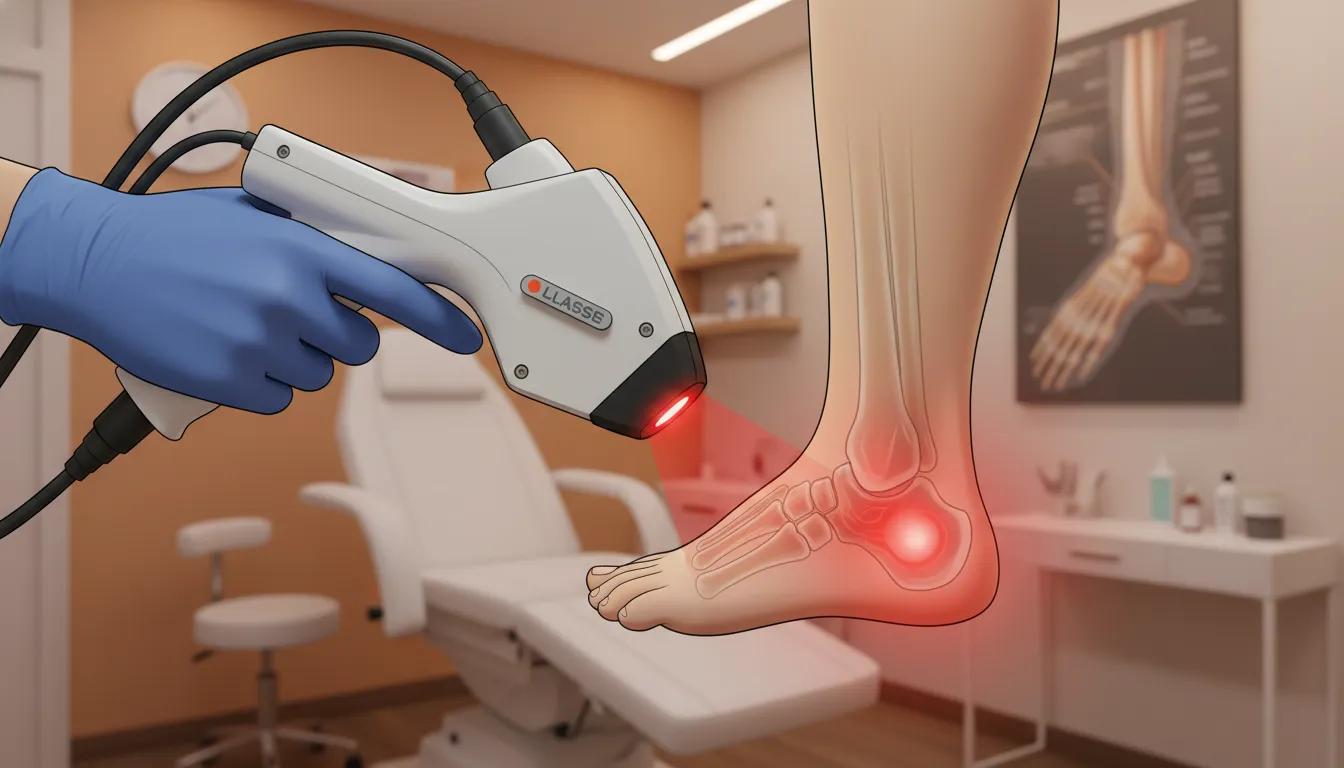
Class IV laser therapy is a non-invasive treatment used as part of regenerative foot and ankle care. During treatment, the doctor applies a laser device to the painful heel area. There are no needles, cuts, or steroid medicines involved in the laser session.
The goal is to support the body’s healing response while addressing pain and tender tissue. It is not a guaranteed cure, and results can differ from one patient to another. Patients can learn more about the practice’s laser treatment options for foot and ankle pain approach before their visit.
Why patients consider a non-steroid option
Many people ask about laser therapy for plantar fasciitis because they want a non-invasive option without cortisone. Steroid injections may offer short-term relief, but repeated shots can weaken the plantar fascia. They may also raise the risk of tissue rupture, according to Mayo Clinic guidance on plantar fasciitis treatment.
Research offers a balanced reason for interest. A recent meta-analysis of local laser therapy found improved heel tenderness across the studies reviewed. Yet it found no clear difference in overall pain, foot function, or plantar fascia thickness. These findings show why a doctor should discuss likely benefits and limits with each patient.
Laser therapy may fit within a wider care plan rather than replace every other form of treatment. Stretching, changes to painful activities, supportive footwear, and other regenerative options may still have a role. The right plan depends on the cause, length, and severity of the heel pain.
A doctor-led plan in Hoffman Estates
At Comprehensive Foot and Ankle Institute, Dr. Sutpal Singh assesses the heel before recommending treatment. This matters because not every case of heel pain comes from plantar fasciitis. The exam also helps him decide whether laser therapy fits the patient’s needs and activity goals.
Dr. Singh uses a concierge model built around direct, doctor-led attention instead of a high-volume clinic visit. Patients have time to discuss their symptoms and activity goals before a care plan begins. The Hoffman Estates office serves patients from Schaumburg, Palatine, Arlington Heights, and other northwest Chicago suburbs.
This personal approach gives patients room to ask practical questions about comfort, timing, and other care options. It also helps set realistic expectations before a laser therapy plan begins.
How Class IV laser therapy may support irritated heel tissue
Class IV laser therapy may support irritated heel tissue by applying focused light energy to the painful area without an injection or incision. For plantar fasciitis, it is best understood as a tissue-focused support option within a broader plan that may also include stretching, footwear changes, and activity guidance.
Targeted energy at the painful area
Class IV laser therapy directs therapeutic light energy toward the sore heel and plantar fascia. The treatment does not cut the skin or inject medicine. In podiatric care, the goal is to support local circulation and the tissue’s recovery response. It may also help calm irritation linked with plantar fasciitis.
The clinician moves the device over selected areas based on the exam. This focused approach matters because heel pain can arise from more than one structure. Treatment settings and the number of visits should reflect the person’s symptoms, health, and response. They should not come from a fixed plan used for every patient. For more details on how this works, visit our advanced laser therapy for heel pain page.
Support rather than a guaranteed fix
Laser therapy for plantar fasciitis is best viewed as one part of a care plan. Research offers a useful but cautious picture. A recent meta-analysis of local laser therapy found improvement in heel tenderness. Yet it found no clear difference in overall pain, function, or plantar fascia thickness.
Those mixed findings help set fair expectations. Laser therapy may support irritated tissue, but it does not remove every source of stress on the heel. A plan may also address tight tissues, weak lower-leg muscles, footwear, or painful activity. The practice’s non-surgical heel pain care page explains how this option fits within regenerative foot care.
Why the exam comes first
A podiatric exam helps confirm whether the plantar fascia is the likely pain source. It also checks for other causes that may need a different plan. An X-ray may show a heel spur, but many people with heel spurs have no heel pain. This is one reason an image alone cannot guide care.
The exam also helps the doctor judge whether laser care should stand alone or support other steps. Common options may include stretching, activity changes, arch support, or another regenerative therapy. The aim is a plan tied to the cause and the patient’s goals, not just short-term symptom relief.
How does laser therapy compare with steroid shots?
Laser therapy for plantar fasciitis is non-invasive and non-steroid, while a steroid shot places medicine near the painful tissue for short-term relief. Repeated steroid injections may carry tissue risks, so patients who want to preserve activity often ask whether laser care can support comfort without another injection.
Laser therapy and steroid shots take different paths toward heel pain relief. A steroid shot places medicine near the sore plantar fascia for short-term pain control. Laser therapy for plantar fasciitis is non-invasive and fits a non-steroid care plan. Neither option replaces a full exam or a clear diagnosis.
The right choice depends on your pain pattern, foot structure, activity level, and past care. Dr. Singh may also check for another source of heel pain before suggesting treatment. This doctor-led approach helps match care to the tissue problem instead of treating pain alone.
Patient-view comparison
The table below shows how four common paths differ from a patient’s point of view. These options are not always either-or choices. Stretching, activity changes, and orthotics may support laser care or another treatment plan.
| Option. | How it is used. | Patient experience. | Key limits. |
|---|---|---|---|
| Laser therapy. | Non-invasive light-based care. | No injection or incision. | Response can vary. A care series may be advised. |
| Steroid injection. | Medicine placed near the tender area. | Needle-based office treatment. | Relief may be temporary. Repeat shots carry tissue risk. |
| Stretching and orthotics. | Supports flexibility and spreads foot pressure. | Daily home care and shoe support. | Needs steady use and activity changes. |
| Surgery. | Procedure for selected ongoing cases. | More involved than office therapies. | Usually reserved for pain that resists other care. |
Relief versus tissue-focused care
Steroid injections can provide temporary pain relief. Yet, multiple steroid shots are not advised because they can weaken the plantar fascia and may cause rupture. This risk matters when the goal is to preserve tissue while restoring motion.
Laser care offers a non-steroid path without an injection. Research is promising but mixed. A recent meta-analysis of local laser therapy found better heel tenderness. It did not find clear differences in overall pain, function, or fascia thickness.
A plan based on exam findings
Stretching and orthotics often remain part of early care. Stretching can target the plantar fascia and Achilles tendon. Orthotics can spread pressure more evenly across the foot. These steps address forces that may keep the heel sore, but they take steady effort.
Surgery may enter the discussion when pain continues despite less invasive care. It is not the automatic next step after a failed shot. Dr. Singh may discuss regenerative laser therapy service within a personalized care plan. The exam guides whether laser, support, an injection, or a procedure fits your needs.
Who may be a candidate for non-steroid heel pain care?
A possible candidate for non-steroid heel pain care is someone with plantar fasciitis symptoms who wants to discuss a non-invasive option after basic steps have not helped enough. The decision still depends on diagnosis, health history, activity demands, and a podiatric exam.
When laser care may fit
Laser therapy for plantar fasciitis may interest active adults, athletes, and people whose heel pain keeps returning. It may also suit people who want to ask about a non-invasive option before considering injections or surgery. A foot exam is still needed because several problems can cause heel pain.
People with ongoing plantar fasciitis may ask about laser care after basic steps have not helped enough. Those steps may include stretching, supportive shoes, activity changes, physical therapy, or orthotics. The Mayo Clinic plantar fasciitis guide notes that activity changes and stretching are common parts of conservative care.
Reasons to discuss a non-steroid option
Some patients want to avoid steroid injections or limit repeat injections. Steroid medicine can give short-term pain relief, but repeated shots may weaken the plantar fascia and could lead to rupture. This concern can make a doctor-led discussion about laser therapy for foot and ankle conditions useful.
Laser care may also appeal to runners, workers who stand for long periods, and adults who want to stay active. Yet treatment should fit the diagnosis, pain pattern, health history, and activity goals. A recent laser therapy meta-analysis found improved heel tenderness, but results for overall pain and function varied.
A good candidate is willing to follow the full care plan, not rely on one treatment alone. Laser care does not replace changes that reduce strain on the plantar fascia. Your doctor may still advise stretching, better support, or a short break from painful activities.
When heel pain needs prompt evaluation
Not every sore heel is plantar fasciitis. Seek prompt medical care after a sudden injury or when you cannot put weight on the foot. Fever, marked swelling, redness, warmth, numbness, weakness, or an open wound also call for timely evaluation.
People with diabetes, poor circulation, or loss of feeling should not self-treat a new foot problem. A clinician can check for a fracture, nerve problem, infection, or another cause before discussing laser care. Even with a plantar fasciitis diagnosis, no treatment is right for everyone.
A personal exam helps decide whether laser care belongs in a wider plan. It also gives the doctor a chance to review what has already been tried. Options may include load changes, stretching, orthotics, therapy, or other regenerative care based on the findings.
What to expect during a plantar fasciitis laser consultation
A focused, doctor-led first visit
Your consultation starts with a detailed talk about your heel pain, daily activities, past treatments, and goals. Dr. Singh then examines your foot and checks where and when pain occurs. The practice’s concierge care model avoids double-booking, so the visit stays focused on your needs and questions.
This exam matters because heel pain can have more than one cause. For example, a heel spur found on an X-ray may not be causing the pain. Your findings help Dr. Singh decide whether laser therapy for plantar fasciitis fits your diagnosis.
- Review your symptoms and history. You will discuss when the pain began, what makes it worse, and how it limits motion. Bring details about prior care, footwear, sports, work demands, and health conditions.
- Complete a foot and ankle exam. Dr. Singh checks the tender area, foot structure, motion, gait, and nearby tissues. Imaging may be discussed when the exam suggests another cause or more detail is needed.
- Confirm the likely diagnosis. The exam helps separate plantar fasciitis from other sources of heel pain. You can then review what may be placing stress on the plantar fascia.
- Compare reasonable treatment options. Dr. Singh explains whether laser care, activity changes, stretching, orthotics, or another approach may suit your case. The discussion also covers alternatives, expected limits, and questions about cost or coverage.
- Build a treatment and follow-up plan. If laser care is appropriate, the plan reflects your symptoms, schedule, and activity goals. Follow-up visits track pain, function, and response, so the plan can change when needed.
A plan based on your findings
There is no fixed treatment schedule that fits every patient. Your plan depends on the exam, how long symptoms have lasted, and how heel pain affects your day. Dr. Singh may discuss Class IV laser therapy as one part of a broader care plan.
The evidence also calls for a measured discussion. A recent meta-analysis found improvement in heel tenderness, but no clear differences in overall pain, function, or fascial thickness. These laser therapy findings help frame realistic goals rather than promise one result for every patient.
Follow-up and progress checks
At follow-up, describe changes in first-step pain, walking comfort, work, exercise, and any new concerns. Dr. Singh can use those details with the repeat exam to judge progress. He may continue the plan, adjust it, or discuss another option.
Progress is not judged by pain alone. The goal is to see whether treatment supports safer, more comfortable motion in daily life. Clear check-ins also give you time to ask questions before the next stage of care.
Questions to ask before choosing laser therapy
A good plan for laser therapy for plantar fasciitis starts with questions, not a preset package. Your visit should clarify the cause of your heel pain, your goals, and how progress will be checked.
Is plantar fasciitis the right diagnosis?
Ask what points to plantar fasciitis and whether another issue could explain your pain. The location, timing, and triggers of pain can help guide this discussion. For example, plantar fasciitis often hurts most during the first steps after rest.
Also ask what the provider expects laser therapy to change. A recent meta-analysis of local laser therapy found better heel tenderness, but not clear gains in overall pain, function, or fascia thickness. This mixed finding makes a personal treatment goal and a clear way to track it important.
- What findings support my diagnosis?
- Could my heel pain come from another condition?
- How will we measure pain, movement, and daily function?
What will the full care plan include?
Ask how many visits the provider recommends and when progress will be reviewed. The answer should reflect your symptoms, activity level, health history, and response to care. Ask what happens if improvement slows or does not match the original goal.
Laser therapy may be one part of a broader plan. Ask whether stretching, activity changes, supportive shoes, or orthotics should continue between visits. Orthotics can help spread pressure more evenly, while stretching can address the plantar fascia and Achilles tendon.
Discuss work, sports, and exercise before treatment begins. Ask which activities are safe, which should be changed, and how to return to higher-impact movement. A clear activity plan helps protect the sore area while keeping you moving when appropriate.
- How many visits should I expect before we review results?
- Should I keep stretching or wearing orthotics during care?
- Which activities should I pause, change, or slowly resume?
- When would you suggest a different treatment?
What are the costs and other options?
Ask for the expected fee per visit, the estimated total cost, and the payment policy. Coverage can vary by plan and service, so ask what your insurer requires before care starts. Avoid assuming that a quoted treatment plan guarantees payment or reimbursement.
It is also fair to ask why laser therapy fits better than other options for your case. The practice’s regenerative medical therapies include shock wave and red light therapy, which may come up during a doctor-led review. Each option uses a different approach and may suit a different care goal.
For chronic plantar fasciitis that has not improved with conservative care, shock wave therapy uses sound waves directed at the heel. Ask how each option works, why it is being considered, and what evidence guides the recommendation. That conversation should lead to a plan built around your diagnosis and daily needs.
Frequently Asked Questions
Does laser therapy for plantar fasciitis work?
Laser therapy may help reduce localized heel tenderness. Results for overall pain and function are less consistent. A meta-analysis of 13 randomized trials found improvement in heel tenderness, but not consistent gains in overall pain, function, or fascia thickness. Laser therapy is generally considered one part of a broader treatment plan.
How many laser treatments are needed for plantar fasciitis?
The number of sessions depends on the laser type, heel pain severity, treatment response, and other therapies used. In published plantar fasciitis trials, protocols ranged from 6 to 15 sessions. They were usually delivered over two to three weeks. A podiatrist should examine the heel and set a personalized schedule rather than promising a fixed number of treatments.
What are the side effects of laser treatment for plantar fasciitis?
Laser treatment is non-invasive. Serious adverse events were not reported in the trials included in a recent meta-analysis. However, adverse-event reporting was limited or missing in several studies. Patients should discuss personal risks, skin sensitivity, medications, and medical conditions first. Their podiatrist can review these details before treatment starts. Outcomes and tolerability can vary by laser type and treatment settings.
How does laser therapy for plantar fasciitis differ from shock wave therapy?
Laser therapy applies light energy to the painful area. Shock wave therapy uses acoustic sound waves to stimulate a healing response. Both are non-surgical options that may be combined with stretching, orthotics, and activity changes. Shock wave therapy is often considered for chronic plantar fasciitis that has not improved with more conservative care.
Is laser therapy for plantar fasciitis covered by insurance?
Insurance coverage for laser therapy varies by plan and diagnosis. It also depends on what the plan considers medically necessary. Some regenerative therapies may be self-pay, so patients should not assume coverage before starting care. Ask the podiatry office for the relevant billing details. Then contact the insurer to confirm benefits, exclusions, authorization rules, and expected costs.
Ready to Address Heel Pain Without Steroids?
Waiting for heel pain to fade on its own can mean more missed walks, workouts, errands, and time with the people you enjoy. Each week spent adjusting how you stand or move may place new limits on your routine and make your symptoms harder to explain. Starting your care now gives Dr. Singh time to assess your heel pain, discuss non-steroid options, and build a personalized plan before pain disrupts more of your life.
Ready to take the next step toward comfortable movement with focused, doctor-led care in Hoffman Estates? Request an appointment for non-steroid heel pain care to discuss your symptoms, goals, treatment timeline, and whether laser therapy may fit your needs.