



Foot pain that lingers through rest can keep an athlete from moving freely. Shockwave therapy offers a non-invasive way to target stubborn tissue without an incision or steroid injection.
Shockwave therapy for foot pain uses acoustic pressure waves to deliver mechanical force into painful tissue and prompt a healing response. This non-invasive, outpatient treatment may help chronic problems such as plantar fasciitis and Achilles tendinopathy, especially when rest, stretching, or orthotics have not provided enough relief. Research summarized in a 2023 systematic review found ESWT can improve short- and long-term pain and function in plantar fasciitis. For athletes and active adults, it may support tissue repair and a return to motion without surgery, but results take time and vary. A foot and ankle specialist should first confirm the cause of pain, rule out unsafe conditions, and tailor care to the patient’s goals.
Persistent heel or tendon pain can have several causes, so the right diagnosis matters before treatment begins. Next, “Shockwave therapy for foot pain: what it does” explains how acoustic waves affect injured tissue and why this option may fit an active recovery plan. Here’s how.
Shockwave therapy for foot pain: what it does
Quick answer: what is shockwave therapy?
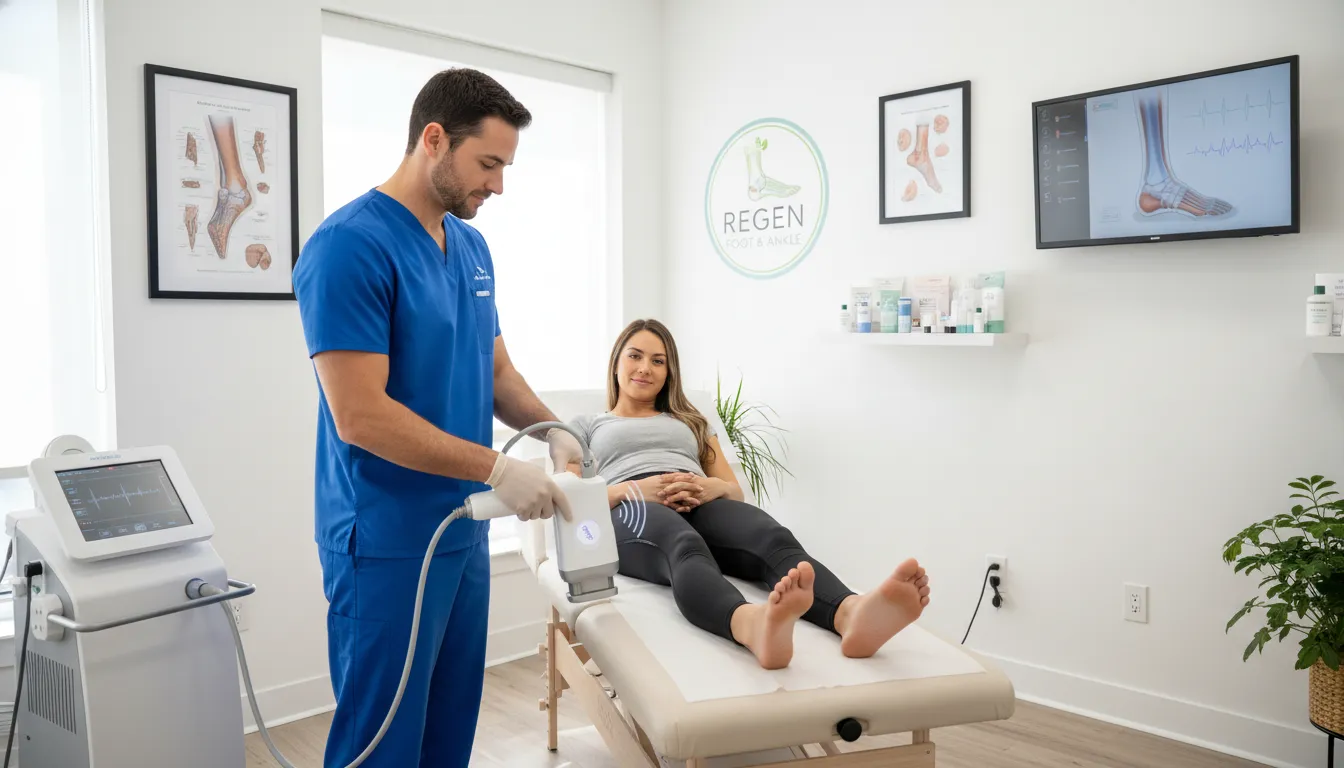
Shockwave therapy is a noninvasive treatment that sends focused acoustic pressure waves into sore or injured tissue. These are not electrical shocks. A clinician places a handheld device against the skin and directs the waves toward the problem area. Learn more about shockwave therapy for plantar fasciitis and foot pain at Comprehensive Foot and Ankle Institute.
The treatment is also called extracorporeal shockwave therapy, or ESWT. “Extracorporeal” means that the energy starts outside the body. The goal is to prompt a healing response without an incision, injection, or hospital stay.
How acoustic waves may support healing
The pressure waves apply controlled mechanical force to tissue. This force may increase local blood flow and signal the body to restart repair in a stubborn area. Comprehensive Foot and Ankle Institute explains how shockwave therapy for foot pain is used to support healing in chronic foot conditions.
Shockwave therapy does not numb pain or repair tissue at once. Instead, it aims to support the body’s own repair process over time. The response can vary based on the cause, location, and length of the pain.
Evidence is strongest for some long-lasting tendon and soft tissue problems. One review of shockwave therapy for plantar fasciitis found benefits for pain and function over short and longer follow-up periods. That evidence does not mean ESWT is right for every type of foot pain.
A regenerative, minimally invasive option
Dr. Sutpal Singh frames ESWT as one part of regenerative foot and ankle care. The approach seeks to help damaged tissue recover while avoiding more invasive treatment when it is not needed. It may fit an active patient’s care plan when an exam supports its use.
Shockwave therapy may be considered alongside activity changes, footwear support, stretching, or other care. It can also complement other regenerative medical therapies when clinically appropriate. Dr. Singh first evaluates the source of pain, since heel pain, tendon pain, and joint pain need different plans.
This doctor-led process matters. A focused diagnosis helps place the acoustic waves where they may help most. It also helps set clear expectations about comfort, response, and the role of ESWT within a broader treatment plan.
Which foot pain conditions may respond?
Shockwave therapy for foot pain may be an option when pain comes from an irritated tendon, fascia, or other soft tissue. It is not a fit for every sore foot. A focused exam helps locate the painful structure and rule out a fracture, nerve problem, joint issue, or another cause. The diagnosis, symptom history, and prior care all shape the treatment plan.
Plantar fasciitis and chronic heel pain
Plantar fasciitis is one of the better-studied uses for shockwave therapy. This condition often causes sharp heel pain with the first steps after rest. A review of clinical studies on plantar fasciitis found benefits for pain and function. Its findings covered short and long term, but results still differ from one person to another.
Heel pain is not always plantar fasciitis. It can also come from a stress injury, nerve irritation, heel pad trouble, or another source. That is why treatment should not start based on symptoms alone. An exam can show whether the plantar fascia is the likely pain source and whether shockwave care makes sense.
Achilles and other tendon irritation
The Achilles tendon handles force each time you walk, run, or push off the ground. Repeated strain may leave the tendon sore and less able to tolerate activity. Shockwave therapy may be considered for ongoing tendon irritation after a clinician confirms the diagnosis. The painful area and tendon health can affect whether it is a reasonable choice.
Other stubborn soft-tissue pain around the foot or ankle may also merit an assessment. Shockwave therapy uses pressure waves for musculoskeletal conditions, and it does not require an incision. The Mayo Clinic overview of shockwave therapy explains that it is now used for some orthopedic conditions. Its use should match the tissue and cause involved.
Sports overuse pain in active people
Runners and other athletes can develop pain when training load rises faster than tissue can adapt. Pain during push-off, jumping, or repeated practice may point to an overuse injury. Yet similar symptoms can have different causes. A foot and ankle exam can help separate tendon or fascia irritation from bone, joint, or nerve pain.
For the right diagnosis, shockwave care may form one part of a broader return-to-activity plan. Load changes, footwear choices, strength work, and recovery time may also matter. The goal is not to mask pain and send an athlete back too soon. It is to support tissue recovery while activity builds at a safe pace.
People with long-lasting pain should discuss prior treatments, health conditions, and activity goals during the visit. Comprehensive Foot and Ankle Institute lists shockwave therapy for foot pain among its regenerative care options. Dr. Sutpal Singh, DPM, FACFAS, FAPWCA, can assess whether the treatment fits the diagnosed condition. No treatment can promise the same outcome for every patient.
When should you see a foot and ankle specialist?
Foot pain should not become the price of staying active. Schedule an evaluation when pain lasts for weeks, gets worse, or keeps you from normal training and daily tasks. A specialist can check the cause before deciding whether shockwave therapy for foot pain fits your needs.
Red flags that need prompt care
Do not wait for a planned shockwave visit after a hard fall, twist, crush injury, or sudden severe pain. Prompt care can rule out a fracture, tendon injury, infection, or another problem that needs a different treatment plan.
Marked swelling, warmth, redness, or pain that keeps rising also calls for an exam. New numbness or poor sensation matters because it can hide tissue damage. An open sore, especially on a diabetic foot, needs direct wound care rather than a routine shockwave session.
- Seek prompt evaluation when you cannot bear weight or train as usual.
- Report new numbness, weakness, color change, or spreading swelling.
- Get any diabetic foot wound, drainage, or open sore checked without delay.
Before starting shockwave care
Shockwave therapy can help some long-term foot problems, but the right diagnosis comes first. A review of shockwave therapy for plantar fasciitis found gains in pain and function. Those findings do not mean every type of foot pain will respond the same way.
Before treatment, the doctor should review where pain began, what makes it worse, and which home steps have failed. The exam may also assess gait, strength, sensation, swelling, and the painful tissue. This check helps separate plantar fascia or tendon pain from trauma, nerve symptoms, wounds, and other causes.
Patients who are pregnant or have open sores, poor sensation, or active heart conditions should discuss other options. A doctor-led visit also allows time to review goals, activity demands, health history, and possible limits of care. Learn more about Dr. Sutpal Singh and his approach before your visit.
Changes during a treatment plan
Speak up if pain worsens during a shockwave care plan or a new symptom appears. Stop and request an evaluation for new numbness, an open wound, marked swelling, or trouble bearing weight. Treatment should respond to what your foot is showing, not follow a fixed schedule without review.
At Comprehensive Foot and Ankle Institute, the concierge model centers each visit on a doctor-led evaluation. Dr. Singh can review failed home care, training limits, and any changes between sessions. If foot pain has lingered or disrupted motion, schedule a foot and ankle evaluation in Hoffman Estates.
What to expect during shockwave therapy visits
Shockwave therapy for foot pain takes place in the office and does not require a hospital stay. The treatment is non-invasive, so there is no incision. Your visit includes a focused exam, treatment, and clear guidance for the days ahead.
Before the first treatment
Dr. Sutpal Singh first reviews your symptoms, health history, and activity goals. He examines the foot and locates the tissue linked to your pain. This focused check also helps him decide whether shockwave therapy fits your needs.
Tell the doctor where the pain starts, what makes it worse, and how long it lasts. Also share any change in feeling, open skin areas, or health concerns. These details help shape a safe, personal treatment plan.
Review and exam: The doctor checks your foot, discusses your symptoms, and confirms the planned treatment area.
Find the painful tissue: You help point out the exact pain pattern while the doctor checks nearby tissue.
Prepare the area: Gel is placed on the skin so the device can deliver acoustic waves to the target.
Apply the treatment: The device moves over the area during a brief office session. You may feel tapping or short bursts of discomfort.
Review aftercare: The doctor checks your response and explains activity limits, symptom care, and the next visit if needed.
During the visit
The doctor can adjust the device based on the treatment area and your comfort. The goal is to direct energy toward the tissue linked to the pain. The process does not involve surgery or a hospital stay.
Shockwave therapy is used for some orthopedic conditions, according to the Mayo Clinic. Research also links it with pain relief and better function in plantar fasciitis. Your response may differ based on the condition and its cause.
Aftercare and later sessions
Most patients leave the office after the visit. Follow the doctor’s advice on walking, exercise, work, and sports. You may be told to reduce an activity that puts added stress on the treated tissue.
Some people notice brief soreness, redness, or bruising after treatment. Report new or lasting symptoms instead of pushing through them. The doctor may check your pain, motion, and activity at later visits.
A care plan may include repeated sessions when appropriate. Timing depends on the tissue involved, your response, and your activity goals. The practice’s overview of shockwave therapy for foot pain explains how it fits within its in-office services.
How shockwave therapy compares with other options
Foot pain treatment is not a contest with one winner. A personalized plan depends on the diagnosis, pain pattern, activity goals, and response to prior care. Shockwave therapy for foot pain may fit between basic care and more invasive options.
Different goals for each option
Rest, orthotics, and physical therapy often form a practical starting point. They can reduce strain, support the foot, and build strength or mobility. These options may also remain part of a plan when another treatment is added.
Shockwave therapy takes a different approach. It applies pressure waves without an incision, so it may suit some people with stubborn soft tissue pain. Treatment aims to address the painful tissue while allowing the broader care plan to continue.
A steroid injection may be considered when short-term pain control is an important goal. Surgery can address certain structural problems that will not respond to less invasive care. Neither choice is automatically better or worse; the diagnosis and expected tradeoffs matter.
Side-by-side treatment comparison
The table shows broad differences, not a treatment rule. The right choice can change based on the tissue involved and how long symptoms have lasted. An exam helps separate plantar fascia pain from nerve, bone, joint, or tendon problems.
| Option | Main role | Invasiveness | Plan considerations |
|---|---|---|---|
| Rest, orthotics, and therapy. | Reduce load and improve support. | Non-invasive. | Often used first. |
| Shockwave therapy. | Apply pressure waves to painful tissue. | Non-invasive. | May need a treatment series. |
| Steroid injection. | Target pain and inflammation. | Injection. | Benefits depend on the diagnosis. |
| Other regenerative options. | Support a tissue-focused plan. | Varies. | Choice depends on the tissue. |
| Surgery. | Correct a structural problem when needed. | Procedure. | Used after diagnosis and review. |
When shockwave therapy may fit
Shockwave therapy may be discussed when pain continues despite changes in activity, footwear, support, or guided rehab. It does not replace every injection or operation. It is one tool that can be combined with care aimed at the cause.
For plantar fasciitis, one review found high-intensity ESWT had better pain relief and success rates than corticosteroid injection within three months. That finding does not mean the same choice fits every condition.
Some patients want a non-invasive option before discussing surgery. Others may need support for a structural issue or a different pain source. Patients can review the practice’s shockwave therapy for foot pain information before a visit.
Other tissue-focused choices may also enter the discussion. The practice offers several regenerative medical therapies, but each has a different role. Dr. Sutpal Singh can compare options after examining the foot and reviewing prior care.
What are the limits, side effects, and cost questions?
Shockwave therapy for foot pain can help some people, but it does not work the same way for everyone. It is not a quick fix for every cause of heel, arch, or ankle pain. A careful exam helps confirm the diagnosis and whether this option fits your health needs.
What discomfort can occur?
During treatment, the device may cause a tapping or snapping feeling against the skin. Treatment can feel more tender when the waves reach an inflamed or painful area. Tell the doctor if the feeling becomes hard to tolerate so the settings can be reviewed.
Short-lived soreness or discomfort may follow a session. Temporary skin redness or bruising may also occur near the treated spot. These effects are often minor, but contact the practice if pain worsens or a new concern develops.
Plan for some tenderness even if you can return to many usual tasks. Avoid testing the foot with a sudden hard workout just because it feels better that day. Your doctor can explain how much activity is suitable based on the treated tissue and your response.
Who may not be a good candidate?
Shockwave therapy is not the right choice for every patient or every type of foot pain. The practice’s shockwave therapy guidance lists pregnancy, open sores, neuropathy, and active heart conditions as reasons it may not be recommended. A personal consultation is needed because health risks and treatment goals differ.
Share your full health history, current symptoms, medicines, and past foot treatments before care begins. Also mention poor sensation, skin wounds, pregnancy, or any active medical condition. Do not assume that another person’s good result means the treatment is safe or suitable for you.
Evidence also has limits. A systematic review of shockwave therapy for plantar fasciitis found benefits for pain and function in both the short and long term. That finding applies to a specific condition and does not promise the same result for every cause of foot pain.
What should you ask about cost?
Insurance coverage can be uncertain, and self-pay may be required. Before starting, ask the practice and your insurer what is covered and what you may owe. Useful cost questions include:
- What is the fee for each session?
- How many sessions may be advised for my condition?
- Are the exam, follow-up visits, or other treatments billed separately?
- Does my plan require prior approval, and will the practice provide the needed records?
Ask for a clear estimate based on your proposed care plan, not another patient’s bill. The lowest initial fee may not reflect the full cost if more visits or added care become necessary.
How Dr. Singh builds an active recovery plan
An active recovery plan starts with the person’s goals, not a fixed treatment menu. Dr. Sutpal Singh, DPM, FACFAS, FAPWCA, looks at the source of pain and the activities each patient wants to keep doing.
A focused, doctor-led assessment
Concierge care gives Dr. Singh time to examine the foot, review prior care, and learn how pain affects daily motion. The practice does not double-book visits, so the plan can reflect the patient’s sport, work, health, and comfort level.
With more than 30 years of experience, Dr. Singh can weigh both common causes and complex cases. He also screens for factors that could make a treatment unsafe or less suitable. The aim is a clear plan that protects motion without making promises about the result.
A regenerative treatment mix
Shockwave therapy for foot pain may be one part of the plan when the exam supports its use. Research has found that ESWT can improve pain and function in plantar fasciitis over the short and long term. Readers can review the published plantar fasciitis review for study details.
Dr. Singh may also consider Class IV laser therapy, SoftWave therapy, peptides, or other options based on the diagnosis. Some patients may be candidates for stem cell injections. The practice’s guide to regenerative medical therapies explains that option in more detail.
Motion, response, and next steps
Treatment is paired with guidance on activity, rest, footwear, and follow-up. Dr. Singh checks how pain and function change, then adjusts the plan when needed. This measured approach helps avoid pushing through pain or stopping all movement without a clear reason.
If regenerative care is not the right fit, Dr. Singh can discuss minimally invasive options for certain foot problems. These procedures may use precise tools through a small opening and may allow walking when clinically appropriate. Patient testimonials offer added context on the practice’s doctor-led care and recovery experience.
Frequently Asked Questions
Is shockwave therapy good for feet?
Shockwave therapy may help some foot conditions, especially ongoing plantar fasciitis, Achilles tendon pain, and other soft tissue problems. It is non-invasive and uses pressure waves rather than incisions. A systematic review found that shockwave therapy improved pain and function in plantar fasciitis. A foot and ankle specialist should first confirm the diagnosis and assess whether it fits the patient’s needs.
Does insurance cover shockwave therapy for foot pain?
Coverage varies by insurer, plan, diagnosis, and medical policy. Many insurers classify shockwave therapy as experimental or investigational, so patients may need to pay out of pocket. Before treatment, ask the insurer whether prior authorization is required and request a written coverage decision. The specialist’s office can explain the proposed treatment plan and provide information needed to verify benefits.
What are the drawbacks of shockwave therapy?
Shockwave therapy can cause discomfort during treatment, followed by temporary redness, bruising, soreness, or swelling. It may not help every cause of foot pain, and several visits may be needed. Treatment can also involve out-of-pocket costs when insurance does not cover it. A specialist should discuss expected benefits, possible side effects, and other suitable options before therapy begins.
What happens after shockwave therapy on feet?
After shockwave therapy, some patients can return to normal daily activity, but the treated area may feel sore or tender. Follow the specialist’s guidance on exercise, footwear, and activity changes, especially before returning to sports. Improvement may develop gradually as tissue repair continues. Contact the office if pain sharply worsens, swelling becomes concerning, or new symptoms appear.
Who should avoid shockwave therapy?
Shockwave therapy may not be appropriate during pregnancy or near open sores. It may also require caution for people with poor sensation, certain heart conditions, bleeding risks, or other medical concerns. Eligibility depends on the treatment area, diagnosis, and overall health. A foot and ankle specialist should review medications and medical history before recommending shockwave therapy.
Ready to Address Foot Pain and Keep Moving?
Persistent foot pain can slowly reduce your training, daily movement, and confidence, especially when rest alone does not resolve the problem. Waiting longer may allow discomfort to keep shaping your choices and delaying the activities that matter to you week after week. Starting now with a focused specialist evaluation can clarify your next steps and help you build a timely, practical recovery plan for safer progress.
Ready to understand your options and move forward? Request an appointment to talk with Dr. Sutpal Singh about your symptoms, goals, and whether shockwave therapy may fit your care plan. Start with a personal evaluation today instead of continuing to work around unresolved pain or guessing about the right next step.