



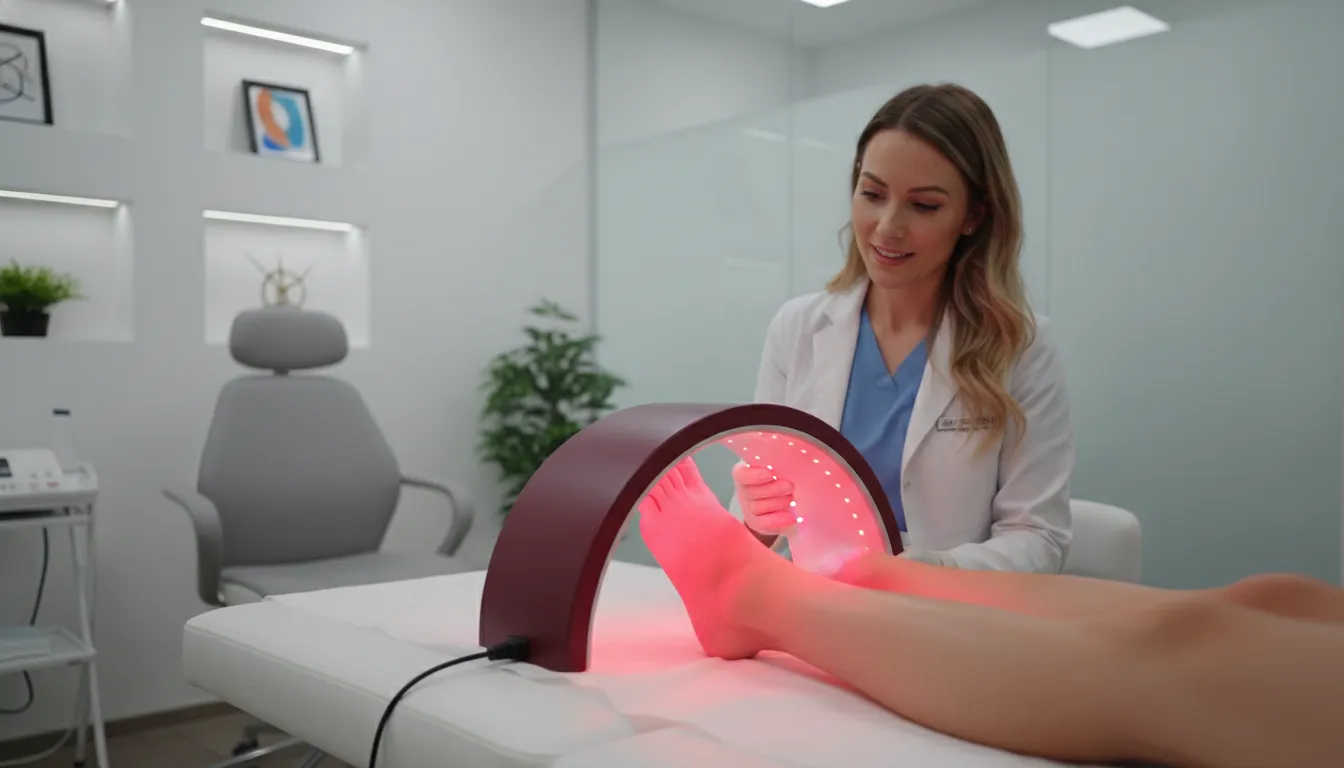

Ankle pain can steal miles from a runner and confidence from every step. Red light therapy may support pain control, but it cannot replace a clear diagnosis.
Request an appointment for ankle pain evaluation with Dr. Sutpal Singh in Hoffman Estates to learn whether red light therapy fits your diagnosis.
For a locally focused overview of how Dr. Singh evaluates and uses this option, explore our red light therapy for foot and ankle pain in Hoffman Estates service page.
Red light therapy for ankle pain uses targeted red or near-infrared light, known as photobiomodulation, to influence tissue response without injections or medication. It may help with pain after ankle sprains or lingering soreness, but it works best after a foot and ankle specialist identifies the cause of pain.
The central question is not whether light sounds promising, but whether it fits the cause of your ankle pain. How red light therapy for ankle pain works explains what the light may do inside tissue, and why careful diagnosis and treatment settings matter. The path begins with
How red light therapy for ankle pain works
Red light therapy for ankle pain uses focused light to support the body’s response to an injured or sore area. The clinical term is photobiomodulation therapy, often shortened to PBMT. It may be used as one part of a care plan after the cause of pain is clear.
Light and cellular activity
During a session, a device directs red or near-infrared light toward selected ankle tissues. Cells absorb part of that light, which may support processes tied to cellular energy and tissue repair. This approach aims to help the tissue response rather than simply block pain signals.
Research has tested more than one type of LED light. One placebo-controlled ankle sprain study examined 627 nm LED therapy and found lower pain scores in the treated group. A separate pilot study of injured university athletes used 830 nm LED phototherapy and reported a shorter return-to-play period.
Those results do not mean that one wavelength or dose fits every ankle problem. The correct setup depends on the injured tissue, pain source, skin, health history, and other care being used. A clinician should first decide whether light therapy fits the diagnosis.
Support for pain and inflammation
Photobiomodulation may affect pain pathways and the local inflammatory response. In a study of acute ankle sprains, researchers described phototherapy benefits as reduced pain processes and a changed inflammatory process. The same ankle sprain study found lower pain scores with LED treatment than with placebo.
Better local circulation is also a common treatment goal because blood carries oxygen and nutrients to tissue. Still, a circulation response should not be assumed for every patient. Swelling, bruising, pain, and limited motion can each point to a different need.
Why ankle tissue depth matters
The ankle packs several tissue types into a small area. Skin, tendons, ligaments, muscles, nerves, bones, and the joint may all play a role in pain. A structure close to the skin may receive light differently than a deeper joint surface.
Placement and dose therefore matter as much as the device itself. A clinician may target a sore tendon, a sprained ligament, or another defined area. This focus avoids treating the whole ankle the same way. Pain from a fracture, unstable injury, infection, or nerve problem also needs care beyond light therapy.
Current evidence is promising but cautious. A review found an overall pain benefit for PBMT in ankle sprains, yet evidence for swelling and function was less clear. Comprehensive Foot and Ankle Institute may consider red light therapy within its comprehensive ankle treatment options after a personalized exam.
What ankle conditions may be considered for red light therapy?
Red light therapy for ankle pain may be considered when soreness limits walking, exercise, or sport. It does not replace a diagnosis. Dr. Singh first examines the ankle to find the injured tissue and rule out problems that need a different form of care.
Recent sprains and sports injuries
An ankle sprain can stretch or tear ligaments, while a hard workout may irritate muscles and other soft tissues. Red light therapy may serve as one part of a wider recovery plan after these injuries. A systematic review of photobiomodulation for ankle sprains found a benefit for pain, but results for swelling and function were less clear.
Sports recovery plans must fit both the injury and the athlete’s activity demands. A pilot study of injured university athletes found that LED phototherapy showed potential for injury recovery. Still, return-to-play choices should depend on strength, motion, balance, and a clinical exam, not pain relief alone.
Tendon irritation and overuse pain
Repeated running, jumping, or long hours on the feet can strain the ankle over time. Dr. Singh may assess red light therapy for tendon irritation, overuse soreness, or pain that returns with activity. Achilles pain needs a careful exam because tendonitis, a partial tear, and a complete rupture require different care.
Red light therapy may also sit within a broader regenerative care plan. Patients with Achilles symptoms can learn about the practice’s regenerative therapies for ankle pain. The right plan may also include changes to activity, footwear, support, or guided rehab based on the diagnosis.
Swelling, arthritis-type soreness, and chronic discomfort
Some patients seek care for a stiff, swollen, or sore ankle without one clear injury. These signs may follow overuse, an old sprain, joint wear, or another condition. Red light therapy may be considered for pain support, but swelling can also signal an issue that needs prompt medical care.
Chronic ankle discomfort deserves an exam when it keeps returning or changes how you walk. Dr. Singh reviews the pain pattern, checks motion and stability, and looks for the source before recommending therapy. This personalized review determines whether red light therapy fits the diagnosis or whether another treatment is more suitable.
Red light therapy vs other ankle pain options
Red light therapy for ankle pain is one option within a broader care plan. The right choice depends on the cause, severity, and length of the problem. A careful exam helps separate a mild sprain from tendon damage, joint disease, or an injury that needs more support.
How the options differ
Each option serves a different role. Some protect the ankle during early healing, while others aim to restore movement or address the source of lasting pain. The comparison below can help patients understand why care is often combined rather than limited to one treatment.
| Option | Main role | Common fit | Key consideration |
|---|---|---|---|
| Red light therapy | Supports pain-focused care | Selected sprains or ongoing soreness | Often used with a wider plan |
| Rest and brace care | Protects the ankle | Early injury or painful activity | Too much rest may delay progress |
| Injections | Targets a defined pain source | Selected cases after an exam | Type and goals must be clear |
| Physical therapy | Builds motion, strength, and control | Weakness, stiffness, or return to activity | Requires steady participation |
| Surgical evaluation | Assesses structural repair needs | Severe damage or lasting limits | Evaluation does not always mean surgery |
These choices are not interchangeable. Dr. Singh uses the diagnosis, goals, activity level, and medical history to decide whether regenerative care, bracing, therapy, or a minimally invasive option makes sense.
Research supports a measured view of light therapy. A review of photobiomodulation for ankle sprains found a pain benefit. Yet results for swelling and function were less clear. This makes diagnosis and follow-up important when light therapy is part of care.
When conservative and regenerative care fit
Rest, protection, compression, and elevation can help during the early phase of some ankle sprains. A brace may also limit painful motion while the area settles. These steps do not replace an exam when pain is severe, walking is hard, or symptoms keep returning.
Red light therapy may sit alongside movement work, bracing, or another regenerative option. Comprehensive Foot and Ankle Institute reviews regenerative foot and ankle services before matching care to the patient’s needs. The practice favors regenerative and minimally invasive paths before traditional surgery when those paths are suitable.
Physical therapy serves a different purpose. It can focus on ankle motion, strength, balance, and a safe return to activity. Light therapy may support pain-focused care, but it should not stand in for needed strength work or a plan for gradual loading.
When further evaluation matters
An injection should follow a clear diagnosis and a discussion of its goal. The right choice may differ for joint pain, tendon trouble, or another source. Patients seeking alternatives to steroid or cortisone injections can ask whether regenerative care fits their case.
Surgical evaluation becomes more useful when an exam suggests a structural problem or when other care has not restored useful function. It is a decision point, not an automatic operation. When a procedure is needed, the Institute may consider minimal-incision treatment when clinically appropriate.
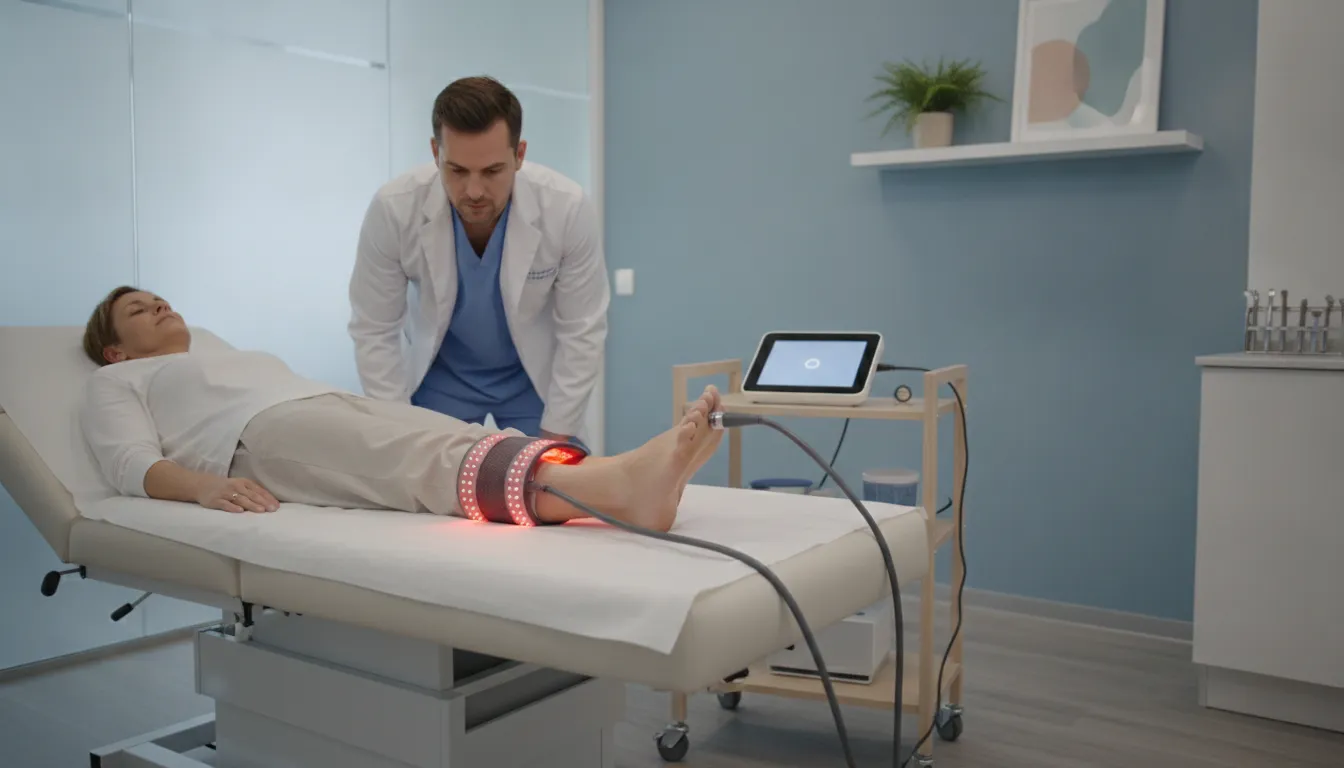
What happens during an ankle red light therapy visit?
A visit for red light therapy for ankle pain starts with finding the cause, not simply placing a light over the sore area. The podiatrist first checks whether the pain fits a sprain, tendon problem, joint issue, or another condition. This helps guide a safe and useful care plan.
History and ankle exam
Expect questions about when the pain began, what makes it worse, past injuries, activity goals, and other health concerns. The doctor then checks the ankle’s tender areas, swelling, motion, strength, stability, skin, and walking pattern. Imaging or other tests may be advised when the exam does not confirm the diagnosis.
This step matters because red light therapy supports care rather than replacing a clear diagnosis. Research has linked photobiomodulation with less pain after ankle sprains. Still, evidence for swelling and function is less certain, according to a systematic review of ankle sprain studies.
The visit, step by step
The exact plan depends on the diagnosis, the ankle’s condition, and the patient’s response. A typical office visit may follow this sequence:
- Confirm the treatment area. The podiatrist reviews the findings and marks the ankle area that needs care. You can ask why light therapy fits the plan and what limits the doctor expects.
- Prepare and position the ankle. Clothing or a brace may need to move so the device can reach the skin. Staff position the ankle and light source based on the diagnosed problem.
- Complete the light session. The ankle stays still while the device delivers light to the planned area. Staff monitor comfort and device placement throughout the session.
- Recheck the ankle. After treatment, the podiatrist may reassess pain, movement, skin, or walking. Tell the doctor about any unusual feeling during or after the session.
- Set the next phase of care. The doctor explains activity guidance and whether another visit may help. The plan avoids fixed dose promises because timing and frequency must match the patient’s needs.
Comfort and combined care
Red light therapy is provided during an office visit and does not require hospitalization. Patients should follow the practice’s directions on clothing, skin products, eye protection, and activity after the session. They should also report medicines, nerve problems, skin changes, or other health issues before treatment.
For some ankle conditions, light therapy may be one part of a wider plan rather than a stand-alone treatment. The podiatrist may discuss support, activity changes, or regenerative therapies for ankle pain when appropriate. Comprehensive Foot and Ankle Institute also offers advanced ankle pain options, which allows care to match the diagnosis and recovery goals.
Who may not be a good candidate?
Red light therapy for ankle pain is not a substitute for a diagnosis. It may suit some pain problems, but certain symptoms call for an exam before any light treatment begins. A personal visit helps separate a minor strain from an injury that needs other care.
When an ankle needs an exam first
Delay treatment and seek medical advice if the ankle has an open wound, signs of infection, severe swelling, or recent acute trauma. Possible fracture signs include severe pain, a changed ankle shape, or an inability to bear weight. Light therapy should never delay imaging, wound care, or urgent treatment when those steps may be needed.
- Get clearance before treating over an open wound.
- Have warmth, spreading redness, drainage, or fever checked for possible infection.
- Ask for an exam after a hard fall, twist, collision, or other acute injury.
- Seek prompt care for major swelling, loss of function, or possible fracture.
For people with diabetic neuropathy or circulation concerns, a medical exam should come first. The doctor can check the skin, feeling, blood flow, and cause of pain before discussing minimally invasive foot and ankle care.
Red light therapy for ankle swelling should also follow an exam when swelling is severe or started after trauma. A systematic review of photobiomodulation for ankle sprains found clearer evidence for pain relief than for effects on swelling and function.
Health conditions and medicines to discuss
Tell the doctor about pregnancy, a cancer history, or active cancer near the planned treatment site. These details do not always rule out care, but they require a medical decision. The doctor may advise another option or request clearance from the clinician managing that condition.
Also share every medicine and supplement, especially products labeled as photosensitizing or carrying a light-sensitivity warning. A clinician can review the drug, dose, treatment area, and device before deciding whether light therapy is suitable. Do not stop a prescribed medicine just to start red light therapy.
What a candidacy visit may include
A candidacy visit should focus on the cause of ankle pain, not only the sore spot. Expect questions about how the problem began, recent injuries, health conditions, medicines, and past treatment. The exam may also check swelling, skin health, motion, strength, feeling, and circulation.
At Comprehensive Foot and Ankle Institute, the discussion may include red light therapy and other regenerative choices. Dr. Sutpal Singh provides personalized, doctor-led care for foot and ankle problems. Your plan will depend on the exam findings and whether another test or treatment is needed first.
Contact Comprehensive Foot and Ankle Institute if ankle pain is limiting walking, running, or sports. A doctor-led exam can clarify whether red light therapy, regenerative care, bracing, or another option is appropriate.
When ankle pain needs more than home red light devices
A home red light wrap may be convenient, but it cannot tell you why your ankle hurts. Pain can come from a mild strain, an unstable joint, a tendon problem, or another issue. That distinction matters because each cause may need a different plan.
Research suggests photobiomodulation may reduce pain after ankle sprains. Yet, a systematic review of ankle sprain studies found less clear evidence for improved swelling and function. Less pain does not always mean the ankle is ready for full activity.
Signs that call for an evaluation
Do not use symptom relief as the only guide. Arrange a medical evaluation when pain limits normal walking, keeps returning, or gets worse. A prompt exam is also wise after a forceful twist, fall, sports injury, or direct blow.
- You cannot bear weight or take normal steps.
- Swelling lasts, returns, or continues to increase.
- The ankle gives way or feels unstable.
- Pain worsens despite rest and reduced activity.
- You suspect a tendon or ligament injury.
- You have diabetes and notice a wound, skin change, warmth, or new swelling.
Seek urgent medical care for a badly changed ankle shape, an open wound, or a cold or numb foot. These signs need assessment, not another home session. When in doubt, stop the activity that triggers pain until a clinician checks the ankle.
What a podiatric exam can clarify
A podiatric exam looks beyond the spot that hurts. The doctor can check motion, strength, stability, swelling, skin health, and the way you walk. Imaging or other tests may be considered when the exam points to a deeper injury.
Tendon pain deserves close attention because a strain, tendonitis, and a tear are not the same problem. The institute explains its approach to regenerative therapies for ankle pain involving the Achilles tendon. A diagnosis helps set safe limits for exercise and return to sport.
Diabetes adds another concern. Reduced sensation can make a foot or ankle problem easy to miss. New swelling, color change, broken skin, drainage, or warmth should be checked rather than covered by a light wrap.
A plan matched to the cause
Professional care may combine red light therapy for ankle pain with support, activity changes, guided exercise, or another form of care. The right mix depends on the diagnosis, health history, and goals. Comprehensive Foot and Ankle Institute offers available podiatric treatment services, including regenerative and minimally invasive approaches.
A clinician can also track whether strength, swelling, motion, and stability improve over time. This gives a fuller view than pain relief alone. Home devices may still play a supporting role, but they should not delay an exam when warning signs appear.
How Dr. Singh builds a regenerative ankle pain plan
At Comprehensive Foot and Ankle Institute, an ankle pain plan starts with the cause, not a preset treatment package. In a concierge visit, Dr. Sutpal Singh reviews your symptoms, activity goals, and the demands you place on the ankle. That doctor-led process helps separate a recent sprain from tendon strain, joint pain, or a problem that may need another path.
People visit the Hoffman Estates office from Schaumburg, Palatine, Arlington Heights, and other northwest Chicago suburbs. The goal is a focused plan that supports safe motion while respecting each person’s condition. Dr. Singh’s experience and care approach shape that plan from the first visit onward.
A diagnosis before treatment
Red light therapy for ankle pain is one tool, not a diagnosis. Dr. Singh first considers where pain occurs, how it began, and which movements make it worse. He can then discuss whether light-based care fits the problem and how progress should be tracked.
Evidence also guides that choice. A systematic review of photobiomodulation for ankle sprains found a pain benefit across the reviewed studies. Yet the evidence for changes in swelling and function was less clear. This balance matters because less pain does not always mean the ankle is ready for full activity.
Matching therapy to the ankle
When regenerative care is suitable, the plan may combine methods rather than rely on one device. The mix depends on the injured tissue, the stage of recovery, and how the ankle responds. Dr. Singh may discuss options such as:
- Red light therapy as a support for pain-focused care.
- Class IV laser therapy for selected foot and ankle conditions.
- Shock wave or SoftWave therapy when it fits the tissue problem.
- A minimal-incision path if a structural issue needs correction.
These ankle and foot treatment services allow the care plan to address more than symptoms alone. A therapy that fits a mild sprain may not fit chronic tendon pain or a mechanical issue. When a procedure is appropriate, Dr. Singh can explain office-based, minimal-incision choices and expected limits.
Reviewing response and next steps
A regenerative plan should change when the ankle’s response changes. Follow-up visits let Dr. Singh review pain, motion, activity tolerance, and any limits that remain. He can adjust the mix of therapies or discuss a different path when progress does not match the goal.
This measured approach is important for active patients who want to return to work, sports, or daily walks. It also helps prevent treatment from being driven by a device alone. Timing, frequency, and the role of red light therapy should follow Dr. Singh’s assessment instead of a general home-use schedule.
Some people may need a staged return to activity, while others may need a closer look at the source of ongoing pain. The concierge model gives Dr. Singh time to explain those choices. It also keeps the plan centered on the patient’s ankle, goals, and clinical response.
Frequently Asked Questions
Can red light therapy help with sprained ankles?
Red light therapy may help reduce pain after an ankle sprain, but it should support rather than replace a proper injury assessment. A systematic review and meta-analysis found a meaningful overall effect on sprain pain. However, evidence for improved function and reduced swelling was less certain. Severe pain, deformity, or trouble bearing weight requires prompt medical evaluation.
How long should you use red light therapy on an ankle?
There is no single session length that is right for every ankle or device. Treatment time depends on the light’s wavelength, power, distance from the skin, and the condition being treated. Follow the device instructions and a clinician’s plan instead of extending sessions on your own. Longer exposure does not necessarily produce better results and may deliver an unsuitable dose.
How often should you do red light therapy for ankle recovery?
The appropriate schedule depends on the diagnosis, device output, and response to treatment. Research has not established one standard schedule for every ankle problem. A clinician can adjust frequency while tracking pain, swelling, movement, and skin response. Red light therapy should be only one part of recovery when an injury also requires protection, rehabilitation, or other medical care.
What is the best wavelength for ankle red light therapy?
No wavelength has been proven best for every ankle condition. Visible red light and near-infrared light reach tissue differently, while device power and total dose also affect treatment. One pilot study of injured university athletes used 830 nm LED phototherapy, but its findings do not establish 830 nm as universally superior. A clinician can select treatment parameters for the specific diagnosis.
Is red light therapy effective for chronic ankle soreness?
Red light therapy may help some people manage chronic ankle soreness, especially when pain involves an ongoing musculoskeletal condition. Results vary, and persistent soreness can reflect arthritis, tendon trouble, instability, nerve irritation, or another problem needing targeted care. An exam is important before relying on light therapy. Treatment should address the underlying diagnosis and may also include rehabilitation, footwear changes, or other regenerative options.
Ready to Address Your Ankle Pain With a Clear Plan?
Ignoring ongoing ankle pain may lead you to avoid more walks, workouts, and daily tasks as discomfort continues to shape your routine. Starting with a focused evaluation now gives Dr. Singh time to understand your symptoms and determine whether red light therapy may suit your needs. Early guidance can help you set practical expectations, make informed activity choices, and build a care plan before pain causes further disruption.
Ready to take the next step? Request an appointment to talk with Dr. Singh about your ankle pain, goals, and available treatment options. The visit can clarify your next steps and help you begin an appropriate plan without letting another week pass.