


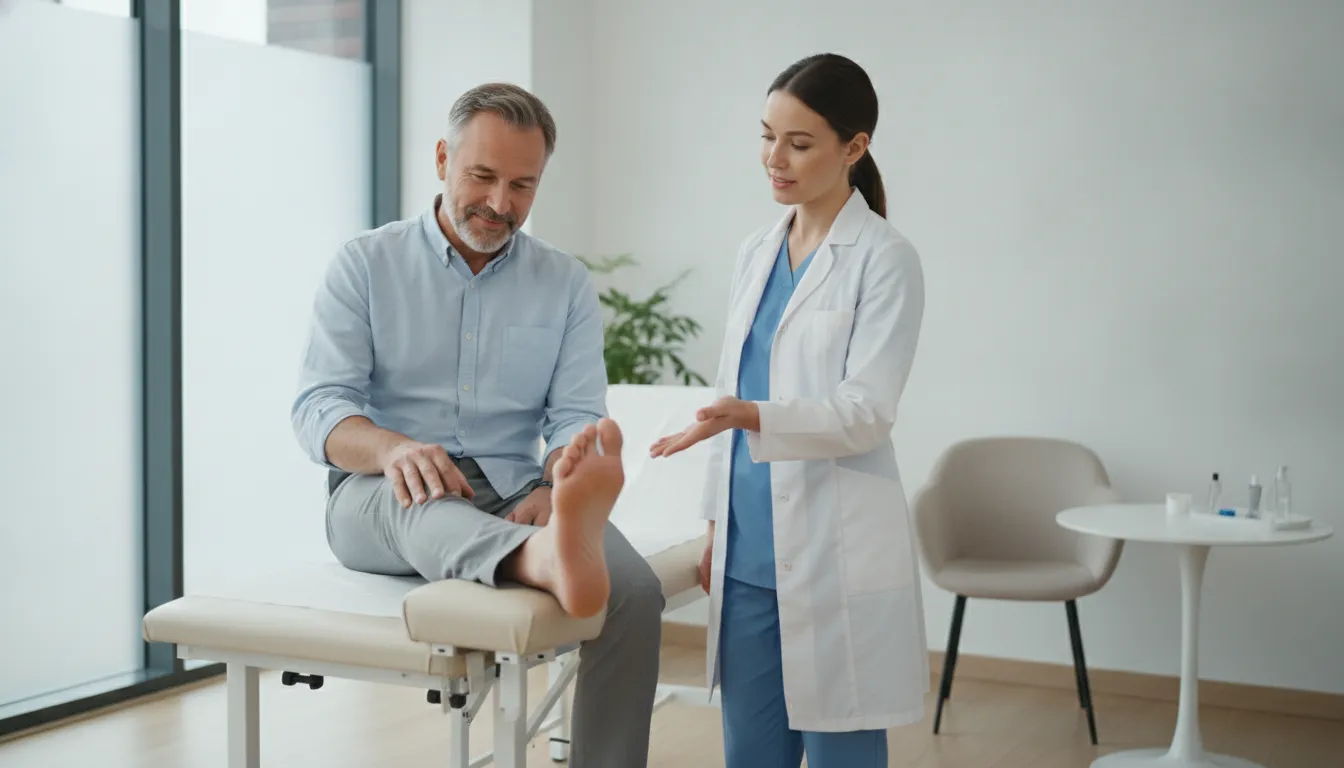

Chronic heel pain can change how you walk, exercise, work, and spend time with the people you love. When stretching, activity changes, or physical therapy have not provided lasting relief, it is reasonable to ask whether there are options beyond another cortisone or steroid injection.
For some patients, regenerative medicine for chronic heel pain uses treatments such as platelet-rich plasma, Class IV laser therapy, shock wave therapy, or other biologic approaches. The goal is to support the body’s own healing response without relying on traditional steroids. The right option depends on the source of your pain, your health, and your goals.
Chronic plantar fasciitis and related heel problems are increasingly understood as a degenerative, failed-healing response rather than inflammation alone. That distinction helps explain why anti-inflammatory treatment does not always produce durable improvement and why many patients begin to explore approaches that aim to support tissue repair instead of only masking symptoms. This guide walks through what regenerative care is, the options available, who may be a candidate, and what a patient can realistically expect.
Schedule a consultation to explore your chronic heel pain options
What Is Regenerative Medicine for Chronic Heel Pain?
Regenerative medicine for chronic heel pain is a group of therapies designed to support the body’s repair response rather than only suppress pain or inflammation. The goal is to help irritated or damaged tissue function better while preserving as much healthy anatomy as possible. Treatment may be considered when heel pain continues despite appropriate activity changes, stretching, physical therapy, footwear adjustments, or other conservative care.
This approach begins with a more accurate understanding of what may be happening in the heel. Chronic plantar fasciitis and heel tendinopathy are not always purely inflammatory conditions. Increasing evidence describes them as degenerative, failed-healing responses. In other words, the tissue may remain painful because it is not progressing normally through repair, not simply because inflammation is present. That distinction helps explain why an anti-inflammatory approach alone may not provide lasting improvement. Research on chronic heel tendinopathy describes this failed-healing pattern and the functional limitations it can create.
How regenerative therapy supports repair
Many regenerative treatments use biologic materials or energy-based therapies to encourage the body’s own healing processes. Platelet-rich plasma, commonly called PRP, is prepared from a patient’s blood and contains a higher concentration of platelets than whole blood. Platelets carry signaling proteins and growth factors involved in tissue repair. Concentrated growth factors can also form a dense fibrin matrix enriched with biologically active growth factors. That matrix may provide a local framework that supports tendon regeneration and functional recovery. Although each patient’s response depends on the condition of the tissue and other health factors.
Using the patient’s own blood is known as an autologous approach. It allows the treatment to use the patient’s own biologic resources rather than introducing a material from another person. A careful evaluation is still essential because the source and preparation of the material, the injection site, the diagnosis, and the overall treatment plan all matter.
Which therapies may be part of a treatment plan?
At Comprehensive Foot and Ankle Institute, regenerative care for heel pain may include PRP or platelet injections. Class IV laser therapy, shock wave or SoftWave therapy, and stem cell injections. These options do not all work in the same way. Shock wave therapy is intended to stimulate the body’s own repair mechanism. While Class IV laser therapy is used as a targeted tool for pain and tissue support in conditions such as plantar fasciitis and Achilles tendinopathy. Injections may be considered when a specific area of tendon or plantar fascia needs focused treatment. You can review the practice’s broader foot and ankle services to understand how regenerative and minimally invasive options fit into care.
Regenerative treatment is not a guaranteed cure, and chronic heel pain can have more than one contributing cause. A doctor-led assessment should confirm whether the symptoms come from plantar fascia, tendon, nerve, fat-pad, or another source before selecting a therapy. The right plan is one that matches the diagnosis, activity goals, and medical history, with progress monitored over time.
Why Chronic Heel Pain Often Outlasts a Cortisone Shot
A cortisone injection can make a painful heel feel better, sometimes quickly. That relief can be useful when inflammation is contributing to symptoms, but it does not necessarily address why the pain has persisted. When discomfort returns after the medication wears off, the problem may not be that the injection was repeated too soon. The underlying tissue may still be struggling to heal.
Chronic plantar fasciitis and related heel tendinopathies are increasingly understood as degenerative, failed-healing responses rather than purely inflammatory conditions. In other words, ongoing pain may reflect changes in tissue structure and function, not simply inflammation that needs to be suppressed. Research on chronic heel tendinopathy notes that this distinction helps explain why conventional anti-inflammatory treatments can have limited long-term effectiveness. Read the academic review of regenerative treatment for chronic heel tendinopathy.
What cortisone can and cannot do
Cortisone is designed to reduce inflammation and pain. It is not a tissue-building treatment, and temporary symptom control does not automatically mean that the plantar fascia or another irritated structure has regained its normal capacity. If the mechanical stress, tissue degeneration, or failed-healing response remains, heel pain can return as normal activity resumes.
Repeated injections also deserve a careful, individualized discussion. The goal should not be to keep masking symptoms indefinitely. A foot and ankle specialist should consider the diagnosis, the condition of the tissue. Activity demands, prior treatments, and any factors that could affect healing before recommending another injection. No single approach is appropriate for every patient, and regenerative care is not a guaranteed replacement for cortisone.
How regenerative care takes a different approach
Regenerative medicine for chronic heel pain is intended to support the body’s repair process rather than only quiet the pain signal. Depending on the diagnosis, this may involve platelet-rich plasma, concentrated growth factors, shock wave or SoftWave therapy, Class IV laser therapy, or another targeted option. The purpose is to create a treatment plan aimed at tissue health and function, while reducing reliance on repeated steroid injections when clinically appropriate.
Some injectable regenerative treatments are autologous, meaning they are prepared from the patient’s own blood. PRP and concentrated growth factor preparations use a patient’s blood components rather than a foreign substance. This approach may reduce concerns associated with a foreign-body reaction, although it does not eliminate every treatment risk or guarantee improvement. A review of concentrated growth factor treatment describes the use of a dense fibrin matrix enriched with biologically active growth factors that may support tendon regeneration and functional recovery. Review the source research on autologous regenerative treatment.
The practical question is not whether cortisone is always wrong or regenerative treatment is always best. It is whether the treatment matches the biology of the problem. For persistent heel pain, a thorough evaluation can help identify whether the primary issue is plantar fascia degeneration, tendon involvement, fat-pad depletion, nerve irritation, or another condition. That diagnosis provides a more responsible foundation for deciding whether regenerative therapy may be a reasonable alternative to another cortisone shot.
The Regenerative Options We Use for Persistent Heel Pain
Persistent heel pain does not always come from one problem. The plantar fascia or Achilles tendon may be struggling with a failed-healing response, while the heel’s cushioning may also be depleted. That is why treatment should be matched to the tissue involved, the source of pain, and your activity goals. Comprehensive Foot and Ankle Institute uses a range of regenerative and minimally invasive options rather than treating every patient with the same injection or protocol.
Some treatments use your own biologic material. Others use energy-based stimulation or targeted compounds to support the body’s repair response. A consultation helps determine whether one modality or a coordinated combination makes sense for your diagnosis.
| Modality | How it works | What it may suit | Typical course |
|---|---|---|---|
| PRP injections | Uses a concentrated portion of your own blood platelets to support healing in injured tissue. | Chronic plantar fascia, tendon, ligament, or other soft-tissue injuries. | A targeted injection followed by a clinician-directed recovery plan; repeat treatment depends on the evaluation. |
| Shockwave or SoftWave therapy | Applies acoustic energy intended to stimulate the body’s own repair mechanism. | Persistent plantar fasciitis and other chronic soft-tissue conditions. | A planned series of in-office sessions, adjusted according to symptoms and response. |
| Class IV laser therapy | Uses focused therapeutic light as a non-invasive tool for pain, inflammation, and tissue support. | Plantar fasciitis, Achilles discomfort, and selected foot and ankle pain patterns. | A course of sessions may be recommended rather than a single visit. |
| Stem cell injections | Delivers a biologic treatment intended to support repair in damaged or degenerative tissue. | Selected chronic heel and tendon problems that require a more advanced regenerative approach. | Evaluation, treatment planning, and follow-up are individualized to the condition. |
| BPC-157 peptide therapy | Uses a peptide approach discussed in regenerative care for soft-tissue and tendon healing. | Appropriate patients with chronic soft-tissue or tendon-related heel pain. | Course and monitoring depend on medical assessment and the broader treatment plan. |
| Liposona fat pad injections | Addresses reduced cushioning by targeting the fat pad beneath the heel. | Heel pain associated with a depleted or insufficient fat pad. | Selected after examining the heel’s cushioning and identifying whether fat-pad support is relevant. |
PRP is an autologous blood product, meaning it is prepared from the patient’s own blood. Research describes PRP as a source of concentrated platelets used for chronic tendon, ligament, and muscle injuries. The practice also offers stem cell therapy for heel pain when clinically appropriate. For non-invasive options, learn more about Class IV laser therapy and shockwave therapy.
Peptide treatment is not interchangeable with an injection or laser protocol. Read about peptide therapy for chronic heel pain, then discuss whether it belongs in your care plan. These treatments are not guaranteed cures, and the appropriate course depends on the diagnosis, health history, tissue involved, and response over time.
Am I a Candidate for Regenerative Heel Pain Treatment?
You may be a candidate if heel pain has become persistent, limits your walking or exercise. And has not improved enough with physical therapy, activity changes, footwear adjustments, or other conservative care. Many people with plantar fasciitis improve with basic treatment, but healing can be slow. Mayo Clinic notes that newer nonsurgical options may help in hard-to-treat cases, making a careful evaluation worthwhile when symptoms continue.
A consultation is especially appropriate when you want to explore options beyond a steroid injection or traditional surgery. Cortisone may provide temporary symptom relief, but it does not necessarily address the tissue changes associated with chronic, failed healing. Regenerative care is designed to support the body’s repair response. Although the best approach depends on the cause of your pain, your health history, and the condition of the tissues involved. No single treatment is right for every patient.
Patients who have tried conservative care
People often seek regenerative medicine for chronic heel pain after weeks or months of trying to manage symptoms without the progress they expected. Persistent pain may reflect plantar fascia degeneration, tendon involvement, an irritated nerve, a depleted heel fat pad, or another problem that can feel similar to plantar fasciitis. An examination helps distinguish these possibilities before treatment is recommended. Your evaluation may include a discussion of when the pain began, what makes it worse, previous injuries, and how you responded to physical therapy or other care.
Patients seeking a nonsurgical or activity-conscious approach
Some patients want to avoid steroid injections because they prefer a tissue-focused strategy. Others are trying to postpone or avoid surgery when a nonsurgical option may be clinically reasonable. Active and athletic patients may also be interested in regenerative or minimally invasive care that supports a return to training and daily activity without assuming that a fixed recovery timeline is appropriate. The goal is not to promise an instant solution. It is to select a plan that respects your diagnosis, performance goals, and the pace at which your body can heal.
Newer nonsurgical approaches can also be considered for people who are not good surgical candidates or who have complex conditions. Patients with difficult cases, including some diabetic foot and limb-preservation concerns, may be referred by another physician for specialized evaluation. These situations require particularly careful coordination and individualized medical judgment, rather than a one-size-fits-all protocol.
Comprehensive Foot and Ankle Institute can review the available foot and ankle services with you and explain which options may fit your needs. A consultation with Dr. Singh also provides an opportunity to learn more about Dr. Sutpal Singh and the doctor-led approach to complex heel pain. Bring a list of prior treatments, imaging reports, medications, and your most important activity goals. That information helps determine whether regenerative treatment is appropriate, what alternatives should be considered, and what realistic next steps look like.
What to Expect During Regenerative Heel Pain Treatment
Your visit begins with a focused evaluation of the heel pain, its likely source, and the way it affects walking, exercise, work, or daily activity. Regenerative treatment is not a one-size-fits-all injection. The appropriate approach depends on the tissues involved, the duration of symptoms, previous care, and your overall health. Your clinician can explain whether a platelet-based treatment, concentrated growth factors, laser therapy, shockwave therapy, or another option is reasonable for your situation.
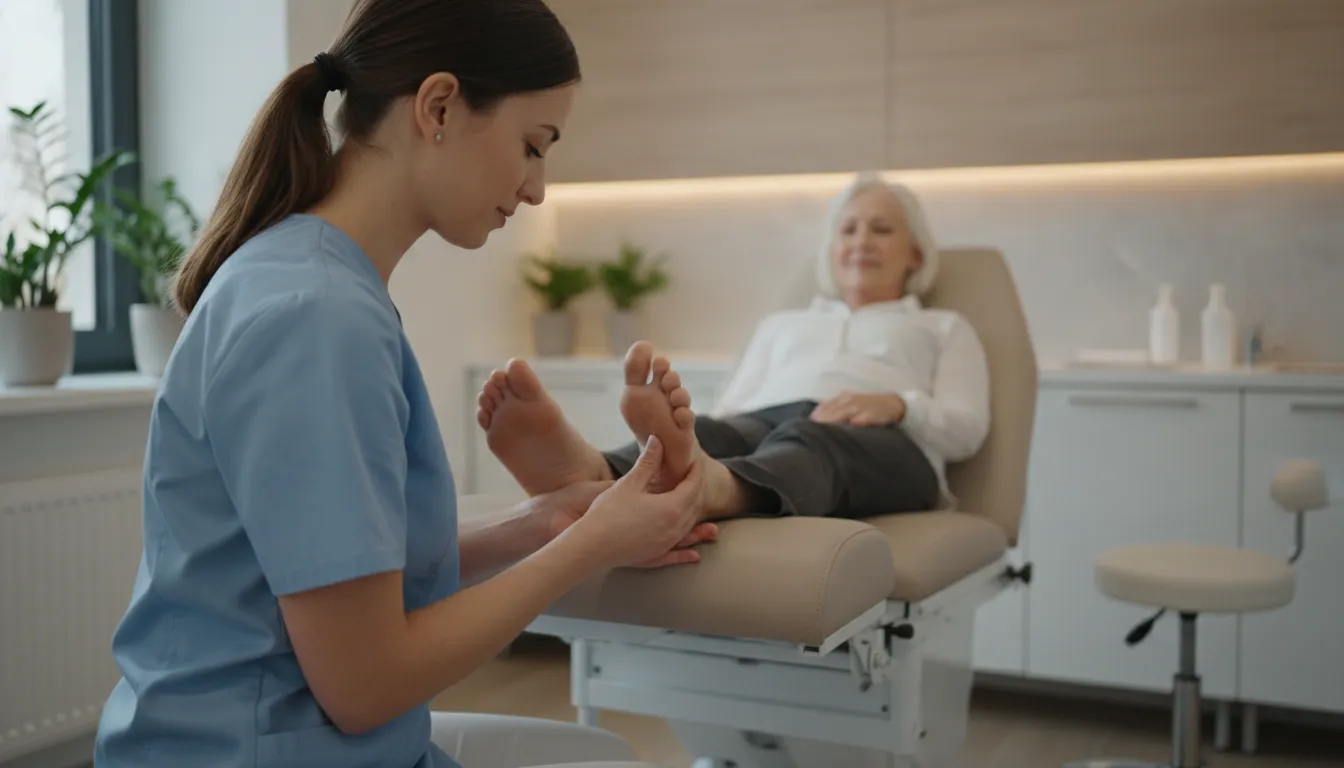
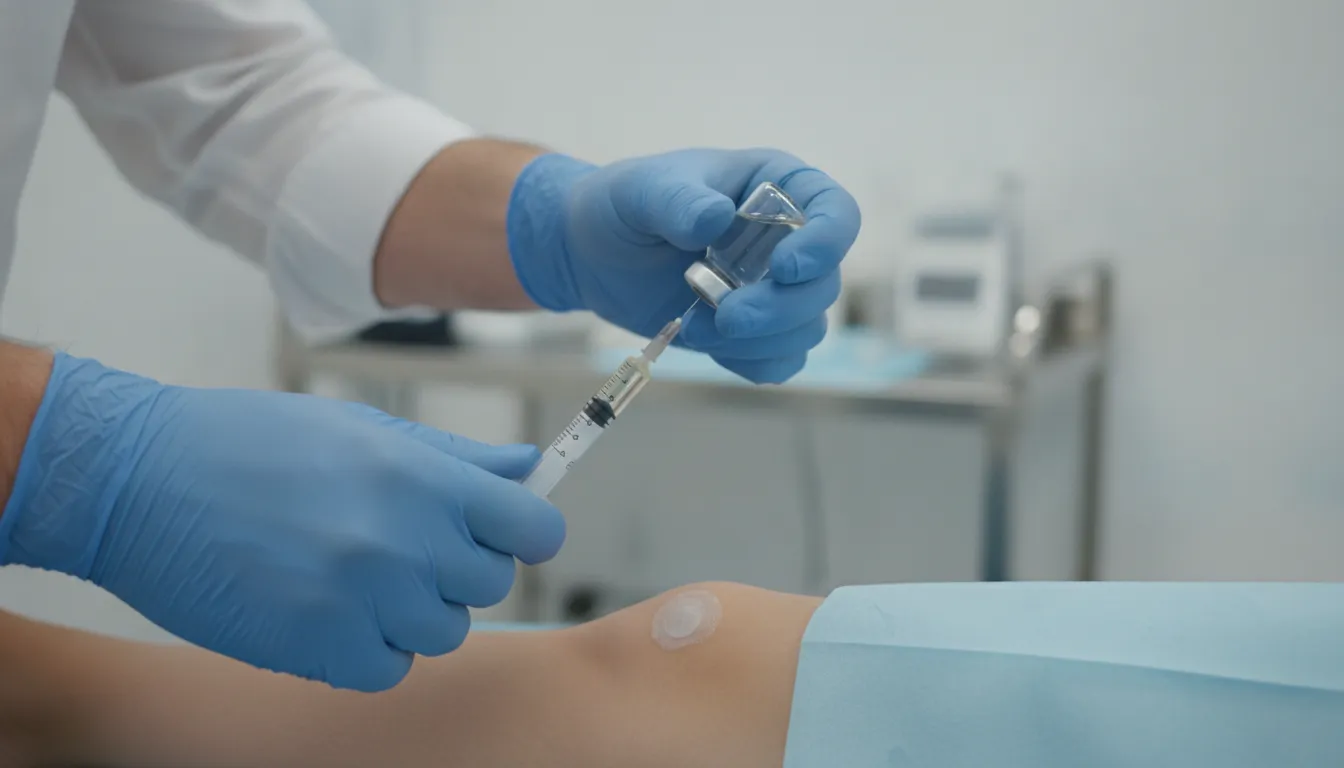
When an injection-based procedure is selected, it is generally performed in the office rather than in a hospital or surgical center. Local anesthesia may be used to improve comfort during the procedure. This approach can allow treatment to remain focused and minimally invasive, without a hospital stay. The exact steps, preparation, and aftercare instructions will be reviewed with you beforehand, including any activity modifications that may be appropriate.
How PRP or CGF treatments use your own blood
PRP and concentrated growth factor, or CGF, therapies are autologous. That means the material used for treatment is prepared from a sample of your own blood. In a typical process, blood is collected and processed so that a concentrated blood product can be placed near the area being treated. PRP contains a higher concentration of platelets than whole blood, while CGF provides a fibrin matrix enriched with biologically active growth factors. These materials are used with the goal of supporting the body’s own healing response, not masking symptoms indefinitely.
Using an autologous product may reduce concerns associated with introducing an unrelated substance and may lower the risk of a foreign-body reaction. It does not make every procedure appropriate for every patient, and it does not guarantee pain relief or a particular recovery time. Your medical history, medications, tissue condition, and diagnosis remain important parts of the treatment decision. Research describing autologous CGF for chronic heel tendinopathy notes that the product was prepared from venous blood and injected locally: review the published clinical report.
Walking after treatment
Many regenerative heel pain procedures are designed to be completed without hospitalization. In clinically appropriate cases, patients may be able to walk soon after an in-office treatment. That does not mean the treated tissue is fully healed or that normal training should resume immediately. Early activity recommendations can differ based on the procedure, the treated structure, your symptoms, and your clinician’s assessment. Some patients may need to limit impact, follow a gradual return-to-activity plan, or complete supportive rehabilitation.
Before leaving, make sure you understand what to expect as the numbing medicine wears off, which symptoms should prompt a call, and when follow-up is recommended. The aim is to create a thoughtful plan that supports tissue recovery while protecting your ability to stay active over time. If you are considering regenerative medicine for chronic heel pain, a personalized consultation can help clarify whether an in-office option fits your diagnosis and goals.
How Long Until Regenerative Medicine Relieves Heel Pain?
Regenerative medicine is not a switch that turns chronic heel pain off overnight. The goal is to support the body’s repair response, while giving irritated or damaged tissue time to recover. That timeline depends on the cause of your pain, how long it has been present. The treatment selected, your activity level, and how consistently you follow the recovery plan.
There is encouraging clinical evidence, but it should be interpreted honestly. In one published study of concentrated growth factor (CGF) injections for chronic heel tendinopathy. Average pain scores fell from 7.30 at baseline to 5.52 after one month and 3.94 after three months. The change at three months was statistically significant, with p less than 0.001.1 Those results describe a study group, not a guaranteed schedule for every patient. Healing can be slow and may require perseverance, especially when heel pain has become chronic.
- Consultation and imaging: The first step is identifying what is actually causing your heel pain. Plantar fascia irritation, tendon problems, reduced heel-pad cushioning, nerve involvement, and other conditions can feel similar but may need different strategies. During a doctor-led evaluation, your symptoms, activity demands, prior treatments, and physical findings are reviewed. Imaging may be recommended when it can clarify the tissue involved or rule out another source of pain. This evaluation helps determine whether an injection, shockwave treatment, laser therapy, or a combination is appropriate.
- Therapy session: Depending on your diagnosis, treatment may include an autologous option prepared from your own blood, such as PRP or CGF, or a non-injection approach. Some patients may also be evaluated for peptide therapy for chronic heel pain when it fits their clinical situation. The purpose is not simply to mask symptoms. Concentrated growth factors provide a fibrin matrix enriched with biologically active growth factors that may support tendon regeneration, but the biological response develops over time.
- Recovery window: Many regenerative treatments are performed in the office, often with local anesthesia. Walking immediately afterward may be possible when clinically appropriate, but that does not mean the tissue is fully healed. Your instructions may address activity modification, supportive footwear, stretching, strengthening, and when to resume higher-impact exercise. A temporary change in soreness or activity tolerance can occur as the area responds. Avoid judging the treatment after only a few days, and do not increase training simply because the pain briefly improves.
- Follow-up and adjustment: Follow-up gives Dr. Singh an opportunity to assess pain, function, tissue response, and your progress toward normal activity. Some patients improve gradually over several weeks, while others need more time or a carefully adjusted plan. If improvement is limited, the next step may be additional rehabilitation, a different modality, or further evaluation rather than automatically repeating the same treatment. The practical goal is steady progress toward walking, working, exercising, and living with less disruption, not an arbitrary promise of a fixed recovery date.
If chronic heel pain continues to limit your movement, a personalized evaluation can clarify what is slowing recovery and which options may be reasonable for you.
Why Patients Across the Northwest Chicago Suburbs Choose Dr. Singh
Chronic heel pain can affect far more than a morning walk. It can change how you train, work, exercise, and participate in everyday activities. For patients who have tried basic care and are still limited by persistent pain, the choice of provider matters. Comprehensive Foot and Ankle Institute offers a doctor-led approach for people seeking specialized options. Including regenerative medicine for chronic heel pain, without being treated as a number in a high-volume clinic.
Dr. Sutpal Singh leads the practice with a concierge model built around personal attention. The office does not double-book patients, and the goal is to keep wait times minimal while giving each person meaningful time with the doctor. That structure allows the evaluation to focus on the details that can shape heel pain. Such as activity demands, symptom patterns, previous treatments, and the condition of the surrounding foot and ankle structures. It also gives patients an opportunity to understand their choices before deciding whether a regenerative or minimally invasive treatment is appropriate.
Experience is another reason patients seek care here. Dr. Singh is a third-generation physician with more than 30 years of clinical experience and advanced credentials. You can learn more about his background and approach on the page about Dr. Sutpal Singh. His experience is particularly relevant for patients whose heel pain has not followed a straightforward course or who want an evaluation that looks beyond a one-size-fits-all recommendation.
The institute also sees complex cases referred by other providers. A referral may be appropriate when symptoms have persisted despite conservative care. When a patient wants alternatives to steroid or cortisone injections, or when the case involves broader foot and ankle concerns. Regenerative care is not a universal solution, and treatment selection depends on a clinical assessment. However, a specialized evaluation can help clarify whether options such as platelet-rich plasma, shock wave therapy, Class IV laser therapy, or another approach may fit the patient’s needs.
Patients travel to the Hoffman Estates office from throughout the northwest Chicago suburbs for this type of focused care. The practice serves people from Schaumburg, Palatine, Arlington Heights, Barrington, South Barrington, Elk Grove Village, Rolling Meadows. East Dundee, West Dundee, Rockford, and nearby communities across Cook, DuPage, Kane, McHenry, DeKalb, and Boone counties. For an active patient, that travel may be worthwhile when the goal is to preserve motion and return to meaningful activities with a carefully considered plan.
Personal experiences can also help prospective patients understand the office environment. Read the practice’s patient testimonials to hear how others describe their care. The guiding idea is simple: Life is Motion and Motion is Life. A thorough, attentive evaluation is the starting point for determining how to protect that motion while addressing chronic heel pain.
Talk to our team about regenerative options for your chronic heel pain
Frequently Asked Questions
What is regenerative medicine for chronic heel pain?
It is a group of therapies intended to support the body’s repair response in tissues contributing to persistent heel pain. Depending on the diagnosis, options may include platelet-rich plasma (PRP), shock wave or SoftWave therapy, Class IV laser therapy, and targeted injections. PRP uses a concentrated portion of your own blood, while other treatments stimulate tissue response without traditional open surgery. The appropriate option depends on the source of your pain, your health, and your activity goals.
Does regenerative medicine really work for heel pain?
Some patients experience meaningful improvement, but results vary and no treatment can guarantee a specific outcome. Chronic plantar fasciitis may involve a failed-healing or degenerative process rather than inflammation alone, so reducing inflammation does not always address the underlying problem. In one published study of concentrated growth factor treatment for chronic heel tendinopathy. Average pain scores decreased from 7.30 at baseline to 3.94 at three months, with statistical significance reported at p < 0.001 (academic study). Your evaluation should determine whether those findings apply to your condition.
Is regenerative medicine effective for plantar fasciitis?
It may be considered for persistent plantar fasciitis, particularly when basic care or physical therapy has not resolved the problem. Mayo Clinic notes that healing can be slow and that newer nonsurgical options may help hard-to-treat cases (Mayo Clinic). Treatment selection should follow an examination that confirms the diagnosis and rules out other causes of heel pain.
Can I get heel pain treatment without surgery?
Often, yes. Regenerative therapies are designed to be nonsurgical or minimally invasive, and many are performed in the office with local anesthesia. Walking immediately afterward may be appropriate in some cases, but activity recommendations depend on the treatment and your clinical situation. A personalized consultation can clarify whether a non-surgical approach is reasonable for you.
Ready to Explore Your Heel Pain Options?
A personalized evaluation can help clarify whether regenerative medicine may be appropriate for your chronic heel pain and goals. Comprehensive Foot and Ankle Institute focuses on patient-centered, non-surgical options when clinically suitable. Call the office at (847) 310-1600 or use the contact page to take the next step.
Schedule a consultation to learn if regenerative medicine can help your chronic heel pain