



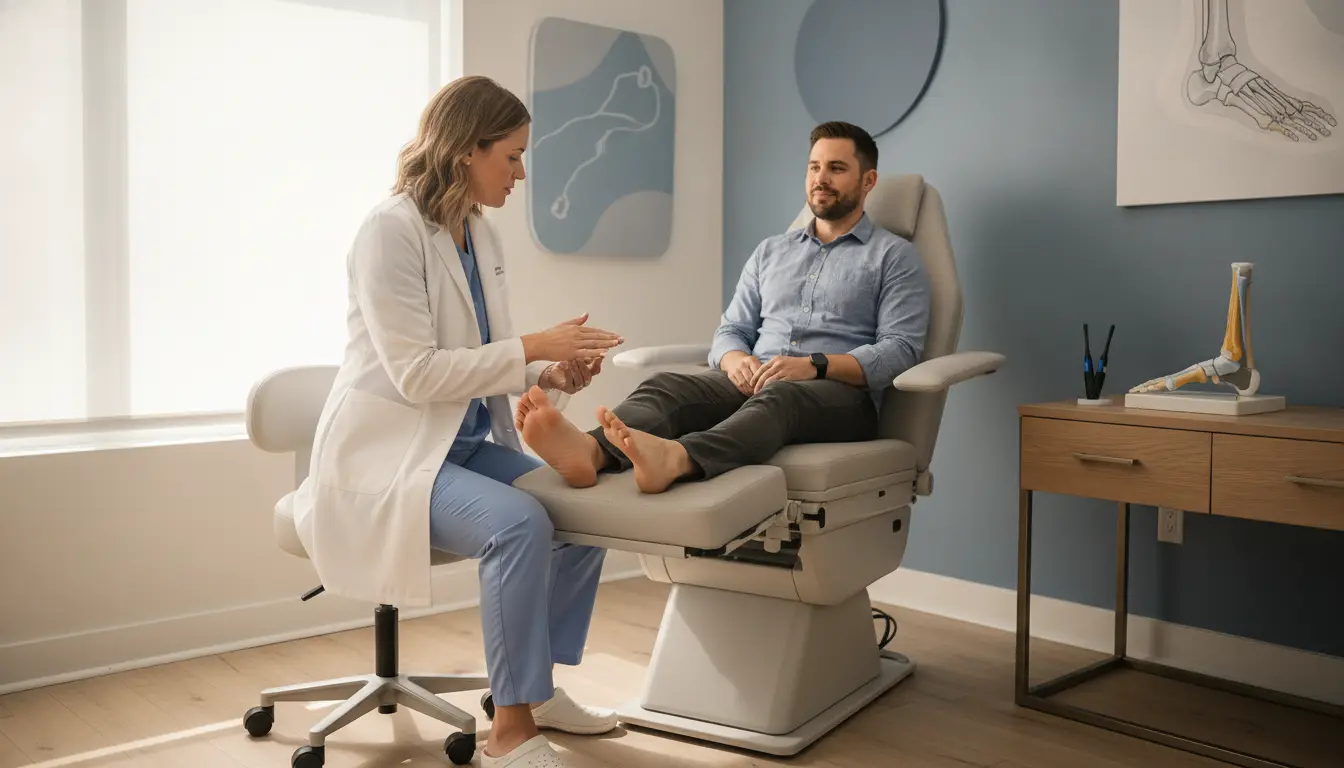

Regenerative medicine for plantar fasciitis and heel spurs is not a single treatment or a promise of a particular result. It is a diagnosis-driven conversation about what is causing your heel pain, what you have already tried, and whether options such as PRP, shock wave therapy, Class IV laser therapy, or a minimally invasive procedure fit your condition and goals.
Request a personalized plantar fasciitis and heel spur evaluation
A heel spur can appear on an X-ray without being the main source of pain. Plantar fascia irritation, nerve symptoms, fat-pad problems, tendon issues, or more than one condition may create similar discomfort. That is why a careful foot-and-ankle examination should come before choosing a regenerative or minimally invasive approach. For a broader overview of treatment discussions, see the practice’s regenerative medicine guide for chronic heel pain.
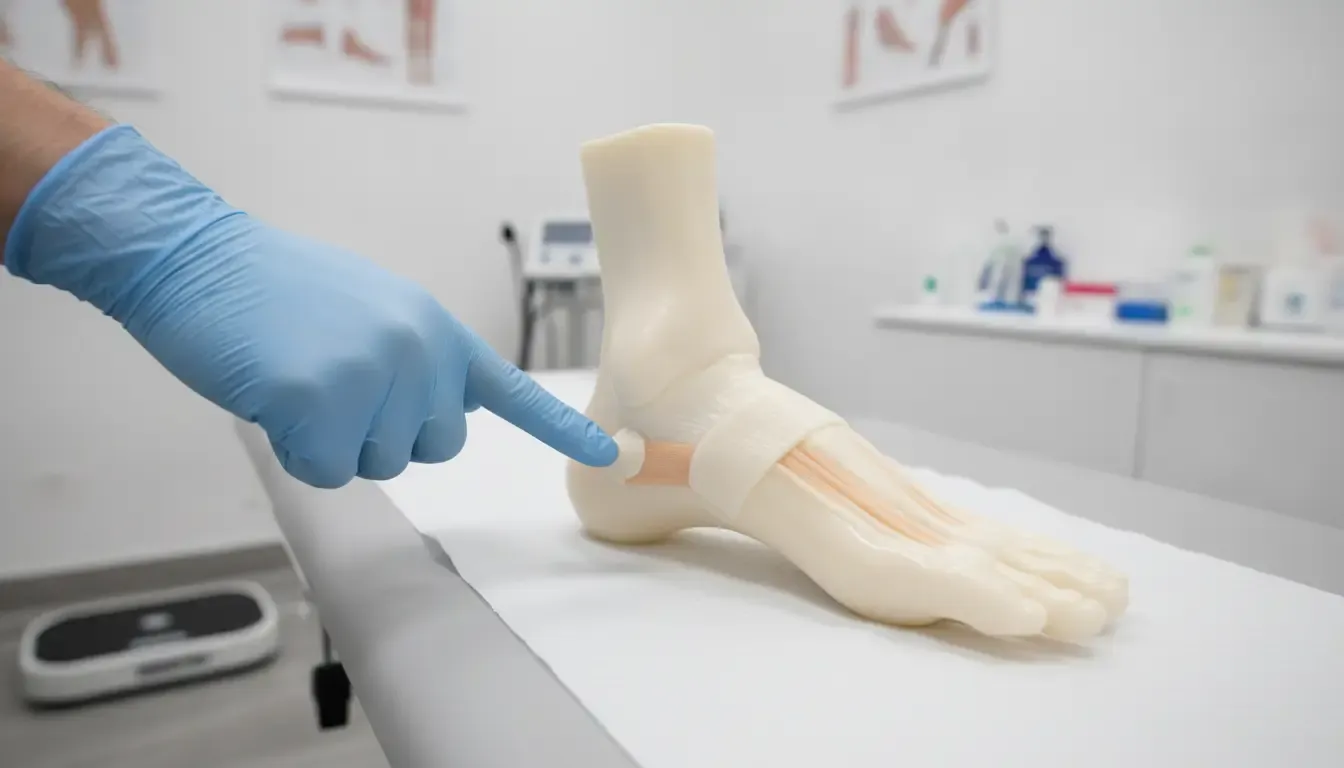
Are plantar fasciitis and heel spurs the same problem?
Key point: Plantar fasciitis describes a painful condition involving the plantar fascia, while a heel spur is a bony growth that may be seen near the heel. They can occur together, but a spur does not automatically explain the pain. Treatment should target the clinical source of symptoms, not an X-ray finding alone.
The plantar fascia is a strong band of tissue along the bottom of the foot. Pain is often felt near the inner bottom of the heel, especially with the first steps after rest, although symptoms can vary. A calcaneal, or heel, spur is a bone formation that may develop where tissues attach to the heel. The American Academy of Orthopaedic Surgeons overview of plantar fasciitis and bone spurs explains that these are related but not identical conditions.
The American College of Foot and Ankle Surgeons consensus statement also cautions that calcaneal spurring is often not the primary cause of infracalcaneal heel pain. A spur may be an incidental finding, a sign of long-term traction, or one part of a larger mechanical picture. Your history and examination help determine its significance.
- Plantar fascia pain: symptoms are connected to the band of tissue under the foot and may be influenced by loading, mobility, or foot mechanics.
- Heel spur finding: an X-ray shows a bony prominence, but the image does not by itself prove that the spur is painful.
- Combined presentation: a person can have plantar fascia symptoms and a spur, while the soft tissue remains the main treatment focus.
- Different source: nerve irritation, a stress injury, fat-pad irritation, tendon problems, or another condition can resemble plantar fasciitis.
For that reason, removing or treating a spur is not automatically the first step. A specialist should explain what the finding means in the context of your symptoms and goals.
How does a foot-and-ankle specialist evaluate heel pain?
What this means for you: A useful evaluation connects the location and behavior of pain with your activity demands, medical history, foot mechanics, and examination findings. Imaging may help when the diagnosis is uncertain or another condition needs to be considered, but a heel spur on a scan should not replace a clinical assessment.
At a consultation, Dr. Sutpal Singh, DPM, FACFAS, can review how the pain started, what makes it better or worse, and how it affects walking, work, exercise, or sport. The evaluation may include:
- Symptom history: when pain began, whether the first steps are the worst, whether it worsens with activity, and whether numbness, burning, swelling, or night pain is present.
- Focused examination: areas of tenderness, plantar fascia tension, heel-pad sensitivity, range of motion, strength, gait, and how the foot loads during movement.
- Review of prior care: stretching, activity changes, footwear, orthotics, physical therapy, medications, injections, or other treatment already attempted.
- Selective imaging or diagnostic tools: X-rays or other evaluation may be considered when the history and examination suggest a fracture, structural issue, spur-related finding, or another source of pain.
- Goal setting: whether you want to return to running, reduce pain during work, walk more comfortably, avoid traditional surgery, or preserve a specific activity.
These details matter because the same word, heel pain, can describe different problems. A recreational runner with a gradual onset may need a different conversation from a patient with sudden pain, diabetes, altered sensation, or a history of injury.
How might the diagnosis shape regenerative treatment choices?
Key point: Treatment selection should follow the working diagnosis and the patient’s priorities. A specialist may discuss a regenerative or minimally invasive option when the examination supports it, but the presence of a plantar fascia problem or heel spur does not make one therapy appropriate for everyone.
The table below is a discussion guide, not a diagnosis or a treatment prescription. Evidence is not equally strong for every option, and comparative research does not establish one universal best treatment for every patient. A 2026 systematic review and network meta-analysis in Scientific Reports found that results varied by therapy, outcome, and follow-up period, supporting individualized selection rather than a one-size-fits-all approach.
| Clinical picture to discuss | Options that may be considered | What guides the decision |
|---|---|---|
| Persistent plantar fascia symptoms after appropriate conservative care | PRP or another consultation-based regenerative injection; shock wave therapy; Class IV laser therapy | Examination findings, symptom duration, prior care, activity goals, and willingness to follow a staged plan |
| Heel spur on imaging with soft-tissue pain but no clear need for surgery | Care directed at the plantar fascia and surrounding tissues, which may include shock wave, laser, or regenerative options | Whether the spur appears clinically relevant, where tenderness is located, and whether another diagnosis is more likely |
| Symptoms that remain unclear, change, or include nerve or injury features | Further diagnostic evaluation before selecting a regenerative treatment | Red flags, neurological findings, trauma history, swelling, weakness, and the need to rule out another cause |
| Selected structural or spur-related problem not responding to nonsurgical care | A discussion of a minimally invasive procedure when clinically appropriate | Structural findings, goals, medical history, and whether precise correction is more appropriate than continued tissue-focused care |
The purpose of this comparison is not to make a treatment choice from a chart. It is to show why a specialist may recommend different next steps for two people whose X-rays both mention a heel spur.
Talk with Dr. Singh about which heel pain options may fit your diagnosis
Which regenerative or minimally invasive options may be discussed?
What this means for you: Regenerative and minimally invasive care can include different types of biologic, energy-based, or precise procedural approaches. The relevant question is not which option sounds newest, but whether the proposed treatment addresses the suspected pain source and fits your health, recovery preferences, and activity goals.
- Platelet-rich plasma, or PRP: a concentrated preparation from a patient’s own blood that may be discussed for selected plantar fascia problems. The practice’s PRP guide for plantar fasciitis covers that treatment-specific topic in greater depth.
- Shock wave or SoftWave therapy: an energy-based approach that may be considered when a clinician believes mechanical stimulation could fit the condition and treatment goals. The customer’s service information describes shock wave therapy as a consultation-based option.
- Class IV laser therapy: an energy-based treatment listed by Comprehensive Foot and Ankle Institute for foot and ankle pain, including plantar fasciitis. It may be discussed as part of a broader care plan rather than assumed to be a stand-alone answer.
- Other regenerative medical options: depending on the diagnosis and clinical assessment, the practice lists regenerative injections or implantation, stem cell therapy, peptides, and red light therapy among options for discussion. Availability, suitability, evidence, and cost should be reviewed directly with the clinician.
- Minimally invasive foot procedures: selected heel-spur or structural problems may prompt a conversation about precise correction through a small access point. Whether a procedure is appropriate depends on the anatomy and diagnosis, not the spur label alone.
For broader service information, see the Comprehensive Foot and Ankle Institute regenerative and foot-and-ankle services. Treatment names should not be interpreted as a promise that a particular therapy will work, be covered by insurance, or be recommended after an examination.
What factors matter more than the X-ray alone?
Key point: An image is one piece of a clinical decision. Pain behavior, examination findings, duration, activity demands, health history, prior treatment, and the patient’s preferred tradeoffs can be more useful than selecting care based on a spur measurement or a treatment trend alone.
During a personalized discussion, ask how each factor affects the plan:
- Duration and pattern: recent symptoms may be managed differently from persistent pain that has not changed after a well-directed conservative plan.
- Function: the goal may be a return to sport, more comfortable workdays, or walking with less limitation.
- Medical context: diabetes, circulation concerns, medications, allergies, prior procedures, and changes in sensation can affect evaluation and treatment planning.
- Recovery preferences: some patients want a nonsurgical approach, while others may need a discussion of a minimally invasive procedure for a specific structural problem.
- Financial considerations: regenerative or cosmetic-oriented services may not be covered by insurance. Ask the office what applies to your proposed plan before scheduling treatment.
- Evidence and uncertainty: ask what is known, what is mixed, what alternatives exist, and how progress will be assessed.
A plan should also include a way to reassess the diagnosis if symptoms do not respond as expected. Persistent or worsening pain is a reason to return for evaluation rather than simply repeating the same treatment.
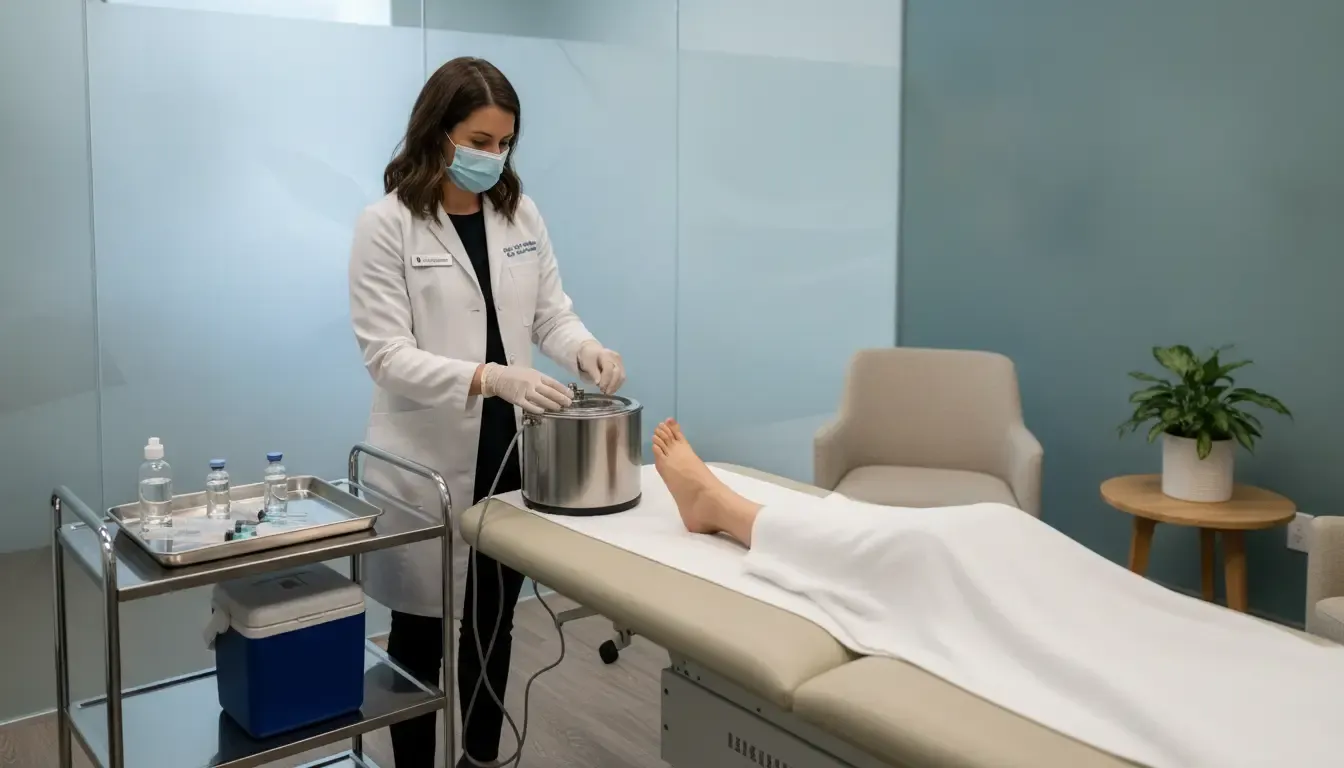
What might a personalized plan look like?
What this means for you: A personalized plan may begin with clarifying the pain source, continue with a targeted nonsurgical or minimally invasive option, and include follow-up based on function and symptoms. The sequence is individualized. No responsible consultation can guarantee a cure, a specific recovery time, or the same result for every patient.
For example, a patient with classic plantar fascia tenderness and a long history of symptoms may discuss activity modification alongside a tissue-focused option such as PRP, shock wave therapy, or Class IV laser therapy. Another patient with a spur on imaging but tenderness in a different area may need a broader evaluation before any spur-directed treatment is considered.
An active patient may care most about a staged return to running or court sports. Another person may prioritize standing through a workday. Those goals help shape the conversation, but they do not replace diagnosis. At Comprehensive Foot and Ankle Institute, Dr. Sutpal Singh describes a concierge, doctor-led model with individualized attention rather than a high-volume visit. Patients from Hoffman Estates and nearby northwest Chicago suburbs can bring their questions and treatment priorities to the consultation.
Depending on the procedure and the patient’s situation, selected minimally invasive care may be performed in the office under local anesthesia, with walking immediately only when clinically appropriate. That possibility should be confirmed for the specific diagnosis rather than assumed from general service descriptions.
What should you ask before choosing treatment?
Key point: The best consultation leaves you understanding the suspected pain source, the reason an option was suggested, the alternatives, the limitations of the evidence, and the follow-up plan. Use questions to make the decision collaborative rather than choosing a treatment from a scan or advertisement.
- What structure appears to be causing my symptoms, and what findings support that conclusion?
- Is the heel spur likely contributing to pain, or could it be an incidental finding?
- What nonsurgical, regenerative, and minimally invasive options fit my diagnosis?
- What does the evidence show, and where is it limited or mixed?
- What activity changes or rehabilitation should accompany treatment?
- How will we decide whether the plan is helping, and when should the diagnosis be reassessed?
- What costs or insurance limitations should I understand before moving forward?
Comprehensive Foot and Ankle Institute can be reached at (847) 310-1600. The office is located in Hoffman Estates and serves patients from communities including Schaumburg, Palatine, Arlington Heights, Barrington, and surrounding northwest Chicago suburbs.
Request an appointment to review plantar fasciitis and heel spur treatment options
Frequently Asked Questions
Can regenerative medicine treat a heel spur?
Regenerative or energy-based care may be discussed when heel pain is related to surrounding soft tissue, but it does not mean a bony spur is being dissolved or that treatment is appropriate for every patient. A specialist first determines whether the spur is clinically relevant and whether another source of pain is more likely.
Is regenerative medicine for plantar fasciitis the same as PRP?
No. PRP is one regenerative option. Depending on the diagnosis and goals, a clinician may also discuss shock wave therapy, Class IV laser therapy, other regenerative medical options, or a minimally invasive procedure. The terms should not be treated as interchangeable, and the plan should be based on an examination.
Do I need an X-ray to diagnose plantar fasciitis?
Not always. Plantar fasciitis is often evaluated from the symptom history and physical examination. Imaging may be useful when the diagnosis is uncertain, symptoms are unusual, trauma is present, or another structural problem needs to be considered. A spur on an X-ray does not automatically identify the pain source.
Can plantar fasciitis and a heel spur occur together?
Yes. They can be seen together, but the relationship varies. Some people have a spur without heel pain, while others have symptoms driven mainly by plantar fascia or nearby soft tissue. The location, timing, examination, and overall clinical picture help determine what should be addressed.
Are regenerative foot treatments covered by insurance?
Coverage depends on the specific service, plan, diagnosis, and insurance policy. Some regenerative or cosmetic-oriented services may not be covered. Ask the office about the proposed plan and financial expectations before scheduling. Avoid assuming coverage or choosing care solely based on an insurance expectation.
When should heel pain be evaluated?
Consider an evaluation when pain persists, limits normal activity, worsens, follows an injury, or includes swelling, weakness, numbness, burning, or other unusual symptoms. Urgent concerns should be assessed promptly. General education cannot replace an examination, especially when symptoms do not follow a typical pattern.
This article is for general education and is not a diagnosis or individualized medical advice. Treatment selection should be discussed with a qualified foot-and-ankle clinician.