



A sharp ache in your heel with every step means your Achilles tendon is struggling to heal. While many people rely on temporary cortisone shots, masking the pain does not fix the underlying wear and tear.
Schedule a drug-free Achilles tendonitis consultation today
An effective achilles tendonitis treatment must focus on repairing the damaged tissue instead of simply masking pain with temporary steroid shots. According to Johns Hopkins Medicine, this condition involves inflammation and swelling of the thick band connecting your calf muscle to your heel. To heal this tissue without harmful drugs, our concierge protocol combines BPC-157 peptide therapy, SoftWave shockwave therapy, Class IV laser, and red light therapy. These advanced treatments work together to boost blood flow, stimulate cell growth, and speed up natural healing from the inside out. This personalized, doctor-led approach helps active adults in the northwest Chicago suburbs restore their movement and safely return to the active life they love.
How can you heal this vital tendon safely and get back to the daily activities you love? We will guide you through these advanced options and explain Why a Drug-Free Achilles Tendonitis Treatment Is Worth Exploring. The journey to lasting relief starts with these facts.
Why a Drug-Free Achilles Tendonitis Treatment Is Worth Exploring
An Achilles injury can put your life on hold. When you live an active life, injuries that keep coming back can create a heavy social and economic burden. Many people feel stuck in a loop of pain and rest. If you want to stay active, finding a safe sports medicine care plan is a vital first step.
This type of injury does not just affect how your body feels. It also impacts your work, your hobbies, and your daily peace of mind. Without the right care, a small ache can turn into a long-term issue that limits how you move for many months. This is why a new approach to healing is so key.
Limits of steroid injections
Steroid shots are a common choice for quick pain relief. But these shots only mask pain and do not heal the tendon. Over time, too many steroid shots can weaken the tissue and lead to tears. Drug-free options, such as peptides, offer new choices instead of steroid shots for your Achilles tendonitis treatment.
Using steroids can also slow down the body’s own repair work. When you block pain without fixing the root cause, you may overwork the injured joint. This often leads to a cycle where the pain returns worse than before. In contrast, drug-free treatments focus on rebuilding the tissue so you can move safely.
Why tendon injuries heal slowly
Your Achilles tendon is a tough band of tissue, but it has a key weakness. Tendons are hypocellular, which means they have very few healing cells. They are also hypovascular, meaning they have a low blood supply. Blood carries oxygen and what is needed to fix damage. Because of this low blood supply and few cells, tendon injuries heal very slowly on their own.
Without a steady flow of blood, the tendon cannot easily clear out waste or bring in new building blocks. This slow pace makes it easy for minor soreness to turn into chronic pain. If you keep training on a weak tendon, you run the risk of causing more damage. This is why passive rest alone is often not enough to heal.
The search for lasting relief
To break this loop, you need treatments that help the body heal itself. Modern drug-free care works to trigger cell growth and boost blood flow to the injured area. These methods do not just hide your symptoms. They aim to repair the tissue from the inside out so you can get back to the sports you love.
Choosing a drug-free care plan offers clear gains:
- No risk of tendon tears from steroid shots
- Support for the body’s own healing work
- Faster return to daily walks and sports
- Less chance of the injury coming back
Understanding Achilles Tendonitis: Causes and the Two Main Types
The Achilles tendon is the thick band of tissue that connects your calf muscles to your heel. When this band faces too much stress, it can become sore, swollen, and irritated. This condition is known as Achilles tendonitis, and it can make simple daily movements painful. Often, the pain starts from a sudden jump in workouts, like running longer miles or adding steep hills to your path. Tight calf muscles can also put extra tension on the tendon, making it more prone to micro-tears.
The Definition and Causes of Achilles Tendonitis
This injury is a common issue for active people and runners. As the American Academy of Orthopaedic Surgeons explains, the Achilles tendon is the largest tendon in the body. Connecting the calf muscles to the heel bone, and it is used for walking, running, jumping, and climbing stairs. Because it must withstand great stress during these activities, it is also prone to overuse injury. While sports can trigger the pain, everyday strain from walking or standing can also cause it. Over time, these small stresses can lead to chronic pain if you do not seek proper care.
The Two Primary Types of Achilles Tendonitis
Doctors divide this condition into two main forms. The difference depends on which part of the tendon is hurt. Knowing the type of your injury helps in planning the right recovery path, as each type responds to different treatment methods. Below is a breakdown of how these two types differ in their location and who they affect.
- Noninsertional tendonitis: This type affects the middle part of the tendon, where the fibers can begin to break down and swell. It usually affects younger, active people who run or play sports.
- Insertional tendonitis: This form occurs at the lower end of the tendon where it meets the heel bone. It can affect people of any age, even if they are not active.
Concierge Care for Lasting Relief
Because these two types affect different areas of the foot, they need different care plans. A generic approach often fails to address the root cause of your pain. At our clinic, Dr. Sutpal Singh takes the time to inspect your foot and find the exact source of the strain. Our goal is to help you stay active, because we believe that life is motion. By building a custom plan, we work to heal the tendon and prevent the injury from coming back.
BPC-157 Peptide Therapy for Achilles Tendon Healing
Achilles tendon tears and strains are hard to treat because tendons have a very poor blood supply. This lack of rich blood flow means that small tears and heavy wear heal very slowly. Many active people struggle with long healing times when they use only standard rest or boots.
Because of this, active adults often look for new ways to get back to their normal life. One advanced option for Achilles tendonitis treatment is BPC-157 peptide therapy. This treatment is part of a custom concierge care plan that aims to help the body repair itself without steroid shots.
What is BPC-157?
Peptides are short chains of amino acids that act as chemical signals in the body. BPC-157 is a specific chain made of 15 amino acids, which makes it a pentadecapeptide. Lab teams first found and took this partial protein sequence from human stomach juice.
In the gut, this same compound helps to protect the stomach lining from harsh acid. Experts soon found that the peptide could do much more than defend the gut. They found that it also helps to protect and repair tough tissues like joints, muscles, and tendons in other parts of the body.
Rodent research on tendon healing
Tendon tissue has very few cells, which makes repair a slow and hard process for your body. When you hurt your Achilles tendon, the body struggles to send enough healing cells to the site.
In lab tests, BPC-157 has shown that it can speed up this slow process. A study on PubMed shows that the peptide helps tendon cells move and survive under stress. It prompts these key cells to travel to the hurt area and start building new tissue. This action helps to make new collagen fibers that are vital for tendon strength.
Most of our knowledge about BPC-157 comes from these controlled lab studies. These tests often use rodent models to see how the peptide heals these injuries. The research shows that BPC-157 speeds up the healing of cut Achilles tendons in rats.
The treated animals showed faster tissue repair and stronger tendons after the therapy. This research is key because it shows how the peptide can jump-start the body’s own repair systems. It gives doctors a clear map of how we might treat severe sports injuries in the future.
Safety and clinical status in humans
While the animal tests look good, patients must understand the limits of these studies. The promise of BPC-157 for healing is clear, but human clinical efficacy has not been confirmed yet. This means we do not have large human trials to prove it works the same way in people.
Still, many doctors want to use this treatment for active adults. Studies show there are very few reported side effects or bad safety issues. A review on PubMed highlights its safety and its promise for non-surgical care. Patients should work with a specialist to see if it fits their needs.
SoftWave Shockwave Therapy for Achilles Tendinopathy
When you have heel pain, even a short walk can feel hard. We believe that life is motion, and motion is life. For many patients, finding a lasting achilles tendonitis treatment means looking past basic options. One of the best non-surgical tools we use is SoftWave therapy to speed up healing deep within your tissue.
Beyond rest and ice
In the early stages of pain, basic home care is a common starting point. Many people try rest and ice to manage swelling and pain. While these simple steps can ease your pain for a short time, they do not heal deep tendon damage. For chronic pain, you need advanced care like SoftWave to target the root cause of the injury.
Unlike ice, which only masks pain, SoftWave therapy works to rebuild the tissue. It is a safe, non-invasive shockwave therapy for sports injuries. Many active adults in the northwest Chicago suburbs choose this route to avoid long healing times and surgery. At our Hoffman Estates office, we design each plan around your unique goals.
How shockwave therapy works
This care uses high-energy sound waves to reach deep into the heel. The waves create a tiny amount of stress in the tissue, telling your body to send more blood and cells to the area. It helps kickstart your natural healing process without any cuts or needles. You do not need to be put to sleep or have downtime after a session.
These waves also help to break up scar tissue that may have built up over time. As the tendon heals, it becomes stronger and less stiff. This helps to prevent future injuries and keeps you moving without pain. Most patients notice less stiffness and better range of motion after just a few visits.
Healing for both tendon types
Achilles pain can happen in different parts of the tendon. It might affect the middle of the tendon or the spot where it connects to your heel bone. Many studies show that extracorporeal shockwave therapy is a proven way to treat both mid-portion and insertional tendinopathy. Dr. Singh uses this therapy to help both active athletes and patients who want to live pain-free.
This care is safe and has very few reported side effects. By choosing a modern regenerative path, you can avoid the risks of steroid shots or surgery. We focus on giving you the close, doctor-led care you need to heal fully. If you are ready to walk without pain, we can help you find the right path forward.
Class IV Laser and Red Light Therapy for Faster Recovery
Regenerative care does not stop with peptides or shockwave tools. To get the best results for your recovery, we often add light treatments to your plan. These office treatments are safe, drug-free options that support your body’s natural healing pathways without surgery.
By using many types of light, we can target many layers of tissue. This helps us address both deep tendon damage and surface swelling at the same time. Our goal is to give you a clear path back to pain-free movement.
Class IV laser care
Deep tissue healing requires focused light. Our office uses Class IV laser therapy to send light deep into the sore tendon. This strong laser helps reduce swelling and pain in a short office visit.
Patients choose laser care for several simple reasons:
- It does not require surgery or recovery downtime.
- It reaches deep areas that wraps and ice cannot touch.
- It is fast, with most sessions taking under ten minutes.
During a laser session, you will feel a warm, soothing heat over the heel. The treatment is completely painless and needs no numbing shots. Most patients find it to be a relaxing part of their office visit.
Tendons are slow to heal on their own because they have a low blood flow. Studies on regenerative soft tissue treatments show that gentle care must target these low-blood zones to work well. The laser light helps by bringing warmth and new life to these deep tissues, which helps the tendon heal much faster.
Red light and cell energy
While lasers go deep, red light therapy works on a wider area closer to the skin. This light helps the cells in your calf and heel make more energy. Cells with more energy can repair tissue damage and ease soreness much faster than tired cells.
We use this therapy to soothe tight muscles and reduce minor surface swelling. It is a gentle, soothing treatment that takes only a few minutes. Patients often find that the warm light provides instant comfort to their sore ankles and calf muscles.
A combined recovery protocol
We do not use light therapy as a single cure. Instead, we combine it with shockwave and peptide care to form a complete recovery plan. This multi-step approach gives your body the best way to heal without steroid shots or risky surgeries.
This combined care is a key part of our sports medicine care for active patients. It helps you get back to running, jumping, and moving without pain. By working on natural tissue repair, we help you keep your active lifestyle for years to come.
Comparing Your Achilles Tendonitis Treatment Options
Standard Clinical Pathways
Finding the right path to heal your tendon can be tough. In the early stages of pain, standard home care often brings quick relief. You can rest your foot and use ice to ease pain quickly.
But for long-term healing, you may need to combine home rest with expert clinic care. The achilles tendonitis treatment guide from the Mayo Clinic outlines several options. These pathways include physical therapy, standard drugs, and newer medical therapies.
Standard home methods like rest and ice can help ease mild pain. But these simple steps do not fix a damaged tendon. If your pain does not go away, you must seek doctor’s advice. A proper clinic check is needed to avoid a complete tendon tear.
Traditional Versus Advanced Therapy
Traditional clinics often suggest steroid shots to calm pain fast. But these shots can weaken the tendon over time. Modern therapies now focus on healing the tissue instead of just hiding the pain. In fact, advanced recovery protocols can provide excellent alternatives to corticosteroid injections for tendon care.
Steroid shots are common but they come with high risks for your tendons. Cortisone can stop the swelling but it may also slow down tissue growth. Many people see pain return once the drug wears off. Choosing a non-drug method can protect the tissue from future damage.
Direct Comparison of Methods
Comparing these pathways can help you make an informed choice. Each path has its own goals, timelines, and risks that you should think about.
| Treatment Approach | Primary Goal | Healing Time | Main Benefits | Risks and Limits |
|---|---|---|---|---|
| At-Home Care | Reduce early swelling | Days to weeks | Free and simple to do | Only helps mild cases |
| Physical Therapy | Strengthen calf muscle | Months of exercise | Builds long-term strength | Takes a lot of time |
| Steroid Injections | Block pain and swelling | Immediate pain relief | Quick relief from pain | Can weaken the tendon |
| Regenerative Protocol | Repair deep tissue | Weeks of active care | Addresses the root cause | May be self-pay care |
Many active people choose a custom regenerative protocol to return to motion quickly. This plan may combine BPC-157 peptide therapy with focused shockwave therapy for Achilles tendonitis. Working with a specialist helps you find the best path for your unique needs. A doctor-led approach focuses on long-term health and keeps you moving without pain.
What to Expect From a Concierge Achilles Tendonitis Treatment Plan
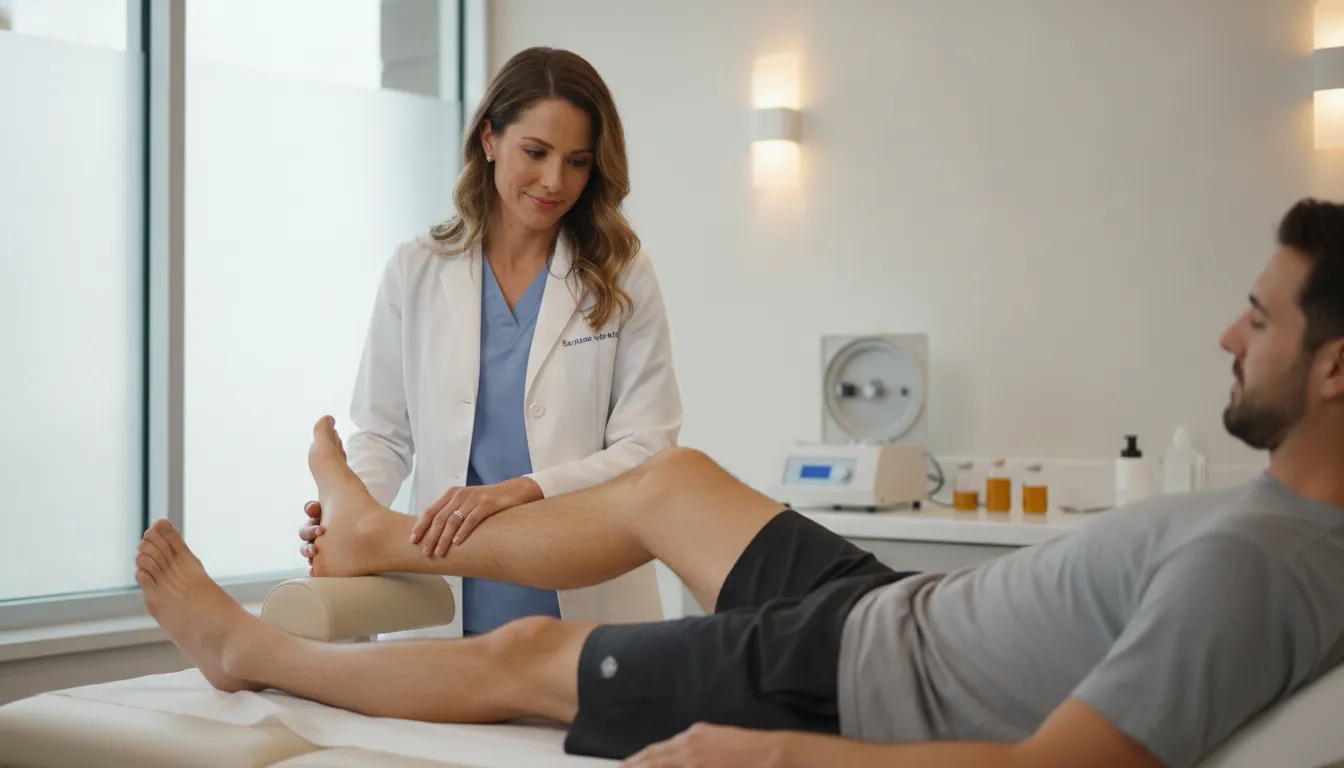
When you seek care for a sore tendon, you should not feel like a number in a busy clinic. A premier concierge plan centers on you from the very first day. At our practice, Dr. Sutpal Singh leads your healing process. He tailors your care to support your active lifestyle and get you back to the sports you love. You will get personal care that respects your time and your goals.
A focus on active recovery
We do not use standard plans that treat every foot the same way. Instead, we use advanced tools to build a custom plan. This doctor-led path helps you recover without relying on steroid shots. We focus on healing the tissue from within to keep your body in motion. Our goal is to help you heal safely without surgery or long delays.
The five-step healing plan
- Thorough exam. First, we check how you move and walk. We look at your ankle range of motion and locate your exact point of pain. We also review your medical history to find any past injuries that may affect your healing.
- Imaging and tests. We use clear ultrasound tests in our office. This allows us to see inside your tendon and find the exact areas of damage. We can check for small tears or swelling in real time with no wait.
- Custom regenerative plan. We combine tools like SoftWave shockwave therapy and Class IV laser care. This helps boost cell repair and reduce deep pain. We may also discuss BPC-157, a peptide that has shown promise in animal studies on tendon healing. But we must note that its clinical success in humans still needs more research.
- Simple home care. Early-stage care includes simple steps like rest and ice to soothe swelling and ease pain. We advise you to avoid any moves that make your pain worse. We do not recommend stretching in the acute phase unless you have physician-guided recovery steps. Proper rest helps prevent further damage to the tendon.
- Follow-up care. We track your progress each week to ensure your tendon is healing well. As you improve, we adjust your plan so you can safely return to your full activity level. We help you ease back into running or sports without causing a setback.
With a concierge model, you get direct access to the doctor and clear answers. We design our sports medicine care to help you heal quickly and avoid long-term damage. This personalized approach gives your body the best environment to recover. You can trust our team to support you at every step of your journey.
Ready to heal your Achilles tendon without steroids? Schedule a consultation today
Frequently Asked Questions
What is the best treatment for Achilles tendonitis?
While traditional care starts with rest and ice, newer approaches offer strong results without steroids. According to the Mayo Clinic, physical therapy and newer treatment options are very effective for this condition. Our custom plan combines advanced laser therapy, SoftWave shockwave therapy, and regenerative peptides. These tools help repair damaged tissue and restore blood flow to speed up your recovery.
How long does it take for Achilles tendonitis to heal?
Tendon healing is a slow process because tendons have a poor blood supply. The Hopkins Medicine team explains that this tissue connects calf muscles to the heel and can easily become inflamed. Mild cases can heal in a few weeks with proper rest. However, severe or chronic pain can take months to resolve. Our drug-free regenerative therapies can help speed up this process by supporting natural cell healing.
Can Achilles tendonitis heal on its own?
While mild soreness might improve with rest, true tendonitis rarely heals on its own. As noted by Cornerstone Foot and Ankle, early care means staying off your feet and applying ice. Without treatment, the tendon keeps suffering minor tears from daily movement. This leads to scar tissue build-up and chronic pain. Active treatment is needed to repair the tendon and prevent permanent damage.
What happens if Achilles tendonitis is left untreated?
Ignoring tendon pain can lead to serious risks. The American Academy of Orthopaedic Surgeons notes that repeated strain and damage to the tendon can, when left untreated, progress toward more severe problems. Including a rupture where the tendon can separate from the heel bone or tear. Leaving this issue untreated can cause the tendon to weaken and even tear or rupture. A ruptured tendon often needs major surgery and a long recovery. Getting early, drug-free care can help you protect your tendon and avoid these severe outcomes.
Start Your Drug-Free Achilles Tendonitis Treatment Today
You do not have to keep living with heel pain, sore calves, or repeated cortisone shots. At Comprehensive Foot and Ankle Institute, Dr. Sutpal Singh designs a personalized, drug-free regenerative plan around your active lifestyle. Our concierge approach blends BPC-157 peptide therapy, SoftWave shockwave therapy, Class IV laser, and red light therapy to help your Achilles tendon heal naturally and safely.
Ready to explore your options and get back to the sports and activities you love? Call our Hoffman Estates office at (847) 310-1600, or reach out through our contact page to schedule a consultation with Dr. Singh today.