




A single misstep on the court can leave you sidelined with a swollen, throbbing ankle. While common resting methods help, they often fail to prevent the joint weakness that leads to repeated sprains. Active recovery needs more than waiting for pain to fade.
Schedule your ankle sprain recovery treatment consultation today
An effective ankle sprain recovery treatment must focus on deep tissue repair rather than simple rest to prevent long-term joint weakness. While standard home care can reduce swelling, it does not heal the joint. Advanced options like Class IV laser therapy and SoftWave shockwave therapy actively prompt the body to mend damaged ligaments. These in-office therapies boost blood flow and trigger natural cell healing, which helps tissues mend much faster. According to a research study on NCBI, laser and shockwave therapies are highly effective for treating tissue and joint pain. By using these modern sports medicine tools, active patients can rebuild joint strength, protect their mobility, and safely get back to the sports they love.
How long does it take for a sprained joint to heal completely? To find the best way to mend, you must understand your specific injury. The path to a safe recovery begins with What an Ankle Sprain Is and Why Recovery Times Vary.
What an Ankle Sprain Is and Why Recovery Times Vary
An ankle sprain happens when you roll, twist, or turn your ankle in an awkward way. This action can stretch or tear the tough bands of tissue that help hold your ankle bones together. These bands of tissue are called ligaments. Ankle sprains are among the most common musculoskeletal injuries for active people and athletes alike. When this injury happens, a fast and correct approach to care makes a real difference in how well you heal.
Understanding the Anatomy of an Ankle Sprain
Most sprains affect the ligaments on the outside of your ankle. These tough bands of tissue keep your joint stable when you walk, run, or jump. When your foot turns inward too far, it puts sudden stress on these outer tissues. This stress causes them to stretch past their normal limits.
Ligaments have a limited blood supply compared to muscles. This makes the natural healing process slow and sometimes incomplete. When you get a sprain, the body tries to patch the torn tissue with scar tissue, which is less flexible. At our clinic, we focus on helping these tissues mend so you can preserve an active lifestyle. Our philosophy is simple: life is motion, and motion is life.
The Three Grades of Ligament Damage
Sprained ankles are classified by severity into three distinct grades. This grading system helps us find the right care plan for your specific injury.
- Grade 1 is mild: The ligaments stretch but do not tear. You may feel mild pain and some swelling, but you can usually put weight on your foot.
- Grade 2 is moderate: There is a partial tear of the tissue. You will likely feel moderate pain, swelling, and bruising, which makes walking difficult.
- Grade 3 is severe: The ligament is fully torn. This level of damage leads to major swelling and joint instability that makes walking impossible.
If your injury is severe, we may need to run imaging tests like X-rays to rule out a broken bone.
Why Healing Windows Differ for Every Patient
Your recovery time depends directly on how much damage your ligaments have sustained. A mild sprain might heal in a few weeks with basic care. A moderate sprain can take six to eight weeks. Severe tears can take several months to heal.
At the Comprehensive Foot and Ankle Institute, we offer advanced regenerative ankle treatments to support the natural healing of your tissues. Starting correct care early helps you heal well and prevents long-term weakness in your joint.

Regenerative Ankle Sprain Recovery Treatment Speeds Healing Beyond RICE
When you suffer an ankle sprain, finding the right ankle sprain recovery treatment is key to getting back on your feet. For many years, people turned to standard resting methods to heal.
Doing RICE (Rest, Ice, Compression, and Elevation) right away is often the first step people take. The Cleveland Clinic recommends this care to manage early pain. Swelling may go down with this approach. But standard rest alone does not repair the torn fibers in your ligaments.
Limitations of standard RICE protocols
Resting an injured ankle is a good starting point. But resting does not help start deep tissue repair. When you only use ice and rest, the ligament can heal with weak scar tissue. This weak tissue raises your risk of future injuries.
Many patients suffer from chronic ankle weakness because they did not heal well the first time. Early active care is needed to help the body build strong new tissue. If you want a fast and safe recovery, you need more than rest.
Without active healing, scar tissue can limit how well your ankle moves. This tightness can lead to chronic pain during daily walks. Over time, you may find yourself skipping sports and active hobbies.
Biological effects of laser and shockwave therapies
To speed up healing, we offer advanced regenerative options at our clinic. These methods include Class IV laser therapy and SoftWave shockwave therapy. Both tools are known to treat musculoskeletal pain, as shown in the National Institutes of Health database.
Class IV laser care uses light to reach deep into damaged tissue. This light helps start the body’s natural repair pathways. It boosts cell power, lowers pain, and reduces inflammation.
Shockwave therapy uses sound waves to trigger new blood flow. These waves help heal hurt tissues without surgery or drugs. They also support the natural repair of damaged ligaments.
These office therapies are quick and do not cause pain. Dr. Singh shapes each plan to fit your own injury. We avoid high-volume care so you get the full attention you need. Our goal is to help you walk with comfort as soon as we can.
Comparing recovery outcomes
Choosing the right path makes a major change in your healing. Standard rest can help you cope with the first few days of pain. But it does not address the deep ligament tear.
At Comprehensive Foot and Ankle Institute, we combine these paths to give you the best results. We offer advanced regenerative ankle treatments to help you recover fast and safely. Please note that while these treatments can speed up healing, results can vary, and some regenerative procedures are not covered by insurance. We can discuss your custom self-pay or coverage options during your visit.
Request your ankle sprain recovery treatment consultation now
| Approach | Inflammation Reduction | Tissue Repair Stimulation | Typical Recovery Time | Risk of Chronic Instability |
|---|---|---|---|---|
| RICE-Only Protocol | Slow reduction of surface swelling only. | None; relies entirely on passive rest. | Weeks to months of inactivity. | High risk of weak ligaments and re-injury. |
| Regenerative-Assisted Care | Fast relief via deep light and sound energy. | Active repair of torn ligament fibers. | Faster return to normal movements. | Low risk due to stronger tissue healing. |
A Sports Medicine Approach to Getting You Back on Your Feet
Early movement versus long immobilization
Active patients want a fast, safe return to their normal lives. They do not want to sit still for weeks. While standard RICE is common for initial management of a sprained ankle, too much rest can slow you down. Staying still for too long can make your joint stiff.
Advanced care helps start the body’s own repair paths. This is why we use laser and shockwave therapies to lower pain and swelling fast. These options help active people get back to motion sooner than old methods. By healing the damage at a cell level, we help you rebuild your strength.
The danger of chronic ankle instability
If a sprained ankle does not heal right, you may face long-term problems like chronic ankle instability. This means your ankle feels weak and can give way during daily tasks. It can lead to lasting pain and more sprains down the road. This instability occurs when the stretched or torn ligaments do not mend with proper strength.
Early care is the best way to prevent these chronic issues. We offer regenerative treatment for sports injuries to help tissues mend strong and support proper ligament repair from the start. By healing the tissue fully, you can keep your ankle stable and protect your active lifestyle. It ensures that the joint can handle the stress of running and jumping again.
In-office care for active lifestyles
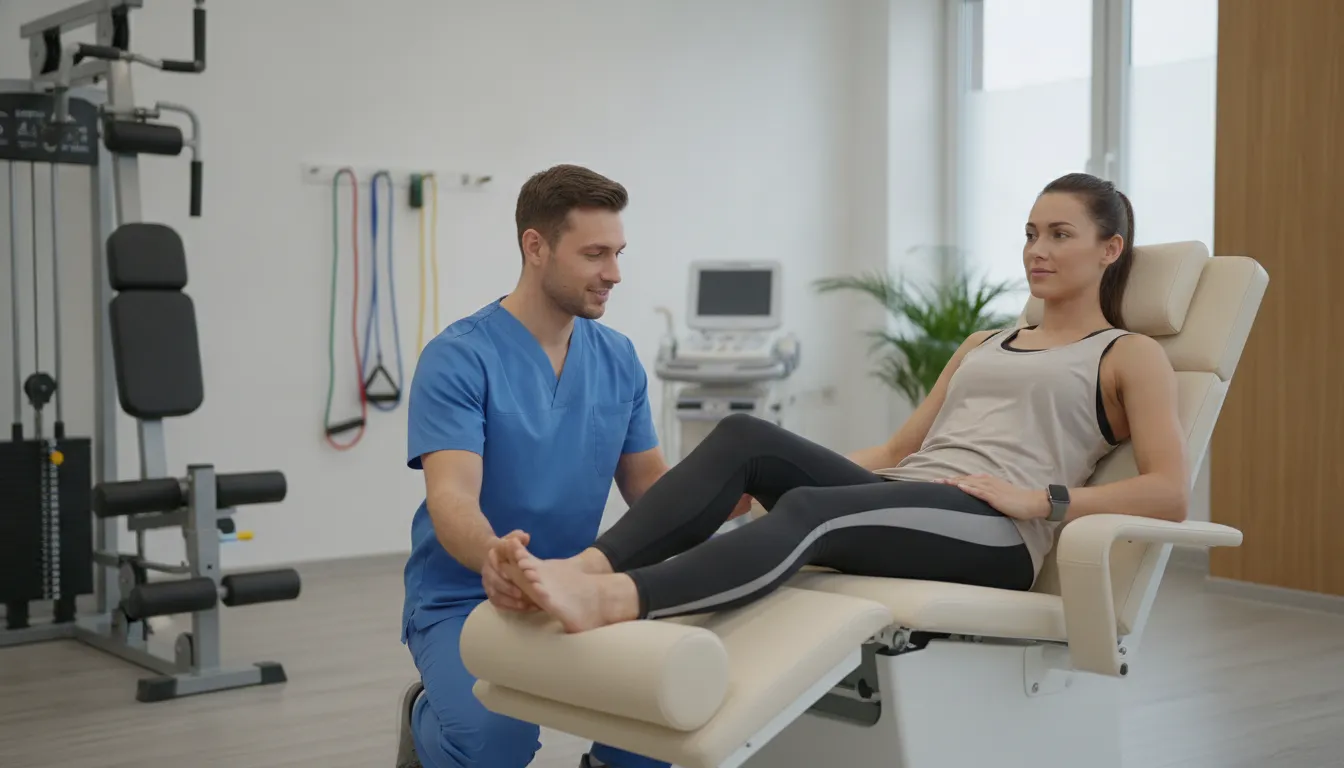
At our practice, we give custom care that fits your busy life by performing treatments right in our office. There is no need for a hospital stay, and we use local anesthesia to keep you pain-free. In many cases, patients can walk right away after their session without using crutches or heavy boots. This makes the healing process much smoother. Here is what a typical path back to activity looks like:
- Get an accurate diagnosis so the right treatment plan matches the true severity of your sprain.
- Begin regenerative care promptly to reduce inflammation and stimulate ligament repair.
- Follow a guided return-to-motion plan that builds strength and range of motion safely.
- Resume sport-specific training only after your ankle feels stable and fully supported.
We want to make getting help as simple as we can. You do not have to deal with long wait times or rushed visits. If you are ready to start your healing journey, call our office today at (847) 310-1600. Our team is here to help you get moving again, because we believe that life is motion.
What to Expect at Your Ankle Sprain Recovery Consultation
If you have a sprained ankle, getting the right help quickly is key to a fast recovery. At our office, we offer expert care. We do not run a fast, busy clinic. We believe that your time and your health come first. This is why we use a concierge model for every visit.
A personalized doctor-led visit
When you book a visit with us, Dr. Sutpal Singh will give you his full focus. He is a third-generation doctor with more than thirty years of experience. He has advanced training as a DPM, FACFAS, and FAPWCA. Because we use a concierge model, we do not double-book our patients. This means you will enjoy minimal wait times and get real, doctor-led care. We do not treat our patients like a pack of cattle.
A careful check and clear imaging
During your visit, we will start with a careful check of your foot and ankle. We check your range of motion, your pain levels, and how well you can stand or walk. If your injury is severe, you may need imaging tests like X-rays. This helps us rule out broken bones or deep tissue damage. Dr. Singh will take the time to explain your results and show you what is going on inside your joint.
We treat many types of foot and ankle injuries with a focus on non-surgical care. Our goal is to avoid big surgeries that keep you off your feet for a long time. Instead, we use advanced tools to find the source of your pain. This keeps our work focused on helping you heal without the need for heavy metal hardware.
A custom healing plan for your needs
Once we know how bad your sprain is, we will build a plan just for you. We do not believe in the same simple routine for every patient. Our care at the Comprehensive Foot and Ankle Institute focuses on advanced regenerative ankle treatments to help you heal faster. This plan is designed to fit your own lifestyle and goals.
This plan may include treatments like laser care or shock wave treatments to rebuild damaged tissue. Some of these advanced choices may not be covered by standard health plans. We will explain all your choices, including any self-pay costs, before we start. You will know what to expect at every step of your healing journey.
Start your faster ankle sprain recovery today
Frequently Asked Questions
How long does it take to recover from an ankle sprain?
Ankle sprain recovery times depend on how badly you hurt the ligaments. A mild sprain can feel better in two to four weeks. A moderate injury may need six to eight weeks of care. According to the Cleveland Clinic, a severe tear can take up to several months to heal. Early medical care helps speed up this timeline.
What is the fastest way to heal a sprained ankle?
To heal quickly, you should seek professional care instead of just resting. Advanced therapies like Class IV laser and SoftWave shockwave treatments can speed up the healing process. They reduce swelling and help the tissue repair itself. A study in the National Institutes of Health database supports using laser and shockwave therapies for joint injuries.
What is the best treatment for a sprained ankle?
The best care combines early relief with long-term healing. While the classic RICE method of rest and ice helps right after the injury, it does not repair torn tissue. A complete recovery plan uses advanced regenerative therapies to build stronger ligaments. According to the Cleveland Clinic, standard care should also include rehabilitation exercises to bring back your full range of motion.
How do you know if an ankle sprain is serious?
Your injury is likely serious if you cannot put any weight on your foot without severe pain. Other warning signs include extreme swelling, deep bruising, or a crooked look to the joint. According to the Mayo Clinic, severe sprains require imaging tests like X-rays to check for broken bones.
Is surgery necessary for a severe ankle sprain?
Surgery is rarely needed for a fresh ankle injury. Most sprains heal well with non-surgical treatments and physical therapy. However, if your ankle keeps giving out after months of care, a doctor may suggest a repair. At the Comprehensive Foot and Ankle Institute, we focus on advanced regenerative therapies first to help you avoid invasive procedures.
Ready to Speed Up Your Ankle Sprain Recovery?
Ignoring an acute ankle sprain or simply hoping it gets better on its own can lead to chronic joint weakness, ongoing pain, and lasting instability. By delaying professional care, you risk serious damage to your ankle ligaments and face a much longer, more difficult road to your full recovery. Choosing our advanced regenerative ankle treatments right away speeds up your body’s natural healing process, protects your joint mobility, and prevents chronic pain.
At our Hoffman Estates clinic, we provide personal, doctor led care with no double booking, short wait times, and a focus on your active life. Our staff is ready to help you take the first step toward pain free movement. Ready to recover? Schedule your ankle sprain recovery consultation online or call our office at (847) 310-1600 to speak with our expert team today.