



Sharp heel pain that makes your first morning steps feel like walking on glass is not normal. You do not have to choose between a long surgery recovery or the risks of steroid shots. Many active patients now use advanced regenerative therapies at Comprehensive Foot and Ankle Institute to get back on their feet. Dr. Sutpal Singh brings over 30 years of experience. He can help you heal without drugs, needles, or incisions.
Shockwave therapy plantar fasciitis treatment is a safe, non-invasive way to heal chronic heel pain without drugs, needles, or surgery. This tool uses focused sound waves to send pulses deep into the soft tissue of the foot. These pulses help the body start its own healing work by bringing more blood and oxygen to the hurt area. Unlike cortisone shots that only hide the pain, this therapy helps fix the damaged parts of your heel. Most patients feel less pain after a few short visits to the office. It is a great option for runners and active adults who want to avoid the long downtime of old foot surgery.
You may have questions about how these sound waves work to repair your feet. Learning what shockwave therapy is will help you see why so many local athletes choose this path. The journey back to your active life begins below.
What Is Shockwave Therapy for Plantar Fasciitis?
Shockwave therapy is a non-invasive medical treatment that uses acoustic pulses to stimulate healing in damaged soft tissue. Known medically as Extracorporeal Shock Wave Therapy (ESWT), it delivers focused sound waves through the skin to the plantar fascia ligament. These waves trigger biological repair processes including increased blood flow, collagen production, and scar tissue breakdown, without requiring any incisions, needles, or medication.
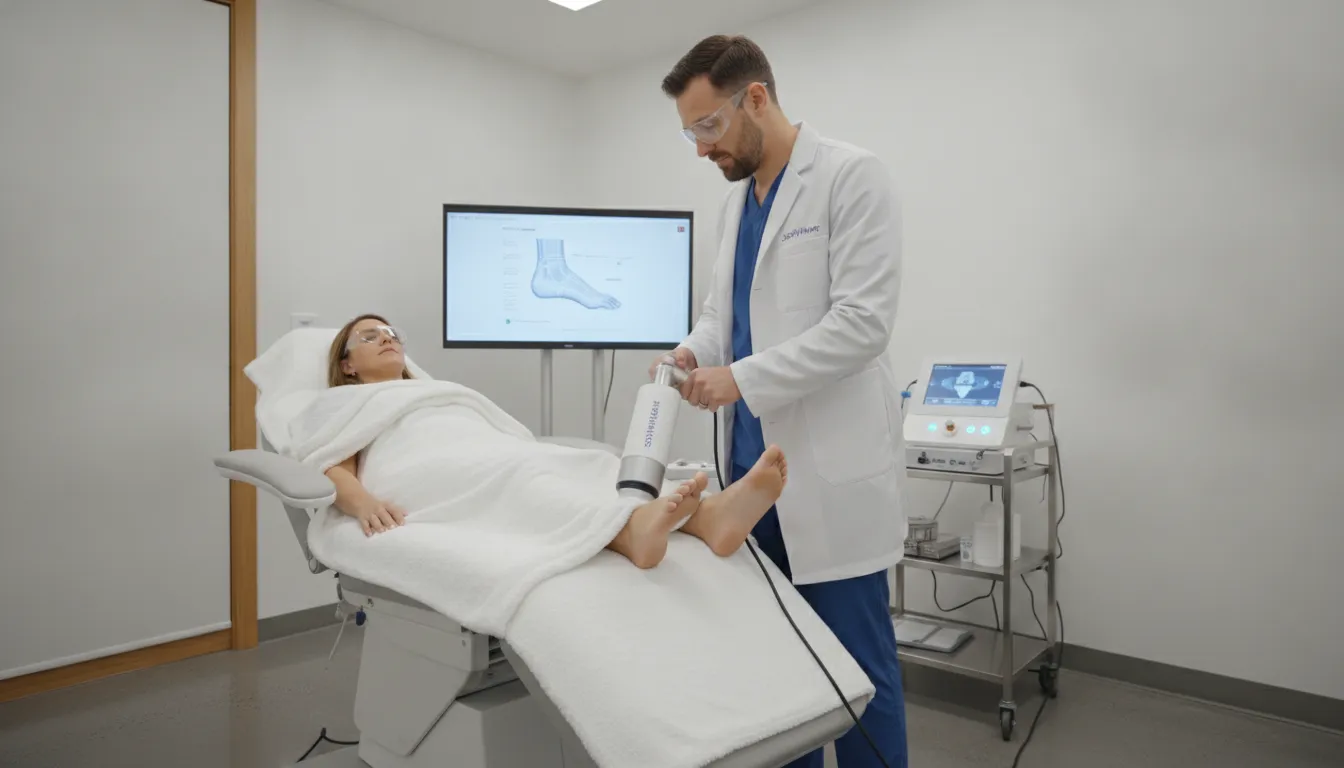
Shockwave therapy is a non-invasive way to treat chronic heel pain. The medical name for this care is Extracorporeal Shock Wave Therapy, or ESWT. It uses a small, hand-held tool to send sound waves through your skin and into your foot. These sound waves carry energy to your tissues to help them heal. At our clinic, Dr. Singh uses SoftWave technology to give you advanced regenerative therapies.
How sound waves help your foot heal
The acoustic pulses from a shockwave tool do more than just dull the pain. They help your body start the repair process on its own. These waves work to break up scar tissue and adhesions in your heel. They also help improve blood flow to the area. This is vital for chronic cases where the body has stopped trying to fix the damage. By jump-starting the healing cycle, shockwave therapy helps reduce both pain and swelling.
A biological approach to repair
Shockwave care does not cut your skin or use internal hardware. Instead, it triggers biological effects that help your body rebuild tissue. The pulses release growth factors that help your foot repair itself. This method is different from surgery because there is no downtime. You do not need to stay in a hospital. Most people can walk right after their visit. It offers a safe way to get back to your active life without the risks of an operation.
How ESWT compares to common treatments
Many people try steroids or cortisone shots for heel pain. Those shots can hide the pain for a while, but they do not fix the root of the problem. Some shots can even make your tendons weaker over time. Shockwave therapy is a drug-free option that aims for real repair. It is a popular choice for people who want to avoid shots or long-term medicine. By using sound waves, we can help you find relief while keeping your foot strong and healthy.
Why Choose Drug-Free Shockwave Therapy Over Cortisone?
Shockwave therapy outperforms cortisone shots for long-term plantar fasciitis relief because it stimulates actual tissue repair rather than masking pain. With approximately an 80% success rate for chronic cases, no risk of tendon weakening. And no recovery downtime, shockwave therapy offers a fundamentally safer and more effective approach than steroid injections.
For many years, steroid shots were the top choice for heel pain. Doctors often used cortisone to dull the ache of plantar fasciitis quickly. However, Dr. Sutpal Singh takes a different path. He focuses on alternative medical therapy that does not use harmful steroids or cortisone shots. This choice puts long-term health over a quick fix.
Shockwave therapy for plantar fasciitis is a safe choice. It has no major side effects and works with your body to fix the cause of the pain. While a shot might hide the pain for a few weeks, it does not heal the ligament. Modern research shows that shockwave therapy has about an 80% success rate for long-term heel pain.
| Feature | Shockwave Therapy | Cortisone Shots |
|---|---|---|
| How it works | Triggers tissue repair and blood flow | Numbs pain and masks symptoms |
| Long-term Effect | Strengthens the plantar fascia | May weaken tendon tissue over time |
| Side Effects | No major side effects | Risk of fat pad loss or rupture |
| Success Rate | About 80% for long-term cases | High initial relief, but often recurs |
| Approach | Regenerative and drug-free | Steroid-based drug use |
The problem with steroid shots
Steroid shots like cortisone work by lowering inflammation fast. This can make your foot feel better in a day or two. But this relief is often short. The drug does not repair the tiny tears in your heel. In fact, too many shots can be bad for your foot health. Studies suggest that often using steroids can weaken the tendon tissue. In some cases, it can even cause the ligament to snap or rupture.
At our office, we believe in keeping your foot strong. We avoid drugs that might hurt your tissue later. Dr. Singh uses tools that help your body fix itself. This is vital for active people who want to stay on their feet. You need a plan that builds your foot up rather than one that just hides the harm. Choosing a drug-free path keeps your heel safe for the years ahead.
Real healing vs short relief
Shockwave therapy works by waking up the healing process in your foot. It sends sound waves into the heel to start deep repair. These waves trigger the release of biochemicals that boost blood flow. According to Mayo Clinic team members, these sound waves jump-start the healing process and reduce pain. They also help improve cellular metabolism in the damaged area.
This method is a common choice for those who want to avoid surgery or long-term drug use. It is a non-invasive way to get back to the things you love. Rather than just masking the pain, you are giving your foot the tools it needs to get strong again. Most patients see a big change after just a few sessions. This makes it a great guide to shockwave therapy for plantar fasciitis for those seeking a safe way to heal.
What Does Shockwave Therapy Feel Like?
Most patients describe shockwave therapy as a mild tapping or pulsing sensation against the heel, not sharp pain. Sessions last 5 to 15 minutes with no needles, no anesthesia, and zero downtime. You can walk out of the office immediately after treatment and return to your normal routine the same day.
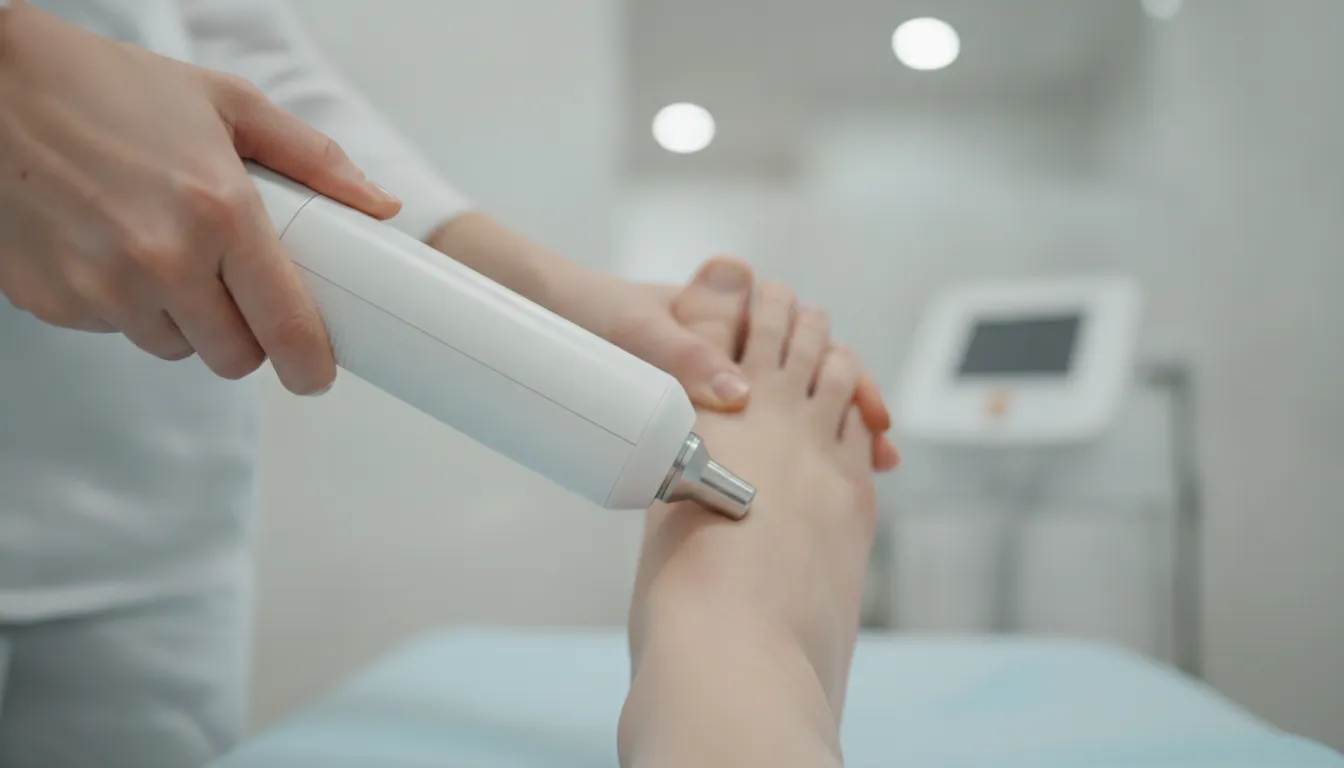
Many people worry about pain when they hear the word shockwave. But most patients find the treatment easy to handle. We use a small, hand-held tool to send acoustic waves into the area of your heel that hurts. A typical session for shockwave therapy for plantar fasciitis is short, often lasting just 5 to 15 minutes.
A mild pulsing sensation
You may feel some mild discomfort as the device moves over the skin. Patients often say it feels like a tapping or a fast pulsing sensation against the heel. Since we do not use needles or make cuts, you do not need any numbing drugs or anesthesia for this visit. We can adjust the power of the device to make sure you stay comfortable while still getting the best care.
The sound waves from the device work to jump-start the healing process in your foot. They help break up stiff scar tissue and improve blood flow. This wakes up your body so it can start to fix the damage in your heel naturally. Because the treatment is non-invasive, it is a great choice if you want to avoid the risks of surgery or the side effects of drugs.
No downtime after treatment
One of the best parts about this care is that there is no recovery time. You can walk right out of our office after your visit. You do not need crutches, a boot, or any time off your feet. This makes it a perfect fit for active people in Hoffman Estates who want to get back to their daily tasks fast.
While you can return to your routine right away, Dr. Singh will give you a clear plan for your next steps. We use advanced regenerative therapies to help you heal without using harmful steroids. We will track your progress and adjust your plan based on how your foot feels. Most people see the best results after a few visits spaced about one week apart.
How Many Sessions Are Needed for Plantar Fasciitis?
Most patients need 3 to 6 sessions of shockwave therapy spaced one week apart. Each session takes 5 to 15 minutes. You can walk immediately afterward with no downtime. Full results typically develop over 8 to 12 weeks as your body continues repairing the tissue between visits.
The number of visits you need for shockwave therapy plantar fasciitis care depends on your pain level and how long you have had it. Most people see big results after a short series of visits. Unlike a steroid shot that masks pain with one dose, this path builds real tissue growth over time.
Your typical treatment schedule
For most people, a plan includes three to six sessions. These visits often happen once a week to give your body time to heal. Each visit is fast and takes about 5 to 15 minutes. This short time fits well into a busy day for runners and active adults. You can learn more about how many sessions of shockwave therapy you may need by talking with our team.
At our office, Dr. Singh does not use a fixed plan for every patient. He looks at your progress and changes the plan to match your needs. This concierge approach means we focus only on you during your visit.
The healing stages
The healing path follows a clear set of steps. Sound waves from the device jump-start repair by sending energy to the hurt spot. This energy helps move blood to the area and starts the growth of new cells. Per the Mayo Clinic, these waves help break up scar tissue and reduce swelling in the heel.
- Initial evaluation. Dr. Singh examines your foot, reviews your symptom history, and determines whether shockwave therapy is the right next step based on your foot health and activity level.
- First treatment session. We use a hand-held tool to send acoustic pulses into your heel. The session lasts about 5 to 15 minutes with no needles or anesthesia.
- Weekly follow-up visits. You return once a week for additional treatment. These visits keep the healing process active while your body repairs tissue between sessions.
- Progress assessment. We track your pain levels and range of motion. Dr. Singh adjusts the treatment plan based on how your foot responds.
- Long-term maintenance. Once your main treatment course ends, your body continues repairing tissue for several weeks. We provide guidance to keep your feet strong and pain-free.
Why the gap between visits matters
Spacing your visits one week apart is key for the best results. The healing starts during the visit but does not stop when you leave. Your body needs those days in between to build new blood vessels and fix small tears. This natural growth is why you do not need harmful drugs or surgery to find relief. Most patients can walk right after their visit with no downtime, meaning you can keep up with your daily life while your feet heal.
Shockwave Therapy vs. PT and Surgery: Recovery Timeline Comparison
Shockwave therapy fills the gap between slow physical therapy and invasive surgery for chronic plantar fasciitis. While PT can take 3 to 6 months with inconsistent results and surgery requires 6 to 12 weeks of recovery. Shockwave therapy allows immediate walking after each session with results often visible within 2 to 4 weeks.
When you deal with chronic heel pain, you want a plan that gets you back to your life fast. Traditional ways like physical therapy or surgery often fall into two extremes. Physical therapy can take many months to show results, while surgery needs a long pause in your active life. Shockwave therapy fills the gap by giving you a fast, non-invasive path to relief.
Closing the gap in chronic care
Physical therapy is a good first step, but it often fails when plantar fasciitis becomes chronic. In these cases, the body stops trying to heal the hurt tissue. Dr. Sutpal Singh has more than 30 years of experience. He uses SoftWave therapy to restart that healing work. This way is much faster than standard care because it works at the cell level to start repair.
According to the Mayo Clinic, shockwave therapy helps to jump-start healing by boosting blood flow and breaking up scar tissue. For people in Hoffman Estates, Schaumburg, Arlington Heights, and nearby towns, this means you do not have to wait for months of stretching to feel better. You can often see a change in just a few short sessions.
| Treatment Type | Invasiveness | Recovery Time | Best for Active People |
|---|---|---|---|
| Physical Therapy | Non-invasive | 3 to 6 months | High, but slow progress |
| Shockwave Therapy | Non-invasive | Immediate walking | Best for fast results |
| Surgical Release | Surgical | 6 to 12 weeks | Low, needs downtime |
A concierge path to fast recovery
Dr. Singh offers a concierge model where he leads every step of your care. You will not be treated like a number or wait in a crowded room. Instead, you get a custom plan based on your needs and goals. This level of focus helps ensure you get the advanced regenerative therapies that work best for your case. Most patients can walk right after their session and return to their daily tasks the same day. This is a big win compared to surgery, which may need weeks of rest and slow rehab.
Who Is a Good Candidate for SoftWave Therapy?
Ideal candidates for SoftWave therapy include runners and active adults who want to avoid surgery, workers who stand for long hours. Patients seeking an alternative to steroid injections, and anyone whose heel pain has persisted for six months or more despite conservative treatments. Dr. Singh evaluates each patient individually to determine candidacy.
SoftWave therapy is not for every case of heel pain. It works best for people whose plantar fasciitis has become persistent, recurring, or activity-limiting despite other attempts at relief. Dr. Sutpal Singh evaluates each patient individually to determine whether shockwave therapy is the right next step given their foot health, medical history, and lifestyle goals.
Active adults and athletes
Runners, walkers, weekend warriors, and fitness-focused adults make up a large portion of patients who choose SoftWave therapy. These individuals need a treatment that does not sideline them for weeks. Because shockwave therapy requires no downtime and patients walk out of the office after each session, it fits naturally into an active schedule. The shockwave therapy for plantar fasciitis guide on our site covers how this option compares with other approaches for people who stay on their feet.
Patients who stand for work
Nurses, teachers, retail workers, restaurant staff, and others whose jobs keep them on their feet for long hours are also strong candidates. Chronic heel pain in these roles can be career-limiting when conservative measures like stretching, shoe changes, and over-the-counter inserts have not resolved the pain. Shockwave therapy offers a non-invasive next step that does not require time off work.
Those seeking an alternative to steroids
Many patients come to our Hoffman Estates office because they want to avoid cortisone or steroid injections. Dr. Singhs practice is built around the principle of alternative medical therapy that does not use harmful steroids or cortisone injections. For patients who have received steroid shots in the past and found the relief was temporary. Shockwave therapy provides a fundamentally different approach: one that stimulates actual tissue repair rather than masking symptoms.
Chronic cases that have stalled
When heel pain has lasted six months or longer, the body often stops actively trying to heal the area. Blood flow decreases, and the tissue enters a chronic, degenerative state. This is where shockwave therapy excels. The acoustic pulses essentially wake up the healing cascade, bringing fresh blood and oxygen to the area and restarting the repair process. Dr. Singh has over 30 years of experience treating complex foot and ankle cases, and he brings that depth of knowledge to every chronic heel pain evaluation.
The evaluation process
During your initial visit, Dr. Singh reviews your symptom history, activity level, prior treatments, and overall foot health. He does not apply a one-size-fits-all plan. Instead, he uses a concierge, doctor-led approach to design a protocol tailored to your specific needs. Your treatment may combine SoftWave therapy with gait evaluation, stretching guidance, footwear changes, orthotics, or other advanced regenerative therapies depending on what your case requires.
Frequently Asked Questions
Does shockwave therapy actually work for plantar fasciitis?
Yes, this treatment works well for chronic heel pain. Many studies show it has about an 80% success rate. Research from PubMed Central shows these sound waves help people reduce pain and stay active. Dr. Sutpal Singh uses the SoftWave system to trigger natural repair in the foot tissue. It helps your body fix the damage instead of just hiding the pain with shots or drugs.
How long does shockwave therapy take to heal plantar fasciitis?
Most people start to feel better within two to four weeks after their first visit. You will likely need three to six sessions. Each visit is spaced one week apart. The sound waves start a healing process that keeps working long after the session ends. You may see the full results in eight to twelve weeks as your body repairs the tissue. This drug-free path offers a safe way to get back to your active life.
What is stage 3 plantar fasciitis?
Stage 3 is a chronic state where heel pain has lasted for six months or more. At this point, the tissue is often weak and the body has stopped trying to heal the area. The Mayo Clinic says sound waves jump-start healing and improve blood flow to the spot. This wakes up the repair process by bringing new cells to fix the damage.
Can shockwave therapy make plantar fasciitis worse?
It is rare for this care to make the problem worse. You might feel some soreness for a day or two after treatment. This happens because your body is starting to heal the area. This feeling usually goes away fast. Dr. Sutpal Singh checks your foot health before starting to make sure this is the right choice for you. This careful plan helps you avoid the risks that come with surgery or steroid shots.
Is shockwave therapy covered by insurance?
Coverage varies by insurance plan. Many private insurers cover shockwave therapy for chronic plantar fasciitis when conservative treatments have failed. Contact our office at (847) 310-1600 and we can verify your benefits and discuss any self-pay options that may be available for your specific treatment plan.