



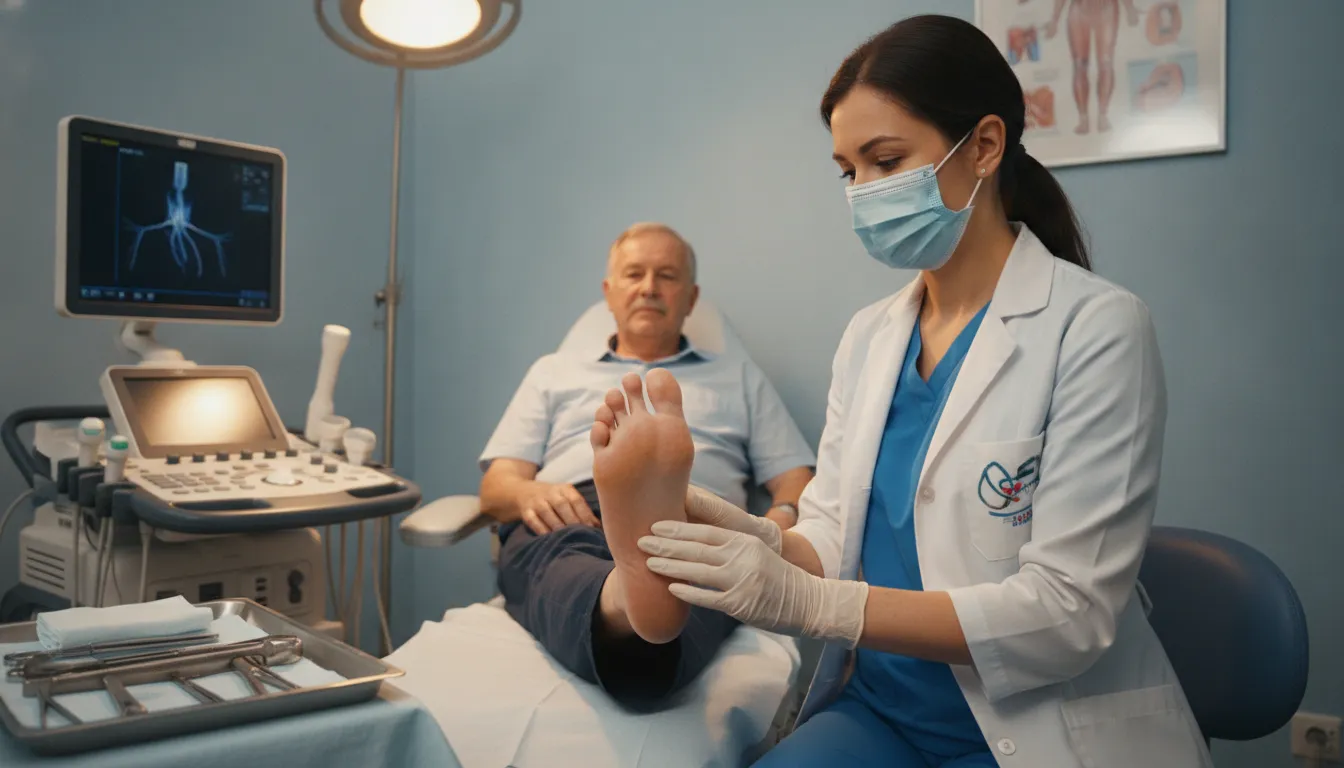

More than 120,000 people in the United States undergo diabetic amputations every year. Many of these procedures are preventable with the right care. These surgeries most often result from foot ulcers that fail to heal correctly.
This comparison illustrates why MIS osteotomy is preferred for diabetic patients, who face higher surgical risks with traditional open approaches. By combining bone correction with regenerative wound therapies, the limb salvage team addresses both the structural cause and the biological healing deficit simultaneously.
Diabetic limb salvage is a comprehensive medical approach that prevents amputation through advanced wound care, vascular intervention, and regenerative therapies. This multidisciplinary strategy addresses non-healing foot ulcers, the leading cause of non-traumatic leg amputations. By combining Class IV laser therapy, SoftWave therapy, and advanced surgical reconstruction, specialists can often save the foot even when other providers recommend amputation. Research from the National Institutes of Health confirms that coordinated limb salvage programs significantly reduce amputation rates. For patients in Hoffman Estates and the northwest Chicago suburbs, this advanced care offers a vital alternative when conventional treatments fail.
Understanding the risks and treatment options for diabetic foot ulcers is the first step toward protecting your mobility. This guide covers the warning signs, advanced therapies, and expert surgical techniques available at Comprehensive Foot and Ankle Institute.What Is Diabetic Limb Salvage?
Diabetic limb salvage is a coordinated medical program focused on preventing foot and leg amputation in patients with diabetes. It integrates wound care, vascular restoration, and regenerative treatments to heal tissue and restore function. The goal is to preserve the limb so patients can maintain mobility and quality of life.
Limb salvage brings together multiple disciplines to treat the underlying causes of non-healing wounds. Unlike routine wound care, which treats the surface, limb salvage addresses blood flow, infection, pressure points, and metabolic factors simultaneously. This integrated approach is essential because diabetic foot ulcers develop from a combination of neuropathy, peripheral artery disease, and impaired immune function.Diabetic foot ulcers are the leading cause of non-traumatic lower extremity amputations in the United States. When caught early, most of these amputations are preventable. Limb salvage programs like the one at Comprehensive Foot and Ankle Institute focus on early intervention. Advanced wound healing, and patient education to stop disease progression before it reaches the amputation threshold.Beyond Routine Foot Care
Limb salvage is not routine foot care. It represents a higher level of specialized intervention. Dr. Sutpal Singh, DPM, FACFAS, FAPWCA, provides a concierge-level approach with personalized attention for every patient. The practice does not double-book appointments, ensuring each patient receives the time and focus needed for complex wound management. This doctor-led care model means every treatment plan is tailored to the individual patient’s vascular status, wound type, and lifestyle goals.Preserving an Active Lifestyle
The philosophy underlying every treatment plan is simple: life is motion and motion is life. Limb salvage is about more than closing a wound. It is about preserving the ability to walk, exercise, and engage fully in daily activities. Using minimally invasive techniques, patients can often remain mobile during treatment. Recovery typically occurs on an outpatient basis with local anesthesia, avoiding the complications and downtime associated with traditional open surgery.Why Diabetes Puts Your Feet at Risk
Diabetes threatens foot health through three primary mechanisms: peripheral neuropathy that eliminates pain sensation, peripheral artery disease that impairs blood flow, and immune dysfunction that slows healing. Together, these conditions allow minor foot injuries to progress into deep infections that can threaten the limb.
Neuropathy and Loss of Sensation
Chronic high blood sugar damages the peripheral nerves in the feet, a condition called diabetic neuropathy. When nerve function declines, patients lose the ability to feel pain, temperature, and pressure. A small blister, a cut from walking barefoot, or a pebble inside a shoe may go completely unnoticed. Without the pain signal to prompt inspection and care, these minor injuries can expand into infected ulcers over days or weeks.This loss of protective sensation makes daily foot inspection essential. Patients with diabetes should examine their feet every day, looking for redness, swelling, breaks in the skin, or warmth. Early detection of even a minor abnormality can prevent a cascade of complications.Peripheral Artery Disease and Poor Circulation
Diabetes accelerates atherosclerosis, narrowing the arteries that supply blood to the lower extremities. The resulting condition, peripheral artery disease (PAD), reduces oxygen and nutrient delivery to the feet. Wound healing depends on adequate blood flow, and when circulation is compromised, even superficial wounds struggle to close. According to the NIH, ischemic ulcers caused by poor circulation carry a significantly higher risk of amputation than wounds with normal blood flow.Immune Function and Healing Capacity
High blood glucose levels impair white blood cell function and reduce collagen production. This dual effect means diabetic patients are both more susceptible to infection and slower to repair damaged tissue. An infection in a diabetic foot ulcer can spread rapidly to deeper tissues and bone. Once osteomyelitis develops, treatment becomes far more complex. The five-year survival rate following a diabetes-related leg amputation is approximately 43 percent, underscoring the importance of prevention and early limb salvage intervention.Warning Signs of a Diabetic Foot Ulcer That Needs Immediate Care
Diabetic foot ulcers require immediate medical attention when they show signs of infection: redness spreading around the wound, warmth, swelling. Drainage or foul odor, dark or black tissue, or a wound that has not improved after several days of home care. Early evaluation by a wound care specialist can mean the difference between limb salvage and amputation.
Recognizing Early Warning Signs
Because neuropathy eliminates pain, diabetic patients must rely on visual inspection and other sensory clues to detect foot problems. Key warning signs include:- Redness or warmth around a specific area of the foot
- Drainage or moisture on socks that was not present before
- A foul odor emanating from the foot or wound
- Black or dark discoloration of the skin, indicating tissue death
- Swelling in the foot or ankle that does not resolve with elevation
- A blister, cut, or sore that has not healed within several days
The Critical Window for Intervention
Most diabetic foot ulcers require approximately 12 weeks to heal with proper treatment. During this period, strict offloading and wound care protocols must be followed. Early detection and treatment significantly improve outcomes. The team at Comprehensive Foot and Ankle Institute uses advanced diagnostics to assess wound depth. Vascular status, and infection burden at the initial visit, allowing treatment to begin immediately.If you notice any of these warning signs, do not wait. Schedule an evaluation with a diabetic foot care specialist who can initiate wound treatment and develop a limb salvage plan tailored to your condition.How Regenerative Medicine Heals Diabetic Foot Wounds
Regenerative medicine uses the body’s own healing mechanisms to repair damaged tissue. Class IV laser therapy stimulates cellular energy production, SoftWave therapy triggers new blood vessel growth, and biologic agents like BPC-157 peptides and stem cell therapies accelerate tissue repair. These modalities offer non-surgical options for wound closure and tissue regeneration.
Regenerative therapies have transformed the treatment landscape for diabetic foot wounds. Rather than relying solely on mechanical debridement and dressings, these treatments work at the cellular level to restore tissue health. At Comprehensive Foot and Ankle Institute, regenerative medicine is integrated into every appropriate treatment plan as a first-line intervention before surgical options are considered.Class IV Laser and SoftWave Therapy
Class IV laser therapy delivers deep-penetrating light energy to wound tissue. This energy stimulates mitochondrial activity in cells, increasing ATP production and accelerating tissue repair. The therapy also improves local blood flow, bringing oxygen and immune cells to the wound site.SoftWave therapy (extracorporeal shock wave therapy) sends acoustic waves into the wound bed. These waves stimulate angiogenesis, the formation of new blood vessels, which is critical for healing in patients with compromised circulation. Together, these two modalities create an optimal healing environment for chronic diabetic wounds.Biologic Therapies for Tissue Repair
When advanced wounds require additional support, biologic therapies offer targeted intervention. These include:- Stem cell injections to replenish damaged tissue with regenerative cells
- Liposona fat pad injections to restore cushioning under weight-bearing areas
- BPC-157 peptides to accelerate angiogenesis and muscle repair
- Red light therapy to reduce inflammation and support pain management
Advanced Surgical Reconstruction: The Duke-Trained Advantage
When diabetic wounds involve exposed bone, tendon, or deep tissue, flap plastic surgery offers the best opportunity for limb salvage. Dr. Sutpal Singh’s advanced training at Duke University Medical Center and Columbia Presbyterian provides specialized expertise in microvascular tissue transfer that few podiatric surgeons possess. This training allows reconstruction of complex wounds that other providers may deem unsalvageable.
Flap Plastic Surgery for Complex Wounds
Flap plastic surgery involves transferring healthy tissue with its blood supply intact from one area of the body to cover a deep wound. Unlike skin grafts, which rely on the wound bed for circulation, flaps bring their own blood flow. This is particularly important in diabetic patients whose wound beds may have compromised circulation. Dr. Singh learned these advanced reconstructive techniques during specialized training at Duke University Medical Center, where he gained expertise in treating the most severe limb-threatening wounds.Microvascular Expertise from Columbia Presbyterian
Dr. Singh holds a certificate in microvascular surgery from Columbia Presbyterian University. This training allows him to repair the tiny blood vessels and nerves that diabetes has compromised. Microsurgical techniques are essential for successful tissue transfer and revascularization in complex limb salvage cases. His ability to restore blood flow and nerve function at the microvascular level is a critical differentiator from standard podiatric care.Reconstructive procedures at Comprehensive Foot and Ankle Institute use precise surgical instruments through small incisions to minimize tissue trauma. In most cases, minimally invasive techniques eliminate the need for screws, plates, or internal hardware, reducing the risk of postoperative infection and hardware-related complications.Three Decades of Surgical Excellence
Dr. Singh is double board certified in Foot Surgery and Reconstructive Rearfoot and Ankle Surgery, with more than 30 years of clinical experience. Patients seeking diabetic limb salvage evaluation are referred to the practice from other surgeons across the greater Chicago area because of this expertise. Every treatment plan is developed through the concierge model, ensuring that Dr. Singh personally oversees each stage of care from initial evaluation through surgical reconstruction and postoperative healing.MIS Osteotomy for Diabetic Foot Ulcers
Minimally invasive surgical (MIS) osteotomy corrects the underlying bone pressure causing diabetic foot ulcers. Through a small incision, Dr. Singh reshapes the bone to reduce pressure on the wound, allowing it to heal. This in-office procedure uses only local anesthesia, requires no internal hardware, and typically allows immediate walking.
Many diabetic foot ulcers are caused by pressure from underlying bone deformities. Even with excellent wound care, the ulcer cannot heal if constant pressure prevents tissue repair. MIS osteotomy addresses this root cause by modifying the bone structure to eliminate pressure on the wound.The procedure follows a precise sequence:- Local anesthesia is administered to the foot only, avoiding the risks of general anesthesia
- A small incision approximately the size of a needle puncture provides access to the bone
- Precision instruments are used to reshape or reposition the bone, relieving pressure on the ulcer site
- No screws or plates are placed, eliminating the risk of hardware-related complications
- Patients can walk immediately after the procedure in most cases, preserving mobility during recovery
- Postoperative regenerative therapies such as laser treatment or peptide application accelerate soft tissue healing
| Factor | Traditional Foot Surgery | MIS Osteotomy |
|---|---|---|
| Incision size | 1-3 inches or larger | Small puncture |
| Anesthesia | General or spinal | Local (foot only) |
| Hospital stay | Often required | None (in-office) |
| Hardware used | Screws, plates, or pins | No internal hardware |
| Walking after procedure | Delayed (weeks in protective gear) | Often immediate |
| Infection risk | Higher due to larger wound | Lower with minimal exposure |
| Return to full activity | 8-12 weeks | 4-6 weeks typically |
How to Protect Your Feet and Prevent Diabetic Amputation
Preventing diabetic foot amputation requires daily foot inspection, proper footwear, blood sugar management, and regular professional evaluations. Patients should examine their feet every day, wear protective shoes, control HbA1c levels, and see a foot specialist at the first sign of any wound or skin change.
Prevention is the most effective strategy for diabetic limb salvage. For patients in Hoffman Estates, Schaumburg, Palatine, Arlington Heights, and the broader northwest Chicago suburbs. Adopting a daily foot protection routine can dramatically reduce the risk of ulceration and amputation.Daily Self-Care Checklist
- Inspect both feet every morning and evening, including the soles and between toes
- Wash feet daily with warm water and mild soap, drying thoroughly between toes
- Apply moisturizer to dry skin but avoid applying between the toes
- Wear properly fitted shoes with cushioned soles at all times, even indoors
- Trim toenails straight across and file edges to prevent ingrown nails
- Never walk barefoot, even at home
- Check inside shoes for foreign objects before putting them on