



When you’re an active person, a bunion is more than just a painful bump on your foot; it’s a roadblock. It’s the reason you cut your run short, skip a training session, or say no to a weekend hike. You’ve probably looked into solutions, but the thought of traditional surgery with its long, painful recovery is a non-starter. That’s why modern, non-invasive treatments are so appealing. But this leads to the big question: what is the laser bunion removal cost? It’s about more than just a price tag. It’s about understanding the total investment in getting back to your life quickly, without the hidden costs of downtime, missed work, and months of frustrating inactivity. This guide will break down the financials so you can weigh the value of a fast recovery against the true cost of waiting.
Key Takeaways
- Understand the Modern Approach: Laser bunion therapy is a non-invasive treatment that uses regenerative technology to target pain and inflammation. This method supports your body’s natural healing process, helping you avoid the incisions, hardware, and long recovery of traditional surgery.
- Consider the Full Investment: The value of this treatment goes beyond the initial price tag. Because you can return to your life immediately, you avoid the hidden costs of surgery like lost wages and weeks of missed training, which is a major advantage for an active lifestyle.
- Get Financial Clarity Upfront: A professional consultation is the best way to determine your specific costs. Ask about insurance coverage for medical necessity, request a detailed estimate, and explore payment options so you can make a confident, informed decision.
What Is Laser Bunion Removal and How Does It Work?
When you hear the term “laser bunion removal,” you might picture a futuristic procedure that simply zaps the bump away. It’s a common question, but the reality is a bit different. True laser removal of a bunion isn’t a standard medical procedure. Instead, the term is often used to describe advanced, minimally invasive techniques that offer a modern alternative to traditional, open-foot surgery. At our clinic, we focus on regenerative therapies that address the root cause of your pain and deformity without the need for invasive cutting.
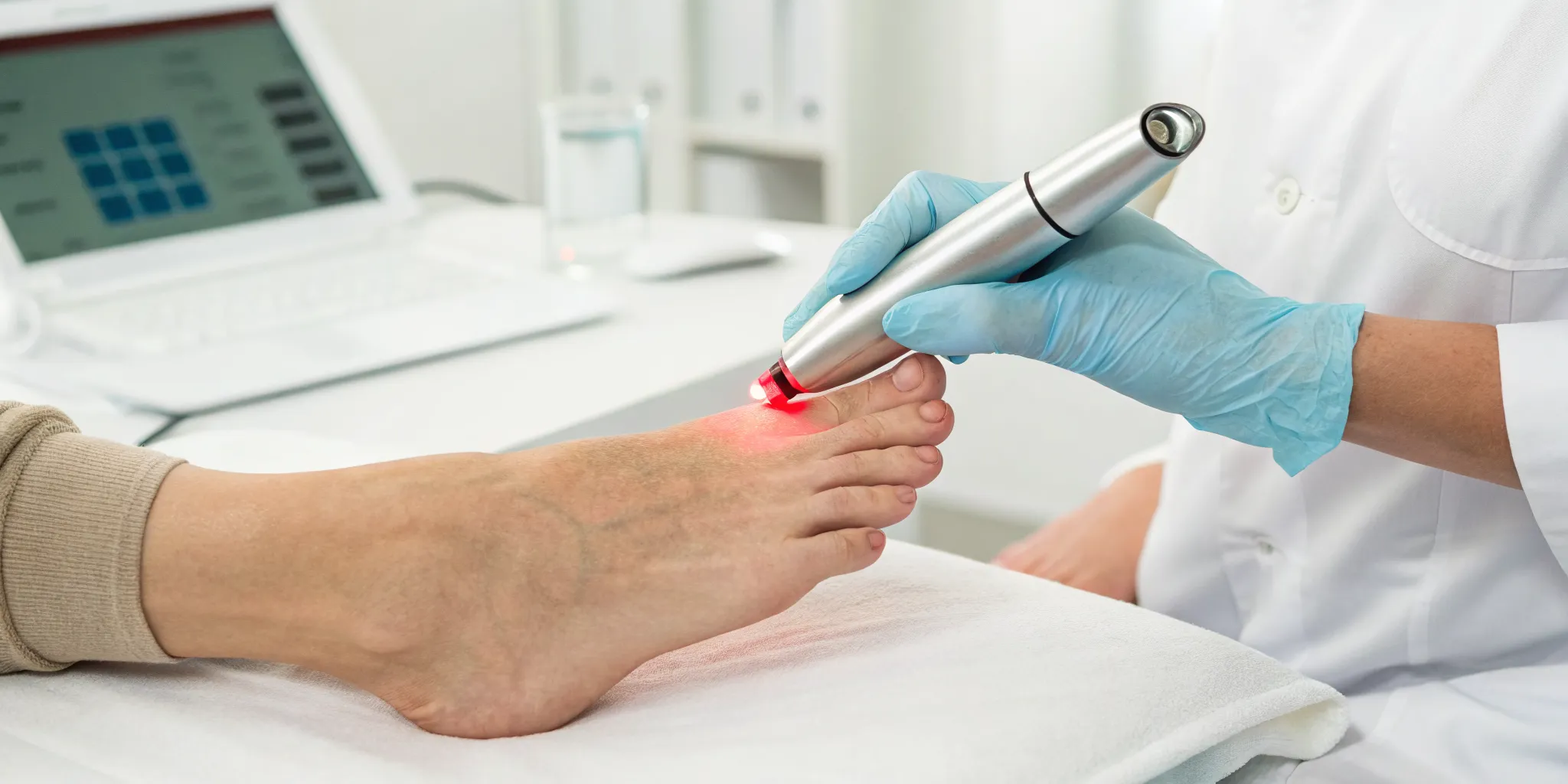
We use treatments like Class IV Laser Therapy to target the pain and inflammation associated with bunions, helping your body heal naturally. This is a key part of a comprehensive treatment plan that avoids the large incisions, screws, and plates used in older surgical methods. The goal is to correct the structural issue in your foot, realign the joint, and relieve the pressure causing the bunion in the first place. This approach allows for a much quicker return to your daily life, which is exactly what you need when you have a busy, active schedule to maintain.
The Minimally Invasive Approach to Bunion Treatment
A minimally invasive approach to bunion treatment is all about precision and preserving healthy tissue. Unlike traditional surgery that requires a long incision over the top of your foot, this method uses very small entry points. Through these tiny openings, specialized instruments are used to carefully cut and realign the bone, correcting the deformity at its source. This isn’t just about shaving down the bump; it’s about fixing the underlying alignment issue that caused the bunion to form. Because the procedure is so much less traumatic to the foot, there is significantly less scarring, swelling, and post-procedure pain.
Faster Recovery for Active Lifestyles
For athletes and anyone with an active lifestyle, the biggest concern with any procedure is downtime. This is where a minimally invasive approach truly shines. Because there’s less damage to the surrounding muscles and soft tissues, your body can heal much faster. Many of our patients are able to walk immediately after the procedure. This means you can get back to your routine, your training, and your life with minimal interruption. The faster recovery, combined with less pain and discomfort, makes it a preferred choice for people who can’t afford to be sidelined. You can see what our patients have to say about their experiences and quick return to activity.
How Much Does Laser Bunion Removal Cost?
Let’s talk about one of the biggest questions on your mind: the cost. When you’re dealing with foot pain, the last thing you want is financial stress. While there isn’t a single price tag for laser bunion removal, understanding the factors that shape the cost can help you plan. Unlike traditional surgery, which often comes with a bundle of separate charges for the hospital, anesthesiologist, and surgeon, a minimally invasive approach is often more straightforward. You’re investing in a treatment plan designed to get you back to your life faster, which can mean less time off work and fewer hidden expenses.
The total investment in your treatment depends on your specific needs, the complexity of your bunion, and your overall treatment plan. The goal is to find a solution that not only fits your budget but also aligns with your active lifestyle. For athletes and active individuals, the value of a quick, non-surgical recovery can’t be overstated. Getting back on your feet immediately and avoiding a lengthy, painful healing process is a huge part of the equation. The best first step is always a direct conversation with a specialist who can give you a clear, personalized estimate based on a thorough examination of your foot. This ensures you know exactly what to expect before making any decisions.
Breaking Down the Average Price
When you start researching costs, you’ll often find figures for traditional bunion surgery, which can range from $5,000 to over $7,000 per foot. While this provides a general benchmark, it’s important to remember that laser bunion removal is a different procedure. The price for a minimally invasive treatment reflects the advanced technology used and the specialist’s expertise. It also accounts for the entire treatment plan, which may include a series of sessions. To get an accurate number for your specific situation, a consultation is essential. This allows the doctor to assess your bunion and create a treatment plan tailored just for you.
How Location Affects the Cost
Just like the price of housing or gas, healthcare costs can vary quite a bit depending on where you live. Major metropolitan areas often have higher overhead costs, which can influence the price of medical procedures. For example, treatment costs in the Chicago suburbs might differ from those in a smaller town. The type of facility also plays a role; a specialized private clinic has a different cost structure than a large hospital. We are proud to serve communities like Schaumburg, Palatine, and Arlington Heights. The most reliable way to understand the cost in your area is to get a personalized quote directly from our office.
What Factors Influence the Price of Laser Bunion Removal?
When you start looking into laser bunion removal, you’ll find that the cost isn’t a one-size-fits-all number. Several important factors come together to determine the final price of your treatment plan. Understanding these variables can help you get a clearer picture of the investment you’re making in your foot health and your return to an active life. From the specialist you choose to the specifics of your condition, each element plays a role in the total cost.
Your Surgeon’s Expertise and Facility
The experience of your specialist is a major factor in the cost. A highly skilled surgeon with years of specialized training in advanced, minimally invasive techniques will naturally have a different price point than a general practitioner. You’re paying for their expertise, precision, and a proven track record of successful outcomes. The quality of the facility also matters. A clinic equipped with the latest laser technology and a comfortable, professional environment contributes to the overall cost, but it also ensures you receive the highest standard of care from a trusted doctor.
How Bunion Severity Impacts Cost
Just as no two people are exactly alike, no two bunions are either. The severity and complexity of your specific bunion will directly influence the price of treatment. A smaller, less developed bunion that can be corrected with a straightforward procedure will generally cost less than a more severe case that requires a more intricate approach. During your consultation, your specialist will assess the angle of your toe, the size of the bump, and any related issues to create a personalized treatment plan, which will then determine the final cost.
Adding Regenerative Therapies to Your Treatment
To support a faster and more complete recovery, your specialist might recommend adding regenerative therapies to your treatment plan. Options like Class IV Laser Therapy or Shock Wave Therapy can help reduce inflammation and accelerate your body’s natural healing process. While including these advanced treatments will affect the total price, they are an investment in your recovery. For athletes and active individuals, this can mean getting back on your feet and returning to your favorite activities much sooner than with the procedure alone, making it a valuable addition to your care.
Will Insurance Cover Laser Bunion Removal?
This is one of the most common and important questions we hear from patients. The short answer is: it depends. Insurance coverage for any bunion treatment, including laser therapy, hinges on whether the procedure is considered a medical necessity. If your bunion causes pain, limits your mobility, or prevents you from participating in daily activities, your insurance provider is much more likely to cover a portion of the cost.
The world of insurance can be tricky, but you don’t have to figure it out alone. Our team has extensive experience working with different insurance providers and can help you understand your benefits. We can assist with the pre-authorization process and provide the necessary documentation to demonstrate that your treatment is essential for your health and quality of life.
The first step is a thorough consultation with Dr. Hyderi, where he will assess your condition and document the medical reasons for treatment. From there, we can help you determine your specific coverage and outline any potential out-of-pocket costs, so you can make an informed decision about your health.
Medical Necessity vs. Cosmetic Procedure
When an insurance company reviews a claim for bunion treatment, they look for one key thing: medical necessity. This means you are seeking treatment because the bunion is causing you physical problems. This could include chronic pain, difficulty walking, or interference with your ability to wear proper footwear. For our athletic patients, this often means a bunion is keeping them from running, training, or playing their sport.
If the primary reason for wanting a bunion removed is simply because you don’t like how it looks, insurance will likely classify it as a cosmetic procedure. As a general rule, health insurance plans do not cover treatments performed for purely aesthetic reasons. Fortunately, most people who seek treatment are doing so to find relief from pain and get back to their active lives.
Planning for Out-of-Pocket Expenses
Even when your procedure is deemed medically necessary, it’s wise to plan for some out-of-pocket expenses. Most insurance plans have a deductible, which is the amount you pay before your coverage begins. You may also be responsible for a co-payment or co-insurance, which is a percentage of the total cost.
The exact amount you’ll pay depends entirely on your specific insurance plan. We believe in full transparency, so we work with you to provide a clear and detailed estimate of your costs before any treatment begins. Our goal is to help you get the relief you need without any financial surprises. To get a better understanding of your specific situation and explore payment options, feel free to contact our office to schedule a consultation.
What Can You Expect from the Procedure?
Knowing what happens from start to finish can make the entire treatment process feel much more manageable. Our goal is to provide a smooth, comfortable experience that gets you back to your life without the long, frustrating downtime of traditional surgery. The entire journey is designed to be straightforward, focusing on effective relief that fits your active lifestyle. Here’s a step-by-step look at what the process involves.
Your Consultation and How to Prepare
It all starts with a one-on-one consultation to talk about your symptoms, activity level, and what you hope to achieve. This is your chance to meet with our doctor, get an accurate diagnosis, and create a treatment plan that’s tailored specifically to you. We encourage you to bring any questions you have. Once we’ve decided on the best approach, our office staff will contact your insurance provider to determine your coverage. We’ll then provide you with a clear, detailed quote, so you have a full understanding of the cost before moving forward.
What Happens During the Treatment
Unlike traditional surgery that requires incisions and hardware, our regenerative treatments are completely non-invasive. During your appointment, we use advanced options like Class IV Laser Therapy to address the source of your bunion pain. This technology delivers light energy deep into the tissue to reduce inflammation, relieve pain, and kickstart your body’s own healing abilities. The entire procedure is performed right in our office, and you can relax comfortably while the therapy works. There are no scalpels or stitches, just a gentle and effective path to healing. You can explore all of our regenerative services to learn more about our approach.
Your Recovery Timeline and Return to Activity
This is where our non-invasive approach really shines. Because there are no incisions, the recovery is incredibly fast. Most patients walk out of the office immediately after their procedure and can get back to their daily routines right away. You won’t need to deal with crutches, special boots, or weeks of being immobilized. For athletes and anyone with an active lifestyle, this means returning to your training and activities with almost no interruption. This quick recovery also helps you avoid the hidden costs of traditional surgery, like taking time off from work. You can read about the experiences of other patients in their testimonials.
Laser Bunion Removal vs. Traditional Surgery: A Cost Comparison
When you’re dealing with bunion pain, the price of relief is a major factor in your decision. On the surface, comparing the cost of laser bunion removal to traditional surgery seems straightforward, but the numbers don’t always tell the whole story. Traditional surgery might have a clearer path with insurance, but it often comes with other expenses that aren’t on the initial bill. Laser therapy, on the other hand, presents a different kind of value, especially for those of us who can’t afford to be sidelined by a long recovery. Let’s break down the real financial picture of both options.
Comparing the Total Financial Investment
The average cost of bunion surgery in the US can range from $3,500 to over $12,000. The final price tag depends on the type of procedure, the facility, and your insurance plan. With good insurance, many patients find their out-of-pocket cost is closer to $2,000.
Laser bunion removal is priced differently. Since it’s a non-invasive therapy, the cost is typically based on the number of sessions you need, which is determined by the severity of your bunion. While it may not always be covered by insurance in the same way as surgery, it’s important to weigh this initial investment against the total cost of a surgical procedure, which includes more than just the operation itself.
Uncovering Hidden Costs and Long-Term Value
Traditional bunion surgery often involves significant hidden costs. Think about the weeks or even months of missed work during recovery. For an active person, this also means lost time at the gym or training for your sport. There’s also the strain on family or friends who may need to help you get around while you’re immobilized. These factors represent a real financial and personal toll.
This is where minimally invasive treatments like laser therapy truly shine. As one surgery center notes, this approach helps you avoid these hidden costs completely because you can walk out of the office and get back to your life immediately. There’s no extended downtime, no need to miss work, and no long-term reliance on others. The long-term value is clear: you’re investing in a solution that gets you back on your feet faster.
What Questions Should You Ask About the Cost?
Talking about money can feel a little awkward, but when it comes to your health, clarity is everything. Understanding the full financial picture of your bunion treatment helps you plan effectively and move forward with confidence. Think of this as part of your preparation. Just as you’d prepare for the recovery process, you should also prepare for the financial side. A good specialist will be transparent about pricing, and their team should be ready to walk you through every line item.
Feeling prepared is half the battle. Before you commit to a treatment plan, you should have a firm grasp of the total investment required. This includes the procedure itself, any additional therapies, and follow-up care. Don’t hesitate to ask direct questions until you feel completely comfortable with the answers. If you’re ready to start that conversation, you can always get in touch with our team to get the specific details you need for your situation. Being proactive now will prevent surprises later and let you focus on what truly matters: getting back on your feet, pain-free.
How to Get a Clear Price Estimate
To get an accurate picture of the cost, ask the clinic for a detailed, itemized estimate. This document should break down every charge associated with your laser bunion removal. Ask specifically what the main fee covers. Does it include your initial consultation, the procedure itself, and all follow-up appointments?
You should also inquire about any separate fees. For example, anesthesia services are often billed separately and can add a significant amount to your total. By understanding the value of a faster recovery from regenerative treatments, you can better weigh the costs against the long-term benefits, like less time off work and a quicker return to your favorite activities.
Exploring Your Payment and Financing Options
Don’t let the initial numbers intimidate you. Many clinics are committed to making treatment accessible. Start by asking the office staff how they handle insurance. While procedures done for purely cosmetic reasons are rarely covered, bunion treatment that is deemed medically necessary often is. The administrative team can help you understand your benefits and what your potential out-of-pocket expenses might be.
If you need more flexibility, ask about payment plans or financing options. Many specialists partner with medical credit companies or offer in-house plans to spread the cost over time. The goal is to find a solution that fits your budget so you can get the relief you need without financial strain. The best way to understand all your options is to discuss your specific situation during a consultation.
How to Choose the Right Specialist for Your Bunion Treatment
Finding the right person to trust with your feet is a big deal, especially when you’re eager to get back to your active lifestyle. The specialist you choose not only performs the treatment but also guides your recovery. It’s about finding a partner who understands your goals and has the expertise to help you achieve them with the most advanced, least invasive methods available. A great specialist will take the time to discuss all your options, from the procedure itself to complementary therapies that can accelerate your healing.
What to Look For in a Specialist
When you start your search, look for a dedicated foot and ankle specialist, or podiatrist. They have the specific training to accurately diagnose your bunion and determine the best path forward. During your consultation, ask about their experience with minimally invasive techniques and treating athletic patients. You want a doctor who gets that your main goal is a quick and effective recovery. It’s also smart to get a handle on the financial side early on. Before committing to a procedure, ask the office staff to help you understand your insurance benefits, including any copays or deductibles, so there are no surprises down the road.
Exploring Other Regenerative Therapy Options
A forward-thinking specialist will often recommend a treatment plan that goes beyond just the primary procedure. Ask your doctor about incorporating regenerative therapies that can manage pain and speed up your recovery. For instance, Class IV Laser Therapy is excellent for reducing the pain and inflammation in the ligaments and soft tissues around the joint, which is often a major source of bunion discomfort. Other treatments like Shock Wave Therapy can also support the body’s natural healing process. Combining these therapies with your bunion treatment can make a significant difference in how quickly you get back on your feet and back to the activities you love.
Related Articles
- Minimal incision Tailor’s Bunion without any internal hardware. Faster healing with Regenerative Medical Therapy
- No incision Bunion surgery with regenerative medical therapy: Laser therapy, Stem cell injection
- Do not be a Victim to the Hardware Doctor doing Bunions
Frequently Asked Questions
So, does a laser actually remove the bunion? That’s a great question, and it gets to the heart of a common misunderstanding. A laser isn’t used to cut or vaporize the bone itself. Instead, we use advanced tools like Class IV Laser Therapy to treat the pain and inflammation in the soft tissues surrounding the bunion. This therapy is a key part of a larger, non-invasive plan that corrects the foot’s alignment and addresses the root cause of the problem without the need for traditional cutting.
What makes this approach better for an active person than traditional surgery? For anyone with an active lifestyle, the biggest advantage is the minimal downtime. Traditional surgery involves large incisions, screws, and a long, often painful recovery that keeps you off your feet for weeks. Our regenerative and minimally invasive methods avoid all that. Because we preserve healthy tissue and don’t use hardware, there is significantly less trauma to your foot, which means a much faster and more comfortable healing process so you can get back to your routine almost immediately.
Will I really be able to walk immediately after the procedure? Yes, you will. Since our treatments are non-invasive and don’t involve the surgical trauma of breaking and resetting bones with hardware, you can walk out of our office right after your appointment. You won’t need crutches or a restrictive boot. This immediate return to mobility is one of the most significant benefits for our patients, especially those who can’t afford to be sidelined from work, training, or their daily lives.
My bunion causes a lot of pain. Will insurance see this as a medical necessity? Pain and the inability to perform daily activities are the primary criteria insurance companies use to determine medical necessity. If your bunion is preventing you from walking comfortably, wearing proper shoes, or participating in your sport, the treatment is almost always considered essential for your health, not cosmetic. Our team can help you with the pre-authorization process to ensure your insurance provider has all the documentation they need.
Are regenerative therapies like laser therapy a permanent fix for my bunion? Regenerative therapies are incredibly effective at managing the pain and inflammation associated with bunions and accelerating your body’s natural healing abilities. They are part of a comprehensive treatment plan designed to correct the underlying structural issue that caused the bunion to form in the first place. The goal is to provide long-term relief and restore proper foot function, allowing you to return to your activities without pain.