



For an active person, being sidelined by an injury is frustrating. But when that injury is a non-healing diabetic foot ulcer, the frustration is mixed with serious concern. The thought of invasive surgery and a long, painful recovery can feel like a massive setback, keeping you from your sport, your workouts, and your daily life. There is another path forward. Modern regenerative medicine offers powerful, non-surgical solutions designed for rapid recovery. This guide explores laser therapy for diabetic foot ulcers, a non-invasive treatment that uses targeted light energy to reduce inflammation, improve circulation, and accelerate tissue repair, helping you heal faster and get back on your feet without the downtime.
Key Takeaways
- Laser therapy addresses the root cause of slow healing: This treatment uses targeted light energy to stimulate your cells, helping them reduce inflammation and improve circulation so your body can repair the wound naturally.
- Treatment is quick, comfortable, and has no downtime: Laser therapy sessions are non-invasive and pain-free, allowing you to walk out and continue your day immediately after your appointment without a lengthy recovery.
- A personalized plan is essential for the best results: Laser therapy is most effective when tailored to your specific needs, often as part of a comprehensive strategy that may include other regenerative treatments to ensure a full recovery.
What Is a Diabetic Foot Ulcer?
If you have diabetes, you know that taking care of your feet is a top priority. A diabetic foot ulcer is an open sore or wound that can develop on the foot, and it’s one of the most common and serious complications of the condition. Unlike a typical blister or cut that heals in a few days, these ulcers can stick around for weeks or even months. They often appear on the bottom of the foot and can start from something as simple as a small scrape or pressure from a shoe that doesn’t fit quite right.
These long-lasting sores are more than just an inconvenience; they can be difficult to treat and significantly impact your quality of life, keeping you from the activities you love. Because they can be hard to heal with standard methods, they pose a real risk if not addressed properly. Understanding what causes these ulcers and why they are so stubborn is the first step toward finding an effective treatment plan that gets you back on your feet, safely and quickly. That’s why exploring advanced, non-invasive options is so important for anyone dealing with a persistent foot wound.
Why Won’t It Heal?
The main reason diabetic foot ulcers are so difficult to heal is linked directly to blood sugar levels. When diabetes isn’t well-managed and blood sugar remains high, the body’s natural healing abilities are compromised. High glucose levels can damage nerves (neuropathy), leading to a loss of feeling in your feet. You might not even notice a small cut or blister until it has become a much bigger problem.
On top of that, poor circulation, another common issue with diabetes, means less oxygen-rich blood can reach the wound. Your cells need that oxygen and other nutrients to repair tissue, fight infection, and close the sore. Without a healthy blood supply, wounds heal much more slowly or may not heal at all, leaving you with a chronic ulcer that just won’t go away.
The Risks of Ignoring a Foot Ulcer
Ignoring a diabetic foot ulcer is not an option. Because the wound remains open, it becomes a gateway for bacteria, leading to serious infections that can spread to the surrounding tissue and even into the bone. These infections are difficult to treat and are the primary reason that diabetic foot ulcers are a leading cause of hospitalizations.
The most frightening risk is amputation. When an infection becomes uncontrollable or tissue damage is too severe, removing part of the foot or leg may be the only way to stop it from spreading. Studies show that severe infections can require amputation in a significant number of cases. This is why proactive and aggressive treatment is critical. Seeking out advanced regenerative therapies can help you avoid these worst-case scenarios and promote natural healing without invasive procedures.
How Can Laser Therapy Help Diabetic Foot Ulcers?
When you have a diabetic foot ulcer, the body’s natural healing process is struggling. The goal of any effective treatment is to give your body the support it needs to repair itself. Laser therapy does exactly that by using specific wavelengths of light to stimulate healing at a cellular level. Think of it as giving your cells a much-needed energy drink so they can get back to the work of closing the wound.
This approach is non-invasive, meaning there are no incisions or injections involved. It’s a gentle way to address a serious problem, working with your body’s own systems to reduce inflammation, fight bacteria, and rebuild tissue. By getting to the root of the healing problem, laser therapy can help you get back on your feet faster and avoid more complicated issues down the road.
LLLT vs. Class IV Laser Therapy
You might hear about a few different types of laser therapy. One common type is Low-Level Laser Therapy (LLLT), sometimes called “soft” or “cold” laser. Research on LLLT shows it’s a treatment that uses light energy to help body cells heal and is known for being painless with few side effects. It’s a great concept, but technology has advanced. Our clinic uses Class IV Laser Therapy, which is a more powerful and effective version.
While LLLT is effective, a Class IV laser can deliver more energy to a larger area and penetrate deeper into the tissue. This means it can stimulate a more significant healing response in less time. It’s designed to provide the therapeutic benefits of light energy more efficiently, making it an excellent option for stubborn wounds like diabetic foot ulcers that need a stronger push to heal.
What Happens Inside Your Cells
So, what is the light from the laser actually doing? It’s creating a chain reaction inside your cells. The light energy is absorbed by the mitochondria, which are like the tiny power plants in each cell. This absorption prompts the mitochondria to produce more ATP (adenosine triphosphate), the molecule that carries energy for all cellular functions. With more energy, your cells can perform their repair jobs more effectively.
This surge in cellular energy leads to several key benefits for wound healing. Research shows that laser therapy helps by “encouraging cell growth, improving blood flow, and reducing swelling and bacteria.” Essentially, it gives your cells the fuel they need to multiply, build new tissue, and clean up the wound site. This is a core part of our regenerative services and a reason it works so well for non-healing ulcers.
How Lasers Encourage Healing
The boost in cellular energy translates directly to faster, more effective healing. When your cells are working at their best, they can rebuild the complex structures needed to close a wound. Studies explain that lasers can “change how cells work and grow,” helping them become more active and efficient. This isn’t just about speeding things up; it’s about improving the quality of the healing process.
This therapy encourages your cells to produce more collagen, the protein that forms the foundation of new skin. It also helps cells move to the area where they are needed most. As Dr. Singh can explain, the entire process happens without causing any heat damage to the surrounding tissue. The laser simply provides the right kind of light to switch on your body’s own powerful healing mechanisms, helping the wound close from the inside out.
Does Laser Therapy Actually Work? A Look at the Science
When you’re dealing with a persistent wound, you want to know that any treatment you choose is backed by real results. It’s smart to ask questions and look at the evidence. While laser therapy is an innovative approach, it’s not just a futuristic idea; there’s a growing body of science that shows how effective it can be for healing stubborn wounds like diabetic foot ulcers. Let’s break down what the research says about how this technology works and what kind of results you can expect.
Does It Help Wounds Close Faster?
The big question for anyone with a non-healing wound is: will this finally help it close? When it comes to laser therapy, the evidence is very encouraging. Several human studies suggest that low-level laser therapy (LLLT) can significantly speed up the healing process for diabetic foot ulcers. It works by improving blood flow to the skin and stimulating the cells responsible for tissue repair. In some studies, patients who received laser therapy saw much better healing rates compared to those who didn’t. This means you could get back on your feet and back to your life sooner.
Can It Reduce the Size of an Ulcer?
Beyond just speeding up the process, laser therapy has been shown to actively reduce the size of ulcers. The numbers here are pretty compelling. One study found that an incredible 58% of ulcers healed completely with laser therapy, while only one ulcer healed in the group that didn’t receive the treatment. Another clinical review showed that laser therapy reduced ulcer size by 58% in just two weeks. For comparison, the group that didn’t get laser therapy only saw a 23.5% reduction in the same timeframe. This shows that the treatment doesn’t just help; it makes a dramatic and measurable difference.
How Does It Compare to Standard Care?
So, why consider laser therapy when other treatments exist? It’s considered a promising treatment option because it’s minimally invasive, easy to perform, and has very few side effects. This is especially helpful for patients whose diabetes may not be well-controlled, making healing even more challenging. Unlike surgical options, there are no incisions or hardware involved. Instead of just managing the wound, laser therapy actively supports your body’s own healing mechanisms. It’s a gentle yet powerful way to address the problem at a cellular level, making it an excellent addition or alternative to standard care protocols.
What We Still Need to Learn
It’s also important to be transparent about the state of the research. While early results are very positive, the scientific community agrees that more large-scale studies are needed before laser therapy becomes a universal standard of care for diabetic foot ulcers. Some of the existing studies have limitations, like small patient groups or different methods for measuring results. However, this doesn’t take away from the powerful outcomes we’ve seen. It just means that as a patient, it’s crucial to work with a specialist like Dr. Singh who understands the nuances of the therapy and can create a personalized plan for your specific needs.
What Are the Benefits of Laser Therapy?
When you’re dealing with a persistent wound like a diabetic foot ulcer, you want a treatment that’s not only effective but also fits into your life. Laser therapy offers several key advantages that make it an appealing option, especially for those looking to avoid surgery and lengthy recovery periods. It’s a modern approach that supports your body’s healing from the inside out.
A Non-Invasive Treatment with No Downtime
One of the biggest draws of laser therapy is that it’s completely non-invasive. There are no incisions, no hardware, and no need for a long, drawn-out recovery. You can walk in, have your treatment, and walk right back out. For anyone with an active lifestyle, this is a game-changer. You don’t have to put your life on hold to get the care you need. These types of regenerative medical therapies are designed to work with your body’s natural healing processes without the disruption of traditional surgery, making it a straightforward addition to your care plan. It’s a simple, in-office procedure that respects your time and your body.
Less Inflammation and Better Circulation
Diabetic foot ulcers often struggle to heal because of poor circulation and chronic inflammation. Laser therapy directly addresses these issues at a cellular level. The light energy from the laser helps stimulate your cells, encouraging new tissue growth. At the same time, it works to reduce swelling and inflammation in the surrounding area. Research shows that this process is key to improving blood flow to the wound, which delivers the oxygen and nutrients your body needs to repair itself. By creating a better healing environment, the laser gives your body the support it needs to finally close the wound.
Natural Pain Relief
Living with a foot ulcer can be painful, and the thought of a painful treatment is the last thing you want. Fortunately, laser therapy is a pain-free experience. Most people report feeling a gentle, soothing warmth during the session, but that’s it. This treatment also provides natural pain relief by reducing inflammation and calming irritated nerve endings. It’s an effective way to manage discomfort without relying on medication. Hearing about positive patient experiences can be reassuring, as many find the sessions to be a relaxing and comfortable part of their healing journey. This focus on gentle care makes the process much less intimidating.
A Safe and Gentle Option
When considering any medical treatment, safety is always a top priority. Laser therapy has an excellent safety profile with very few side effects, making it a gentle option for sensitive tissues. The procedure is carefully controlled, and the specific wavelengths of light used are chosen to stimulate healing without damaging the surrounding skin. Because it is minimally invasive and doesn’t cause pain, it’s considered a very low-risk procedure. You can feel confident knowing you are in the hands of an expert like Dr. Singh, who will ensure your treatment is tailored to your specific needs for the safest and most effective outcome.
Are There Any Risks or Downsides?
It’s smart to look at any treatment from all angles, and laser therapy is no exception. While it has an excellent safety record, especially compared to more invasive options, it’s important to have a clear picture before you decide if it’s right for you. The good news is that the downsides are minimal and often depend on your specific situation. Understanding the potential risks helps you and your doctor make the best possible plan for your healing.
Potential Side Effects
One of the biggest benefits of Class IV laser therapy is that it’s non-invasive, which means the risk of side effects is very low. Unlike surgery, there are no incisions, so the complications that come with cutting the skin are off the table.
While all medical treatments carry some theoretical risks, issues with laser therapy are rare. Some people report a gentle warming sensation during treatment, but it’s not painful. In fact, most patients find it quite soothing. Since a diabetic foot ulcer is an open wound, preventing infection is always a top priority, and our clinical team takes every precaution to ensure the treatment area remains sterile. When performed by a trained specialist, laser therapy is one of the safest options available for encouraging wound healing.
Why Results Can Vary
Just as every person is unique, so is their healing process. While many patients see fantastic results with laser therapy, outcomes can vary. Factors like your overall health, circulation, nutrition, and how long you’ve had the ulcer can all influence how quickly you heal. The size and depth of the ulcer also play a significant role.
It’s also worth noting that because laser therapy is an advanced and evolving field, the body of high-quality research is still growing. Some studies use different types of lasers or unclear methods, which can lead to mixed results. This is why it’s so important to work with a specialist who uses state-of-the-art equipment, like a Class IV laser, and has a deep understanding of the precise protocols that get the best outcomes.
Who Isn’t a Good Candidate?
Most people struggling with a non-healing diabetic foot ulcer are great candidates for laser therapy. However, a thorough evaluation is necessary to be sure. The most important factor for healing is managing your overall health, particularly your blood sugar levels.
That said, even patients with challenging health situations may benefit. In fact, there is a growing need for alternative treatments that can help in complex cases where traditional methods fall short. Laser therapy can be a powerful tool to support the body’s healing processes, even when conditions aren’t perfect. The only way to know for certain if laser therapy is right for you is to have a one-on-one consultation. A specialist can assess your ulcer, review your health history, and determine the best path forward for your specific needs.
What Is a Laser Therapy Session Like?
If you’re considering laser therapy, you might be picturing an intense, complicated procedure. The reality is much simpler and more comfortable. A laser therapy session is a non-invasive treatment designed to work with your body, not against it. The goal is to use targeted light energy to stimulate your body’s natural healing processes at a cellular level, all without incisions or downtime.
When you come to our clinic, you can expect a calm, private, and personalized experience. Dr. Singh handles every consultation and treatment himself, ensuring your care is tailored specifically to you. The entire process is straightforward, and most patients find it to be a relaxing and painless part of their recovery plan.
Your Step-by-Step Treatment
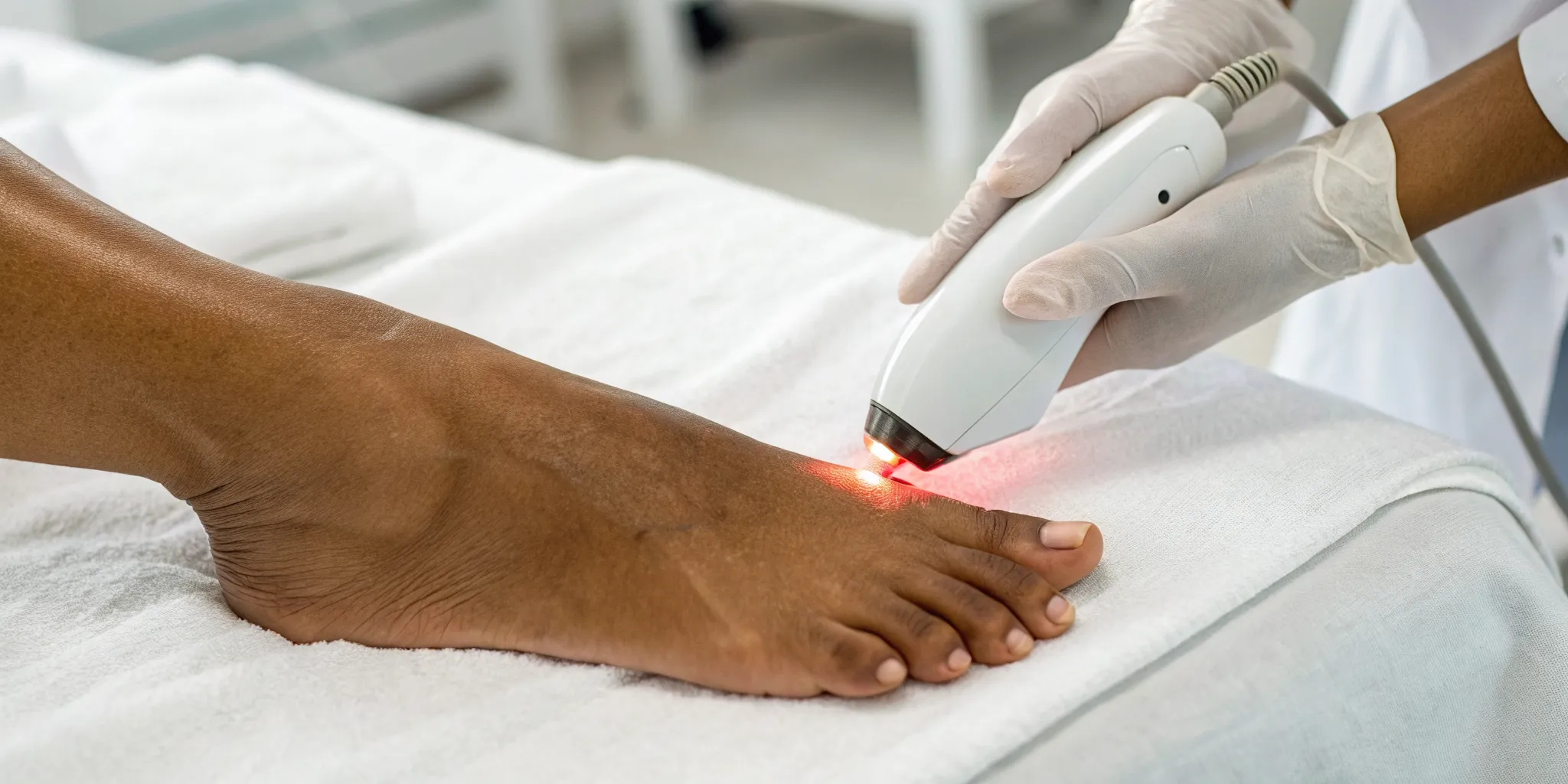
Walking into your appointment, you can leave any worries at the door. Each session is quick and gentle. First, we’ll carefully clean the ulcer and the surrounding area to prepare it for treatment. Then, Dr. Singh will use a handheld device to apply the laser energy directly over the wound. You won’t feel any pain, though some patients report a mild, soothing warmth on their skin.
The treatment itself usually only takes a few minutes. The light energy penetrates your skin to reach the damaged tissues underneath, where it helps promote healing from the inside out. Once the session is over, you can get right back to your day with no recovery time needed.
How Many Sessions Will You Need?
Since every patient and every ulcer is unique, your treatment plan will be, too. Generally, patients see the best results with a series of treatments. Most people require between 6 and 12 sessions to achieve significant improvement, but this can vary based on the size and severity of your ulcer and how your body responds.
To keep the healing process moving forward, we often schedule sessions two to three times per week. This consistent approach helps maximize healing and gives your cells the steady support they need to repair the damage. During your initial consultation, Dr. Singh will assess your condition and outline a clear treatment schedule that makes sense for you.
How Your Treatment Is Customized
There is no one-size-fits-all solution for foot health, which is why your laser therapy plan is built around you. Your treatment is customizable based on individual needs, especially for patients managing other health conditions. Dr. Singh will adjust the laser’s settings and the frequency of your sessions to give you the most effective and efficient care possible.
This personalized approach is at the heart of everything we do. We focus on regenerative therapies that are both effective and gentle on your body. By tailoring the treatment, we can address your specific concerns and support your healing journey in a way that feels right for you. If you have any questions, we’re here to answer them every step of the way.
Can You Combine Laser Therapy with Other Treatments?
While laser therapy is a powerful tool on its own, it often works best as part of a team. Think of it as the star player in a comprehensive game plan designed to heal your diabetic foot ulcer. Combining it with other advanced, non-invasive treatments can create a synergistic effect, where each therapy enhances the others. This multi-faceted strategy addresses the complex nature of non-healing wounds from several angles, giving your body the support it needs to repair and regenerate tissue effectively. At our clinic, we customize your treatment plan, often layering different regenerative therapies to achieve the fastest and most complete recovery possible.
Adding Shockwave Therapy
Pairing laser therapy with shockwave therapy can be a game-changer for stubborn foot ulcers. While laser therapy is excellent for reducing inflammation and improving cellular energy, shockwave therapy adds another layer of healing power. It uses acoustic waves to stimulate blood vessel formation and tissue regeneration deep within the wound. Studies show that using both low-level laser therapy and extracorporeal shockwave therapy (ESWT) together can significantly speed up wound closure compared to using either one alone. This combination tackles healing from two different but complementary directions, creating an ideal environment for your body to repair itself without invasive procedures.
Using Stem Cells and Peptides
Regenerative treatments like stem cells and peptides are at the forefront of modern medicine, and laser therapy can make them even more effective. When we introduce stem cells or specific peptides to a wound, their job is to orchestrate the repair process. Laser therapy acts like a catalyst, preparing the wound bed and energizing the surrounding cells. Research suggests that the light from the laser can enhance the effectiveness of stem cell therapy by encouraging the new cells to multiply and migrate to where they are needed most. This combination helps ensure these powerful regenerative materials can do their best work, leading to more robust and faster tissue repair.
Complementing with Red Light Therapy
You might also hear about red light therapy, which is a specific type of low-level light therapy that works beautifully alongside Class IV laser treatments. While our powerful Class IV laser penetrates deep into the tissue to address inflammation and circulation, red light therapy works more superficially. It’s particularly good at stimulating collagen production and improving the metabolic function of skin cells. This form of photobiomodulation helps rebuild the skin’s structure from the outside in while the deeper-acting laser works from the inside out. Using both gives you a comprehensive light-based treatment that supports every layer of the healing process.
Why a Multi-Faceted Approach Works Best
A diabetic foot ulcer isn’t a simple problem, so it rarely has a simple solution. The reason these wounds struggle to heal involves poor circulation, persistent inflammation, and a breakdown in the body’s natural repair signals. A single treatment might only address one of these issues. However, a comprehensive management of diabetic foot ulcers that combines laser therapy with other modalities like shockwave, stem cells, or red light therapy can tackle all these problems at once. This integrated approach creates a powerful healing environment that reduces inflammation, improves blood flow, and provides the building blocks for new tissue, giving you the best possible chance for a full and lasting recovery.
Will Insurance Cover Laser Therapy?
The question of insurance coverage for laser therapy is one of the most common we hear, and the answer isn’t always straightforward. It really depends on your specific insurance plan and the reason you’re seeking treatment. While some insurance companies are starting to see the value of laser therapy for certain conditions, many still consider it an emerging or elective treatment, especially for something as specific as diabetic foot ulcers. This often creates a gap between the most advanced care available and what traditional insurance plans are willing to cover.
Our clinic operates on a concierge model, which means we focus on providing cutting-edge regenerative therapies that prioritize your long-term health and quick recovery. This approach sometimes means working outside the rigid constraints of insurance networks. We believe your care shouldn’t be dictated by a third party. Instead, you are investing directly in a treatment plan tailored specifically for you by Dr. Singh. This allows us to use the best technology and provide the focused attention you deserve. Understanding how insurance views these treatments is the first step in making an informed decision about your health.
When You Might Be Covered
There is some good news. A growing number of insurance companies are starting to cover laser therapy, particularly for conditions involving chronic pain and inflammation. Some Medicare and Medicare Advantage plans, for example, may offer coverage for laser treatments aimed at reducing pain and swelling. In specific situations, like a work-related injury covered by workers’ compensation, you might also find that your plan will pay for laser therapy, though this usually requires special approval beforehand. This shows that the medical community’s acceptance of laser therapy is growing, but it’s happening slowly.
Why It’s Often Not Covered
On the other hand, many insurance plans still classify laser therapy as “investigational” or “not medically necessary” for treating diabetic foot ulcers. Insurers are often slow to adopt new technologies, and they may point to the potential for side effects, however rare, as a reason for caution. An evaluation of laser therapy’s effects notes that complications can occur, which makes some providers hesitant. Because our goal is to offer the most effective and advanced treatments available, we often recommend therapies that haven’t yet been added to standard insurance protocols.
Understanding Out-of-Pocket Costs
Because insurance coverage can be unpredictable, it’s wise to prepare for out-of-pocket costs. We believe in being transparent about this from the start. Our concierge approach means you are investing in personalized, one-on-one care from Dr. Singh, with a treatment plan designed for your unique needs. This model allows us to use the best technology and techniques for your recovery without being limited by an insurance company’s policies. If you have questions about treatment costs or payment options, we encourage you to contact our office directly.
Questions to Ask Your Provider
To get a clear answer about your specific situation, the best thing you can do is call your insurance company directly. Don’t just ask if “laser therapy” is covered; be as specific as possible. Here are a few questions to guide your conversation:
- Is Class IV laser therapy covered for the diagnosis of a diabetic foot ulcer?
- Do I need pre-authorization from my primary care doctor or a specialist?
- If it is covered, what is my deductible, co-pay, or coinsurance amount?
- Is there a limit on the number of sessions my plan will cover per year?
Is Laser Therapy the Right Choice for You?
Deciding on the best treatment for your foot or ankle pain can feel overwhelming, but you don’t have to make that choice alone. Laser therapy is a powerful tool, especially for persistent issues like diabetic foot ulcers that resist other treatments. It works by stimulating your body’s own healing mechanisms, which is why it’s gaining attention as a non-invasive option.
The potential of this technology is exciting. For example, research on laser therapy for diabetic foot ulcers shows promising results. One case report on wound healing found that patients saw significant improvement in their ulcers after several weeks of treatment, without any negative side effects. This highlights how laser therapy can support cellular repair and improve circulation, even in complex cases.
However, it’s also important to have a realistic perspective. The field of regenerative medicine is always evolving, and while the results are encouraging, the scientific community agrees more research is needed. A critical survey of studies noted that because methods can vary, it’s difficult to establish it as a standard treatment for everyone. This is exactly why a personalized approach is so critical. The effectiveness of laser therapy depends on your specific condition, your health history, and your goals. The only way to know if it’s the right path for you is to have a thorough discussion with a specialist who understands your unique needs.
Related Articles
- Laser Therapy and Healing of Wounds – Comprehensive Foot and Ankle Institute
- Bone healing with the use of our laser therapy – Comprehensive Foot and Ankle Institute
- Laser Therapy and Ingrown Toenails – Comprehensive Foot and Ankle Institute
Frequently Asked Questions
Is the laser treatment painful? Not at all. This is one of the most common questions we get, and I’m happy to report that the treatment is completely pain-free. Most patients describe the sensation as a gentle, soothing warmth over the treatment area. The goal of the therapy is to reduce inflammation and calm irritated tissues, so the experience is designed to be comfortable and relaxing from start to finish.
How soon can I expect to see results from the therapy? While every person’s healing journey is unique, the goal is to see steady improvement throughout your treatment plan. Some patients notice a reduction in pain and inflammation after just a few sessions. For the ulcer itself to show significant signs of healing, it typically requires a consistent series of treatments over several weeks. Dr. Singh will give you a more personalized timeline based on the condition of your ulcer and your overall health.
Why is Class IV laser therapy better than the “cold laser” I’ve heard about? Think of it in terms of power and depth. While “cold lasers” or Low-Level Laser Therapy (LLLT) can be helpful, a Class IV laser is much more powerful. This allows the therapeutic light energy to penetrate deeper into the tissue where the damage is. For a stubborn problem like a diabetic foot ulcer, reaching those deeper layers is crucial for stimulating circulation and cellular repair, which often leads to more significant and faster results.
Can I continue my normal activities during the treatment period? Yes, and that’s one of the biggest benefits of this approach. Because laser therapy is non-invasive and requires no downtime, you can walk out of your appointment and get right back to your day. There’s no need to put your life on hold. We always recommend discussing your specific exercise routine with the doctor, but for most people, continuing with work, errands, and light activity is perfectly fine.
If this treatment is so effective, why isn’t it covered by my insurance? This is a frustrating reality for many patients seeking advanced care. Insurance companies are often very slow to adopt and approve new technologies, even when they have strong evidence of success. They may label it as “investigational” for years. Our clinic operates on a concierge model because we believe in providing the best possible care now, without waiting for insurance policies to catch up. This allows us to create a personalized plan focused entirely on your healing.