



If your doctor has mentioned surgery for a chronic foot or ankle injury, it’s natural to feel hesitant. The thought of incisions, anesthesia, and a long, painful recovery is enough to make anyone look for another option. This is where shock wave therapy offers a completely different path forward. As a non-invasive alternative, it allows you to avoid the operating room entirely. The treatment uses focused sound waves to penetrate deep into damaged tissue, breaking down scar tissue and stimulating your body’s own healing response. It’s an incredibly effective way to resolve chronic conditions and get you back on your feet without the risks and extended downtime associated with a surgical procedure.
Key Takeaways
- Heal without surgery: Shock wave therapy uses acoustic waves to stimulate your body’s own repair functions, helping to regenerate tissue and address the source of your pain for lasting relief.
- Find relief for stubborn injuries: It is particularly effective for chronic conditions, such as plantar fasciitis and Achilles tendonitis, that have not improved with traditional treatments like rest or stretching.
- Get back to your life faster: The treatment is quick, non-invasive, and requires almost no downtime, allowing you to continue with your daily routine while your body heals.
What Is Shock Wave Therapy?
If you’re dealing with a nagging injury that just won’t quit, Shock Wave Therapy might be the solution you’ve been looking for. It’s a non-invasive treatment that uses powerful acoustic waves to target injured areas and stimulate your body’s own healing abilities. You might be surprised to learn it’s been around for a while; it was first used in the 1980s to break up kidney stones. Today, this proven technology is one of the go-to regenerative therapies for muscle, tendon, and bone issues, helping athletes and active people get back on their feet without surgery or medication. It’s a way to work with your body, not against it, to achieve lasting pain relief and recovery.
How It Works to Heal Your Body
So, how can sound waves actually heal an injury? It’s a fascinating process. The targeted sound waves create micro-trauma in the affected tissue, which sounds scarier than it is. This process, sometimes called mechanotransduction, essentially sends a signal that kickstarts your body’s natural repair cycle. It helps your cells regenerate, reduces pain signals, and increases blood flow to the area, delivering more oxygen and nutrients needed for healing. While some people feel pain relief almost immediately, the real magic happens over the next 8 to 12 weeks as your body works to repair the damaged tissue from the inside out.
Exploring the Different Types
Not all shock wave treatments are the same, and the type used depends on your specific injury. The two main forms are Radial Pressure Wave (RPW) and Focused Shockwave (FSW). Think of RPW as best for treating issues closer to the skin’s surface, like certain types of muscle pain. FSW, on the other hand, can send that healing energy deeper into the body. This makes it an excellent choice for problems affecting tendons, ligaments, and bone, such as plantar fasciitis or Achilles tendonitis. An experienced specialist like Dr. Singh can determine which type of therapy is best suited to treat your condition and get you the most effective results.
What Injuries Can Shock Wave Therapy Treat?
If you’re an active person, you know how frustrating it is when an injury keeps you on the sidelines. You’ve probably tried rest, ice, and stretching, but some conditions just don’t seem to get the memo. Shock wave therapy is a powerful, non-invasive treatment that excels at resolving these stubborn musculoskeletal issues. It’s particularly effective for chronic conditions that have lingered for months or even years without responding to traditional methods. By targeting the source of your pain, this therapy stimulates your body’s own healing mechanisms to repair damaged tissue and get you moving again. It’s a versatile solution for a wide range of problems, from nagging heel pain to persistent tendonitis, offering a path to recovery without surgery or medication. We use this advanced technology to address the root cause of your discomfort, helping you find lasting relief.
Healing Plantar Fasciitis and Heel Pain
Waking up to that sharp, stabbing pain in your heel is a telltale sign of plantar fasciitis. This common condition can make every step feel like a struggle, derailing your fitness routine and daily life. Shock wave therapy offers a breakthrough solution. As the Mayo Clinic notes, this treatment uses strong acoustic waves to help heal long-lasting injuries, including heel pain. The energy waves penetrate deep into the plantar fascia, the thick band of tissue connecting your heel to your toes. This process increases blood flow, reduces inflammation, and stimulates cellular repair, effectively kickstarting your body’s natural healing process. It’s a fantastic way to finally resolve chronic heel pain and get back on your feet comfortably.
Addressing Achilles Tendonitis and Sports Injuries
For athletes, an injury to the Achilles tendon can be a serious setback. This thick, powerful tendon is essential for running, jumping, and pushing off, but it’s also prone to inflammation and degeneration from overuse. Shock wave therapy is an exceptional option that helps athletes recover faster and stronger. It works by breaking down scar tissue and promoting the growth of new, healthy tendon fibers. This approach is designed to get you back in the game with minimal downtime. By supporting your body’s ability to heal itself, it helps you build resilience against future injuries. Dr. Singh specializes in helping athletes overcome these exact types of injuries, using regenerative methods to ensure a safe and expedited return to competition.
Relieving Chronic Joint and Tendon Pain
Sometimes, pain becomes a chronic companion that just won’t leave. If you’ve been dealing with persistent joint or tendon pain for months, shock wave therapy can offer a new sense of hope. It provides a non-surgical, drug-free approach that supports your body’s innate healing abilities rather than just masking symptoms with medication. Instead of temporary fixes, this treatment gets to the core of the problem. The acoustic waves create micro-trauma in the affected area, which signals your body to ramp up its repair response. This leads to the formation of new blood vessels and the regeneration of healthy tissue. It’s an effective way to find long-term relief from a range of musculoskeletal disorders and avoid more invasive procedures.
Treating Other Common Overuse Injuries
The benefits of shock wave therapy extend to many other common overuse injuries that plague active individuals. Conditions that result from repetitive strain or chronic inflammation are often excellent candidates for this treatment. Think of issues like shin splints, stress fractures, and patellar tendonitis (jumper’s knee). The therapy’s ability to stimulate circulation and tissue regeneration makes it a versatile tool for healing damage throughout the foot, ankle, and lower leg. If you’re dealing with a nagging injury that’s holding you back, this could be the key to your recovery. To find out if it’s the right fit for you, we can discuss your specific condition during a consultation. You can contact us to schedule an appointment and take the first step toward healing.
Shock Wave Therapy vs. Other Treatments
When you’re dealing with a nagging injury, the path to recovery can seem overwhelming. You might think your only options are invasive surgery, long-term medication, or simply giving up the activities you love. Shock wave therapy offers a different path forward, one that works with your body to heal from the inside out. It stands apart from traditional methods by providing a non-invasive, drug-free solution that gets you back on your feet faster. Instead of just managing symptoms, this treatment addresses the root cause of your pain, helping you build a stronger, more resilient foundation for long-term health and performance. Let’s look at how it compares to other common treatments for foot and ankle pain.
A Non-Invasive Alternative to Surgery
If the thought of surgery and its long recovery time makes you hesitate, you’re not alone. Shock wave therapy is a powerful alternative that lets you avoid the operating room. This treatment uses strong sound waves to help your body repair damaged tissues and reduce pain, all without a single incision. Instead of cutting into the body, we use a special device to deliver targeted energy waves to the injured area. This process stimulates blood flow and awakens your body’s own healing cells. It’s an excellent option for chronic conditions like plantar fasciitis or Achilles tendonitis that haven’t responded to other treatments, giving you a path to recovery without the risks and downtime of a surgical procedure.
Get Back in the Game Faster
For any athlete, time spent on the sidelines is frustrating. Traditional recovery can be slow, but shock wave therapy is designed to speed things up. Because the treatment is non-invasive and supports your body’s natural healing process, it helps you recover faster and stronger. Many patients report feeling less pain and seeing improved mobility after just a few sessions. The therapy gets right to work stimulating blood flow and tissue regeneration, which means you can get back to your training schedule much sooner than with surgery. It’s a proactive approach that doesn’t just get you back in the game; it helps you return with more resilience against future injuries.
Heal Naturally, Without Medication
Pain medications can offer temporary relief, but they often just mask the problem without fixing it. Shock wave therapy offers a drug-free solution that encourages genuine healing. By delivering acoustic waves to the injured area, the treatment stimulates cellular repair and can even help reduce pain by affecting nerve endings. This approach supports your body’s innate ability to heal itself, rather than introducing foreign substances. It’s becoming a first-line treatment for many athletes because it provides a safe and effective way to return to competition with minimal to no downtime. You can heal the right way, from within, and build a foundation for lasting relief.
The Key Benefits of Shock Wave Therapy
If you’re dealing with a nagging injury, you want fast pain relief, a solution that truly heals the problem, and a way to get back to your life without a long layoff. Shock wave therapy is a powerful, non-invasive treatment that delivers on all three fronts. It works with your body to address the root cause of your pain, making it an incredibly effective option for athletes and active individuals.
Find Fast Pain Relief
One of the most immediate benefits of shock wave therapy is how quickly it can reduce your pain. The acoustic waves work on the nerve endings in the affected area, helping to interrupt pain signals sent to your brain. This process can provide rapid relief, often during or right after the session. For anyone living with chronic discomfort from plantar fasciitis or Achilles tendonitis, this can be a game-changer. You can start feeling better right away as your body begins the deeper healing process.
Regenerate Healthy Tissue from Within
While fast pain relief is a huge plus, the real magic of shock wave therapy is how it encourages your body to heal itself. The sound waves kickstart your body’s natural repair mechanisms, helping your body regenerate and heal tissues by stimulating blood flow and promoting new collagen formation. It’s not a temporary fix. Instead, it’s a way to rebuild stronger, healthier tissue from the inside out, leading to lasting recovery and a reduced risk of future injury.
Enjoy Minimal Downtime
For any active person, a long recovery can be just as daunting as the injury itself. This is where shock wave therapy truly shines. Unlike surgery, this treatment is non-invasive and requires virtually no downtime. Most people can return to their normal activities right after a session, with many feeling a significant improvement within 24 to 48 hours. You can get the treatment you need and get right back to your life without pressing pause on your goals.
Is Shock Wave Therapy Safe?
One of the biggest draws of shock wave therapy is its excellent safety record. As a non-invasive treatment, it allows you to avoid the risks and long recovery times associated with surgery. The procedure is performed right in the office without any incisions, anesthesia, or medication, which significantly reduces the potential for complications. It uses your body’s own healing mechanisms to resolve pain, making it a very natural approach to recovery.
While shock wave therapy is widely considered safe and effective, it’s helpful to know about potential side effects and understand who makes a good candidate. This ensures you can make a confident and informed decision about your care.
Understanding the Mild Side Effects
The side effects of shock wave therapy are typically minor and temporary. Most are simply signs that your body’s natural healing process has been activated. After a session, it’s common to experience some redness, mild bruising, or soreness at the treatment site. These effects usually fade within a day or two.
Less common issues might include temporary swelling or nerve irritation, but these are rare. Overall, the risk profile is very low, especially when compared to more invasive procedures. It’s a treatment designed to get you back on your feet quickly, not sideline you with a long list of complications.
Who Isn’t a Candidate for This Treatment?
While shock wave therapy is a great option for many people, it isn’t the right fit for everyone. A thorough consultation is key to determining if it’s appropriate for your specific situation. Generally, this treatment is not recommended for individuals who are pregnant or have certain medical conditions.
You may not be a candidate if you have a severe bleeding disorder or have active cancer in the area being treated. The therapy is also avoided over areas near the lungs, brain, spine, or open growth plates in children. This is why it’s so important to work with a specialist who can review your health history and confirm your injury is a good match for this type of regenerative therapy.
Important Safety Considerations
The most important step you can take is to get an accurate diagnosis from a qualified specialist. Shock wave therapy is fantastic for many chronic tendon and joint issues, but it’s not a one-size-fits-all solution. An expert evaluation ensures your injury doesn’t have a severe tear that might require a different approach.
Always talk to your doctor first to see if this treatment is right for you. A specialist like Dr. Singh will perform a comprehensive assessment to understand the root cause of your pain. This personalized attention guarantees you receive the most effective and safest treatment plan for your specific goals.
How Effective Is This Treatment?
When you’re sidelined by a nagging injury, the most important question is, “Will this actually work?” It’s a completely fair question, and with shock wave therapy, the answer is overwhelmingly positive. This treatment isn’t a temporary patch; it’s designed to trigger your body’s natural healing mechanisms for lasting relief. While every person and injury is unique, the evidence shows that shock wave therapy is a powerful tool for recovery. Let’s look at what you can realistically expect in terms of success rates, your treatment timeline, and achieving long-term results.
A Look at the Success Rates
Shock wave therapy has a strong track record for helping people overcome persistent pain. It’s particularly effective in treating a wide range of musculoskeletal issues, especially those caused by overuse and repetitive strain. If you’re an athlete or active person, that probably sounds familiar. Conditions like plantar fasciitis, Achilles tendonitis, and chronic joint pain often respond incredibly well to this treatment because it targets the root cause: damaged tissue and poor blood flow. By stimulating the body’s repair processes, it helps you heal from injuries that have lingered for months or even years, finally giving you a path forward.
Your Treatment Timeline and What to Expect
It’s natural to want immediate relief, and some people do feel a bit better right after their first session. However, the true healing happens on a deeper, cellular level. Many patients report a noticeable improvement after just a few treatments as the therapy gets to work stimulating blood flow and tissue regeneration. Think of each session as giving your body the signal to start repairing itself. The most significant and lasting results often build over the weeks following your treatment series, as your body continues to produce new collagen and rebuild healthy tissue. Patience is part of the process, but it’s worth it for genuine, long-term healing.
Achieving Long-Term Relief and Recovery
The goal of shock wave therapy isn’t just to mask your pain; it’s to resolve the underlying issue for good. This treatment promotes true tissue regeneration, which is why the relief you feel is designed to last. To get the best possible outcome, it’s helpful to see this therapy as part of a comprehensive recovery plan. Many people see the best improvement over several weeks when they pair their sessions with smart, gentle strengthening and proper activity management. We will guide you on the best post-treatment care, ensuring you have the tools to support your body’s healing process and get back to your activities stronger than before.
What to Expect During Your Appointment
If you’re considering shock wave therapy, you probably have questions about what the process actually looks like. It’s a straightforward and non-invasive treatment performed right in our office. From the number of sessions you’ll need to what happens after, here’s a simple guide to your treatment journey. Our goal is to make your experience as comfortable and clear as possible, so you can focus on what matters: healing and getting back to your active life.
How Many Sessions Will You Need?
The number of shock wave therapy sessions you’ll need is tailored specifically to you. There isn’t a one-size-fits-all answer, as your treatment plan will depend on the type of injury, its severity, and how long you’ve been dealing with the pain. During your consultation, we will create a plan that addresses your unique situation and goals.
Many patients report feeling noticeable improvement after just a few sessions. However, it’s important to remember that shock wave therapy works by stimulating your body’s own healing mechanisms. This is a cumulative process, so the most significant and lasting results often appear in the weeks following the completion of your treatment series. Committing to the full plan gives you the best chance at long-term recovery.
The In-Office Treatment Process
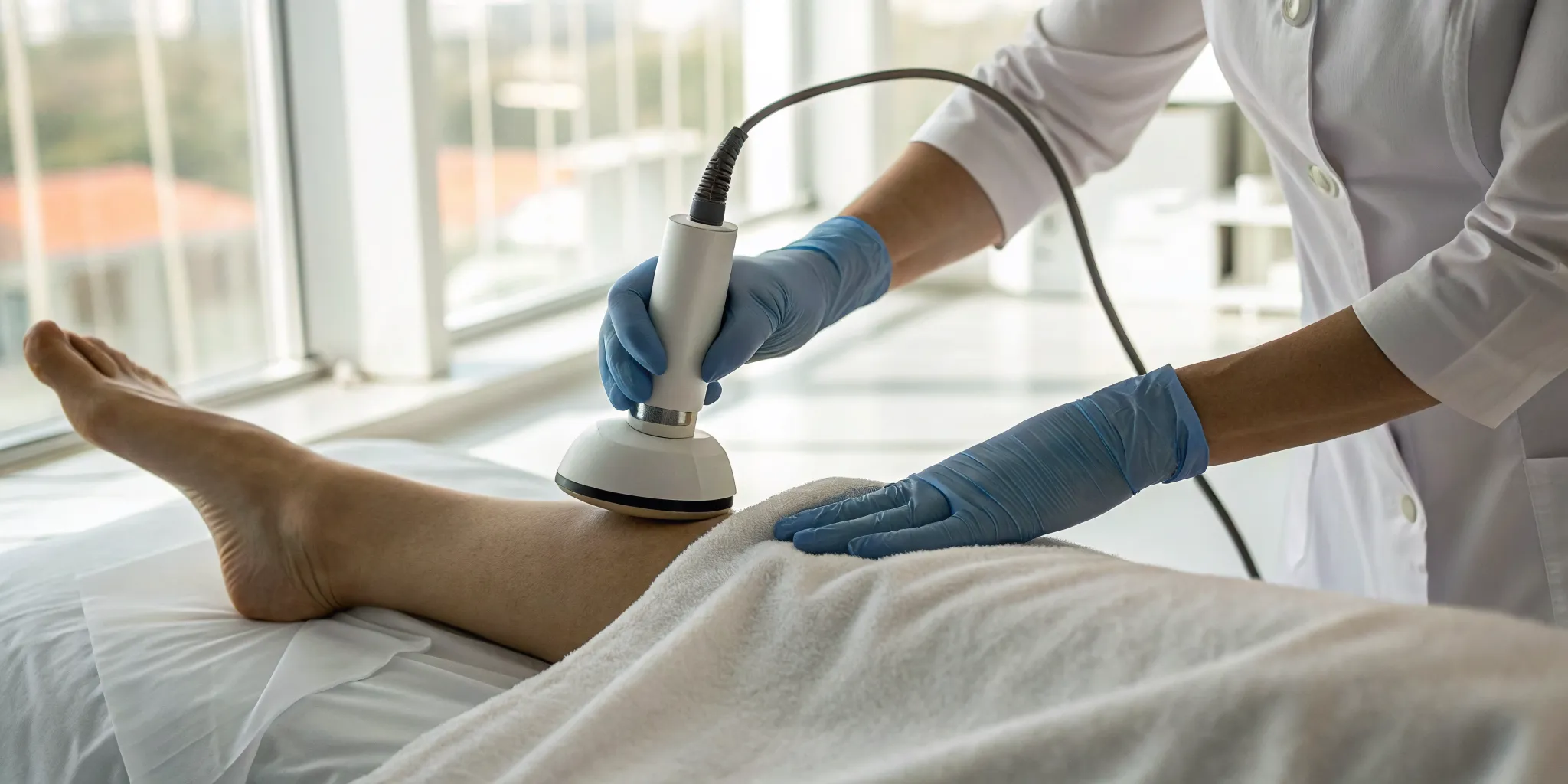
The treatment itself is quick and simple. When you arrive for your appointment, you’ll be made comfortable in a treatment room. We will apply a gel to the target area, similar to an ultrasound, and then use a handheld device to deliver acoustic waves to the injured tissue. These high-energy sound waves create micro-trauma in the tissue, which stimulates blood flow and triggers your body’s natural repair functions.
Each session typically lasts only 10 to 15 minutes. Most people describe the sensation as a strong tapping or pulsing, and while it can be intense, it is not usually painful. Some patients even experience a slight reduction in pain immediately after their first session. It’s a fast and effective way to promote healing without any incisions or medication.
Your Guide to Post-Treatment Care
One of the biggest advantages of shock wave therapy is the minimal downtime. You can walk out of the office immediately after your session and return to your daily routine. We generally advise you to avoid any strenuous, high-impact activities for about 24 to 48 hours to allow the healing process to begin effectively.
Remember, the full benefits will continue to develop over several weeks as your body regenerates healthy tissue. Dr. Singh will provide you with a personalized post-treatment plan to support your recovery. This may include gentle stretches or other simple activities you can do at home. Following these guidelines will help you achieve lasting relief and get back to the activities you love, faster.
Is Shock Wave Therapy Right for You?
Deciding on a treatment path can feel overwhelming, especially when you’re dealing with persistent pain. If you’re wondering if shock wave therapy is the right move for your recovery, let’s walk through who benefits most from this treatment and when it makes the most sense. This approach is a cornerstone of our practice because it helps active people get back on their feet without invasive procedures or long recovery periods.
Are You an Ideal Candidate?
If you’re an active person struggling with a chronic injury that just won’t quit, you’re exactly who this therapy is designed for. Shock wave therapy is an excellent option for people seeking a powerful, non-surgical solution to pain. It’s particularly effective for long-lasting conditions that interfere with your life and athletic performance, like stubborn plantar fasciitis or Achilles tendonitis. Because the therapy is safe and works with your body’s natural healing abilities, it has become a preferred choice for patients who want to avoid injections or surgery. At our clinic, we focus on these types of advanced regenerative therapies to get you back to your activities without a long recovery.
When Other Treatments Haven’t Worked
It’s frustrating when you’ve diligently followed advice to rest, ice, stretch, and even gone through rounds of physical therapy, only to still be in pain. Many people come to us after trying anti-inflammatory medications or other conventional methods without finding lasting relief. If this sounds familiar, shock wave therapy could be the breakthrough you need. It’s often recommended for injuries that haven’t improved with other treatments. Instead of just masking symptoms, this therapy triggers a healing response at the cellular level, repairing tissue from the inside out. Many patients start to feel a noticeable difference after just a few sessions, with pain relief that continues to build over the following weeks. If you’re ready to try a different approach, we can help you determine if you’re a candidate.
Finding the Right Provider
Choosing to move forward with shock wave therapy is a big step toward healing, but the success of your treatment often comes down to the person administering it. The technology is powerful, yet the provider’s expertise is what guides it to the right areas for maximum effect. Finding a specialist who not only understands the equipment but also deeply understands your specific injury is crucial for a safe and effective recovery. This isn’t the time to shop around for a bargain; it’s about finding a true partner for your health who can tailor the treatment to your body’s unique needs.
What to Look for in a Specialist
When you start your search, it is essential to find a qualified medical professional who has experience with this specific treatment. You want someone with a strong background in treating musculoskeletal conditions, especially those affecting the foot and ankle. A specialist like Dr. Singh will have an in-depth knowledge of the complex structures in your feet and how to best apply this regenerative therapy. Look for practitioners who are certified and have a history of successfully helping patients with injuries similar to yours. This ensures they have the skill to not only perform the treatment but also to accurately diagnose your condition and create a comprehensive healing plan.
Key Questions to Ask During Your Consultation
Your consultation is the perfect time to get a feel for the provider and their approach. During your appointment, consider asking about their experience with shock wave therapy, the types of conditions they have treated, and their success rates. It’s also smart to inquire about the specific technology they use. A great provider will also explain the expected timeline for treatment and recovery, as well as any potential side effects. They should welcome your questions and give you clear, confident answers, making you feel comfortable and informed. Ready to get your questions answered? You can book a consultation to discuss your specific needs.
Related Articles
- Acoustic sound wave and regenerative medical therapy helps overcome oxygen deprivation
- 5-Trusted by the Pros: SoftWave Therapy for Sports Injuries and Athletic Recovery
- 7-Trusted by the Pros: SoftWave Therapy for Sports Injuries and Athletic Recovery
Frequently Asked Questions
Does the treatment actually hurt? This is a great question, and the honest answer is that it depends on your personal pain tolerance and the injury we’re treating. Most people don’t describe it as painful, but rather as an intense tapping or pulsing sensation. The treatment itself is very quick, usually lasting only 10 to 15 minutes. Any discomfort you feel is temporary and a sign that the therapy is targeting the right spot to stimulate healing.
How soon can I get back to my sport after a session? One of the best parts of shock wave therapy is the minimal downtime. You can walk out of the office and go about your day right after a session. However, we do recommend you avoid any strenuous, high-impact activities like running or jumping for about 24 to 48 hours. This brief rest period gives your body a chance to kickstart the healing response we just triggered.
Is this treatment covered by insurance? Because shock wave therapy is an advanced regenerative treatment, it is typically not covered by insurance plans. Our clinic operates on a concierge model, which allows us to provide you with personalized, focused care without the limitations set by insurance companies. We see this as an investment in your long-term health, helping you avoid the costs and extended downtime associated with surgery.
How is this different from a cortisone shot? While both treatments can reduce pain, they work in very different ways. A cortisone shot is an anti-inflammatory steroid that primarily masks pain signals. It doesn’t fix the underlying problem and can sometimes weaken tissue over time. Shock wave therapy, on the other hand, is a regenerative solution. It stimulates your body’s own healing mechanisms to repair damaged tissue and build a stronger foundation, offering a long-term fix instead of a temporary patch.
What if I feel a little sore after the treatment? It is completely normal to feel some mild soreness or tenderness in the treated area for a day or two after your session. In fact, this is often a good sign. It means the therapy has successfully activated your body’s natural inflammatory response, which is the first step toward regenerating healthy tissue. This temporary soreness is part of the healing process and should fade quickly.