


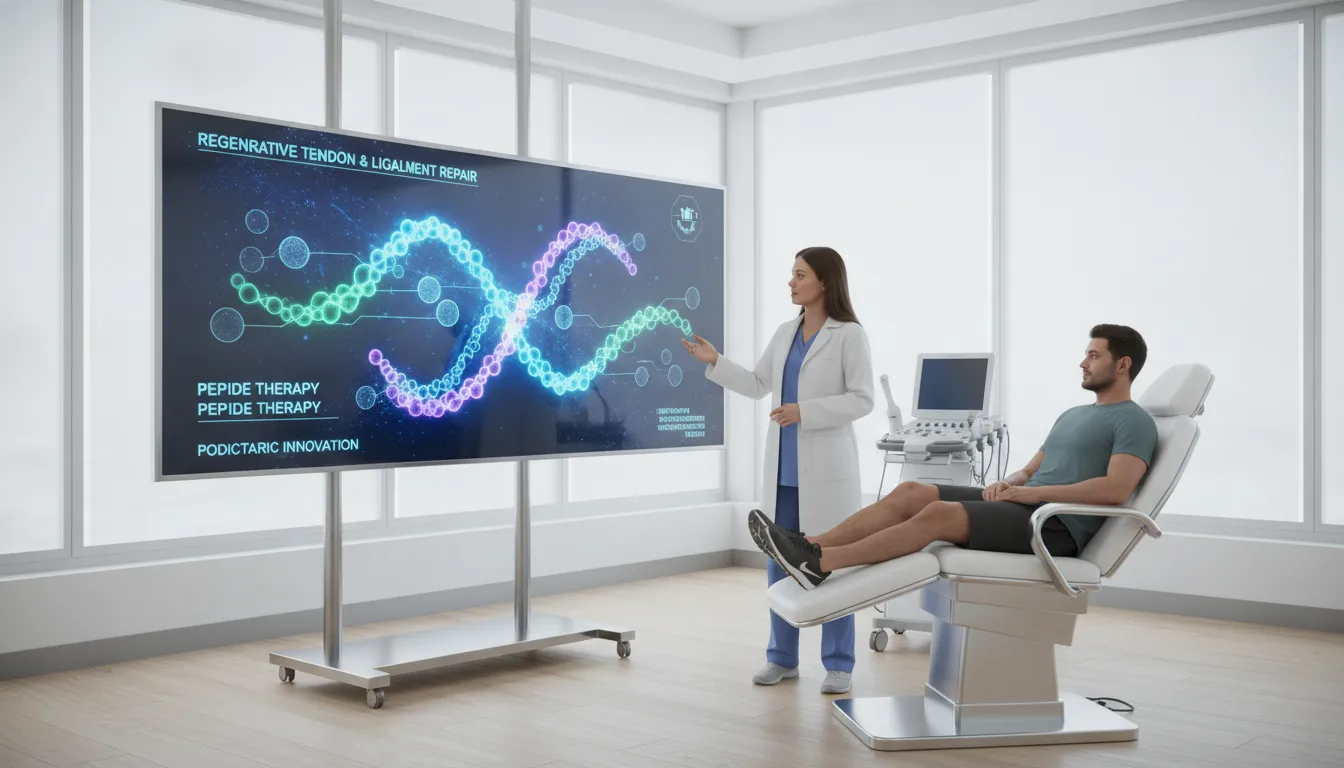

Persistent foot and ankle pain can turn simple daily movements into excruciating challenges. When standard treatments fail to provide lasting relief, patients are often left with frustratingly narrow options, either relying on temporary corticosteroid injections that can weaken tissues over time, or undergoing invasive surgical procedures with lengthy recovery periods. However, advanced regenerative medicine is shifting this paradigm. In-office medical-grade peptide therapy, specifically utilizing BPC-157 foot healing protocols, is emerging as a highly targeted, non-surgical alternative designed to support the body’s natural tissue repair signaling and accelerate recovery from chronic injuries.
At the Comprehensive Foot and Ankle Institute, Dr. Sutpal Singh, DPM, FACFAS, FAPWCA, integrates cutting-edge regenerative medical therapies to help active individuals, athletes, and complex surgical patients restore mobility without the use of invasive hardware or standard high-volume clinical approaches. As a double-board-certified podiatric surgeon with over 30 years of specialized experience, Dr. Singh design-builds personalized concierge care protocols that prioritize tissue preservation and fast, functional recovery. Under his expert direction, medical-grade peptides like BPC-157 and Synapep offer an innovative pathway to healing deep within the soft tissues of the lower extremity.
What is BPC-157 Peptide Therapy?
BPC-157 foot healing uses highly bioavailable amino acid chains to signal your local tissues to initiate cellular reconstruction, capillary outgrowth, and rapid collagen deposition. Administered in a professional medical setting, BPC-157 accelerates repair in slow-healing, poorly vascularized structures like tendons, ligaments, and joints, offering a safe, non-steroidal alternative for musculoskeletal recovery.
Peptides are short chains of amino acids (typically containing fewer than 50 amino acids) that act as precise signaling molecules within the body. They function as biological messengers, binding to specific cell-surface receptors to trigger crucial cellular responses such as collagen synthesis, vascular development, and anti-inflammatory pathways. Unlike broader hormonal therapies, peptides are highly targeted, directing specific instructions to tissues that require restoration.
BPC-157, or Body Protection Compound 157, is a synthetic pentadecapeptide consisting of 15 amino acids. This compound is structurally derived from a protective protein naturally occurring in human gastric juice, where its native biological role is to maintain mucosal integrity and promote gastrointestinal healing. In regenerative medicine, researchers and clinicians have harnessed these potent cytoprotective properties to address injuries in other parts of the body, particularly the musculoskeletal system.
For patients seeking BPC-157 foot healing, the primary therapeutic value of this peptide lies in its unique ability to stimulate soft tissue repair, tendon-to-bone integration, and joint restoration. When administered in a controlled medical setting, BPC-157 acts as an essential catalyst for cellular repair, making it highly effective for slow-healing, poorly vascularized structures like tendons and ligaments.
How Does BPC-157 Promote Tissue and Tendon Repair?
BPC-157 promotes tendon and tissue repair by activating the vascular endothelial growth factor receptor 2 (VEGFR2) pathway to stimulate new capillary growth (angiogenesis). It also upregulates F-actin cell migration to recruit tendon fibroblasts, accelerates Type I collagen synthesis, and directly counteracts the degenerative, collagen-blocking damage caused by previous cortisone steroid injections.
To understand why peptide therapy is so effective for foot and ankle conditions, it is necessary to examine how the body heals soft tissue injuries, and why certain structures heal so slowly. Tendons and ligaments are notoriously slow to recover from sprains, tears, or chronic degeneration because they possess limited blood supply (hypovascularity). Without a robust delivery of oxygenated blood, nutrients, and cellular signals, these tissues often remain trapped in a state of chronic inflammation or incomplete healing.
BPC-157 directly overcomes this cellular barrier through several overlapping physiological mechanisms:
- Acceleration of Angiogenesis (New Blood Vessel Formation): BPC-157 activates the vascular endothelial growth factor receptor 2 (VEGFR2) pathway and promotes nitric oxide synthesis via the Akt-eNOS cellular axis. This stimulates the growth of new capillaries in damaged tissues, bringing vital blood flow, oxygen, and nutrients directly to the site of the injury to speed up healing.
- Upregulation of Tendon Fibroblast Activity: Studies show that BPC-157 promotes the outgrowth, survival, and migration of tendon fibroblasts. These fibroblasts are the specialized cells responsible for producing Type I collagen, the structural building block of healthy, resilient tendons and ligaments.
- Mitigation of Corticosteroid Damage: Standard cortisone injections can temporarily mask joint or tendon pain but are clinically known to inhibit collagen synthesis, weaken soft tissue structures, and increase the risk of tendon rupture over time. Research indicates that BPC-157 can actively counteract these harmful steroid-induced degradations, protecting and restoring tissues that have been compromised by previous cortisone treatments.
- Neuromuscular and Anti-Inflammatory Regulation: BPC-157 engages ERK1/2 signaling pathways to stabilize cell membranes, reduce systemic and localized inflammatory cytokines, and facilitate coordinated cellular repair at the myotendinous junction (where muscle and tendon meet).
For more detailed insights on how advanced biological therapies can target localized heel and joint pain without surgical downtime, you can review our dedicated guide to stem cell therapy for foot and ankle pain, which explores alternative cellular repair options practiced at our clinic.
What Foot and Ankle Conditions Can Peptide Therapy Help?
Peptide therapy helps a wide array of lower-extremity conditions, notably Achilles tendinitis, posterior tibial tendon dysfunction (PTTD), chronic plantar fasciitis, severe ligament instability from ankle sprains, and post-surgical bone and incision healing. By targeting soft tissue regeneration and collagen modeling, peptides accelerate recovery for both chronic and acute injuries.
At our clinic in Hoffman Estates, Dr. Sutpal Singh evaluates each patient’s lower extremity health to determine if peptide-based regenerative medicine is appropriate. Because BPC-157 and Synapep target soft tissue repair and cellular signaling, they are exceptionally suited for a variety of stubborn podiatric conditions:
1. Achilles Tendinitis and Tendon Tears
The Achilles tendon is the largest and strongest tendon in the body, but it is highly susceptible to repetitive strain, micro-tearing, and degenerative wear (tendinosis). Whether you are dealing with insertional Achilles tendinitis, non-insertional tendinitis, or recovering from an acute tendon tear, BPC-157 helps accelerate the repair process. By promoting fibroblast migration and building a dense, highly structured collagen matrix, peptide therapy restores structural integrity and tensile strength to the tendon, significantly reducing recovery times for athletes and active individuals. To learn more about non-steroidal recovery options for the Achilles, read our detailed article on Achilles tendinitis treatment without steroid injections.
2. Posterior Tibial Tendon Dysfunction (PTTD)
The posterior tibial tendon supports the foot’s natural arch. When it becomes inflamed or stretched, it can lead to a condition known as adult-acquired flatfoot, causing severe pain along the instep and ankle. BPC-157 is utilized to stimulate healing in the deep, hypovascular portion of this tendon, preserving arch support and preventing progressive structural collapse without the immediate need for complex surgical reconstruction. You can read our clinically-focused breakdown on posterior tibial tendonitis treatment to see how we manage this progressive arch condition.
3. Severe Plantar Fasciitis
For patients experiencing chronic heel pain that has failed to resolve with standard stretching, orthotics, or physical therapy, peptides offer a biological boost. BPC-157 targets the micro-tears at the attachment point of the plantar fascia ligament on the calcaneus (heel bone), stimulating cellular renewal and relieving the localized chronic inflammation that causes sharp, morning-step heel pain. At our clinic, we frequently combine BPC-157 with advanced peptide therapy for plantar fasciitis to achieve rapid, long-lasting outcomes for chronic heel pain.
4. Ankle Sprains and Chronic Ligament Instability
Severe inversion or eversion ankle sprains often stretch or partially tear the anterior talofibular ligament (ATFL) or calcaneofibular ligament (CFL). If these ligaments do not heal correctly, they can lead to chronic ankle instability and recurrent sprains. Peptide therapy promotes ligament-to-bone healing and stabilizes the ankle joint structure, ensuring a stronger recovery and helping athletes return to their sports with confidence. We highly recommend reviewing our detailed article on red light therapy for ankle sprains to see how photobiomodulation further supports ligament repair.
5. Post-Surgical Healing and Bone Repair
For patients undergoing minimally invasive foot surgeries, such as Dr. Singh’s advanced, hardware-free bunion and hammertoe corrections, incorporating BPC-157 into the post-operative recovery protocol can significantly accelerate bone consolidation, reduce post-surgical swelling, and speed up soft tissue incision closure. Additionally, it helps prevent non-union or delayed union bone fractures by supporting osteoblast (bone-building cell) activity.
—
How Do Peptides Compare to Cortisone Steroid Injections?
Unlike cortisone steroid injections, which chemically suppress inflammation while temporarily masking pain and structurally weakening soft tissues, BPC-157 peptide therapy actively repairs and strengthens tendons and ligaments. Peptides promote long-term cellular reconstruction, collagen remodeling, and capillary growth with a superior safety profile and zero risk of tissue degradation.
To appreciate the value of advanced regenerative peptide therapy, it is helpful to contrast its mechanism and long-term effects with standard podiatric injection options:
| Treatment Type | Mechanism of Action | Tissue Impact | Long-Term Outcome |
|---|---|---|---|
| Corticosteroid Injections | Chemically suppresses inflammation and immune response locally. | Degrades collagen, weakens tendons, and can atrophy the foot’s protective fat pad. | Provides temporary pain relief but increases the risk of tissue rupture and structural damage. |
| BPC-157 & Synapep Peptides | Signals cells to trigger collagen synthesis, angiogenesis, and active tissue repair. | Strengthens tendons and ligaments, builds healthy tissue, and counteracts steroid damage. | Promotes biological healing and long-term structural restoration of the foot and ankle. |
—
Our Concierge Regenerative Protocol in Hoffman Estates
We do not believe in high-volume, standard podiatric care that treats patients like a “pack of cattle.” Dr. Sutpal Singh operates a personalized concierge medical model where every patient receives dedicated, doctor-led attention and a custom-tailored treatment plan. Our priority is to preserve your active lifestyle and maintain natural lower-limb motion.
Our comprehensive regenerative medicine program is certified in Regenerative Podiatric Medicine and integrates peptide therapy with other highly effective, synergistic modalities to optimize your healing:
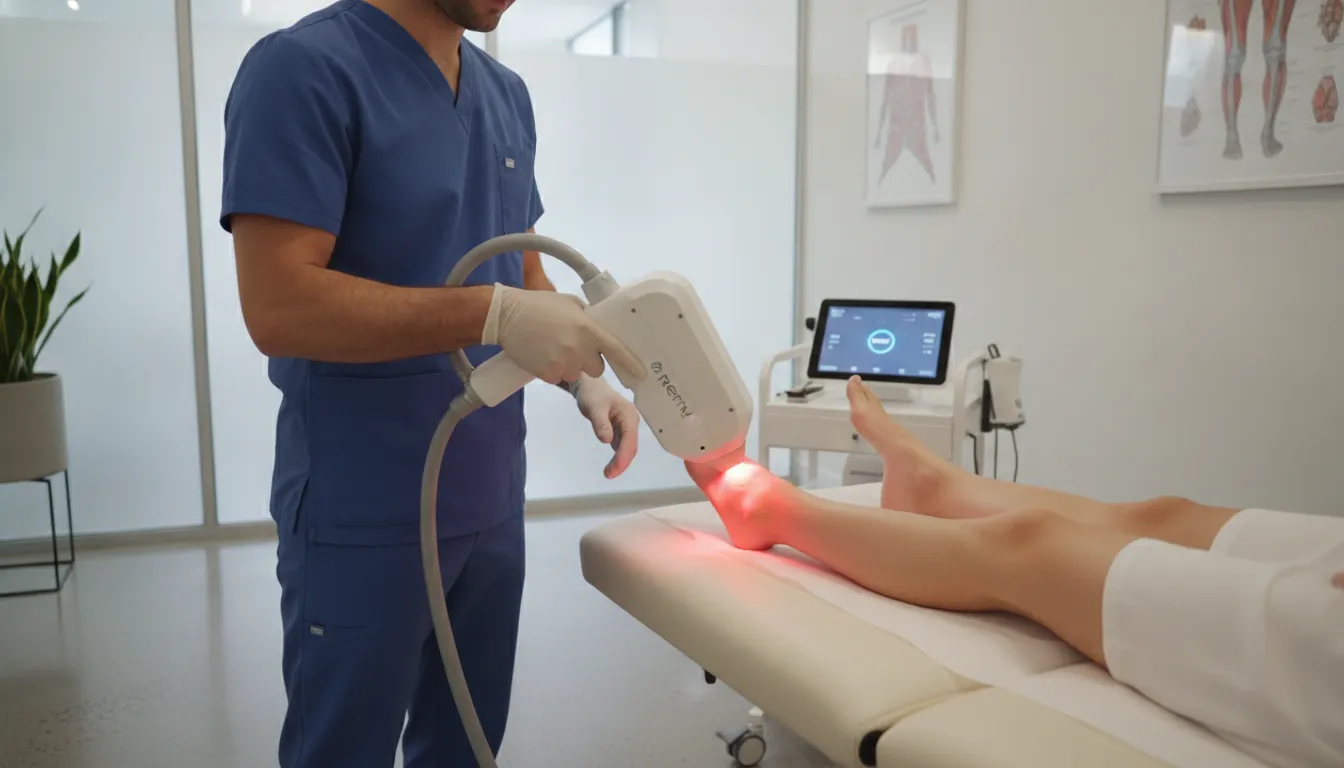
Class IV Remy Laser Therapy delivered at our Hoffman Estates location to work synergistically with BPC-157.
- Class IV Laser Therapy: Utilizing the advanced Remy Laser system, we deliver specific light wavelengths deep into the tissues. This photobiomodulation process stimulates cellular mitochondria to increase ATP (energy) production, working in perfect harmony with peptide therapy to accelerate cellular repair and reduce localized pain.
- Extracorporeal Shock Wave Therapy (ESWT) / SoftWave: Utilizing acoustic sound waves, SoftWave therapy stimulates blood flow, activates local stem cells, and promotes deep tissue analgesia, which helps resolve chronic tendon and ligament scar tissue.
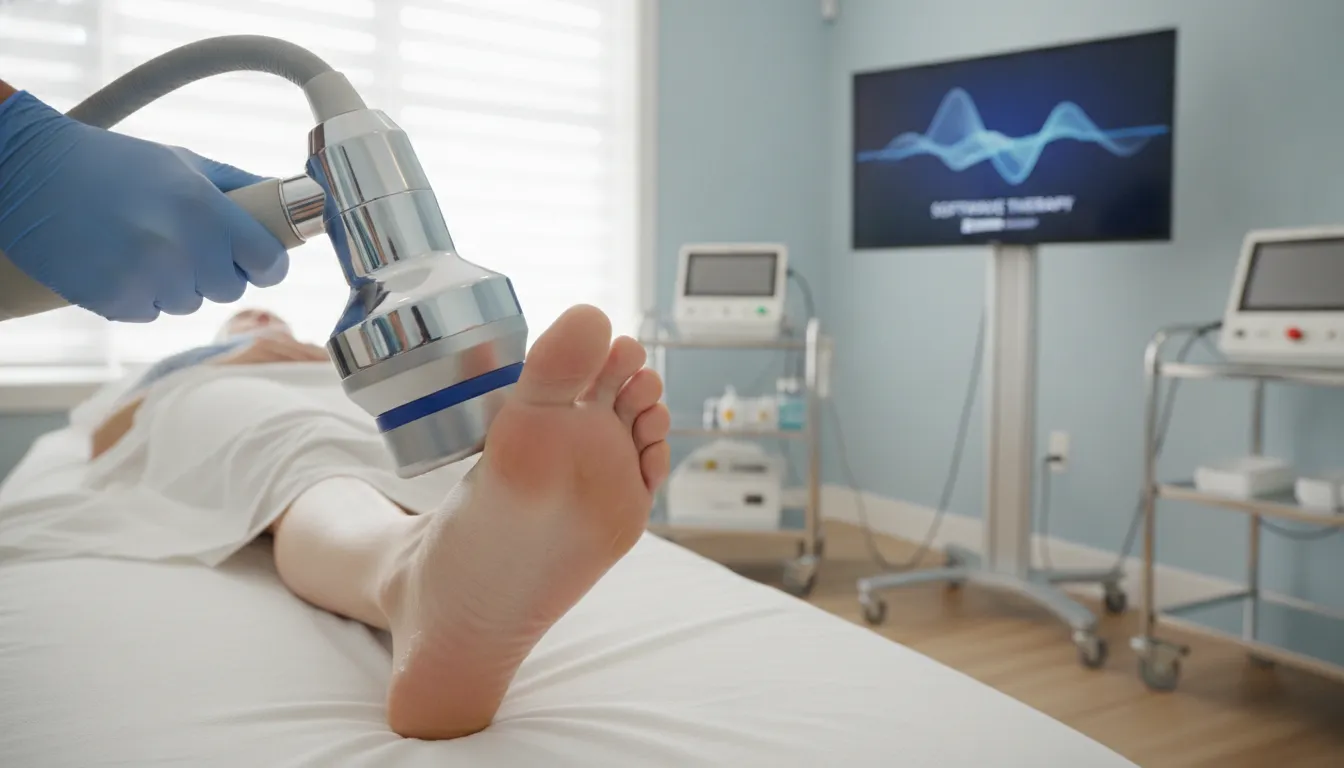
Extracorporeal Shock Wave (SoftWave) Therapy is used to restore blood supply and break down chronic scar tissue.
- RED:VIVE Red Light Therapy: In our office, we apply red and near-infrared light therapy post-operatively and post-treatment to improve local circulation, release nitric oxide, and decrease post-injury swelling. Read our full overview on red light therapy for foot and ankle pain to see how we speed post-treatment recovery.
Your journey begins with an in-depth, diagnostic evaluation where Dr. Singh uses state-of-the-art diagnostic imaging to analyze your specific injury. If peptide therapy is appropriate for your condition, he will design a precise administration schedule. Because specialized regenerative and peptide procedures are highly customized, they are generally not covered by standard commercial insurance. We provide clear, transparent self-pay pricing and consultation options, allowing you to make informed decisions about your recovery.
—
Who is a Candidate for BPC-157 Foot Healing?
Peptide therapy is an exceptional option for individuals who:
- Suffer from chronic foot or ankle pain that has persisted for more than three months.
- Have been diagnosed with Achilles tendinitis, plantar fasciitis, or a chronic ankle sprain and have not found relief through standard conservative treatments.
- Wish to avoid steroid injections due to concerns over tissue degradation and tendon weakening.
- Are seeking non-surgical, regenerative alternatives to preserve their natural joints and active lifestyles.
- Are recovering from lower extremity surgery and want to accelerate their tissue and bone healing.
—
Frequently Asked Questions About BPC-157 Foot Healing
Is BPC-157 safe for foot and ankle injuries?
Clinical observations and preclinical studies show BPC-157 has an exceptional safety profile. Because it is highly target-specific and works with the body’s natural cellular repair signaling pathways, it does not cause the systemic side effects or tissue degradation associated with cortisone steroids. However, it must always be administered under strict clinical supervision from a certified podiatrist.
How long does it take to see results from BPC-157 foot healing?
While healing times vary based on the severity and chronicity of your condition, many patients report initial pain reduction and improved range of motion within 3 to 4 weeks of starting their protocol. Complete tissue remodeling and structural strengthening of ligaments or tendons typically occur over a 6 to 12-week period when combined with synergistic therapies like Remy Laser or SoftWave.
Can BPC-157 repair old, chronic injuries?
Yes. Chronic injuries are often stalled in an incomplete healing phase due to poor blood flow and tendon scarring. BPC-157 triggers angiogenesis (new blood vessel development) and collagen restructuring, effectively jumpstarting the healing process in tissues that have been degenerated or scarred for months or even years.
—
Schedule a Concierge Regenerative Consultation in Hoffman Estates
If you are tired of living with persistent foot and ankle pain and want to explore how BPC-157 foot healing can restore your mobility, take the first step toward recovery. Dr. Sutpal Singh serves patients throughout Hoffman Estates, Schaumburg, Palatine, Arlington Heights, Barrington, Elgin, and the broader northwest Chicago suburbs.
If you are ready to reclaim your active lifestyle, click here to request a personalized, doctor-led regenerative consultation with Dr. Sutpal Singh at our Hoffman Estates clinic, or call us directly at (847) 310-1600. Let us help you get back on your feet using the most advanced biological tools available in modern medicine. Because life is motion, and motion is life.
Disclaimer: Peptide therapy, including BPC-157 and Synapep, is considered an investigational and consultation-based regenerative option with limited clinical trials in human populations. These treatments are not FDA-approved for all specific medical indications. A thorough clinical evaluation and consultation with Dr. Sutpal Singh are required to determine suitability, potential risks, and expected clinical outcomes.