



Outer ankle pain after a run may signal an injured tendon, not just a missed step. Good peroneal tendonitis treatment can calm pain and protect your return to motion. At Comprehensive Foot and Ankle Institute, Dr. Sutpal Singh offers personalized care for runners and active adults experiencing lateral ankle pain.
Call (847) 310-1600 today to schedule a consultation with Dr. Sutpal Singh at Comprehensive Foot and Ankle Institute and get back to running safely.
Peroneal tendonitis treatment depends on the cause and severity of the tendon problem. Early care may include rest from painful activity, a gradual change in training, physical therapy, bracing, or orthotics. A foot and ankle specialist may also consider regenerative options such as Class IV laser or SoftWave shock wave therapy when appropriate. These tendons sit along the outside of the ankle and help the foot turn outward and stay steady during walking and running. Pain, swelling, or tenderness in that area can also come from a tear, tendon slip, or ankle injury, so an exam matters. The medical literature notes that peroneal tendon problems can be hard to tell apart from other causes of outer ankle pain.
What causes this pain, and when should a runner seek care? Dr. Sutpal Singh, a board-certified foot and ankle specialist with over 30 years of experience. Helps patients in Hoffman Estates and the northwest Chicago suburbs find the right path forward through advanced diagnostics and personalized treatment planning.
What Is Peroneal Tendonitis? Understanding the Anatomy and Causes
Peroneal tendonitis is irritation of the tendons along the outer ankle and hindfoot. It can be an under-recognized source of lateral ankle pain, especially for runners and active adults. Understanding the anatomy helps explain why this condition develops and why targeted peroneal tendonitis treatment matters.
The peroneal tendons
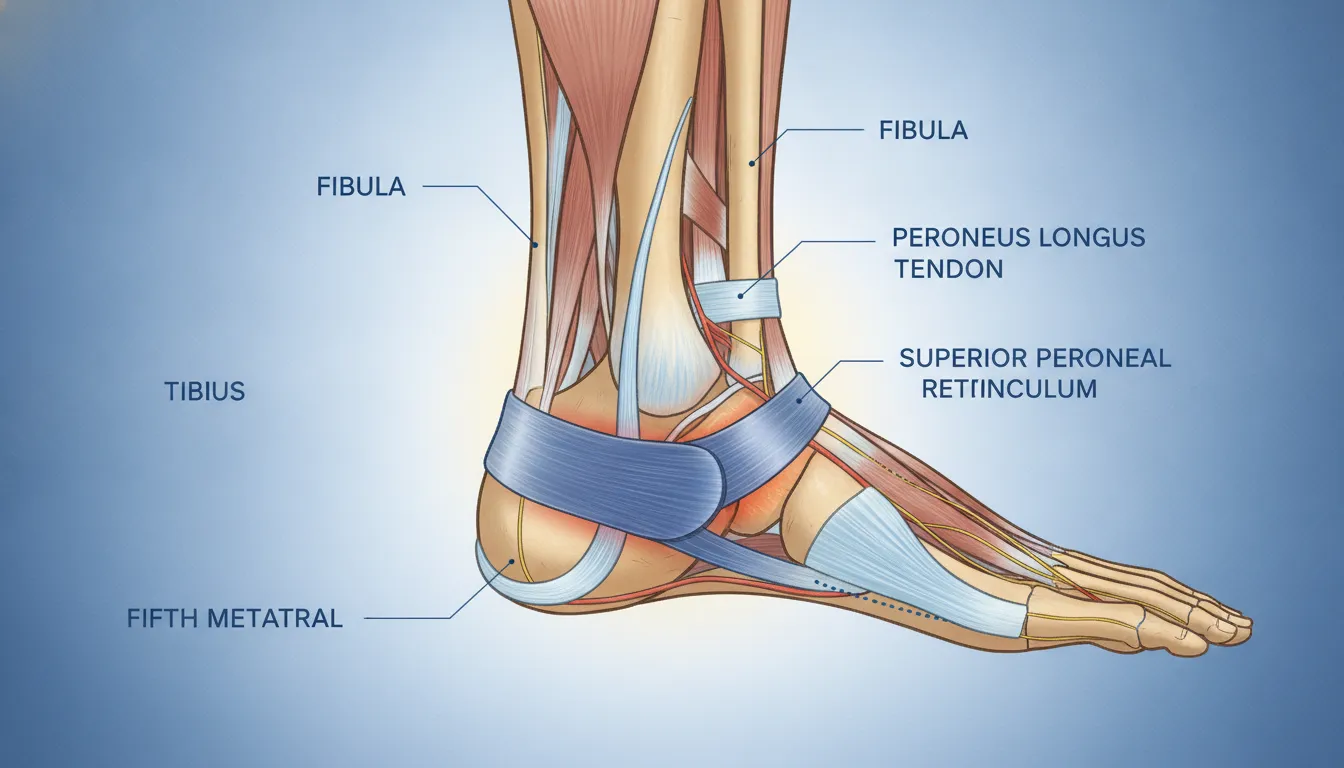
The peroneus longus and peroneus brevis are the two main peroneal tendons. They run behind the outer ankle bone and attach along the foot. These tendons help turn the foot outward, a motion called eversion. They also act as key outer ankle stabilizers while you walk, run, or move on uneven ground.
The medical review of peroneal tendon disorders explains why these problems can be hard to separate from other ankle injuries. Without an accurate diagnosis, treatment may miss the real source of pain.
Why active people are at risk
Runners and other athletes place repeated stress on these tendons. Common causes include:
- A sudden increase in mileage, speed work, or hill training that pushes tendons past their current capacity
- Improper footwear that lacks arch or lateral support for the activity level
- Ankle instability from prior sprains, forcing the peroneal tendons to work harder to stabilize the joint
- Foot mechanics such as supination, pronation, or other alignment changes that shift load toward the outer ankle
- Inadequate recovery time between high-impact sessions
Finding the root cause is part of planning effective peroneal tendonitis treatment. Rest alone may not address an unstable ankle, a rapid training change, or a poor shoe fit. A foot and ankle exam can help connect your pain to your activity and movement pattern.
The practice at Comprehensive Foot and Ankle Institute serves patients across the northwest Chicago suburbs including Schaumburg, Palatine, Arlington Heights, Barrington, and Rockford. Dr. Singh offers sports medicine expertise for athletes dealing with foot and ankle injuries.
What Are the Symptoms of Peroneal Tendonitis?
Peroneal tendonitis symptoms range from mild discomfort after activity to persistent pain that limits walking and running. Recognizing these signs early can help you seek treatment before the condition worsens.
Lateral ankle pain and swelling
Pain on the outer side of the ankle is the most common symptom. You may notice swelling or tenderness along the tendons behind the outer ankle bone. The pain often intensifies with walking, running, or activities that involve turning the foot. These symptoms are documented in the medical review of peroneal tendon disorders.
Activity-related changes
Early symptoms can be easy to dismiss. Instead of sharp pain during a run, you may feel a dull ache after activity. Common patterns include:
- Soreness after longer runs that fades during rest but returns with each session
- Tenderness along the outer ankle when pressing on the tendon area
- A feeling of weakness or instability when walking on uneven ground
- Gradual onset rather than a single injury event
If pain keeps returning, do not assume it is only normal muscle fatigue. Dr. Singh provides comprehensive foot and ankle services including diagnostic evaluation for persistent lateral ankle pain.
Snapping or slipping sensations
Peroneal tendonitis is not the same as peroneal tendon subluxation. Subluxation occurs when a tendon slips out of its normal groove near the fibula. This may cause a snapping feeling during a sudden ankle move. Early diagnosis matters because untreated tendon problems may progress to chronic damage or tears. A focused exam is the best way to distinguish between these conditions and determine the right treatment path.
Treatment Options for Peroneal Tendonitis
Peroneal tendonitis treatment follows a stepwise approach that starts with conservative care and advances to regenerative options when needed. Dr. Singh’s concierge, doctor-led model ensures each patient receives focused attention without rushed handoffs.
Conservative care first
Treatment often begins with rest, reduced impact, and a short pause from the motion that stirs pain. A brace or orthotic may provide relief in some cases. Physical therapy adds a slow load plan, ankle strength work, and proprioception drills to improve neuromuscular control. These steps aim to calm the tendon and build its ability to handle daily and sport demands. A review in the medical literature on peroneal tendon disorders identifies therapy as a key component of care.
Many patients benefit from temporary activity modification rather than complete rest. Cross-training with swimming, cycling, or elliptical exercise can maintain fitness while reducing tendon load. Ice, gentle stretching, and over-the-counter anti-inflammatory measures may also help during the early phase. The goal is to calm the tendon while preserving strength and mobility for a smoother return to running.
Regenerative options at Comprehensive Foot and Ankle Institute
When pain persists despite conservative measures, Dr. Singh offers several advanced regenerative therapies:
- Class IV laser therapy supports cellular activity in tendon tissue and helps manage inflammation without medication. Learn more about Class IV laser therapy for foot and ankle conditions.
- SoftWave shockwave therapy delivers acoustic energy to break down scar tissue and stimulate a local healing response. This option is often used for chronic tendon pain that has not responded to other care. Read about shockwave therapy at the practice.
- BPC-157 peptides may support tissue repair through targeted peptide therapy for tendon and ligament recovery.
- Regenerative injections including stem cell therapy and Liposona fat pad injections offer biologic support for persistent tendon damage.
The right choice depends on the tendon findings, your activity goals, and your response to earlier care. Dr. Singh discusses each option in detail so you can make an informed decision based on your specific situation.
Minimal-incision surgical options
If non-operative care does not provide sufficient relief, Dr. Singh may discuss minimal-incision surgical approaches. These procedures use precise instruments through small incisions, often performed in the office under local anesthesia. No screws, plates, or internal hardware are required for relevant tendon repairs. Common surgical goals include removing damaged tendon tissue, repairing partial tears, and restoring the tendon sheath for smooth gliding. Immediate walking may be possible when clinically appropriate, though recovery varies by the specific procedure and tendon condition. Dr. Singh recommends conservative and regenerative options first whenever possible, and surgery is considered only after a full course of non-operative care has been attempted.
Call (847) 310-1600 to speak with Dr. Singh about your peroneal tendonitis treatment options and find out which approach fits your lifestyle and recovery goals.
| Option | Recovery time | Invasiveness | Best for |
|---|---|---|---|
| Conservative care | Gradual | None | Early or mild pain |
| Laser therapy | Little downtime | Noninvasive | Tendon pain and inflammation |
| Shockwave therapy | Gradual | Noninvasive | Chronic tendon pain |
| Regenerative injections | Varies | Minimally invasive | Persistent tendon damage |
| Minimal-incision surgery | Procedure-dependent | Minimally invasive | Selected cases after failed care |
Why Choose Dr. Singh for Peroneal Tendonitis Treatment?
Effective peroneal tendonitis treatment depends on accurate diagnosis and a personalized approach. Dr. Sutpal Singh brings advanced training and a concierge care philosophy to every patient visit.
- Experience. Dr. Singh is a third-generation physician with 30 years of experience and board certification in foot and ankle surgery (FACFAS).
- Advanced technology. The practice offers Class IV laser, SoftWave shockwave, BPC-157 peptides, and regenerative injection options in one location.
- Concierge model. No double-booking and no rushed visits. Dr. Singh sees each patient personally and spends time understanding your activity goals. Patients receive individual attention rather than a high-volume clinic experience. Meet Dr. Sutpal Singh and learn about his approach to care.
- Sports medicine focus. The practice specializes in helping runners, weekend athletes, and active adults return to sport quickly and safely. Dr. Singh understands the demands that running, hiking, and court sports place on the foot and ankle.
- Patient satisfaction. Read patient testimonials from northwest Chicago suburbs patients who have regained their active lifestyles after treatment at Comprehensive Foot and Ankle Institute.
- Comprehensive same-location care. From diagnosis through treatment and recovery, patients access advanced technology including Class IV laser. SoftWave shockwave, BPC-157 peptides, regenerative injections, and minimal-incision surgery at one practice with one trusted provider.
Frequently Asked Questions
How do you treat peroneal tendonitis?
Peroneal tendonitis treatment often starts with rest, activity changes, ice, bracing, or physical therapy. Therapy can build tendon strength and improve ankle control. A foot and ankle specialist may also assess foot mechanics and use imaging when needed. Some patients may be candidates for laser, shockwave, or regenerative care after an exam confirms the cause of pain.
How long does peroneal tendonitis take to heal?
Healing time varies with the tendon injury, activity level, and response to care. Mild cases may improve over several weeks, while persistent or more severe problems can take a few months. Returning to running too soon may raise the risk of ongoing pain or a tear. A gradual increase in activity is safer than a quick return to full training. Patients who follow their treatment plan and allow adequate recovery time tend to have better long-term outcomes. Dr. Singh will provide specific guidance based on your exam, treatment approach, and activity goals.
Can I run with peroneal tendonitis?
Running with peroneal tendonitis is not advised when it causes pain, swelling, or a change in your stride. Repeated impact can add stress to the tendons and delay healing. Stop or reduce running, choose lower-impact activity if it is comfortable, and seek an exam if symptoms persist. A clinician can help set a safe return-to-run plan.
Does peroneal tendonitis treatment include injections?
In some cases, treatment may include a regenerative injection. The right option depends on the exam, tendon health, and your goals. Injections are not suitable for every patient and should not replace a clear diagnosis. Ask about expected benefits, limits, side effects, cost, and other options before choosing this approach.
What causes peroneal tendonitis?
Common causes include repeated ankle stress, a sudden increase in running volume, ankle instability, and foot alignment changes. The peroneal tendons help turn the foot outward and support the outer ankle. Repetitive overload can irritate them, especially during high-impact activity. Research in peer-reviewed clinical literature links these tendon problems with athletic activity and altered foot mechanics.
Ready to Start Your Peroneal Tendonitis Treatment?
Delaying care keeps pain in your stride and makes each run harder. Early guidance helps you find the cause, choose the right next step, and plan a safer return to the activities you enjoy. A timely visit gives you a clear path forward instead of weeks of guesswork. Dr. Singh and his team are ready to help you get back to the sports and daily activities that matter to you.
Call (847) 310-1600 today to schedule a consultation at Comprehensive Foot and Ankle Institute in Hoffman Estates. Serving Hoffman Estates, Schaumburg, Palatine, Arlington Heights, and the entire northwest Chicago suburbs with concierge foot and ankle care.