



A sore, swollen edge around a toenail can make every step uncomfortable, especially when shoes or athletic activity keep pressing on the area. Repeated episodes may signal that temporary trimming is not addressing the underlying problem.
Advanced ingrown toenail treatment may include laser-assisted care and minimally invasive techniques, depending on the nail, surrounding tissue, infection risk, and your overall health. These options can reduce tissue trauma while preserving more of the nail when clinically appropriate.
At Comprehensive Foot and Ankle Institute in Hoffman Estates, Dr. Sutpal Singh evaluates the cause and severity before recommending a personalized approach. Understanding how an ingrown toenail develops is the first step toward knowing when home care is no longer enough.
What Causes an Ingrown Toenail, and When Does It Need Professional Treatment?
An ingrown toenail, medically called onychocryptosis, develops when the edge or corner of the nail presses into the surrounding skin. Pressure from a curved nail, tight footwear, repeated toe trauma, or cutting the nail too deeply can allow the nail edge to irritate the nail fold. The big toe is most often affected, although any toenail can become ingrown.
Early symptoms may include tenderness when walking, soreness along one side of the nail, or sensitivity when wearing shoes. As irritation progresses, the skin may become red and swollen. Ongoing pressure can lead to drainage, increased warmth, or infection. An untreated ingrown toenail can make normal movement uncomfortable and may worsen as the nail continues to grow into the skin.
In the earliest stage, conservative care may be appropriate. A clinician may recommend reducing pressure on the toe, wearing roomier shoes, and using a carefully selected home-care plan. Conservative treatment is generally most useful before intense pain, significant inflammation, or infection develops.
Professional evaluation becomes more important when symptoms persist despite reasonable home care, return repeatedly, or interfere with walking and exercise. Significant pain, spreading redness, swelling, drainage, or persistent infection are reasons to seek podiatric care rather than continuing to wait. A review of surgical options describes conservative treatment for early-stage symptoms and surgery for severe cases: review the clinical evidence.
For patients in Hoffman Estates and the northwest Chicago suburbs. An examination can clarify whether the problem is a temporary irritation or a recurring condition that needs a more targeted plan. If pain or inflammation is not settling, you can schedule a consultation to discuss appropriate next steps.
What this means for you: Mild, early symptoms may improve with professional guidance and pressure reduction, but persistent pain, swelling, redness, drainage, or infection calls for an in-person evaluation.
How Modern Ingrown Toenail Treatment Avoids Traditional Nail Removal
Traditional care often focused on removing part or all of the nail, sometimes with a procedure intended to prevent that portion from growing back. That approach remains appropriate for some patients, but it is no longer the only way to address a painful nail edge. Modern treatment starts by identifying whether the problem is primarily the nail plate, the skin around it, or both.
A review of surgical options groups procedures into two broad strategies: changing the shape or width of the nail plate. And reducing the periungual tissue that is pressing against the nail. This distinction matters because the best procedure depends on the severity of the condition, the amount of inflammation, recurrence history, and the patient’s goals. The surgical review in the National Library of Medicine describes this range of options and the role of clinical assessment in selecting among them.
Preserving more of the natural nail when appropriate
For selected cases, treatment can focus on relieving pressure at the nail fold rather than automatically removing the nail matrix. Options discussed in contemporary care include laser ablation, chemical techniques, and radiofrequency approaches. A recent report on carbon dioxide laser treatment described nail-fold decompression without matricectomy, preserving the nail in the reported cases. That evidence does not make one technique right for every patient. But it supports a more targeted question: can the painful tissue be treated while preserving healthy nail structures?
Research on surgical treatment has also shifted toward healing time, postoperative complications, pain, recurrence, and patient satisfaction, not simply whether a nail edge was removed. In some severe cases, treatment without matricectomy may be preferable to damaging the nail or operating on the nail bed. Outcomes still depend on diagnosis, technique, aftercare, and individual healing.
A precise, minimally invasive philosophy
At Comprehensive Foot and Ankle Institute, Dr. Sutpal Singh evaluates the source of the pressure before recommending a plan. When clinically appropriate, a minimally invasive approach uses precise instruments through no incision or a small poke hole, rather than defaulting to extensive tissue disruption. Care may be performed in-office with local anesthesia, and walking immediately afterward may be appropriate for some procedures. Learn more about Class IV laser therapy and discuss whether it fits your condition. The goal is thoughtful, doctor-led care that supports comfort, mobility, and an active lifestyle.
What Is Laser Treatment for an Ingrown Toenail?
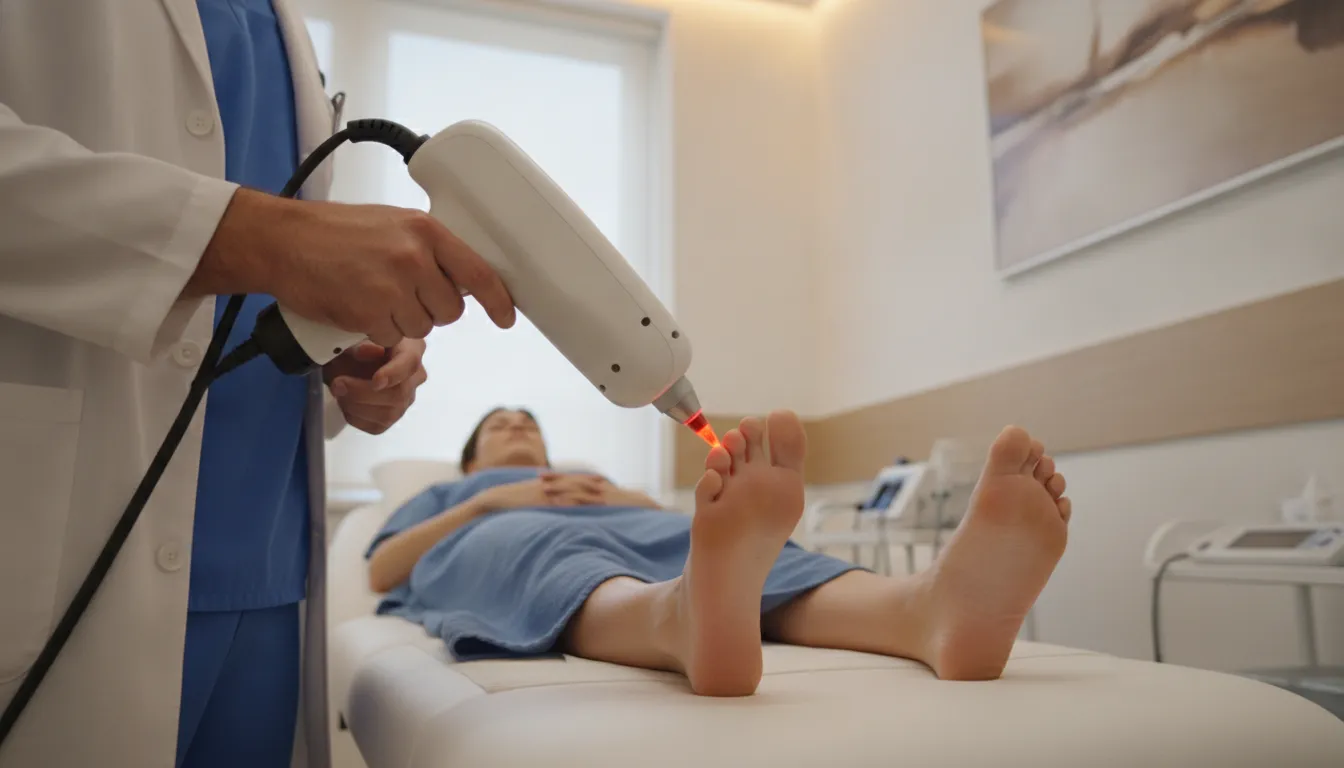
Laser treatment uses focused therapeutic energy to address the inflamed tissue around an ingrown toenail while limiting unnecessary trauma to the nail and surrounding skin. The exact approach depends on the nail’s shape, the degree of inflammation, recurrence history, and whether infection is present. It is not automatically the right option for every patient, but it can be a useful alternative when conservative care has not resolved the problem.
At Comprehensive Foot and Ankle Institute, Dr. Singh may evaluate advanced laser options as part of a personalized plan. The Remy laser is a Class IV, multi-wavelength laser system used by foot and ankle specialists, understood as an advanced therapeutic laser technology rather than a one-size-fits-all procedure. You can learn more about the practice’s Class IV laser therapy and how treatment is selected.
Who Is a Good Candidate?
A consultation is particularly appropriate for someone with a chronic or recurrent ingrown toenail, persistent nail-fold inflammation, or pain that continues despite reasonable conservative measures. The clinical examination also considers drainage, infection, swelling, the amount of nail embedded in the fold, and any health factors that could affect healing.
Published CO2 laser research illustrates why patient selection matters. In one study, 52 procedures were performed in 47 patients, with a reported cure rate of 94.23% and three relapses during follow-up. Those results describe one studied technique and should not be treated as a guarantee for an individual patient. Read the study in PubMed for its methods and limitations.
Laser Therapy in a Regenerative Care Plan
Some CO2 laser techniques remove selected inflamed or damaged tissue to decompress the nail fold, reduce pressure, and calm inflammation. The goal is to address the tissue contributing to the problem rather than automatically removing the entire nail or destroying the nail matrix. In the cited study, the mean operative time was about 10 minutes. And patients returned to walking in an average of approximately 1.36 days, while the technique preserved the nail and matrix. Recovery still varies with the patient’s condition and the procedure performed.
Dr. Singh may combine laser treatment with other regenerative options when clinically appropriate, such as therapies intended to support comfort and tissue recovery. Those options are selected after an examination. The goal is a thoughtful, minimally invasive plan that helps protect normal nail appearance and supports a return to comfortable activity.
Laser and Minimal-Incision Options vs. Traditional Nail Avulsion
The best approach depends on the severity of the ingrown toenail, the surrounding tissue, and your goals for recovery and nail appearance. This comparison outlines how advanced options differ from removing part of the nail.
| Approach | What it does | Typical recovery | Nail preservation | Setting |
|---|---|---|---|---|
| Laser-assisted decompression | Uses laser ablation to decompress the nail fold and reduce inflamed or damaged tissue. A recent study reported approximately 94% positive outcomes in its sample. | In that study, patients returned to walking in about 1.36 days on average. Individual healing varies. | The technique was designed to preserve the natural nail and nail matrix rather than perform a traditional matricectomy. Review the study findings. | Often performed in-office with local anesthesia when clinically appropriate. |
| Minimal-incision techniques | Use precise instruments through no incision or a small poke hole to address the problem while limiting tissue disruption. | Recovery depends on the correction and the patient’s condition. The clinician provides activity and wound-care instructions. | May avoid removing a larger portion of the nail, but preservation is determined by the examination and selected technique. | Can be performed in-office under local anesthesia in appropriate cases. |
| Traditional partial nail avulsion | Removes the painful nail edge, sometimes with treatment to the nail-producing tissue to reduce regrowth at that margin. This remains a conventional option in appropriate cases. See AAFP’s conventional management overview. | The wound may require more aftercare, and full nail regrowth can take months. | The removed edge is not preserved during regrowth, and the final appearance depends on healing and whether the matrix is treated. | Commonly performed as a minor office procedure with local anesthesia. |
At Comprehensive Foot and Ankle Institute, the goal is not to select one method automatically. Dr. Singh evaluates the nail, inflammation, recurrence pattern, and activity needs before discussing an individualized plan. Ask which option best balances symptom relief, nail preservation, and recovery for your case. When appropriate, concierge in-office care allows treatment under local anesthesia without hospitalization, with walking immediately when clinically appropriate.
What to Expect During and After In-Office Treatment
A visit begins with a focused examination of the nail, surrounding skin, and any inflammation or infection. Dr. Sutpal Singh assesses the severity of the ingrown toenail, asks about your symptoms and activity goals, and explains which approach fits your case. Early or mild problems may be managed conservatively, while persistent pain, swelling, or infection may call for a procedure.
When treatment is appropriate, it can often be performed in the office with local anesthesia rather than a hospital stay. The anesthetic numbs the treatment area while the doctor addresses the involved nail edge or surrounding tissue with carefully selected instruments. For laser-assisted approaches, a published study reported an average operative time of approximately 10 minutes, although actual timing depends on the findings and treatment plan. The study details the laser procedure and reported recovery outcomes.
Walking right away may be appropriate for some patients, but Dr. Singh will give you activity instructions based on the procedure, the condition of your toe, and your overall health. Comfort, swelling, drainage, and healing all deserve attention as the toe recovers.
At Comprehensive Foot and Ankle Institute, Dr. Sutpal Singh provides doctor-led ingrown toenail treatment without double-booking patients or treating care as a rushed, high-volume appointment. Call (847) 310-1600 to discuss your symptoms and next steps.
Aftercare and Recovery Tips
Follow the written instructions provided after your visit. A few general steps can support comfortable healing:
- Keep the area clean and protected as directed by the clinic.
- Wear footwear that does not press on the toe during the first days of recovery.
- Increase activity gradually and avoid high-impact exercise until healing is established.
- Avoid cutting into the nail corner or attempting to drain the area at home.
Contact the office if pain, redness, swelling, drainage, or other symptoms worsen instead of improving.
Follow-up needs vary. Some patients may need a brief check to review healing, while others monitor the toe at home. The goal is a comfortable recovery that supports a return to normal walking and daily activities as the treated tissue heals.
Why Patients Trust Dr. Singh for Ingrown Toenail Care in the Northwest Suburbs
Choosing a clinician for an ingrown toenail involves more than finding the fastest appointment. Patients in Hoffman Estates, Schaumburg, Palatine, Arlington Heights, Barrington, Elk Grove Village, and nearby communities often want careful evaluation. Practical treatment choices, and a plan that helps them return to normal activity. At Comprehensive Foot and Ankle Institute, Dr. Sutpal Singh brings more than 30 years of experience to that decision.
As a third-generation physician, Dr. Singh combines longstanding clinical experience with a modern approach to foot and ankle care. His work emphasizes regenerative medicine and minimally invasive techniques when they are clinically appropriate. For someone comparing ingrown toenail treatment options, that perspective can provide an alternative to assuming that traditional nail removal is the only path forward.
Personal attention from an experienced foot and ankle physician
The practice follows a concierge model rather than a high-volume visit structure. There is no double-booking, and patients can expect minimal wait times and direct, personalized attention. That gives Dr. Singh time to listen to how the problem started, understand whether it is interfering with work. Exercise, or daily routines, and discuss the benefits and limitations of available approaches.
This doctor-led experience matters when symptoms have returned, when previous care did not resolve the problem, or when a patient is concerned about healing and recovery. It also supports a more complete assessment of factors such as footwear, nail shape, activity level, skin condition, or other foot concerns.
Care designed around movement and recovery
Dr. Singh’s philosophy is grounded in the idea that “Life is Motion and Motion is Life.” The goal is not simply to address a painful nail. But to help patients preserve an active lifestyle with a treatment plan suited to their situation. When appropriate, care may be provided in the office under local anesthesia. With walking immediately afterward and no hospitalization; these details depend on the examination and the procedure selected.
Patients who want to understand Dr. Singh’s training, credentials, and approach can learn more about Dr. Sutpal Singh before scheduling a visit.
Frequently Asked Questions
What is the fastest way to treat an ingrown toenail?
The fastest appropriate option depends on severity. Early irritation may improve with conservative care, while persistent pain, swelling, drainage, or infection may require an in-office procedure. An examination helps determine whether laser-assisted treatment, nail-fold decompression, or another approach is suitable.
Does laser treatment for an ingrown toenail hurt?
Laser procedures are typically performed with local anesthesia, so you should not feel the treatment area during the procedure. Post-treatment discomfort varies by case, and published CO2 laser research reports rapid pain relief.
Can laser treatment preserve the natural nail?
Some laser-assisted surgical techniques are designed to treat the inflamed nail fold without removing the entire nail or damaging the nail matrix. A published CO2 laser study reported treatment without matricectomy and preservation of the nail, although candidacy and expected results require an examination.
How soon can I walk after treatment?
Many minimally invasive procedures allow walking immediately when clinically appropriate, with activity instructions tailored to the treated toe. In one CO2 laser study, the average time to return to walking was 1.36 days, though your timing may differ based on infection, tissue involvement, and aftercare needs.
Should I try to dig out an ingrown toenail at home?
Avoid cutting deeply into the corner or digging under the nail, since this can worsen tissue injury and inflammation. Conservative care may be reasonable in early cases, but significant pain, persistent symptoms, or signs of infection warrant professional evaluation rather than repeated self-treatment.
Ready to Explore Your Treatment Options?
A focused consultation can help clarify whether laser therapy or a minimally invasive approach fits your ingrown toenail and overall goals. Dr. Singh can review your symptoms, discuss appropriate options, and explain what to expect before you decide. Call (847) 310-1600 to schedule, or request an appointment online.