


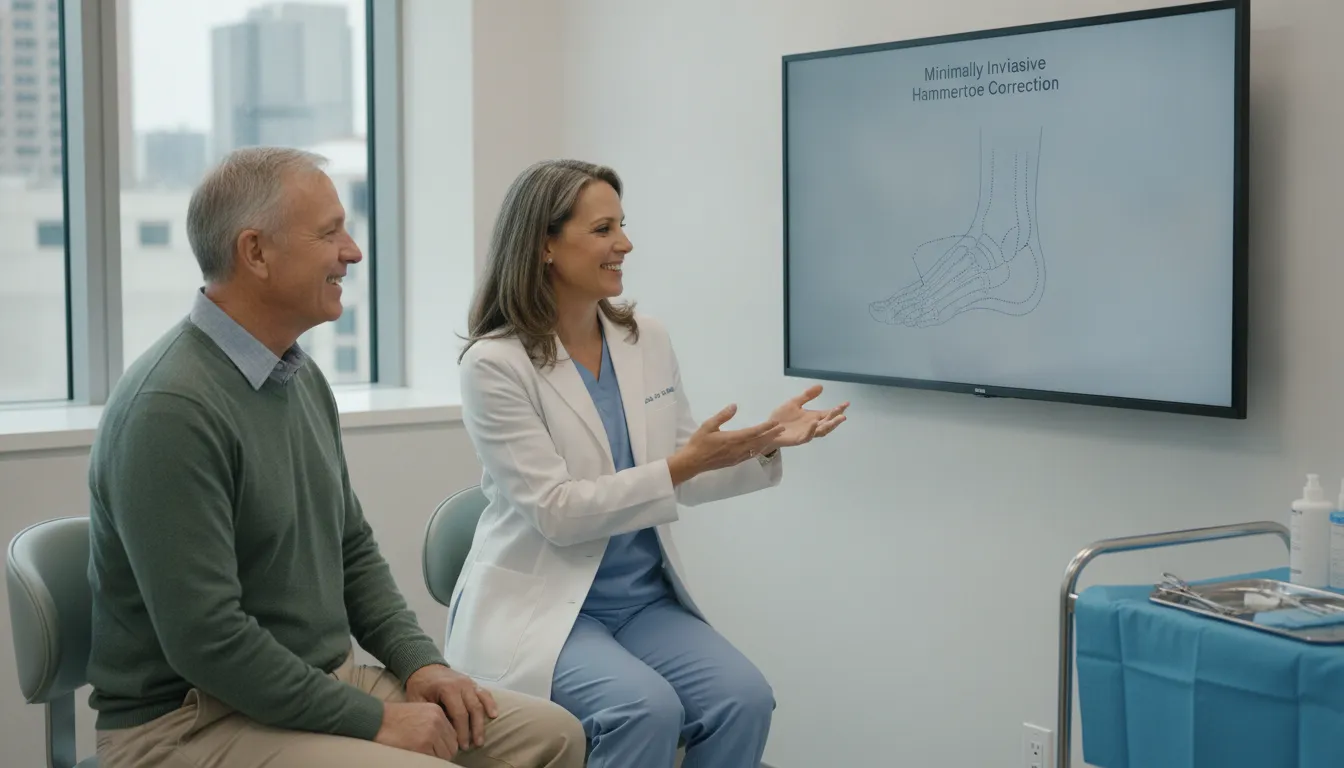

A stiff, painful toe joint often forces patients to give up their favorite shoes and activities. Traditional surgery often relies on permanent metal pins to hold the bones in place during recovery. Hammertoe surgery without hardware can correct this common foot issue through small openings and without internal hardware.
Hammertoe surgery without hardware is a minimally invasive procedure that straightens the toe joint using precise tools through small openings. Instead of using permanent metal pins or screws, this approach relies on specialized taping and wrapping for alignment during the healing phase. This method is performed in the office with local numbing, which avoids the need for a hospital stay. By skipping hardware, patients often keep more natural movement and face fewer risks of pain or infection. According to clinical guides, minimally invasive techniques allow for correction without the use of screws, pins, or wires—including specialized minimally invasive foot osteophyte removal—which helps patients return to their lives comfortably. This concierge approach focuses on personalized care and long-term joint health.
Patients often ask about the specific steps involved in a no-hardware correction. It is vital to know how these tools straighten the toe without using pins. To help you understand this modern choice, we will explain What does hammertoe surgery without hardware mean? and how the path begins.
What does hammertoe surgery without hardware mean?
Old ways of fixing hammertoes often use big cuts and metal parts. Doctors might put screws, pins, or wires into your toe to keep it straight. While this works, many people want a simpler way. Hammertoe surgery without hardware is a new way that skips the metal. It uses special tools and tiny holes to fix the bone. This way, you do not have metal left inside your foot. At the Comprehensive Foot and Ankle Institute, Dr. Sutpal Singh uses these methods to help you get back on your feet fast.
A focus on tiny cuts
This method uses what doctors call a percutaneous technique. This means the doctor works through a tiny poke hole in the skin. Instead of a long cut, they use a hole only about three millimeters wide. Through this small space, a surgeon uses a tiny tool to trim and move the bone. This percutaneous method causes much less trauma to the toe joints. It also protects the soft tissue around the bone. Small cuts mean less pain and less scarring than old methods. Most people only need local numbing medicine for the visit. You do not need to go to a hospital or stay overnight.
Straighter toes without pins and screws
In old surgery, metal pins often stick out of the toe for weeks. These pins can be hard to manage and may cause more pain. With no hardware surgery, we use other ways to keep the toe straight while it heals. After the bone is moved, the doctor uses tape and a special wrap to hold the toe in place. This non-invasive hammertoe choice helps the bone stay in the right spot as it gets strong. You will usually wear these wraps for six to eight weeks. This time allows the bone to knit back together in its new, straight shape. Research shows that bones heal at a similar rate as those fixed with metal pins.
Personal care for better results
Not every person is a good fit for surgery without hardware. It depends on how stiff your toe is and how much the bone has moved. Your health history and activity level also matter. Dr. Singh looks at each case to see what will work best for your feet. He offers a concierge model of care with very short wait times. Choosing this way brings several benefits for active people:
- No external metal pins: Taping and wrapping help support alignment during healing.
- No internal hardware: The correction avoids screws, plates, and permanent implants.
- Protected walking: Immediate walking may be appropriate for selected patients.
- Office-based care: Treatment may be performed with local anesthesia when clinically appropriate.
This means you get a lot of time with the doctor to talk about your goals. We want to help you find a minimally invasive podiatric surgery plan that fits your life. Our goal is to keep you moving without the need for metal parts in your body. We focus on results that look good and help you stay active for years.
How is a hammertoe corrected without hardware?
Old surgery for hammertoes often uses big cuts and metal pins. Many people now pick a better path. Small-cut methods allow a doctor to fix the toe through tiny spots. This avoids the use of screws or plates while using exact bone work and natural healing.
Small cuts and exact tools
In this type of work, the doctor makes a tiny “poke hole” in the skin. These spots are often just three millimeters wide. Through these small holes, the doctor uses a special tool to trim and move the bone. This minimally invasive podiatric surgery limits harm to the soft parts near the toe joint.
Standard ways might remove a piece of bone to straighten the toe. With the no-hardware plan, the doctor uses a percutaneous method. This means the work is done through the skin without a big open cut. This way can help keep more joint movement than old styles of fusion.
Natural alignment through taping
Since no metal pins hold the bone in place, the toe needs a new kind of support. Doctors use a special taping and wrapping way to keep the toe straight. This wrap acts like a soft cast while the bone heals. It allows for a more natural shift as the foot moves into its new shape.
People often find this way much more easy to handle. There is no risk of a pin catching on a sock or getting bumped. The wrap is changed and checked for some weeks to make sure the toe stays in line. This path to healing uses the body’s own power to mend and avoids metal inside the foot.
- The doctor numbs the toe so you do not feel pain during the work.
- Small holes are made at key spots to reach the bone without a big cut.
- A small bone-cutting tool is used to trim and line up the toe joints with care.
- The doctor checks the toe’s new spot to make sure it is straight and even.
- Special tape and gauze are wrapped around the toe to hold the new look.
- You can often walk out of the office in a special shoe right after the work is done.
A percutaneous plan offers a different way to fix the curved toe compared to open surgery. This method is often done in the office instead of a hospital. Patients can skip the stress of a long hospital stay. This concierge care puts the ease and quick recovery of the patient first.

No-hardware vs. traditional hammertoe surgery
Choosing the right way to fix a hammertoe can feel like a big task. Many people look for hammertoe surgery without hardware to avoid metal pins or screws. While both the old way and the new way can help, they use very different steps to get results. Your choice often depends on how stiff or bent your toe has become.
Standard open hammertoe surgery
The old way to fix a hammertoe uses a large cut on the top of the toe. Through this cut, a surgeon can reach the bone and the tight tendons. To straighten the toe, the surgeon may remove a piece of bone or cut the tendon. This helps the toe lay flat again. But this method usually needs metal hardware to keep the bone still while it heals.
Pins or wires are the most common tools used in this old style. These pins often stick out of the end of the toe for several weeks. This can make it hard to wear shoes and might lead to germs getting into the pin site. While this approach works well for very stiff toes, the large cuts can lead to more scar tissue and a slower start to walking.
The small-cut way without hardware
Modern medicine now offers a minimally invasive podiatric surgery that does not use any metal. In this method, Dr. Singh uses a very small tool to make tiny cuts in the bone. These “poke hole” cuts are only about three millimeters wide. This percutaneous technique allows the doctor to fix the bone shape without a large open wound.
Instead of pins, this method uses special taping and wrapping to keep the toe straight. Patients often like this because they can walk right away in a special shoe. Since there are no pins, there is less risk of metal-related issues. This path also helps keep the toe joints moving better after the bone heals. Most people need to keep the toe wrapped for six to eight weeks to ensure the bone sets in the right spot.
Comparing the two paths
Both types of surgery aim to give you a straight, pain-free toe. But they differ in how they treat the joint and how you spend your first few weeks of healing. Here is a look at the main differences between these two options.
| Feature | Standard Surgery | No-Hardware Surgery |
|---|---|---|
| Access. | A traditional open incision. | Small poke-hole openings. |
| Hardware. | May use pins, screws, or wires. | No internal hardware in selected procedures. |
| Walking. | Instructions depend on the procedure. | Protected walking may be allowed when appropriate. |
| Healing support. | May include internal hardware. | May include taping and wrapping. |
| Joint motion. | Depends on the selected technique. | Motion goals depend on anatomy and technique. |
Picking the best fit for your feet
Not every foot is the same. The best path for you depends on your bone shape and how long you have had the hammertoe. A very stiff toe may require a different approach than a flexible toe. For selected patients, the no-hardware approach may support their mobility goals.
At our practice, we focus on a concierge, doctor-led model. This means you get a full check-up from Dr. Singh to see which plan fits your goals. We want to help you stay active without the stress of metal pins. We look at your X-rays and your lifestyle to make sure we pick the safest and most helpful path for your unique feet.
Who may be a candidate for no-hardware correction?
Finding the right fix for a curled toe starts with a look at new ways. Many people in the northwest Chicago suburbs want a way to walk again without pain. If you look for hammertoe surgery without hardware, you want a path that avoids pins and screws. This way uses very small cuts and tape to keep the toe straight as it heals. It is a good choice for those who want a fast return to their daily life.
Flexible vs rigid toes
A key part of the check is seeing how stiff the toe has become. If you can still move the joint with your hand, it is a flexible toe. These early stages may respond well to non-invasive hammertoe treatment options like laser therapy or shoe pads. But over time, the toe can become fixed in a bent spot. This is what doctors call a rigid hammertoe, and it often needs surgery to bring it back to a flat state.
For those with flexible toes, the goal is to stop the curl from getting worse. If small steps like shoe changes do not work, a small-cut method might be the best path. This allows for a fix before the toe becomes fully stuck. Dr. Singh checks the movement in each joint to find the best plan for your foot health.
Pain and daily health
Your level of pain is another thing the doctor will check. If your toe rubs against your shoes and causes painful corns, it may be time for a change. Constant pain can stop you from being active. This goes against the idea that “Life is Motion.” Your health history also matters, such as if you have diabetes or poor blood flow. These issues can change how you heal after any foot procedure. A full check of your blood flow helps ensure that a minimally invasive podiatric surgery is safe for you.
Dr. Singh takes time to learn about your goals. If you love to run or walk, he finds the best path to get you back on your feet. This look helps find the right time for a no-hardware fix. Patients from Schaumburg to Barrington find that this custom plan leads to better results. It helps them get back to their life faster.
Imaging and the final check
To see what is going on inside the foot, a doctor might use a few tools. While a physical check is key, foot X-rays help show the state of the bones and joints. These images allow the surgeon to see the exact angle of the curl and the health of the bone. This data is vital for a precise fix through a small poke hole. It ensures the bone tool can do its work without the need for large openings.
Only a skilled doctor like Dr. Singh can find the best path for you. He uses his 30 years of skill to look at every detail of your foot. He uses X-rays and your health data to see if you are ready for surgery. He serves people in Hoffman Estates, Palatine, and across the northwest Chicago suburbs.
What should patients expect during recovery?
Recovery from hammertoe surgery without hardware is often simpler than old open surgery. Most patients have their work done in a calm office setting. We use local anesthesia to numb the foot, so you stay awake but do not feel pain. This approach saves you from a hospital stay. You can often go home as soon as the doctor is done. Our concierge model means you get full care and focus from Dr. Singh throughout the process.
Walking and protecting your toe
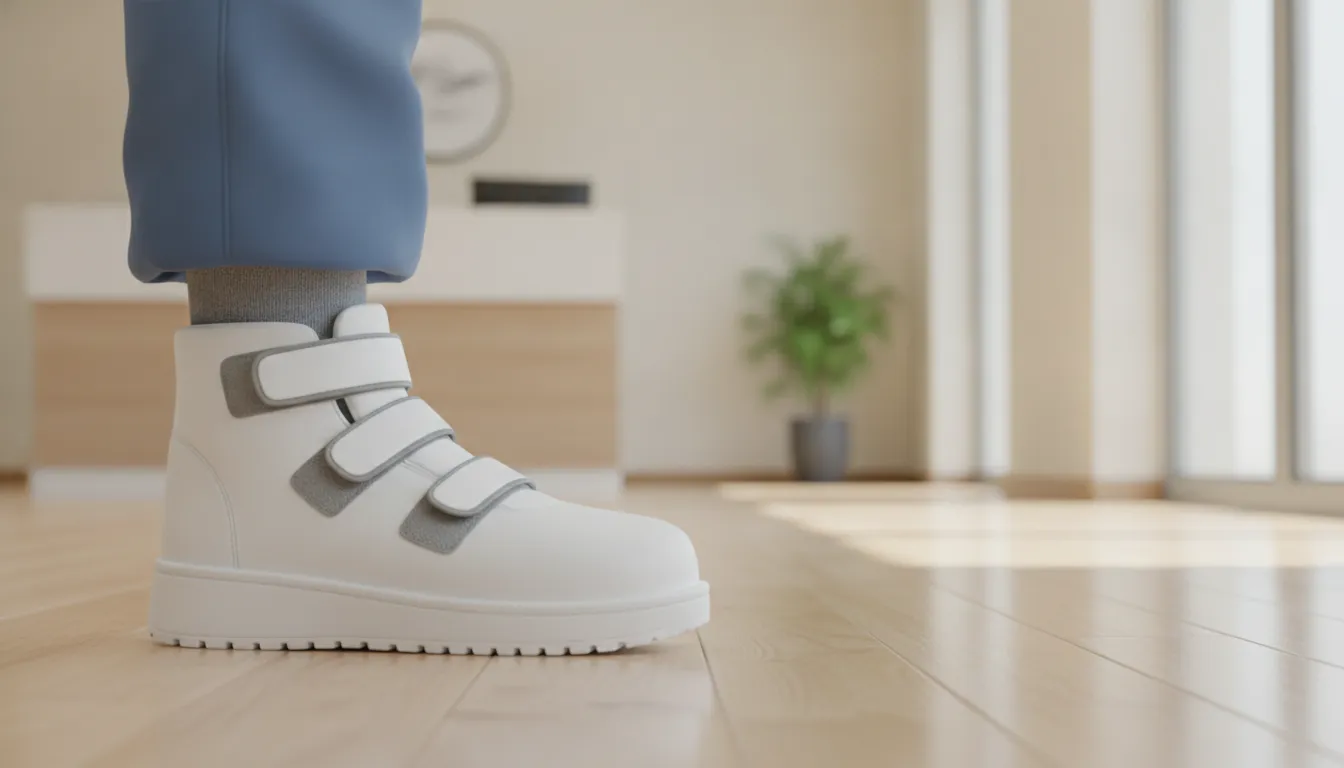
One big plus of this method is that you can often walk right away if it is safe for you. You will not need a heavy cast or crutches in most cases. Instead, you will wear a special surgical shoe to protect your foot. This boot keeps the toe stable while you move around. Using minimally invasive podiatric surgery helps you stay mobile while you heal. Staying active but careful is the best way to keep your blood flowing and speed up the mend. We will give you a clear plan on how much weight you can put on your foot each day.
Since we do not use pins or screws to hold the toe, we use taping and wrapping to keep it straight. You will need to keep the toe wrapped for about six to eight weeks. This step is a must because it lets the bone heal in the new, straight line. We will show you how to change your wraps at home so the toe stays in the right spot. Our team is always a phone call away if you have questions about your wraps or pain levels. Following our advice on care will help you get the best result.
Swelling and shoe choices
Some swelling is a normal part of the healing process. It may take a few months for all the puffiness to fade away. Keeping your foot up and using ice can help you feel better and reduce the size of the foot. Once you stop wearing the surgical boot, you must pick the right shoes. Experts at the Mayo Clinic suggest you wear shoes that keep your feet happy. Look for these features in your new footwear:
- A deep and wide toe box to reduce rubbing.
- Soft materials that can stretch if needed.
- Low heels to reduce pressure on the toes.
- Support selected for your individual foot.
Giving your toes room to breathe stops new pain from starting. Avoiding tight shoes or high heels is key to keeping your foot healthy for the long run. Each step you take in the right shoes helps your body heal.
Checking your progress
The goal is to fix the toe bend while keeping the joint able to move. Most bones show a full mend in about eight to nine weeks, according to the National Library of Medicine. We will set up visits to check your foot and make sure the toe is staying straight. These checkups are a core part of our concierge care. We want to ensure your recovery is smooth and that you can return to the life you love. Each person heals at their own pace, so we adjust your care as you get better.
Why a personalized treatment plan matters
The value of concierge foot care
Foot pain can stop you from living your life. A simple plan that is the same for everyone rarely works well for long-term pain. At our practice, we use a concierge model. This means you are not just a number on a chart. You get direct care from an expert who knows your history. Dr. Sutpal Singh has over 30 years of skill in the foot care field. He leads each step of your path to health.
During your first visit, we take the time to listen. We look at your goals and your daily life. This doctor-led care helps us find the real cause of your pain. Many people come to us from the northwest Chicago suburbs for this level of help. We serve towns like Schaumburg and Palatine with focused care. Your plan will fit your unique foot shape and needs.
Smart tools for better plans
To make a good plan, we need the right facts. We start with a full check of your toes and feet. We often use foot X-rays to see how the bones sit. This shows us how much your toe has bent. It also helps us see if you have other issues like bunions. Knowing these facts helps us pick the best care for you.
A custom plan may include many types of care. We might suggest minimally invasive podiatric surgery for bone fixes. This choice often avoids the use of pins or screws. We also look at non-invasive hammertoe treatment options to help with pain. These tools work together to get you back on your feet. We do not just fix a toe; we care for you as a whole person.
Caring for your active lifestyle
Our theme is “Life is Motion and Motion is Life.” We want to keep you moving. A custom plan looks at how fast you need to get back to work or sports. We might use advanced therapies like laser or shock wave. These can help with healing and swelling after a fix. We use these tools to support your recovery and ease your pain.
These therapies do not replace a surgical fix for a bent bone. But they are great tools to use around your care. We talk about all your choices during your visit. We want you to feel sure about your path to health. You can schedule a consultation to talk about your feet. Let us help you find the best way to get back to your active life.
Questions to ask before hammertoe correction
Before you pick a path for your foot care, you should feel clear about your choices. A hammertoe can make daily life hard, but new care offers ways to find relief. Asking the right questions helps you pick the best plan for your needs. At our office in Hoffman Estates, we focus on close care for patients in the towns near Chicago. Dr. Sutpal Singh has over 30 years in practice helping people walk well again. He holds top honors as a Fellow of the American College of Foot and Ankle Surgeons. He believes that “Life is Motion and Motion is Life.”
What surgical way do you suggest?
You should ask if your doctor uses old open surgery or a newer, smaller way. Many people now seek minimally invasive podiatric surgery to fix their feet. Ask if you are a fit for hammertoe surgery without hardware. This way often uses tiny cuts and small tools to fix the bone shape. These methods allow a different way to fix the foot through the skin. This means less stress to your toe joints and smaller marks on your foot. It can also help you keep more motion in your toe joints than older fusions.
What will my healing look like?
Healing is a main worry for active people. Ask if you can walk right after the work is done. Many of our patients can walk the same day because we work in our office. We use local numbing instead of full sleep. You should also ask how long your toe will need support after the fix. In many cases, you will use special taping and wrapping for six to eight weeks. This helps the bone heal in its new, straight spot. Studies show that people who have these small-cut steps return to full movement at a rate like open surgery (nih.gov). Our team provides close care to help you move safely each week.
Are there non-surgical choices?
It is wise to ask about tools like X-rays to check your bones and joints (mayoclinic.org). You might also ask if non-invasive hammertoe treatment options can help you first. Things like custom shoe pads or special stretches can sometimes ease pain if the toe can still bend. You should ask about footwear too. Using shoes with a big toe box can help lower the pressure on your toes. Dr. Singh will give you his full attention to find the right path. Our doctor-led model ensures you never feel like a number.
Frequently asked questions about hammertoe surgery without hardware
Can every hammertoe be corrected without hardware?
No. The appropriate technique depends on whether the toe is flexible or rigid, the joints and tendons involved, circulation, overall health, and prior treatment. A foot and ankle specialist must examine the toe and discuss which approach fits the individual patient.
Does no-hardware hammertoe correction use an incision?
Minimally invasive correction may be performed through one or more tiny poke-hole openings rather than a traditional open incision. Precise instruments are used to address the structures causing the deformity. The exact technique depends on the patient’s anatomy and treatment plan.
Can I walk after minimally invasive hammertoe correction?
Immediate protected walking may be appropriate for some patients, often with specific footwear and activity limits. Others may need a different plan. Follow the doctor’s instructions closely because recovery recommendations vary with the correction performed and the patient’s health.
What are the risks of hammertoe surgery without hardware?
Any procedure can involve risks, including swelling, infection, delayed healing, stiffness, numbness, recurrence, or an unsatisfactory position. A personalized consultation is the right time to review benefits, limitations, alternatives, and risks in the context of your health.
Schedule your no-hardware hammertoe consultation
Leave a hammertoe alone and the pain gets worse as the joint gets stiff and hard for a doctor to fix later on. Start your care now to avoid long wait times and get back to your active life and daily tasks much sooner. Choosing a no-incision plan means you heal fast in your own home without the need for metal plates or hardware. Our concierge office makes sure you get the care you need from Dr. Singh to feel very sure about your results. We focus on your ease and your success from the very first day so you can walk without pain and enjoy life. You can trust our team to help you move with ease and reach all your goals for better foot health and comfort.
Ready to request an appointment? Call +1 (331) 444-6569 to request an appointment.