




Most serious foot and ankle problems start small. Preventive foot care — checking your feet regularly, wearing supportive shoes, keeping feet clean and nails trimmed properly, and seeing a podiatrist for routine care — catches issues early, before they turn into chronic pain, infection, or surgery. It matters most if you have diabetes, are over 65, or are very active. See a podiatrist if you notice numbness, a sore that won’t heal, redness or swelling, or pain lasting more than two weeks.
You probably don’t think much about your feet until something goes wrong — a blister that won’t quit, a sharp jab in your heel on the first step out of bed, a toenail that’s turned thick and discolored. By then the problem already has a head start. That’s where preventive foot care earns its keep: the same small habits that keep your feet comfortable today are what head off the serious foot and ankle problems that lead to chronic pain and surgery later.
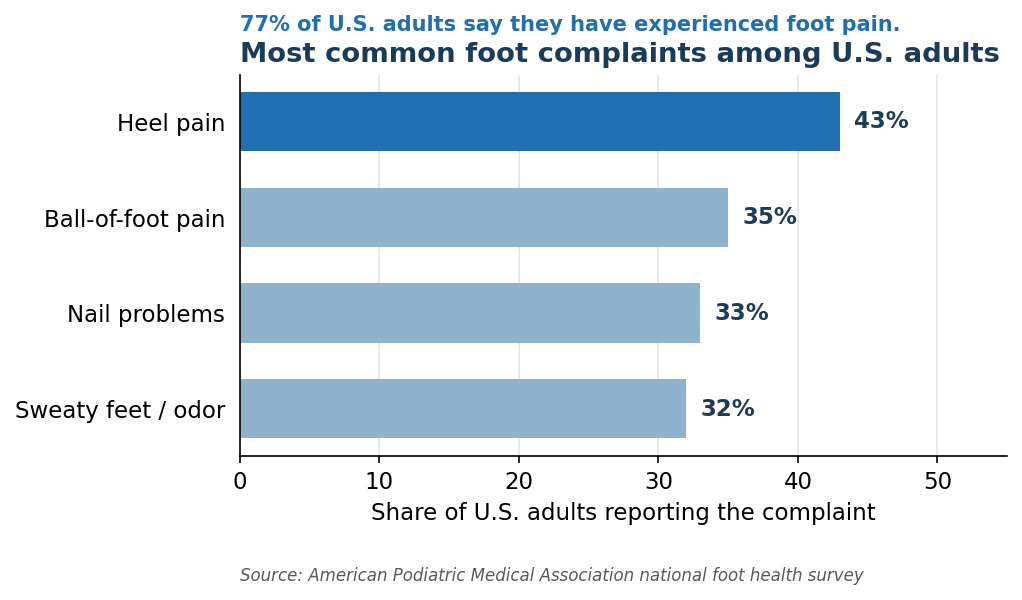
Foot pain is remarkably common. In a national survey by the American Podiatric Medical Association, about 77% of U.S. adults said they’d experienced it — yet only a fraction ever see a foot specialist. Each foot packs 26 bones, 33 joints, and more than 100 muscles, tendons, and ligaments into a small space and absorbs the impact of thousands of steps a day, so small problems add up fast. Here’s where that pain tends to show up:
What preventive foot care actually means
Preventive foot care is the routine attention — at home and with a professional — that keeps small foot problems from becoming serious ones. The at-home part is simple: looking your feet over, washing and drying them properly, trimming nails correctly, moisturizing, and wearing footwear that fits and supports. The professional part is periodic checkups with a podiatrist who can spot early warning signs, safely manage nails and calluses, and step in before a condition worsens. The goal is to catch the dry crack before it becomes an infection, the early bunion before it becomes a painful deformity, and the numb spot before it becomes an unnoticed wound.
How preventive foot care can help: small problems vs. serious ones
Almost every serious foot and ankle condition begins as something minor and manageable. Catching these early is the whole point of prevention:
| Caught early (manageable) | Left unchecked (serious) |
| Dry, cracked heels | Skin breaks that let in infection — especially risky for diabetics |
| A blister or thick callus | An open sore or foot ulcer |
| Mild, occasional heel pain | Chronic plantar fasciitis that limits walking |
| An early bunion or hammertoe | A painful, fixed deformity that may need surgery |
| A slightly ingrown toenail edge | An infected, swollen toenail |
| Numbness or tingling (neuropathy) | An unnoticed injury or ulcer that won’t heal |
| A thick, discolored toenail | A spreading fungal infection |
| Foot pain or poor balance in older adults | A fall and serious injury |
Who needs preventive foot care most
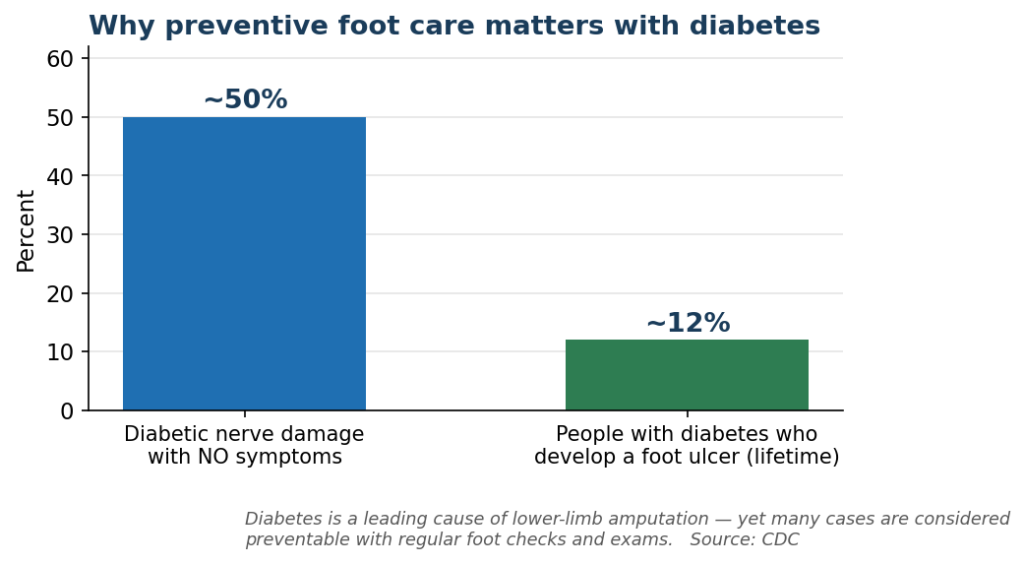
Everyone benefits, but for two groups preventive care is genuinely protective — even limb-saving. The first is people with diabetes. Diabetes can quietly damage the nerves in the feet, and according to the CDC, up to about half of people with diabetic nerve damage have no symptoms at all — so a cut, blister, or pressure sore can go unnoticed until it becomes a serious wound. Roughly 12% of people with diabetes develop a foot ulcer at some point, and diabetes is a leading cause of lower-limb amputation. The encouraging part: many of these complications are considered preventable with consistent foot care, and the American Diabetes Association recommends a comprehensive foot exam at least once a year.
The second group is adults over 65, for whom foot care is also fall prevention. The CDC reports that falls are the leading cause of injury among older adults, and foot pain and poorly fitting footwear are recognized risk factors. Routine foot care, balance-friendly activity, and supportive shoes all help keep older adults steady. Active people and athletes round out the list — repeated stress makes them prone to overuse problems like plantar fasciitis and tendonitis, which respond best when caught early.
When to see a podiatrist
Home care prevents a lot, but some signs mean it’s time for a professional evaluation. Don’t wait these out:
- A sore, blister, or wound that hasn’t healed within a week or two — with diabetes, call right away about any new break in the skin
- Numbness, tingling, or burning in the feet
- Redness, warmth, swelling, drainage, or pus (possible infection)
- Foot or heel pain that lasts more than two weeks or keeps returning
- A toenail that is increasingly thick, discolored, or painful
- A bunion, hammertoe, or other deformity that is getting worse
- Sudden inability to bear weight, or pain after an injury
Simple habits that protect your feet
Most preventive foot care is straightforward and takes only a few minutes a day.
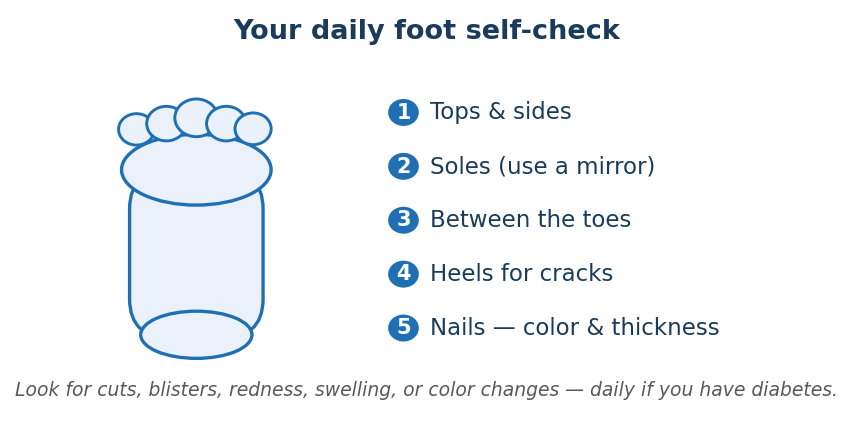
Check your feet regularly. Look over the tops, soles, heels, and between the toes for cuts, blisters, redness, or color changes — daily if you have diabetes or reduced sensation. Use a mirror or ask for help to see the bottoms. Early detection is the single most valuable habit in foot care.
Wash, dry, and moisturize. Wash daily with soap and water and dry thoroughly — especially between the toes, where leftover moisture invites athlete’s foot and fungal infections (per the APMA). Moisturize the tops and soles to prevent dry cracks, but skip between the toes.
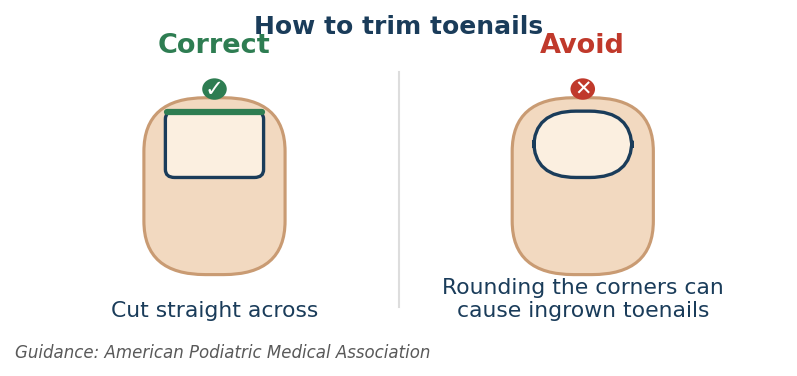
Trim toenails correctly. Use a straight-edge clipper and cut straight across; don’t round the corners. The APMA notes that rounding the edges makes painful ingrown toenails more likely.
Wear shoes that fit and support. Choose shoes by how they feel rather than the number on the box, and try them on later in the day when feet are slightly swollen. Look for good arch support and a roomy toe box. Mayo Clinic advises replacing athletic shoes before the cushioning wears out and avoiding going barefoot on hard surfaces or wearing high heels for long stretches — all of which reduce strain on the plantar fascia and joints.
Keep moving and manage your health. Gentle calf and foot stretches help prevent plantar fasciitis, and a healthy weight reduces daily stress on the feet. If you have diabetes or circulation problems, keeping blood sugar in range lowers the risk of nerve damage and slow-healing wounds.
See a podiatrist for routine care. A podiatrist catches problems you can’t see or feel, manages thick nails and stubborn calluses safely, and can recommend orthotics before a condition worsens. People with diabetes should have at least a yearly foot exam.
Frequently asked questions
What is preventive foot care?
It’s the routine of at-home habits and professional checkups that keeps minor foot issues from becoming serious — daily foot checks, proper hygiene and nail care, supportive footwear, and periodic podiatry visits.
How often should I see a podiatrist?
People with diabetes should have a comprehensive foot exam at least once a year, and more often if higher risk. Otherwise, see a podiatrist whenever you have foot pain, a developing deformity, or a problem that isn’t improving with home care.
Why is foot care so important for people with diabetes?
Diabetes can numb the feet, so injuries may go unnoticed and heal slowly, raising the risk of ulcers and amputation. Daily checks and regular exams catch problems early, and many complications are considered preventable with consistent care.
How should I trim my toenails to prevent problems?
Cut straight across with a straight-edge clipper and don’t round the corners. Rounded edges make painful ingrown toenails more likely.
What shoes are best for foot health?
Shoes that fit well with good arch support and a roomy toe box. Choose by feel rather than the size on the box, try them on later in the day, and replace athletic shoes before the cushioning wears out.
When should I treat a foot problem at home versus seeing a podiatrist?
Minor dryness or an occasional ache can often be managed at home. See a podiatrist for non-healing sores, numbness, signs of infection, worsening deformities, or pain lasting more than two weeks — and right away if you have diabetes and notice any break in the skin.
Book a consultation
Comprehensive Foot and Ankle Institute in Hoffman Estates, Dr. Sutpal Singh, DPM, FACFAS, sees every patient one-on-one and offers regenerative and minimally invasive treatment options with a focus on catching problems early — the sooner an issue is found, the more options you have. To discuss your foot health, call (847) 310-1600 or request an appointment online.
References
- Centers for Disease Control and Prevention. Promoting Foot Health (Diabetes).
- Centers for Disease Control and Prevention. Preventing Diabetes-Related Amputations.
- American Diabetes Association. Retinopathy, Neuropathy, and Foot Care: Standards of Care in Diabetes — 2025.
- American Podiatric Medical Association. Tips for Healthy Feet.
- Centers for Disease Control and Prevention (STEADI). Feet and Footwear for Older Adults.
- Centers for Disease Control and Prevention. Facts About Falls.
- Mayo Clinic Health System. Heel pain might be plantar fasciitis.
8. American Podiatric Medical Association. National foot health survey (Today’s Podiatrist).