



A sharp ache on the side of your pinky toe is a sign of a common foot problem. You do not have to live with this discomfort.
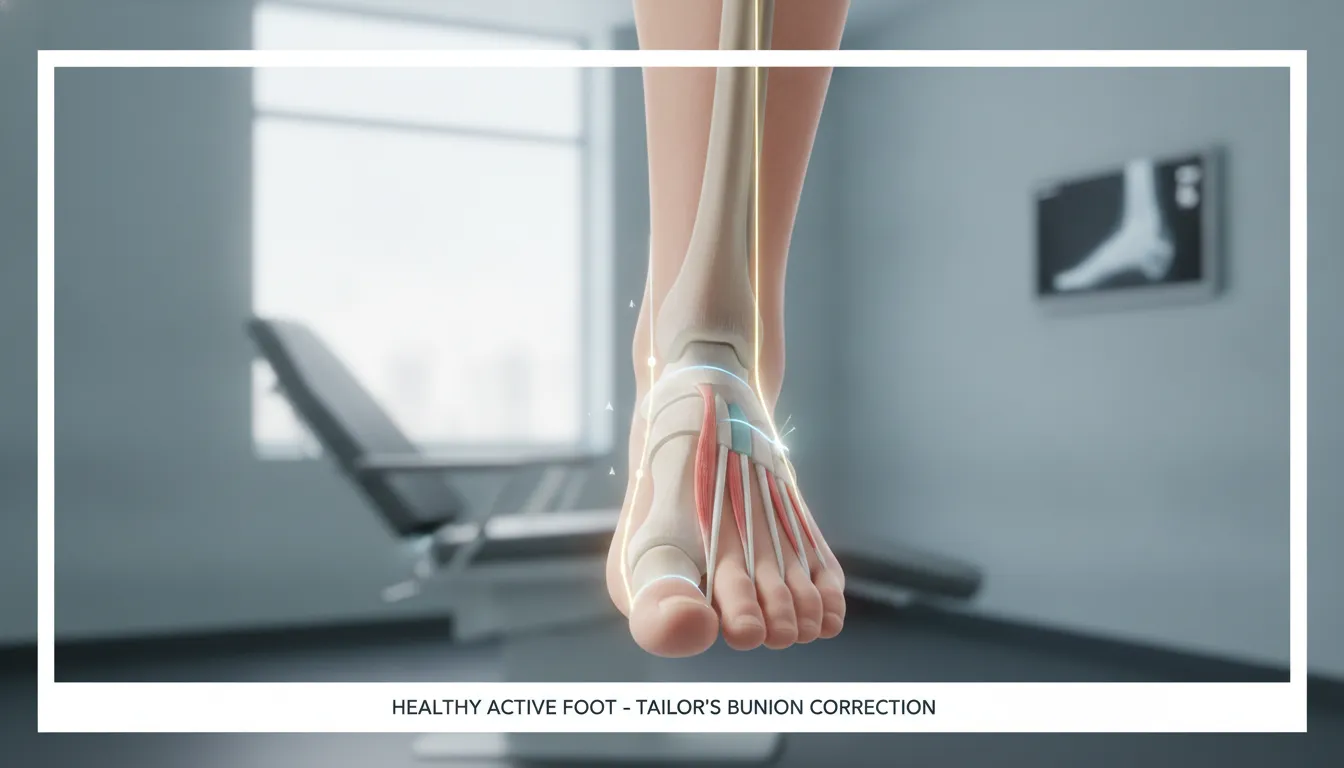
Tailor’s bunion correction without hardware uses a small poke hole to fix the painful bump on the side of your pinky toe. Dr. Sutpal Singh uses neat tools to straighten the bone without inside screws or plates that can cause pain later. This method takes place in the office under local anesthesia, so you stay relaxed during the short visit. Unlike old surgery that needs weeks of rest, this approach gets you back to your active life fast. Most patients can walk right away in a special shoe and return to their routine soon. According to the Mayo Clinic, a bunionette is a small bump that forms on the joint of the little toe. By choosing a path with no hardware, you avoid the scars of big cuts.
If you are tired of foot pain stopping your workouts, you need to know your options for relief. Learning the facts about this condition is the best way to start your journey to better health. To find the right fix, we must first answer the question, What is a Tailor’s Bunion (Bunionette)? Finding the right fix starts with asking.
What is a Tailor’s Bunion (Bunionette)?
A Tailor’s bunion is a painful, bony bump that forms on the outer edge of the foot. It appears at the base of the little toe, where the fifth metatarsal bone meets the toe joint. While most people know about standard bunions on the big toe, a bunionette is a smaller version on the other side of the foot. These bumps can make it hard to find shoes that fit well without causing pain.
Defining the bunionette
The bump often starts small but can grow over time. It happens when the fifth metatarsal bone moves outward or the joint becomes enlarged. This shift creates a bump that rubs against the side of your shoes. The little toe is much smaller than the big toe. This makes the bump smaller, which is why doctors often call it a bunionette. For many patients, finding a way to get a Tailor’s bunion correction without hardware is a top goal to restore their comfort.
Many factors can cause these bumps to form. Some people are born with a foot shape that makes them more likely to develop a bunionette. Others may get them due to foot stress, past injuries, or the way they walk. No matter the cause, the final bump can lead to a lot of friction and pressure during daily tasks. If you are looking for relief, Dr. Sutpal Singh offers several advanced options, such as minimally invasive foot osteophyte removal and other minimally invasive foot procedures, to help you get back on your feet quickly.
History of the name
You might wonder why this problem has such a unique name. Centuries ago, tailors often worked while sitting cross-legged on the floor all day long. In this way, the outer edges of their feet would rub against the hard ground for hours at a time. This constant pressure and friction caused painful bumps to grow on the sides of their feet. Over time, the term “Tailor’s bunion” became the standard way to describe this specific foot issue.
Common symptoms and signs
The most clear sign of a bunionette is a bulging bump on the side of the little toe. This area often becomes red, swollen, and sore to the touch. You may notice that the skin over the bump looks thicker or has grown a callus from rubbing against your shoes. The pain can be constant, or it might only show up after you have been walking or standing for a long time. In some cases, the pain can make it hard to stay active or enjoy sports.
Inflammation is also a common sign that can lead to more pain. When the joint becomes sore, it can cause a dull ache that stays even after you take your shoes off. Some patients also feel a burning sense in the area. If you see these signs, it is best to speak with a foot specialist before the problem gets worse. Managing the swelling early can help prevent more serious issues down the road.
The Limits of Conservative Treatments for Bunionettes
Many people first try simple home care to manage a Tailor’s bunion. These non-surgical steps can help you feel better during the day. Common choices include using bunion pads to cushion the bump or wearing wider shoes to lower pressure. You might also use ice packs or shoe inserts to help spread out your weight evenly. These steps are good for short-term relief, but they do not fix the physical shape of your foot.
Managing symptoms vs fixing the bone
Conservative care only treats the symptoms of a bunionette. A bunionette is a small, painful bump on the base of your little toe. While pads and new shoes can stop the rubbing, the bone stays in its shifted position. These methods do not offer a permanent Tailor’s bunion correction without hardware because they cannot move the bone back. Over time, the pain may return as the deformity stays the same or gets worse.
When simple steps are not enough
If you still have pain after trying pads and inserts, it may be time to look at other options. Dr. Sutpal Singh often sees patients who have tried every type of shoe but still find it hard to walk. Traditional treatments help for a while, but they cannot restore the natural shape of your foot. For those who want to stay active, a more direct path may be needed to fix the root cause of the bump.
| Criteria | Conservative Steps | Minimal-Incision Fix |
|---|---|---|
| Main Goal | Manage pain | Fix deformity |
| Bone Position | No change | Realign bone |
| Hardware Used | None used | None typically |
| Recovery Time | No recovery | Immediate walk |
| Long-term Result | Pain returns | Permanent fix |
At our office, we focus on minimally invasive foot procedures that go beyond temporary fixes. These advanced options allow for correction through a small poke hole rather than a large cut. This method helps you get back to your life faster than traditional surgery. It bridges the gap between simple padding and major hospital visits, offering a real fix for active adults in the northwest Chicago suburbs.
Understanding Minimally Invasive Bunionette Surgery
Modern foot care offers a Tailor’s bunion correction without hardware right in our office. Dr. Sutpal Singh uses a way that avoids big cuts and metal parts. These minimally invasive foot procedures focus on small entry points and quick healing. Our concierge model means you get direct time with the doctor to talk about your goals and needs. Dr. Singh has over 30 years of experience helping people in the northwest Chicago suburbs stay active.
Small entry for big results
Our minimally invasive foot surgery options avoid the long cuts that can take a long time to heal. Old-style surgery uses long cuts that can take a long time to heal. This way uses a tiny “poke hole” instead. The opening is often less than 1 centimeter long. Dr. Singh uses sharp tools through this small gap to move the bone. This means less harm to your skin and less pain after the work is done. It also helps to keep the blood flow strong near the bone for better healing.
By using these tiny entries, we keep the area around the joint safe. You will see much less scarring than with traditional foot surgery. This is a big win for people who want their feet to look and feel great again. We focus on results that let you move with ease and pride. Our patients often travel from Schaumburg and Barrington for this expert care.
Benefits of local care
You do not need to stay in a hospital for this surgery. We do the work in our Hoffman Estates office with local anesthesia. This keeps you awake but numbs your foot so you feel no pain. Many people go back to their active lives much faster than with old ways. It is a safer choice for many patients who want to avoid the risks of being put to sleep.
A hospital stay can be slow and costly. Our in-office care is simple and direct. You can even walk right away after the work is finished in most cases when it is safe to do so. This fits the needs of busy people in the northwest Chicago suburbs. We know you have places to be and lives to live, and we want to help you get there.
Four steps to a better foot
- Local anesthesia: Dr. Singh numbs your foot so you stay at ease. This means no need for general gas that puts you to sleep. You stay awake and can talk to us during the short work.
- Small entry: A tiny “poke hole” lets us reach the bone. We use precise tools that fit through this very small gap. This keeps the rest of your foot safe from harm.
- Bone fix: Small tools fix the bone shape to take away the bump. We move the bone into a better spot without using big cuts. This fixes the root of the pain.
- Soft wrapping: We clean the area and wrap it to keep it safe. You will leave with a small bandage instead of heavy casts. Most patients wear a special shoe to walk out.
A huge plus of no-hardware bunion surgery is that we use no screws or plates. This means you have no metal left in your foot forever. The Mayo Clinic says bunionettes are bumps on the joint of the little toe. Fixing them this way lets you walk right after if it is safe for you. You get to skip the pain that sometimes comes with internal metal parts.
How Tailor’s Bunion Correction Without Hardware Works
Common surgery for a Tailor’s bunion often uses large cuts. It also uses metal parts to hold the bone in place. Dr. Sutpal Singh uses a different way to fix this. This method is called Tailor’s bunion correction without hardware. It uses a tiny opening to reach the bone. Instead of screws or plates, this way uses precise tools. It lets your foot heal in a natural way to keep things in the right spot.
The small-cut method
To start, Dr. Singh makes a tiny gap in the skin. This is often called a “poke hole” because it is less than one centimeter long. Through this small space, he uses special tools to reach the bone. These tools help him move the bone back to its proper place. He does this without the need for a long scar. This no-hardware bunion surgery is gentle on the soft tissue around the joint.
By using smaller tools, there is less harm to the area. This helps the body start to heal right away. Since the cut is so small, you often do not need many stitches. This is good for people who care about how their foot looks. Most patients find that the scar is hard to see once it fully heals. It is a modern way to treat a bunionette. This is the small bump that forms on the outer edge of the foot.
Why skipping metal parts helps
One of the best parts of this fix is that no metal stays in your body. In old-style surgery, screws and plates are left inside. For some people, these metal parts can cause pain. Some patients feel a cold chill in the foot or have a bad reaction to the metal. When you choose a fix without hardware, you avoid these risks. There is no metal to rub against your shoes or bother your nerves.
Also, not having hardware means you do not need a second surgery. Sometimes, metal parts can break or move. If that happens, they must come out. By skipping the pins and screws, you save yourself from more time in the clinic. The bone stays in place because of the way it is cut. The foot is then wrapped in a special way. This physical plan uses the foot’s own strength to keep the fix solid while you heal.
Fast recovery for your life
This surgery is light on the body, so recovery time is often much shorter. Dr. Singh does these jobs in his office. He uses local numbing medicine so you stay awake. You do not need to go to a hospital. This makes the whole day much easier for you. Most people can walk right away after the fix in a special shoe. This “Life is Motion” view helps you get back to your daily tasks fast.
Athletes and active people often like this hardware-free path. You can usually get back into steady tennis shoes within two weeks. By the six-week mark, many patients return to their regular shoes. This fast timeline is key for those who do not want to spend months on the couch. Getting back to your feet quickly keeps your muscles strong. It also helps your blood flow well for better healing.
A Faster Recovery: Immediate Walking and Minimal Scarring
Many people worry about a long rest after foot surgery. Tailor’s bunions are small, painful bumps that form on the joint of the little toe, according to the Mayo Clinic. Old ways of fixing this often mean weeks off your feet. But no-hardware bunion surgery helps you get back to your life fast. This path for Tailor’s bunion correction without hardware keeps you moving while you heal. It is a great choice for those who want to stay active and fit.
Walk the same day
A big plus of this work is that you can move right away. Most patients can walk soon after surgery when the doctor says it is safe. We do the work in our office with local numbing. This means you do not need a stay in a big hospital. You can often go home the same day and start your recovery in your own space.
Since we do not use screws or plates, your foot can heal in a more natural way. This fast start helps you keep up with your daily tasks at home or work. Dr. Singh uses tools that do not need to stay in your body. This lowers the chance of long-term pain from metal parts. It also helps your foot feel more like it did before the bump formed.
Tiny marks and better looks
We use a way that needs only a small “poke hole” in the skin. These tiny cuts are often less than one centimeter long. Since the cuts are so small, they leave very little scarring on your foot. This is a big win for people who want their feet to look good. We aim to stop the pain while keeping your skin clear and smooth.
It is a key part of our minimally invasive foot procedures. We focus on the best look for your foot along with the best fix. Our team knows that how your foot looks matters to you. We use precise tools to shift the bone back to the right spot. This process leads to a foot that looks and feels much better than before.
Expert help near you
Dr. Sutpal Singh gives this top care to people in the northwest suburbs. If you live in Hoffman Estates, Schaumburg, or Palatine, help is close by. We also see patients from Arlington Heights, Barrington, and South Barrington. Our team focuses on you, not a crowd of people. We take the time to find the best plan for your foot pain.
Our concierge model means you get one-on-one time with the doctor. You will not feel like a number in a busy clinic. We listen to your goals for your health and life. This lets you get back to the life you love with less stress. We are proud to serve our local towns with the best foot care options.
Bunionette Correction in Hoffman Estates: Why Choose Dr. Sutpal Singh
Patients in Hoffman Estates and the nearby suburbs trust Dr. Sutpal Singh for his deep skill. He is a third-generation doctor with more than 30 years of medical work. At the Comprehensive Foot and Ankle Institute, he works on high-quality care that helps you stay active. He knows that life is motion and motion is life.
Custom care for every patient
Dr. Singh uses a concierge model to treat his patients. This means he takes the time to listen and build a plan just for you. You will never feel like a “pack of cattle” in our office. Instead, you get direct care from an expert who knows your goals. Many people from Schaumburg and Palatine travel here because they want this level of focus.
This doctor-led approach ensures that your health is always the main goal. We avoid the high-volume feel of big clinics. Our team wants you to feel at home and well-cared for from your first visit. Whether you are an athlete or just want to walk without pain, we give you the time you need. This means you get a plan that fits your life and your needs.
Tailor’s bunion correction without hardware
For many, the biggest worry about foot surgery is the healing time. Dr. Singh offers tailor’s bunion correction without hardware. This minimal-incision surgery uses very small cuts and precise tools. This method often allows for faster healing and less pain than older types of surgery.
Because there are no screws or plates, you can often walk soon after the work is done. This helps you get back to your daily tasks without a long wait. We use advanced foot and ankle services to help you heal well. Our goal is to fix the problem while keeping your foot as strong as possible.
Serving Hoffman Estates and beyond
Our office is easy to reach for people living in the northwest Chicago suburbs. We serve families in Arlington Heights, Barrington, and Rolling Meadows. Dr. Singh is proud to help patients across the region find relief from foot pain. We want to be your first choice for foot health in Kane, Cook, and DuPage counties.
If you are ready to fix your bunionette, we can help. Our team is ready to talk about your paths and find the best way for your care. You can find out more by reaching out to us today. We look forward to helping you move with ease once again.
Frequently Asked Questions
How long does it take to recover from Tailor’s bunion surgery?
Most patients can walk right away in a special boot after this work. You will move into sneakers or walking shoes by the second week. Based on Acacia Foot and Ankle, many people wear their normal shoes by the sixth week. This fast track helps you get back to your life much sooner than old ways of surgery.
Can Tailor’s bunions be fixed without screws or plates?
Yes, we can fix these bumps without using metal parts in your foot. Dr. Singh uses small tools to move the bone through a tiny “poke hole.” This way avoids screws or plates that might hurt or itch later. By not using metal, your foot can heal in a normal way. You also skip the need for a second surgery to take out old parts.
Are you awake during minimally invasive bunionette surgery?
Yes, Dr. Singh does this work in the office using local numbing. This means you stay awake and feel fine while he works. You do not have to worry about the risks of being put to sleep. Not needing a hospital stay helps you heal much faster. Most people find it easy because they can talk to the doctor and go home as soon as the work is done.
Will Tailor’s bunion surgery leave a large scar?
No, this way leaves very small marks because the cut is so tiny. The “poke hole” method uses a cut that is often less than half an inch long. This look is much better than the long cuts used in old foot surgery. Since the cut is small, it heals fast. It leaves the skin on the side of your foot looking smooth and clear. This is great for people who care about how their feet look.
What causes a Tailor’s bunion to form?
A Tailor’s bunion is often caused by the way your foot is built. If your foot leans out too much, the bone at the base of the pinky toe can push out. This causes a painful bump to grow over time. Narrow or tight shoes can make the pain worse by rubbing against the bump. Based on the Mayo Clinic, your genes also play a role in how your feet are shaped.
Ready to schedule a personalized consultation?
Leaving a Tailor’s bunion alone often leads to more pain and stops you from doing the daily walks or sports you love for a long time. Deciding to act now prevents the bone from shifting more and helps you avoid a long and slow healing time that keeps you off your feet. Our office uses a minimal-incision way with no screws or plates that lets you walk right away and keeps your feet looking their best. You can read more about our foot care services to see how our team helps patients get back on their feet with ease and care.
Ready to schedule a personalized consultation? Call (331) 444-6569 to book your visit with Dr. Singh and start your path to healing at our clinic today.