



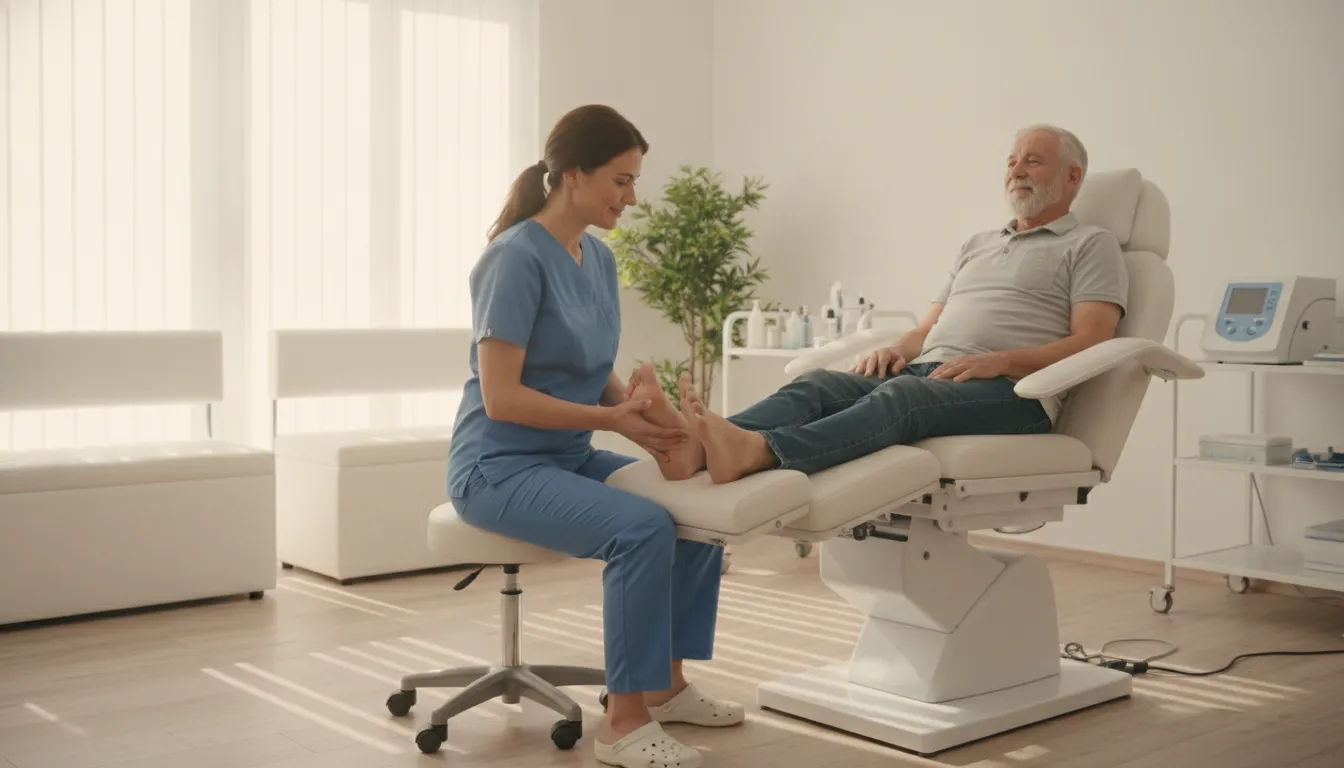

Pain at the end of a toe can make every step uncomfortable, especially when shoes press against a tender nail, irritated skin, or a recent injury. The location may seem specific, but the underlying cause is not always obvious from symptoms alone.
Tip of toe pain may result from an ingrown toenail, a neuroma, trauma, or a subungual problem beneath the nail. Pressure from crowded footwear and nerve-related conditions such as peripheral neuropathy can also be responsible. Persistent symptoms, trouble walking, diabetes, or a recent injury are reasons to seek a podiatry evaluation rather than wait for the problem to worsen.
At Comprehensive Foot and Ankle Institute in Hoffman Estates, Dr. Sutpal Singh evaluates the pattern, timing, and source of discomfort before discussing care. The next step is to look more closely at the common causes and the clues that can help distinguish them.
Schedule a consultation to pinpoint the cause of your tip of toe pain.
What Causes Pain at the Tip of the Toe?
Tip of toe pain can come from the skin, nail, bone, joint, or nerves. The location and quality of the discomfort often provide useful clues. A sore spot beside the nail may suggest an ingrown toenail, while burning or tingling can point toward nerve irritation. Pressure from footwear, a recent injury, or a toe deformity may also concentrate pain at the end of the toe. Understanding the possible source helps a specialist choose an appropriate evaluation and treatment plan rather than treating every painful toe the same way.
Ingrown toenails
An ingrown toenail occurs when the nail edge presses into the surrounding skin. This can cause tenderness, redness, swelling, or drainage along one or both sides of the nail. Shoes that compress the front of the foot may make the pressure worse. Repeated trimming problems, nail shape, or prior injury can also contribute. Persistent toe discomfort around the nail deserves attention, especially if the area becomes increasingly inflamed. A podiatric evaluation can determine whether the problem is limited to the nail edge or whether another condition is creating similar symptoms.
Toe neuromas
A neuroma involves irritation or thickening around a nerve. Patients may describe burning, electrical sensations, numbness, or the feeling that a small object is inside the shoe. Although neuroma pain is often felt in the ball of the foot, nerve irritation can radiate toward the toes and contribute to tip of toe pain. Footwear that squeezes the toes may intensify symptoms. If burning or tingling is part of your experience, mention it during the examination. A focused assessment can help distinguish a localized neuroma from broader nerve conditions. Including peripheral neuropathy, which is also associated with painful sensations at the tips of the toes.
Subungual issues
Problems beneath the toenail can create pressure that feels deep, focal, and difficult to relieve by changing shoes. Subungual irritation, a bruise after repetitive impact, or a bony growth such as subungual exostosis may press upward against the nail. The nail can become discolored, thickened, or tender. Because several nail conditions can look similar at home, avoid repeatedly digging under the nail or attempting to remove a suspected growth yourself. The cause should be identified before treatment is selected.
Trauma and mallet toe deformities
A stubbed, jammed, or broken toe can remain painful after the initial injury and may later be more likely to develop a mallet toe or another deformity. Mallet toe creates an unusual bend in the joint nearest the toenail, which can place pressure on the toe tip and make shoes uncomfortable. Tight or high-heeled footwear crowds the toes and may encourage them to curl over time. If tip of toe pain persists after trauma, changes your walking pattern, or worsens in shoes, a specialist should assess the joint alignment and soft tissues. Comprehensive Foot and Ankle Institute emphasizes personalized, minimally invasive care when clinically appropriate, with treatment selected around the cause and your active lifestyle.
Why the Tip of Your Big Toe Hurts When You Walk
Walking is a repeated sequence of loading and releasing the foot. As you move through a step, the big toe helps the foot push away from the ground. If the toe is crowded, bent, inflamed, or not moving normally, that pressure can concentrate near the nail or the end of the toe. The result may be soreness with each step, pain that worsens in shoes, or a feeling that the toe is catching against the front of the footwear.
Tight shoes can make this problem more noticeable. Footwear with a narrow toe box presses the toes together and may prevent them from lying flat. Over time, that crowding can contribute to deformities such as a mallet toe. A mallet toe bends at the joint nearest the toenail. Which can place the end of the toe under repeated pressure and cause pain while walking or wearing shoes. A toe that was previously stubbed, jammed, or broken may also be more likely to develop a related deformity.
When the pain starts at the joint or forefoot
Not every painful sensation felt at the big toe tip begins there. Turf toe is an injury involving the structures around the big toe joint, often after the toe is forced upward during sports or another active movement. Swelling and stiffness may change how you push off, shifting stress toward the front of the toe. Learn more about turf toe pain management if your symptoms began during athletics or a sudden change in direction.
Metatarsal problems can also alter the way pressure travels through the forefoot. You may notice pain under or around the toes even when the original source is farther back in the foot. A clinical evaluation can help determine whether the issue is a toe deformity, joint irritation, or a metatarsal alignment problem. When appropriate, the practice also addresses metatarsal and toe pain with minimally invasive approaches.
Inflammation can make ordinary steps feel severe
Gout can produce sudden, intense pain, redness, warmth, and swelling in a toe joint. Although the discomfort may feel concentrated at the tip or front of the big toe, the underlying inflammation may involve the joint. Read about sudden intense toe pain when symptoms appear abruptly rather than building gradually.
Because several conditions can feel similar, persistent pain that changes your walking pattern deserves more than a footwear adjustment alone. A podiatric assessment can identify the source and guide a focused plan, including conservative, regenerative, or minimally invasive options when clinically appropriate.
Is Sudden Sharp Toe Tip Pain an Emergency?
Sudden, sharp pain at the end of a toe can be alarming, but it does not always mean you need an emergency room. The urgency depends on what caused it, how intense it is, and whether other symptoms are developing. A stubbed or jammed toe, a small fracture, an irritated nerve, gout, or an infection can all produce abrupt pain. If the pain began after an injury, or if you cannot walk normally, arrange a prompt podiatric evaluation rather than trying to push through it.
Trauma deserves particular attention when the toe looks crooked, becomes significantly swollen or bruised, or hurts with even gentle movement. A stubbed, jammed, or broken toe can increase the likelihood of a later deformity, including a mallet toe. Mallet toe involves an unusual bend in the joint nearest the toenail and may cause pain when the toe is placed in a shoe. More information about turf toe pain management may also be useful for athletes whose pain followed a forceful push-off or sports injury.
Sudden redness, warmth, swelling, and extreme tenderness at the big toe joint can occur with gout. The discomfort may arrive quickly and make light contact feel intolerable. You can read more about sudden intense toe pain, but do not assume gout is the cause without an examination. Similar symptoms can occur with infection or another inflammatory problem, and the appropriate treatment is different.
When nerve symptoms change the timeline
Nerve-related pain may feel sharp, burning, electric, or like repeated pins and needles. Peripheral neuropathy is one recognized cause of foot pain and can create painful sensations at the tips of the toes. It can also reduce protective sensation, making it easier to overlook a blister, pressure spot, or small wound. This is especially important for people with diabetes, who should not wait for a minor toe problem to become severe.
Seek urgent medical guidance if you notice spreading redness, drainage, fever, a darkening toe. An open wound, rapidly increasing swelling, or pain that is out of proportion to what happened. People with diabetes and anyone with a history of significant toe trauma should seek early specialist care even when the symptoms seem manageable. Early intervention may help reduce the risk of infection or a lasting deformity.
A careful examination can help distinguish injury, gout, nerve irritation, infection, and pressure-related problems. Comprehensive Foot and Ankle Institute provides doctor-led, personalized evaluation in Hoffman Estates, with treatment planning tailored to the underlying cause rather than the symptom alone.
How Podiatrists Diagnose Pain at the Tip of the Toe
A careful diagnosis starts with more than identifying the sorest spot. The tip of the toe may hurt because of an ingrown toenail, irritation beneath the nail, a neuroma, trauma, a fracture, or a pressure-related deformity. Nerve conditions such as peripheral neuropathy can also create painful sensations in the toes. The goal is to connect your symptoms with the underlying structure causing them, then choose a treatment that fits your health, activity level, and recovery goals.
Review your symptoms and medical history
Your podiatrist will ask when the pain began, whether it developed suddenly or gradually, and what makes it worse. Details such as pain with shoes, tenderness beneath the nail, swelling, numbness, burning, or pain after stubbing the toe can narrow the possibilities. The clinician may also ask about diabetes, neuropathy, gout, prior injuries, athletic activity, and previous treatment. A toe that was stubbed, jammed, or broken may be more likely to develop a secondary deformity such as mallet toe, according to Mayo Clinic guidance.
Perform a focused physical examination
The exam includes looking at the skin, nail, nail bed, toe alignment, and areas of swelling or redness. Your podiatrist may gently press around the nail and joint, check how the toe moves, and assess sensation and circulation. The position of the toe in shoes and while standing can also matter. A bend in the joint nearest the toenail, for example, may point toward mallet toe, which can cause shoe-related pain. Tight footwear can crowd the toes and contribute to deformity over time.
Use imaging when the examination calls for it
An X-ray may help identify a fracture, joint change, bone spur, or subungual exostosis, a bony growth beneath the toenail. Ultrasound can provide additional information about soft tissues and may help evaluate a neuroma or another source of localized tenderness. Imaging is selected for a reason rather than automatically ordered for every case. It should clarify what the physical examination suggests and help distinguish a structural problem from nerve or soft-tissue irritation.
Rule out overlapping causes and discuss next steps
Several conditions can produce similar tip of toe pain. A thorough evaluation considers neuroma, subungual exostosis, fracture, ingrown toenail, trauma, and neuropathy instead of assuming one explanation. At Comprehensive Foot and Ankle Institute, the evaluation is designed around unhurried, doctor-led attention rather than a high-volume, commodity experience. That concierge approach is especially valuable when pain is chronic, complex, or has not improved with conventional care. Once the likely cause is clear, Dr. Sutpal Singh can explain appropriate options, which may include conservative care, regenerative therapy, or a minimally invasive approach when clinically appropriate.
Minimally Invasive and Regenerative Treatment Options
The right treatment depends on what is creating pressure, inflammation, nerve irritation, or structural stress at the toe tip. A focused evaluation helps distinguish a problem that may respond to conservative care from one that needs a procedure. At Comprehensive Foot and Ankle Institute, treatment planning is designed around preserving motion, supporting an active lifestyle, and avoiding more intervention than your condition requires.
For some patients, advanced regenerative modalities can address painful symptoms without an incision. Class IV laser therapy and shock wave therapy are examples of noninvasive options that may be considered when soft-tissue irritation. Inflammation, or chronic pain is part of the picture. These treatments are selected based on the underlying diagnosis, not simply the location of the pain.
| Conventional or routine approach | Minimally invasive and regenerative approach |
|---|---|
| May rely on general symptom management without fully addressing a deformity, pressure point, or chronic tissue irritation. | Begins with a focused diagnosis and may use Class IV laser therapy or shock wave therapy when clinically appropriate. |
| Surgery, when recommended, may involve larger incisions or implanted plates, screws, or other hardware. | Precise instruments can correct certain problems through a minimal incision or small poke hole, with no internal hardware for relevant procedures. |
| Patients may need a hospital-based setting or a longer interruption to normal activities, depending on the procedure. | Eligible procedures are generally performed in the office under local anesthesia, with immediate walking when clinically appropriate. |
| Care may follow a high-volume model with limited time for complex concerns. | A concierge, doctor-led model gives chronic or complex foot pain the individualized attention needed for thoughtful planning. |
Minimal-incision treatment is not appropriate for every patient or every cause of tip of toe pain. A curled or deformed toe, pressure beneath the nail, an ingrown toenail, a nerve-related problem, or an injury may require different strategies. Your medical history, circulation, skin condition, imaging findings, and goals all matter. Patients with diabetes or a history of trauma may need earlier specialist attention because untreated problems can progress to infection or permanent deformity.
When a procedure is appropriate, the goal is precise correction while limiting disruption to surrounding tissue. The practice’s podiatric medical services include advanced options intended to help patients move forward without automatically defaulting to hardware-intensive surgery. Dr. Sutpal Singh can explain which approach fits your diagnosis, expected recovery, and comfort with treatment choices.
When to See a Podiatrist for Tip of Toe Pain
Occasional soreness after wearing a narrow shoe or bumping a toe may improve with rest and roomier footwear. However, persistent tip of toe pain deserves more attention when it changes how you walk, limits your activity, or continues despite simple measures. Lasting foot pain that affects normal walking is a reason to seek evaluation from a healthcare professional, according to the Mayo Clinic.
Do not wait to schedule an assessment if the pain is accompanied by increasing redness, swelling, drainage, warmth, an open sore, or a visible change in the toe. These signs can point to irritation, infection, injury, or pressure from a developing deformity. A toe that was stubbed, jammed, or broken may later be more likely to develop a mallet toe or another deformity. So ongoing symptoms after trauma should not be dismissed.
Situations that call for earlier evaluation
Some patients should seek specialist guidance promptly, even if the pain seems manageable:
- Diabetes: Diabetes can increase the consequences of a small wound or pressure spot. Persistent toe pain, skin breakdown, discoloration, or drainage should be evaluated early because complications may include infection or lasting deformity.
- Recent trauma: Pain that follows a fall, sports injury, stubbed toe, or suspected fracture warrants assessment when it does not steadily improve. Especially if walking is difficult or the toe looks crooked.
- Recurrent ingrown toenails: Repeated tenderness along the nail edge, swelling, or inflammation may need more than temporary home care. Identifying why the problem keeps returning can help guide a more appropriate treatment plan.
- Numbness or tingling: Burning, pins-and-needles sensations, or reduced feeling can be associated with peripheral neuropathy and should be discussed with a podiatrist. Particularly when symptoms affect both feet or progress over time.
A focused evaluation can distinguish nail pressure, toe alignment problems, nerve irritation, trauma, and other causes that may feel similar at first. At Comprehensive Foot and Ankle Institute, Dr. Sutpal Singh provides personalized, doctor-led attention for chronic and complex foot concerns. The goal is to understand what is driving the pain and discuss appropriate options, which may include minimally invasive or regenerative approaches when clinically suitable.
If your symptoms are persistent, recurring, or affecting your confidence in walking, Schedule a consultation to discuss the next step. The office can be reached at (847) 310-1600.
Schedule a consultation to discuss your toe pain with our specialist team.
Frequently Asked Questions
What causes pain at the tip of the toe?
Common causes include an ingrown toenail, a neuroma, trauma, a problem beneath the toenail, or pressure from a toe deformity. A mallet toe bends near the toenail and may become painful in shoes. Peripheral neuropathy can also produce painful sensations in the toes. The right diagnosis depends on the location, timing, appearance, and any recent injury.
Could my toe tip pain be an ingrown toenail?
It could be, especially when the pain is concentrated along one or both edges of the nail and the area is tender, red, or swollen. Do not repeatedly dig under the nail or cut deeply into its corners. A podiatric examination can distinguish an ingrown nail from infection, trauma, a subungual problem, or another source of pain.
Is sudden sharp stinging pain in the toe an emergency?
Sudden, severe pain may follow an injury, gout flare, or nerve-related problem, so its urgency cannot be determined by symptoms alone. Seek prompt medical evaluation if pain is severe, the toe looks deformed, swelling rapidly worsens, or you cannot walk normally. People with diabetes should seek earlier guidance for new or persistent toe symptoms.
Can tight shoes cause pain at the tip of my toe?
Yes. Shoes that squeeze the toe box can increase pressure on the nail and toe tip and may contribute to deformity over time. Choose footwear with enough room for the toes to lie comfortably, but arrange an evaluation if pain continues after changing shoes or limits your activity.
When should I see a podiatrist for toe tip pain?
Schedule an evaluation when pain persists, interferes with walking, follows trauma, or returns despite simple footwear changes. Early specialist care is particularly important for patients with diabetes or a history of toe injury, because untreated problems may progress to infection or permanent deformity. A focused examination can identify whether minimally invasive or regenerative care is appropriate.
Schedule a Consultation for Tip of Toe Pain
Persistent pain at the tip of your toe can make walking and everyday activity more difficult. A focused evaluation may help clarify whether the discomfort is related to an irritated nail, pressure, injury, nerve symptoms, or another cause. If you are in Hoffman Estates or the northwest Chicago suburbs, schedule a consultation with Comprehensive Foot and Ankle Institute. You can also call the office at (847) 310-1600.